Mooching for Salmon and How Washington Anglers Do It
There's nothing quite like the thrill of salmon fishing in Washington, but sometimes, the traditional methods like slow trolling can feel a bit… passive. You're covering water, sure, but you might miss that intimate connection with your bait and the subtle takes of a feeding salmon. This guide is all about embracing "mooching," a classic, highly effective, and deeply engaging technique that puts you right in the heart of the action, helping you master it for our diverse Washington waters.
What Exactly Is Mooching for Salmon?
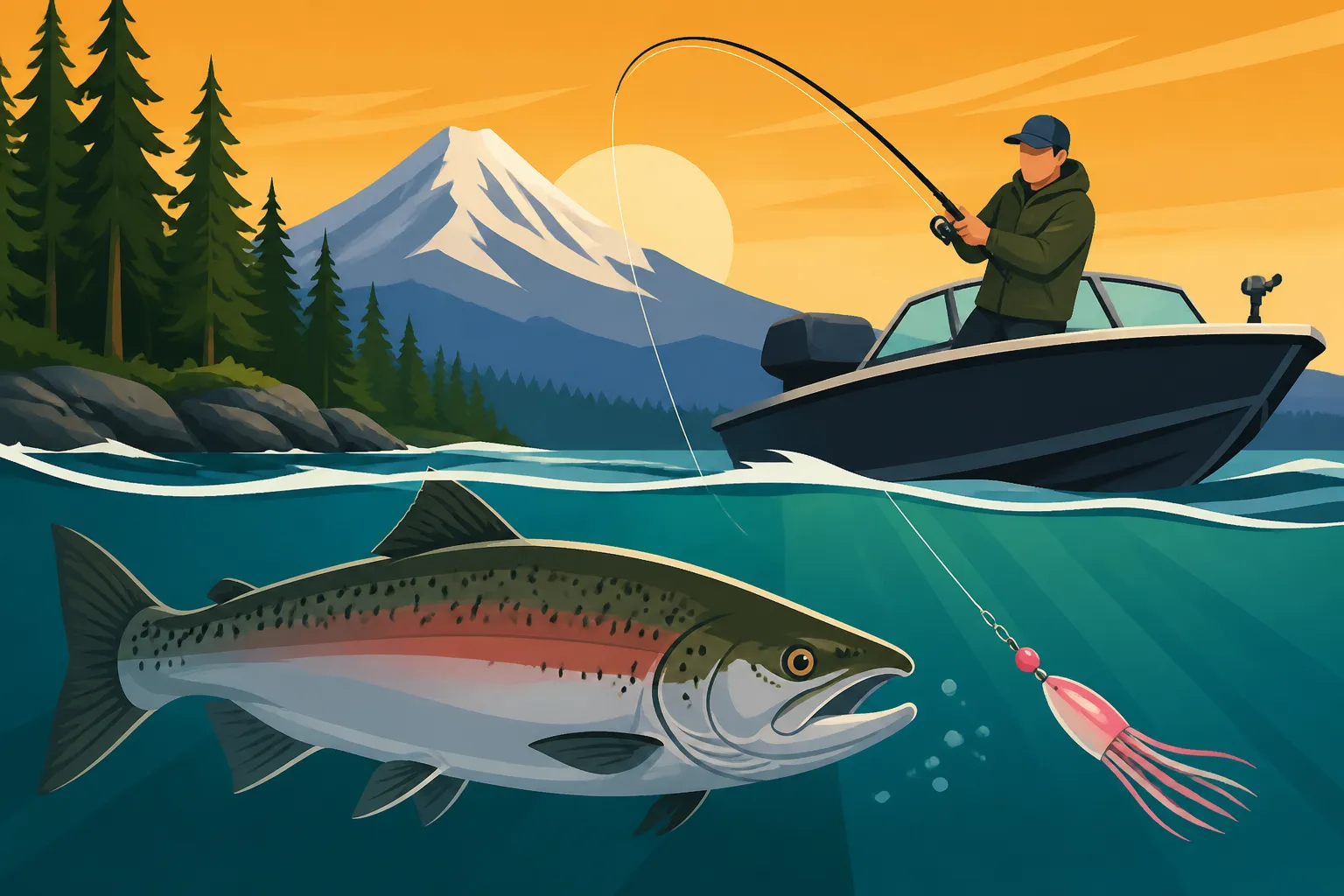
Mooching, at its heart, is a finesse fishing technique for salmon that relies on drifting with the current, presenting a natural bait (typically herring or anchovy) in a lifelike manner. Unlike trolling, where your bait is pulled through the water by the boat's propulsion, mooching uses the natural drift of your boat, often assisted by light motor use or oars, to mimic a free-swimming or injured baitfish.
Imagine this: You’re out on Puget Sound, the tide is just right, and instead of the rhythmic drone of a trolling motor, you’re quietly drifting, feeling every subtle twitch and tap on your line. Your bait is doing a slow, enticing dance in the water column, unweighted for a good portion of its journey, looking utterly irresistible. This isn't about covering miles; it's about covering the right water with precision and an almost Zen-like focus on what your bait is doing. It’s a very active form of fishing, demanding your full attention, which is precisely why so many Washington anglers swear by it, especially for Chinook (King) and Coho (Silver) salmon.
It's also a fantastic method for when salmon are scattered or feeding higher in the water column, making them less susceptible to deep-trolled gear. The natural presentation is often the key to triggering a strike when other methods fail.
Essential Gear for Washington Mooching
Getting set up for mooching doesn't require an arsenal of specialized equipment, but having the right tools for the job will significantly improve your success and enjoyment. This is where a little upfront investment really pays off.
Rods and Reels Designed for the Drift
For mooching, you're looking for gear that offers a blend of sensitivity, backbone, and the ability to manage line effectively while drifting.
- Rods: A good mooching rod in Washington is typically between 8.5 to 10.5 feet long, often with a medium to medium-heavy action. The length is crucial for keeping your line clear of the boat, cushioning heavy salmon runs, and providing excellent leverage during a fight. The action should be soft enough in the tip to detect subtle bites (which salmon are famous for when "mouthing" a bait) but transition quickly to a strong backbone to set the hook and control powerful fish. Graphite rods are popular for their sensitivity and light weight, making them a pleasure to hold all day. You can find excellent options on platforms like Amazon that are specifically designed for salmon mooching, often labeled as "salmon mooching" or "drifting" rods.
- Reels: This is where personal preference really comes into play, but two main types dominate the mooching scene:
- Level Wind Reels: These are conventional reels with a line guide that distributes line evenly on the spool. They're user-friendly, great for beginners, and many anglers prefer them for ease of use. A good quality level wind reel in a 20-30 size (like a Daiwa Sealine or a Penn Fathom) with a smooth drag system is ideal.
- Single Action Reels (Knuckle Busters): These are essentially large fly reels, often used by traditionalists. They have a 1:1 gear ratio, meaning one crank of the handle equals one rotation of the spool. This direct connection to the fish is exhilarating, but they require skill to manage line and fight fish. They don't have a level wind, so you have to manually guide the line onto the spool. They're incredibly fun once you get the hang of them, offering an unparalleled fight experience. Think Islander or Shimano Moochers.
Line, Leaders, and Terminal Tackle
Your line setup is critical for successful mooching, balancing strength with stealth.
- Mainline: Most anglers opt for 20-30 lb monofilament or braided line as their mainline. Monofilament offers some stretch, which can be forgiving with heavy-hitting salmon, while braid offers incredible sensitivity and no stretch, transmitting even the lightest bite. If using braid, you’ll definitely want a fluorocarbon leader.
- Leaders: Fluorocarbon leaders are king for mooching. Their near-invisibility underwater is a huge advantage, especially in clear Puget Sound waters. Use 15-25 lb test, depending on target species and water clarity. The length of your leader will vary, but typically 4-6 feet is a good starting point from your swivel down to your hooks.
- Swivels: High-quality barrel or ball-bearing swivels are essential to prevent line twist, especially when using bait that spins.
- Hooks: Mooching typically employs a tandem hook setup. For herring, a popular setup is a 3/0 or 4/0 hook for the lead hook (through the nose or chin) and a 1/0 or 2/0 trailer hook (positioned near the vent of the bait). Some anglers prefer single hooks for easier release, and it's always important to be aware of Barbless Hook Requirements on Washington Rivers or in specific marine areas, even when saltwater fishing. Gamakatsu and Owner are reliable hook brands you can often find in local tackle shops or online.
- Sinker Slider and Weights: A mooching sinker slider allows your main line to run freely through a weight, giving the salmon less resistance when it bites. Weights typically range from 1 to 6 ounces, depending on current, depth, and desired drift speed. You want just enough weight to get your bait down to the desired depth and maintain a good angle to the bottom, without dragging.
Bait: The Heart of the Mooch
The effectiveness of mooching largely hinges on your bait presentation.
- Herring: This is the undisputed champion of mooching baits in Washington. Fresh or brined frozen herring are used, typically in sizes ranging from "green label" (small) to "red label" (large).
- Whole Herring: Rigging a whole herring involves pushing the lead hook through the chin and out the top of the nose, then placing the trailer hook near the vent. The key is to get it to spin perfectly in the water, mimicking an injured baitfish.
- Cut Plug Herring: This involves cutting the herring at an angle behind the head, creating a bait that has a built-in spin. This is a highly effective presentation that many Washington anglers master.
- Anchovies: Smaller and oilier than herring, anchovies can be very effective, especially for Coho salmon. They are rigged similarly to herring.
- Bait Preparation: Many anglers brine their bait in advance with salt, cure, and sometimes even scent to firm it up, make it shinier, and enhance its appeal.
Mastering the Mooch: Techniques and Tips
Mooching isn't just about dropping a line; it's an art form that blends boat control, bait presentation, and a keen sense of what's happening beneath the surface.
Boat Control and Drift Management
This is perhaps the most critical aspect of successful mooching. Your goal is to achieve a natural, controlled drift.
- Match the Current: You want your boat to drift at roughly the same speed as the current, allowing your bait to fall and rise naturally. This often means using your main engine or a kicker motor in reverse to slow your drift, or sometimes using oars to fine-tune your speed and direction. If the current is strong, you might need more weight.
- Maintaining Depth: As your boat drifts, your line will naturally sweep through different depths. This "rise and fall" is part of the mooching presentation. Use a line counter reel or pay close attention to how much line you have out. Salmon often hold at specific depths, so experimenting is key. Sometimes they are near the surface, other times they are hugging the bottom structure. Your fish finder is your best friend here, helping you pinpoint bait balls and salmon schools.
- The "Mooch": The actual "mooch" is the gentle jigging or pumping action you impart to your rod as your bait drifts. This makes your bait swim down and then float back up as you raise and lower your rod tip, usually a smooth 2-3 foot raise and drop. This motion, combined with the natural boat drift, makes the bait look alive and enticing. It's a subtle motion, not aggressive jigging.
Bait Presentation and Depth Control
A perfectly presented bait is irresistible.
- The Perfect Spin: Whether using whole or cut plug herring, ensuring your bait has a slow, seductive roll is paramount. If it's corkscrewing wildly or not spinning at all, it's less effective. Take the time to rig it correctly. A good rule of thumb: drop your rigged bait next to the boat and observe its spin. Adjust your lead hook placement if needed until it spins naturally.
- Targeting the Bite Zone: Salmon often feed within a specific depth range. Use your fish finder to locate baitfish schools or salmon arches. Start by dropping your bait to the bottom, then reel up 10-20 feet and begin your mooch. If no bites, try another 10-20 feet up. Keep track of what depth produces fish. Many anglers find fish concentrated between 40 and 100 feet in various Puget Sound areas, but this can change rapidly.
- Feel the Bite: Because mooching is so hands-on, you'll feel every tap, bump, and pull. Salmon bites can be anything from a gentle "tick" to a hard smash. Don't be too quick to set the hook on a subtle tap; often, they're just "mouthing" the bait. Let them commit, feeling the weight load up before setting the hook with a firm, sweeping motion.
Reading the Water and Timing
Understanding the environment greatly influences your mooching success.
- Tides and Currents: Best Tides for Puget Sound Salmon Fishing in Washington can make or break a mooching trip. Tidal exchanges create currents that salmon use to travel and feed. A strong tidal flow can be excellent for mooching, as it helps distribute scent and makes bait presentation more natural. Pay attention to slack tides, as currents can be unpredictable, and fish behavior might change.
- Structure: Salmon will often hold near underwater structure like reefs, humps, drop-offs, or even kelp beds. These areas provide ambush points and hold baitfish. Your GPS and chart plotter are invaluable for identifying and drifting over these key features.
- Time of Day: Early morning and late evening often offer the best fishing, but salmon can bite all day, especially on overcast days or during strong tide changes.
Where and When to Mooch for Salmon in Washington
Mooching is a popular technique across many of Washington's salmon fisheries, but some areas and seasons are particularly well-suited for it.
Prime Mooching Grounds in Puget Sound
Puget Sound offers a wealth of opportunities for mooching, especially during the summer and fall salmon runs.
- Marine Area 9 for Salmon Fishing: Areas like Possession Bar, Point No Point, and Kingston are legendary mooching spots. These locations are known for holding transient Chinook and Coho as they stage to enter rivers or feed in the nutrient-rich waters. The currents here can be robust, making for excellent mooching conditions when timed correctly.
- Marine Area 10 (Seattle/Bremerton): The waters off Jefferson Head, Presidents Point, and the shipping lanes can be productive, especially for resident Chinook (often called "blackmouth") during the winter months, and transient Coho and Chinook in summer.
- Marine Area 11 (Tacoma/Vashon): Areas around Quartermaster Harbor, Point Defiance, and Dalco Pass are excellent for mooching, particularly for Chinook and Coho. This marine area offers diverse bottom structure that holds baitfish and, consequently, salmon.
Targeting Specific Salmon Species and Seasons
Understanding Washington Fishing Seasons: A Month-by-Month Guide helps you maximize your mooching efforts for different salmon species.
- Chinook Salmon (King Salmon): These powerful fish are often the primary target for mooching. They tend to feed aggressively and are attracted to the natural movement of a well-presented herring.
- Season: While resident Chinook ("blackmouth") can be targeted through the winter in certain areas, the main When Chinook Salmon Run in Washington's Puget Sound is typically from late spring through late summer, peaking in July and August as they migrate towards their spawning rivers.
- Coho Salmon (Silver Salmon): Coho are also excellent targets for mooching, known for their acrobatic fights. They can be found higher in the water column and are often less finicky than Chinook.
- Season: When Coho Salmon Run in Washington usually picks up in late summer and continues strong through the fall, often into September and October. They can be incredibly abundant in certain years, making for fast and furious mooching action.
- Pink Salmon (Humpies): While not typically targeted with mooching, pink salmon can occasionally be caught this way, especially during their massive odd-year runs in Puget Sound. They prefer smaller baits and often feed aggressively near the surface.
Table: Mooching Gear Essentials
To help you get organized, here’s a quick overview of essential mooching gear you'll want to have on hand, much of which you can easily find at your local tackle shop or through online retailers like Amazon.
| Gear Item | Description | Key Considerations |
|---|---|---|
| Mooching Rod | 8.5-10.5 ft, Medium-Heavy action, sensitive tip, strong backbone | Graphite preferred for sensitivity; balanced with reel. |
| Mooching Reel | Level wind (20-30 size) or Single Action (knuckle buster) | Smooth drag crucial; consider ease of use vs direct fight experience. |
| Main Line | 20-30 lb Braided or Monofilament | Braid for sensitivity, mono for stretch; choose based on preference. |
| Leader Line | 15-25 lb Fluorocarbon, 4-6 ft length | Near-invisible underwater; optimal for clear water. |
| Swivels | High-quality barrel or ball-bearing | Prevents line twist, especially with spinning bait. |
| Hooks | Tandem 3/0-4/0 (lead) and 1/0-2/0 (trailer) single or treble hooks | Must be sharp; check local regulations for barbless requirements. |
| Sinker Slider | Allows mainline to run freely through weight | Reduces resistance when fish bites; improves bite detection. |
| Weights | 1-6 oz lead or downrigger cannonball style | Adjust based on current, depth, and desired drift speed. |
| Bait | Fresh or brined whole/cut plug herring or anchovies | Quality bait and proper rigging for a natural spin are paramount. |
| Bait Knife | Sharp, flexible knife for cutting and rigging bait | Essential for precise cut plugs and other bait prep. |
| Cooler with Ice | Keeps bait fresh and your catch cold | Crucial for preserving bait quality and fish meat. |
| Net | Large, deep net suitable for salmon | Essential for safely landing your catch once alongside the boat. |
Mooching is an incredibly rewarding way to fish for salmon in Washington. It connects you directly to the action, demanding skill and intuition, and offers the satisfaction of outsmarting these magnificent fish with a natural, enticing presentation. So, next time you're planning a salmon trip, consider putting away the downriggers and embracing the subtle art of the mooch. Just make sure you understand the current Washington Fishing Regulations Every Angler Should Know before heading out!
Disclaimer
Fishing regulations, seasons, and emergency rule changes in Washington State can change frequently and without much notice. Always consult the latest WDFW regulations pamphlet, check the WDFW website for emergency rule updates, or use the Fish Washington App before heading out on any fishing trip. This information is for general guidance only and should not be considered a substitute for official WDFW regulations.