How to Fish a Buzz Bomb for Salmon
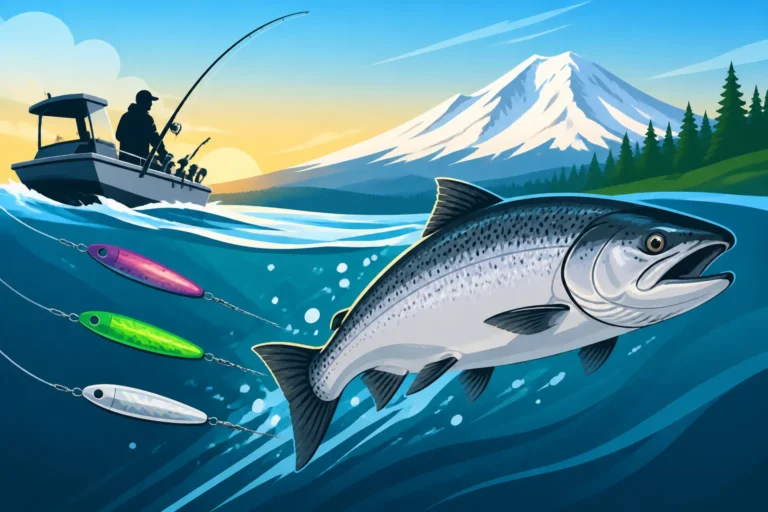
There’s nothing quite like the thrill of salmon fishing in Washington, but sometimes, those elusive kings and coho just aren't interested in your offerings. You've tried everything in the tackle box, from traditional trolling setups to various casting lures, yet the bite remains stubbornly slow. It can be incredibly frustrating to see fish on the sonar or even jumping, but they simply won't commit. This guide dives deep into one of the most effective and often overlooked lures for these situations: the Buzz Bomb, offering a detailed breakdown of how to rig it, present it, and ultimately entice those salmon to strike.
Understanding the Buzz Bomb Lure for Salmon Fishing
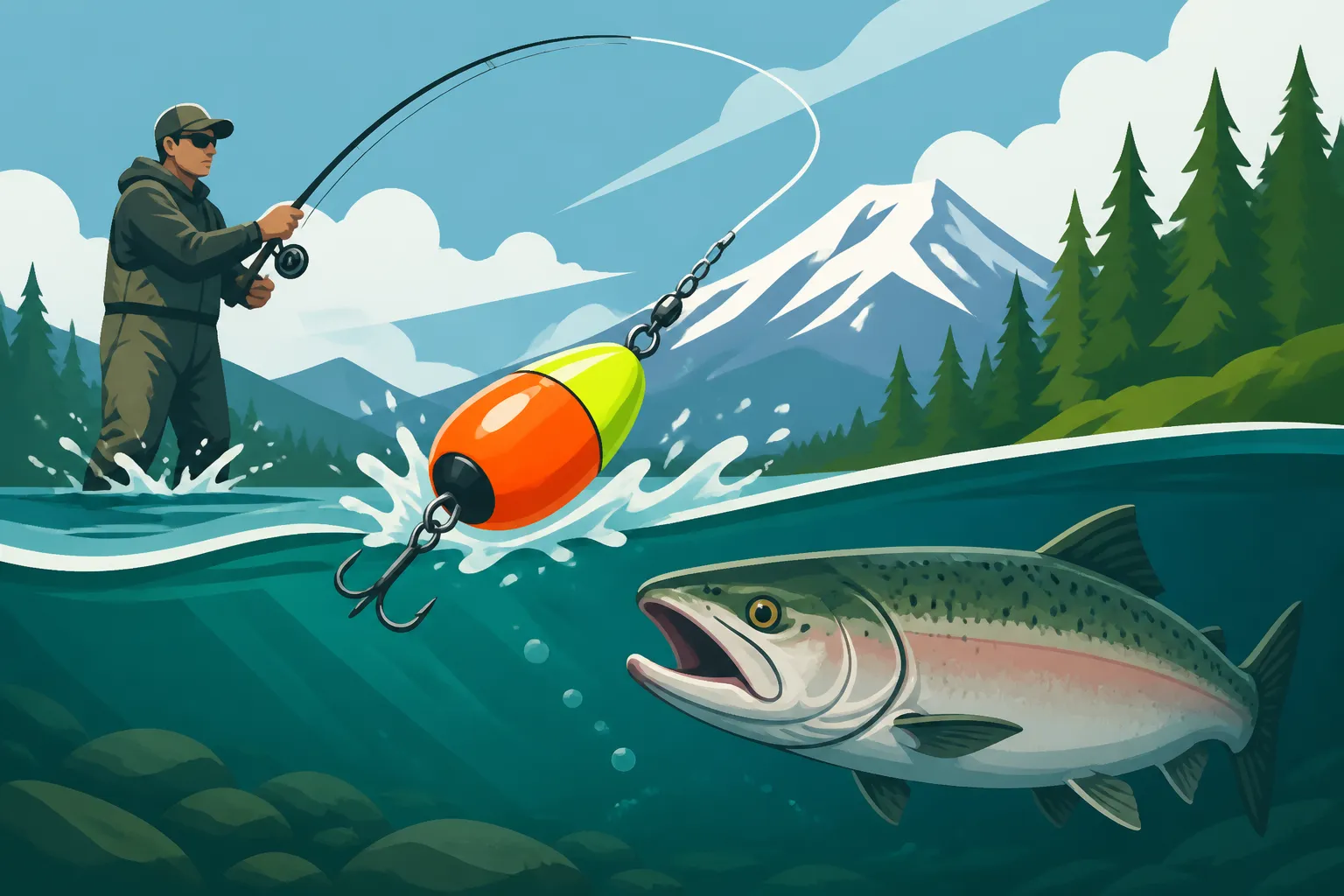
The Buzz Bomb isn't just another metal jig; it's a unique tool designed to mimic injured baitfish and trigger aggressive reactions from salmon. For years, anglers across Washington have relied on its distinctive action to put fish in the box when other methods fall short, especially when targeting fish holding deep or in strong currents.
What Makes a Buzz Bomb So Effective?
At first glance, a Buzz Bomb looks like a simple, weighted metal lure with a fin, but its effectiveness comes from a clever combination of design elements. The weighted, slender body allows it to sink rapidly through the water column, getting down to where the salmon are holding quickly, even in deep water or strong tides. This rapid descent is crucial when you're fishing areas like the mouth of the Columbia River or deep channels in Puget Sound, where currents can make it challenging for lighter lures to stay in the strike zone.
The true magic happens on the retrieve, or more specifically, on the drop. As you lift your rod tip and then allow the lure to fall, the offset fin causes the Buzz Bomb to spin and flutter erratically. This chaotic action creates a powerful sonic vibration that travels through the water, attracting fish from a distance. Imagine a frantic, injured baitfish struggling to swim – that's the illusion the Buzz Bomb creates. This vibration, combined with the lure's flashing metal body, acts as a dual sensory trigger, making it incredibly hard for curious salmon to ignore. Many anglers describe the vibration as a "thump" that salmon can feel through their lateral line, often provoking an instinctive, aggressive strike even when they aren't actively feeding.
When and Where to Use a Buzz Bomb in Washington
The versatility of the Buzz Bomb is one of its greatest strengths, making it a valuable addition to any Washington salmon angler's tackle box. It truly shines in situations where you need to get a lure down quickly and present an erratic, high-vibration profile.
One of the most classic scenarios for Buzz Bomb success is surf fishing for salmon along the Washington coast, particularly for aggressive coho and chinook. Beaches near Westport or La Push, for example, can be fantastic when schools of salmon are pushing close to shore. The lure's weight allows for long casts beyond the breaking waves, reaching fish that might be out of range for lighter spoons or spinners. Similarly, fishing from jetties or public piers, such as those found around Puget Sound, provides excellent opportunities. You can effectively cast out and retrieve, or even jig vertically down the face of the jetty to target salmon holding in deeper water or near structure.
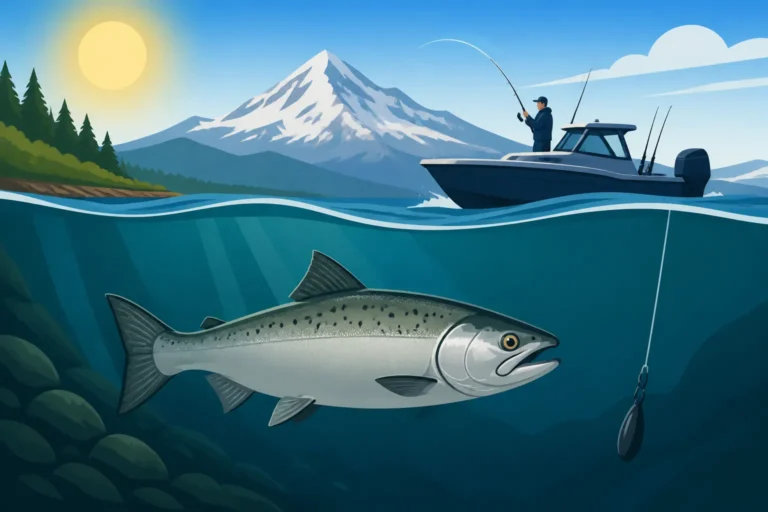
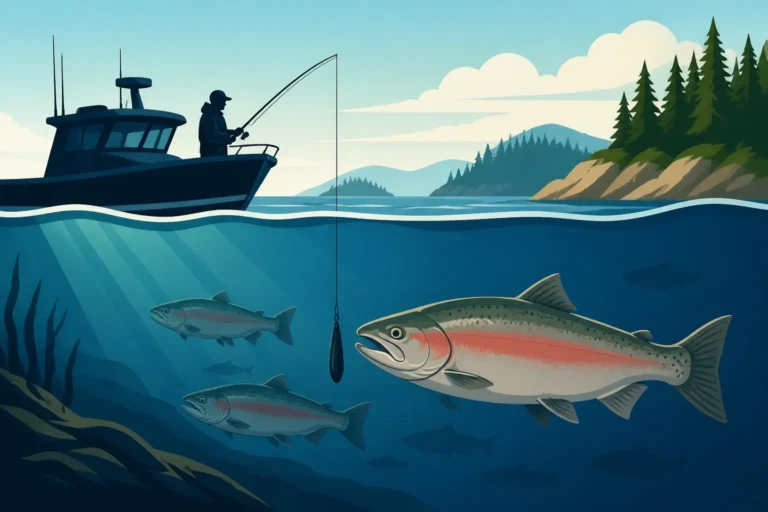
From a boat, the Buzz Bomb excels in areas with strong currents or deep water, like portions of the Columbia River or the deep passages of Puget Sound. If you're drifting through a channel or anchored over a known salmon holding area, dropping a Buzz Bomb directly below the boat and vertically jigging can be incredibly productive. It's also an excellent choice for anglers fishing the frenetic action of Buoy 10 at the mouth of the Columbia, where its rapid sink rate helps it cut through the strong current. While often associated with aggressive Chinook Salmon: Washington's King of Fish and Coho Salmon Fishing in Washington, Buzz Bombs can also tempt Pink and even Chum salmon, especially when these species are concentrated in deeper pools or current seams during their runs. Knowing Washington Fishing Seasons: A Month-by-Month Guide can help you time your Buzz Bomb outings to coincide with peak salmon runs.
Essential Gear and Rigging for Buzz Bomb Fishing
Having the right equipment and understanding the proper rigging is paramount to successfully fishing a Buzz Bomb. A mismatched rod or an improperly tied knot can mean the difference between landing a trophy salmon and going home empty-handed.
Choosing the Right Rod, Reel, and Line
When it comes to selecting your rod for Buzz Bomb fishing, you’ll want something with enough backbone to cast these weighted lures a good distance and handle the powerful fight of a salmon, yet sensitive enough to detect subtle bites. A medium-heavy to heavy power rod with a fast action is usually ideal. For casting from shore or a boat, a rod in the 8 to 10-foot range is excellent, providing the necessary leverage for long casts and ample shock absorption during a fight. Brands like Lamiglas or G. Loomis offer rods specifically designed for this type of heavy-duty salmon and steelhead fishing, often found on platforms like Amazon.
Pair your rod with a reliable spinning or baitcasting reel that has a smooth, strong drag system. A reel in the 3000 to 5000 size range for spinning, or a 200-300 series baitcaster, will typically balance well with the chosen rod. A smooth drag is non-negotiable, as an erratic drag can lead to snapped lines or pulled hooks when a powerful Chinook or Coho makes its initial blistering run. For your main line, braided line is the way to go. Its lack of stretch offers superior sensitivity, allowing you to feel every flutter of the lure and the often-subtle tap of a salmon strike. A braided line in the 20 to 40-pound test range is usually appropriate. This heavy main line is then typically connected to a fluorocarbon leader. Fluorocarbon is nearly invisible underwater, extremely abrasion-resistant, and provides that crucial stealth factor. A leader of 15 to 30-pound test, depending on water clarity and target species, is a good starting point. This combination ensures maximum casting distance, sensitivity, and the strength needed to battle big fish.
Step-by-Step Buzz Bomb Rigging
Rigging a Buzz Bomb properly is straightforward but critical for its intended action and overall effectiveness. An incorrect setup can hinder the lure's flutter and vibration, making it less appealing to salmon.
Begin by spooling your chosen braided main line onto your reel. The next step involves connecting a high-quality barrel swivel to the end of your main line. This swivel is essential for preventing line twist, which can be a major issue with the spinning action of the Buzz Bomb, especially after multiple casts and retrieves. Use a strong knot like a Palomar knot or an improved clinch knot to attach your main line to one end of the swivel.
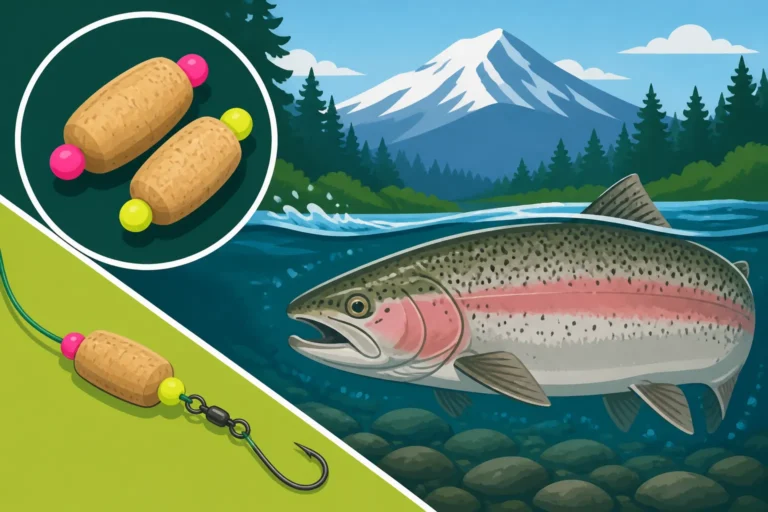
From the other end of the swivel, tie on your fluorocarbon leader. A leader length of 24 to 36 inches is a good general guideline, providing enough separation from your main line while still allowing for good control of the lure. The exact length can be adjusted based on water clarity and the aggressiveness of the fish; sometimes a longer, stealthier leader is beneficial in clear water, while a shorter one gives you more direct control in murky conditions. Now, here's where the Buzz Bomb itself comes in. Slide the main body of the Buzz Bomb onto your leader, making sure the "fin" end points towards your main line/swivel. This orientation is crucial for the lure's spinning action. Next, slide one or two small plastic beads (often fluorescent or glow-in-the-dark) onto the leader, positioning them between the lure body and your knot. These beads serve two purposes: they protect your knot from the metal body of the Buzz Bomb, and they can add additional visual attraction and vibration. Finally, tie your hook directly to the end of the leader. While some anglers prefer a single Siwash hook for better hookups and easier release, others opt for a strong treble hook for maximum hooking potential. Ensure your hook is sharp and appropriately sized for your Buzz Bomb and target species. For a visual aid, searching "Buzz Bomb rigging diagram" on Amazon or YouTube can quickly illustrate this simple setup. This detailed rigging ensures that your Buzz Bomb will perform exactly as designed, maximizing your chances of a successful hookup.
Mastering the Retrieve: Techniques for Buzz Bomb Success
The Buzz Bomb isn't a "cast and crank" lure. Its effectiveness hinges on presenting it with specific retrieves that capitalize on its unique flutter and vibration. Mastering these techniques will significantly increase your success rate.
The Classic Vertical Jigging Technique
Vertical jigging is perhaps the most iconic and often most effective way to fish a Buzz Bomb, especially when you've located a school of salmon on your sonar or are fishing in areas with strong current or deep holes. The technique starts by getting your lure down to the desired depth, usually near the bottom or where you're marking fish.
Once your Buzz Bomb reaches the target depth, the action begins. Give your rod tip a sharp, quick snap upwards, lifting the lure anywhere from one to three feet. This rapid ascent makes the Buzz Bomb dart and vibrate intensely. Immediately after the snap, lower your rod tip, allowing the lure to free-fall or "flutter" back down on a semi-slack line. The key here is "semi-slack" – you want enough slack for the lure to flutter naturally, but not so much that you can't feel a bite. Most salmon strikes actually occur on this downward flutter, as the lure mimics an injured baitfish falling through the water column. Pay close attention during the drop; any sudden change in line tension, a quick twitch, or a feeling of "heaviness" could indicate a bite. It often feels like a subtle thump rather than a violent tug. Vary your retrieve. Sometimes a series of quick snaps works, other times a slow, deliberate lift and drop is more effective. The goal is to experiment until you find what triggers a strike on a given day. This technique is particularly deadly in places like the deep channels of the Puget Sound or when fishing around structure in the Columbia River.
Casting and Retrieving for Covering Water
While vertical jigging is great for targeting specific depths, casting and retrieving with a Buzz Bomb allows you to cover more water, especially when fishing from shore or looking for scattered schools of salmon from a boat. This method is incredibly effective for Bank Fishing Techniques for Washington Salmon.
After making a long cast, allow the Buzz Bomb to sink to your desired depth. Depending on the current and depth, this might mean letting it hit the bottom, or counting down a few seconds to let it sink into the middle of the water column. Once it's at depth, begin your retrieve with a "lift and drop" or "sweep and drop" motion. Instead of a sharp vertical snap, you'll perform a longer, sweeping lift with your rod, then lower it, reeling in the slack as the lure flutters down. This creates a wider, more horizontal presentation of the Buzz Bomb's erratic action. Think of it like a distressed baitfish trying to swim away, then succumbing to injury. The key is to keep tension on the line as it drops, allowing you to feel for bites on the fall, which, as mentioned, is often when salmon strike. Vary your retrieve speed and pause duration. Some days, a fast, aggressive sweep followed by a quick drop triggers bites, while other days, a slower, more deliberate retrieve with longer pauses is the ticket. Experiment with different depths in your retrieve as well. If you're not getting bites near the bottom, try letting it sink for a shorter duration and working it higher in the water column. This technique is excellent for exploring a new area or when salmon are spread out.
Reading the Water and Adjusting Your Approach
Successful Buzz Bomb fishing, like all salmon fishing, relies heavily on your ability to read the water and adapt your techniques to prevailing conditions. Washington's diverse fishing environments, from the tidal rips of the San Juan Islands to the river mouths of the Olympic Peninsula, present unique challenges.
Current is a major factor when using a Buzz Bomb. Strong currents will make your lure sink faster and sweep downstream, potentially taking it out of the strike zone. In these situations, you might need to use a heavier Buzz Bomb or adjust your casting angle upstream to allow the lure time to sink before it reaches the fish. Conversely, in slack water, a lighter lure might be more appropriate, and you'll need to work it more actively to generate the desired action. Pay close attention to tidal charts when fishing saltwater, as the incoming and outgoing tides can drastically change current speeds and salmon holding patterns. Beyond current, understanding where salmon are likely to be holding is crucial. Look for natural structures like rock piles, drop-offs, current seams, and submerged timber. These are often ambush points where salmon lie in wait for baitfish. When targeting salmon in Puget Sound Salmon Closures: What Washington Anglers Need to Know, always be aware of the specific marine area and any temporary rules that might affect your chosen spot.
Bait presence is another critical indicator. If you see baitfish on your sonar or actively jumping on the surface, salmon are likely nearby. Adjust your retrieve depth to match where the bait is concentrated. If fish are actively feeding on the surface, a Buzz Bomb might not be the most effective choice, but if they're holding deeper and occasionally slashing through bait balls, it could be perfect. Don't be afraid to experiment with retrieve speed, pause duration, and even lure color until you crack the code for that particular day. Sometimes, a subtle change in your presentation makes all the difference. Remember to always check What to Check Before Every Washington Fishing Trip to ensure you're fishing legally and effectively.
Tips for Maximizing Your Buzz Bomb Catches
Even with the right gear and techniques, a few nuanced tips can truly elevate your Buzz Bomb game, turning slow days into memorable ones.
Lure Color and Size Selection
Choosing the right color and size of Buzz Bomb can be as crucial as the retrieve itself. Salmon can be incredibly finicky, and matching the conditions or their mood can make a significant difference.
For general salmon fishing in Washington, popular colors often include chartreuse, white, blue/silver, and pink. Many anglers swear by a blue/silver combination on sunny days, as it closely mimics herring or candlefish, common prey items. Chartreuse or white often excel in overcast conditions or murky water, providing a higher contrast that salmon can spot more easily. Pink is a fantastic "attractor" color, especially for Coho, and glow-in-the-dark options can be deadly in low light, deep water, or on particularly dark, stormy days. Consider matching the prevalent baitfish in the area; if you know there are lots of small anchovies, a smaller, silver Buzz Bomb might be best. If bigger herring are around, a larger, blue/silver one could be the ticket. You can find a wide array of colors and sizes on Amazon to stock your tackle box for various conditions.
| Buzz Bomb Size (oz) | Common Target Species | Recommended Use |
|---|---|---|
| 1/2 – 1 | Coho, Pink, Smaller Chinook | Shallow water, calm conditions, light tackle, when fish are finicky. |
| 1.5 – 2 | Coho, Chinook, Chum | General purpose, moderate depths/currents, good for casting from shore or boat. |
| 3 – 4 | Large Chinook, Deep Coho | Deep water, strong currents (e.g., Columbia River), heavier tackle, when you need to get down fast. |
Lure size also plays a vital role. While 1.5 to 2 ounces is a great all-around size for many Washington salmon scenarios, you'll want to adjust. For deep water or strong currents, especially when fishing the Columbia River in Washington: A Complete Overview or targeting large, aggressive Chinook, moving up to a 3 or 4-ounce Buzz Bomb will help you get down and stay in the strike zone. Conversely, if salmon are finicky, or you're fishing shallower water like a calm bay, a smaller 1/2 or 1-ounce Buzz Bomb might be more effective, offering a more subtle presentation.
Adding Scent and Bait for Extra Appeal
Sometimes, the visual and vibrational appeal of the Buzz Bomb isn't quite enough, and that's when adding scent or a small piece of bait can really make a difference. Salmon have an incredibly keen sense of smell, and an added olfactory stimulant can push hesitant fish over the edge.
Many anglers will apply a liberal amount of a commercial fishing scent, such as Pro-Cure or Pautzke's, directly to the Buzz Bomb itself. These scents come in various flavors like herring, anchovy, shrimp, or even krill, mimicking the natural smells of a salmon's diet. Reapply the scent frequently, especially after a few casts or if you haven't had a bite, as the scent washes off over time. For an even more enticing presentation, consider "tipping" your hook with a small piece of natural bait. A small strip of herring, a cured prawn, or even a piece of sand shrimp can add both scent and a realistic texture that salmon find irresistible. Some anglers also use a tiny piece of cured salmon roe. When tipping your hook, ensure the bait is small enough not to impede the Buzz Bomb's action, but large enough to stay on through a cast and retrieve. This combination of vibration, flash, and natural scent/taste is a powerful one, often proving irresistible to otherwise uninterested salmon.
Understanding Salmon Behavior and Bite Indicators
Becoming proficient with a Buzz Bomb means not just knowing how to cast and retrieve, but also understanding how salmon behave and what their bites feel like. Unlike some other fish, salmon strikes can range from incredibly aggressive to surprisingly subtle.
Sometimes, a salmon will absolutely hammer the Buzz Bomb, leaving no doubt that you have a fish on. This often happens with aggressive Coho or Chinook in high-current situations. More frequently, however, especially when fish are lethargic or the water is cold, the bite might be much softer. It could feel like a slight tick, a momentary slackening of the line, or simply a sudden heaviness that wasn't there a second ago. This is where the sensitivity of braided line and a good rod become invaluable. Because many bites occur on the drop, it's crucial to be constantly alert, visually tracking your line and feeling for any anomaly. If you detect anything out of the ordinary, even a subtle hesitation in the lure's fall, set the hook immediately! Salmon have bony mouths, so a firm, sweeping hookset is usually required to properly embed the hook.
A common mistake is reeling too fast or not paying attention during the fall. If you're constantly cranking, you might be pulling the Buzz Bomb away from salmon that are trying to investigate it on the drop. Another error is not varying your retrieve enough; if a certain speed or depth isn't working, don't be afraid to change it up. Observing other anglers (if you're in a crowded spot) and noting their successful techniques can also provide valuable clues. Patience, keen observation, and willingness to experiment are key to consistent success with the Buzz Bomb. Remember that a Washington Fishing License Guide for Nonresidents or a resident license is essential for legal fishing, and be mindful of How Bag and Possession Limits Work in Washington to stay compliant.
Disclaimer
Fishing regulations can change frequently. Always consult the latest Washington Department of Fish and Wildlife (WDFW) regulations before heading out. This information is for educational purposes only and should not be considered legal advice.