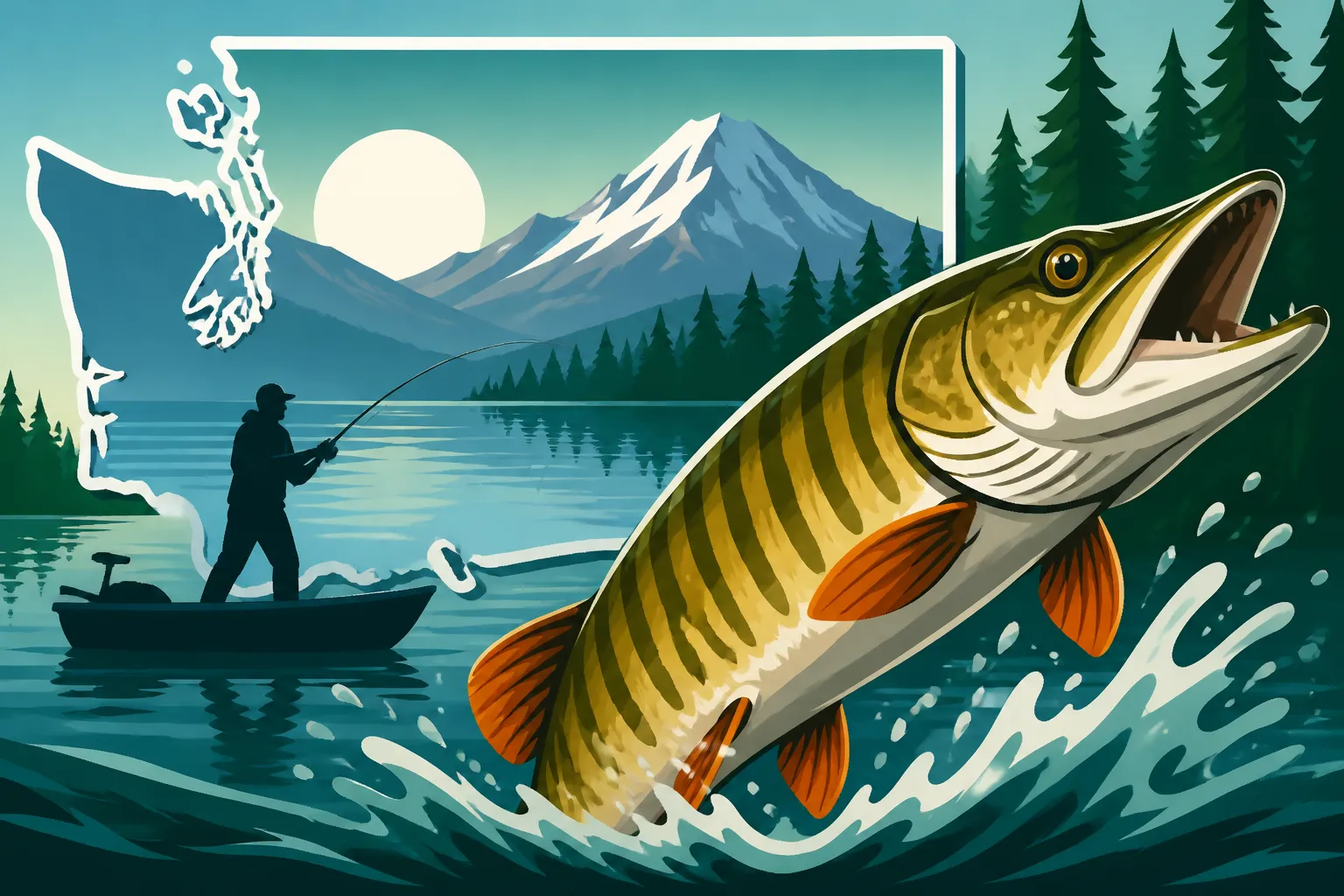
Lakes That Hold Tiger Muskie in Washington
Trying to hunt down the elusive tiger muskie in Washington State can feel like searching for a mythical beast, right? It's not like trout fishing where you know they're in almost every lake. These magnificent, hard-fighting hybrids are strategically placed, making finding their watery abodes a specific quest. This guide is going to cut through the guesswork, revealing exactly which Washington lakes hold tiger muskie and arming you with the knowledge to pursue these incredible predators.
Understanding the Allure of Washington's Tiger Muskie
When you talk about freshwater predators in Washington, most people think of bass or even big rainbow trout. But the tiger muskie? That's a whole different league. These fish are absolute monsters, and their presence in certain Washington lakes provides a unique and thrilling challenge for anglers looking for something truly special.
What Makes Tiger Muskie So Special?
Tiger muskie are a sterile hybrid, a cross between a muskellunge and a northern pike. This genetic mash-up gives them some truly remarkable traits. For starters, they grow fast and get big. We're talking fish that can easily top 40 inches and weigh over 20 pounds, often exceeding that in prime conditions. Their streamlined, torpedo-like bodies are built for explosive speed and power, making every strike a heart-stopping event and every fight a brutal test of angler and tackle. They have that distinct barred or mottled pattern, a wild beauty that instantly identifies them.
What makes them so appealing to fisheries managers, and by extension, to us anglers, is their role as a biological control. They're often introduced into lakes where certain undesirable species, like abundant warmwater "trash fish" or stunted panfish, are outcompeting more desirable sport fish. Tiger muskie are voracious eaters, quickly thinning out these populations and rebalancing the ecosystem. Plus, because they're sterile, there's no risk of them overpopulating or establishing a wild, breeding population that could upset native species. This makes them a carefully managed, high-value sport fish without the ecological headaches some other introduced species can cause.
Identifying a Tiger Muskie
Okay, so you've hooked into something huge and toothy. How do you know it's a tiger muskie and not just a very large pike or even a walleye? This is a common frustration, especially when you're caught up in the excitement of a big fish! The key is in their markings and tail fin.
Northern pike, while similar in shape, typically have lighter, oval-shaped spots on a darker background, and their tail fins are more rounded or squared off at the edges. Muskellunge, on the other hand, usually have darker spots or bars on a lighter body, and their tails are distinctly pointed.
A tiger muskie, being a hybrid, often displays a striking, irregular pattern of vertical bars or stripes, almost like a tiger (hence the name!). These bars are typically dark on a lighter, greenish-gray body, but the exact pattern can vary. Another tell-tale sign is their caudal fin (tail fin). Unlike the distinct pointed lobes of a pure muskie or the rounded lobes of a pike, a tiger muskie's tail often has a more uniform, slightly rounded, but still forked appearance, sometimes described as a "rounded fork." They also have fewer pores on the underside of their jaw compared to pure muskellunge. Pay close attention to these details – they're crucial for proper identification and adhering to catch limits.
Key Washington Lakes Stocked with Tiger Muskie
The Washington Department of Fish and Wildlife (WDFW) has very specific goals for their tiger muskie stocking programs. These are not random introductions; they're strategic moves designed to improve fisheries by targeting problematic populations of other fish. As such, only a handful of lakes in Washington are fortunate enough to host these incredible predators. Knowing these specific lakes is your first and most important step to success.
Curlew Lake: A Premier Destination
Located in Ferry County in northeastern Washington, Curlew Lake is arguably the state's most famous tiger muskie destination. This large, beautiful lake, nestled in a scenic valley, has been a WDFW focus for tiger muskie stocking for decades. The goal here was to control the abundant populations of northern pikeminnow and other nuisance fish that were competing with the lake's trout and other gamefish.
And boy, has it worked. Curlew Lake consistently produces some of the largest tiger muskie in Washington, with fish regularly caught in the 40-inch class, and even some giants pushing past 50 inches. Anglers travel from all over the Pacific Northwest to target these fish. The lake itself is quite diverse, offering a mix of weed beds, submerged timber, and varying depths, all providing excellent habitat for both the muskie and their prey. Early spring, just after ice-out, and late fall, as water temperatures drop, are often considered prime times for trophy fish here. There are several public access points, including a state park with boat launches and camping facilities, making it a very angler-friendly lake. You'll often find a good bite near the deeper weed lines or along abrupt depth changes.
Silver Lake: Southern Washington's Gem
Moving down to southwestern Washington, in Cowlitz County, we find Silver Lake. This is another prime tiger muskie fishery, and it's particularly popular due to its proximity to the Vancouver/Portland metropolitan areas. Like Curlew, Silver Lake received tiger muskie to help manage populations of undesirable fish, primarily common carp and brown bullhead catfish, which were dominating the ecosystem.
Silver Lake is a relatively shallow, highly productive lake with extensive weed beds, especially during the warmer months. These dense weeds provide excellent ambush points for tiger muskie and shelter for their prey. Because of its shallower nature, fishing success can sometimes be tied to weather patterns and water temperature more closely than in deeper lakes. Many anglers find success by casting or trolling large bucktails and swimbaits along the edges of weed lines or over deeper channels. Summer can be excellent, but be prepared to fish heavy cover. The WDFW has been actively managing this fishery, ensuring a healthy population for anglers. Just remember, due to its popularity, it can get busy, especially on weekends!
Evergreen Reservoir: A High Desert Challenge
Out in the arid landscape of Grant County, Eastern Washington, Evergreen Reservoir offers a different kind of tiger muskie experience. This reservoir is part of the Columbia Basin Project's irrigation system, and its fluctuating water levels can present a unique challenge for anglers. Tiger muskie were introduced here to manage abundant carp and tench populations, and they've settled in nicely.
Evergreen is a fantastic lake, but it's often overlooked compared to Curlew or Silver Lake, perhaps due to its more remote, high-desert location and the sometimes challenging conditions. However, for those willing to put in the effort, it can yield some truly impressive fish. The reservoir has a mix of rocky points, submerged structure, and weed beds, depending on water levels. Anglers targeting tiger muskie here often find success by focusing on structure or areas where baitfish congregate. The changing water levels mean that what was a productive spot one month might be dry the next, so staying flexible and scouting new areas is key. It's truly a test of adaptability, but the reward of a big Evergreen muskie is well worth it. Access often involves driving on gravel roads, so be prepared for a bit of an adventure.
Merwin Lake: An Untapped Potential
Merwin Lake, located in Cowlitz County like Silver Lake, but further up the North Fork Lewis River, is a more recent addition to Washington's tiger muskie program. This large, deep reservoir, impounded by PacifiCorp's Merwin Dam, historically held a different fishery focus. However, tiger muskie were introduced to help control populations of northern pikeminnow, which predate on juvenile salmon and steelhead, particularly smolts migrating downstream.
The tiger muskie fishery in Merwin Lake is still developing compared to Curlew or Silver Lake. While Merwin is a fantastic lake for kokanee and trout, the tiger muskie provide an exciting new dynamic. Because it's a deep, cold-water reservoir, fishing tactics here might lean more towards deeper presentations, especially during the warmer months when the muskie might retreat to cooler waters. Keep an eye on WDFW reports for stocking updates and angler success stories from Merwin. It represents an exciting, growing opportunity for muskie enthusiasts in Washington. Finding guides specializing in the Lewis River system might also provide insight into fishing this particular body of water.
Here's a quick overview of these fantastic tiger muskie lakes:
| Lake Name | County | Primary Prey Species Controlled | Typical Size Range (Inches) | Best Fishing Times | Key Characteristics |
|---|---|---|---|---|---|
| Curlew Lake | Ferry | Northern Pikeminnow | 30-50+ | Early Spring, Late Fall | Diverse habitat, weed beds, submerged timber |
| Silver Lake | Cowlitz | Carp, Brown Bullhead | 25-45 | Spring, Summer, Fall | Shallow, extensive weed beds |
| Evergreen Reservoir | Grant | Carp, Tench | 28-48 | Spring, Early Summer, Fall | Rocky points, variable water levels, high desert |
| Merwin Lake | Cowlitz | Northern Pikeminnow | 20-40+ (growing) | Still developing, likely Spring/Fall | Deep, cold-water reservoir, submerged timber |
Essential Gear and Tactics for Tiger Muskie in Washington
Chasing tiger muskie isn't like bass fishing; it requires specialized gear and a serious commitment to certain techniques. These are powerful, toothy predators, and under-gunning yourself will lead to heartbreak and lost fish. Don't let the sheer size of the lures intimidate you – these fish eat big!
The Right Rods, Reels, and Line
When it comes to tiger muskie, think "heavy duty." This isn't the time for your delicate trout rod. You're looking for stout rods, robust reels, and incredibly strong line.
- Rods: A good tiger muskie rod will typically be 7'6" to 9' in length, with a heavy or extra-heavy power rating and a fast action. This length gives you leverage for casting large baits and controlling powerful fish, while the heavy power allows you to drive hooks through tough jaws. Brands like St. Croix, G. Loomis, or even more affordable options from Okuma or Daiwa make excellent muskie-specific rods. If you're looking for a good starting point, check out muskie rods on Amazon for a wide selection.
- Reels: You'll want a heavy-duty baitcasting reel, often called a "muskie reel" or "swimbait reel." Look for a robust gear train, a strong drag system, and a high line capacity. A low gear ratio (around 5.X:1) is good for cranking big, resistant baits, while a slightly faster one (6.X:1) can be useful for quickly picking up slack. Something like an Abu Garcia Revo Toro Beast or a Shimano Tranx is popular, but there are many solid choices.
- Line: Braided line is almost universally preferred for muskie fishing due to its incredible strength, zero stretch, and thin diameter. Think 80 to 100-pound test. The no-stretch quality is crucial for feeling subtle bites and setting hooks effectively. You absolutely must use a heavy fluorocarbon or wire leader, at least 100-pound test, to prevent bite-offs from those razor-sharp teeth. Using an inadequate leader is a common mistake that leads to losing what could be a fish of a lifetime.
Top Lures and Baits for Washington Tiger Muskie
Tiger muskie are opportunistic predators, but they respond best to large, flashy, or erratic baits that mimic their natural prey like trout, suckers, or kokanee.
- Bucktails: These are a classic muskie killer. Large, flashy blades paired with a pulsating skirt of deer hair or synthetic material create incredible vibration and flash. Brands like Musky Mayhem Tackle and Livingston Lures make some very popular ones. Retrieve them with a fast, steady crank, often with a few pauses, to entice strikes.
- Jerkbaits: Big, buoyant jerkbaits that can be twitched and paused to create an injured baitfish presentation are highly effective. These lures require a specific cadence of jerking and pausing, making them a more active fishing style.
- Swimbaits: Large, realistic soft plastic or hard-bodied swimbaits that accurately imitate trout or other large baitfish are increasingly popular. These can be slow-rolled or twitched, and their realistic profile often triggers strikes from wary muskie. You can find a huge variety of quality swimbaits for muskie on Amazon, from brands like Savage Gear or River2Sea.
- Glide Baits: These hard baits "glide" from side to side with a simple reel-crank, offering an irresistible, erratic action that big muskie often can't ignore.
- Topwater Lures: During low-light conditions or over shallow weed beds, nothing beats the explosive strike on a large topwater lure. Think large prop baits, walk-the-dog style lures, or even big plopper-style baits. Watching a giant muskie blow up on a topwater is an unforgettable experience.
Remember to bring a large landing net with a deep, rubberized basket to protect the fish, and long-nosed pliers or a jaw spreader for safe hook removal. Losing a big fish because you weren't prepared to land it safely is a real bummer, and proper handling is critical for the health of these valuable fish.
Seasonal Strategies and Best Practices
Tiger muskie behavior, and thus your fishing strategy, changes throughout the year. Understanding these shifts is key to consistent success.
- Spring (Post-Spawn): After the water warms into the low to mid-50s (Fahrenheit), tiger muskie become very active, feeding heavily to recover energy. They'll often be found in shallower bays and around new weed growth. This is an excellent time for smaller bucktails, crankbaits, and jerkbaits. Focus on areas with slightly warmer water and good baitfish concentrations.
- Summer (Warm Water): As water temperatures climb into the 60s and 70s, muskie can become more nocturnal or move to deeper, cooler water during the day. Early mornings and late evenings are often prime. Larger, faster-moving baits like big bucktails or topwater lures over weed beds can be effective. During the heat of the day, try working deeper structure, points, or thermoclines with swimbaits or larger crankbaits. Fishing Washington's Sport Fishing Seasons and Emergency Closures is crucial as seasons for other species might affect your trip timing.
- Fall (Pre-Winter Feed): This is often considered the peak season for trophy tiger muskie. As water temperatures drop into the 50s and 40s, muskie go on a "feed bag" to bulk up for winter. They'll actively chase large baits, and many anglers switch to bigger lures, including large soft plastics, gliders, and even live suckers (where legal). Fish often hold on main lake points, steep drop-offs, and deep weed edges. This is a time when the fish are aggressive, and you might have to grind it out for fewer, but larger, bites.
- Winter (Ice-Out/Deep Water): In Washington lakes that freeze, ice fishing for muskie can be an option, though less common. After ice-out, they'll be slow and lethargic, often holding tight to structure or in the deepest available water. Fishing is challenging but can yield very large, slow-moving fish.
Always remember that tiger muskie are primarily a catch-and-release fishery. Handle them with extreme care to ensure their survival. Use proper tools, minimize their time out of the water, and release them gently.
Conservation and Regulations for Washington Tiger Muskie
Tiger muskie are a precious resource in Washington's fisheries, managed carefully by the WDFW. Their limited presence and specialized role in the ecosystem mean that responsible angling and strict adherence to regulations are paramount.
Why Conservation Matters
The tiger muskie program in Washington is a prime example of biological control. These fish are intentionally stocked to solve specific problems, like overpopulation of rough fish or predation on native salmon smolts by invasive species. Because they don't reproduce in these lakes, every single fish is a direct result of the WDFW's stocking efforts. This makes each muskie incredibly valuable.
Practicing catch-and-release is not just encouraged, it's often mandated for certain size classes or in specific lakes. This ensures that these powerful predators remain in the water, continuing their ecological job of managing prey populations and providing thrilling angling opportunities for years to come. Losing a tiger muskie due to poor handling means losing a significant investment in the health of that fishery. It's truly a long-term benefit for the entire ecosystem.
Navigating Washington's Tiger Muskie Regulations
Washington's fishing regulations can be complex, and tiger muskie are no exception. The rules are designed to protect the population and ensure sustainable fishing. It's critical to check the most current Washington Fishing Regulations Every Angler Should Know, specifically the pamphlet or the WDFW website, before every trip, as rules can change.
Generally, for tiger muskie, you'll find regulations revolving around:
- Size Limits: Most lakes have a minimum size limit, often 30 or 32 inches, meaning any fish smaller than that must be immediately released. Some lakes might have slot limits, where fish within a certain size range must be released, but fish above or below that slot can be kept.
- Daily Bag Limits: Typically, the daily bag limit for tiger muskie is very low, often one or two fish. This conservative approach helps maintain the population.
- Catch Record Card: If you are fishing for species like salmon or steelhead, you'll need a Washington Catch Record Card and What It Requires. While muskie aren't on the typical catch card, you must still record any legal fish you keep if required by specific regulations for that body of water.
- Gear Restrictions: Pay attention to any specific gear restrictions that might apply to the particular lake you're fishing. For instance, some areas might have Barbless Hook Requirements on Washington Rivers or Washington Bait Bans and When They Apply, though these are less common for muskie-specific regulations on lakes.
- Licensing: Of course, you'll need a valid Washington fishing license. Make sure you understand the difference between a Resident vs Nonresident Fishing Licenses in Washington and ensure you have the appropriate freshwater endorsement. You can easily buy a Washington Fishing License Online or at a local sporting goods store.
Understanding these regulations is your responsibility as an angler. Not only does it protect the fishery, but it also protects you from potential fines and penalties for common fishing violations. When in doubt, err on the side of caution or consult the WDFW directly.
Disclaimer
Please note that fishing regulations, stocking programs, and lake conditions can change frequently. Always consult the official Washington Department of Fish and Wildlife (WDFW) website or the latest fishing regulations pamphlet before planning any fishing trip to ensure you have the most up-to-date information regarding seasons, limits, and specific rules for each body of water. This guide is for informational purposes only and should not be considered a substitute for official WDFW publications.