How Deep to Troll for Summer Kokanee
Summer kokanee fishing in Washington can feel like a frustrating guessing game, especially when those lively landlocked sockeye vanish from their springtime haunts, diving deep into the cooler, oxygen-rich waters. It’s a common scenario: you’re out on a beautiful lake, and despite your best efforts, the fish just aren't biting because you haven't quite cracked the code of their summer depth. This guide is here to unravel that mystery, providing a comprehensive look at how to effectively pinpoint and troll for summer kokanee at the right depths, ensuring your cooler sees more action.
Understanding Summer Kokanee Behavior and Habitat Preferences
Kokanee are essentially sockeye salmon that have chosen to spend their entire lives in freshwater lakes rather than migrating to the ocean. While they might be landlocked, they retain many of their wild sockeye instincts, especially when it comes to temperature and food. As Washington's lakes warm up through late spring and into summer, the surface waters become less hospitable for these cold-water fish. This isn't just about comfort; it's about survival.
The Thermocline: Kokanee's Summer Sanctuary
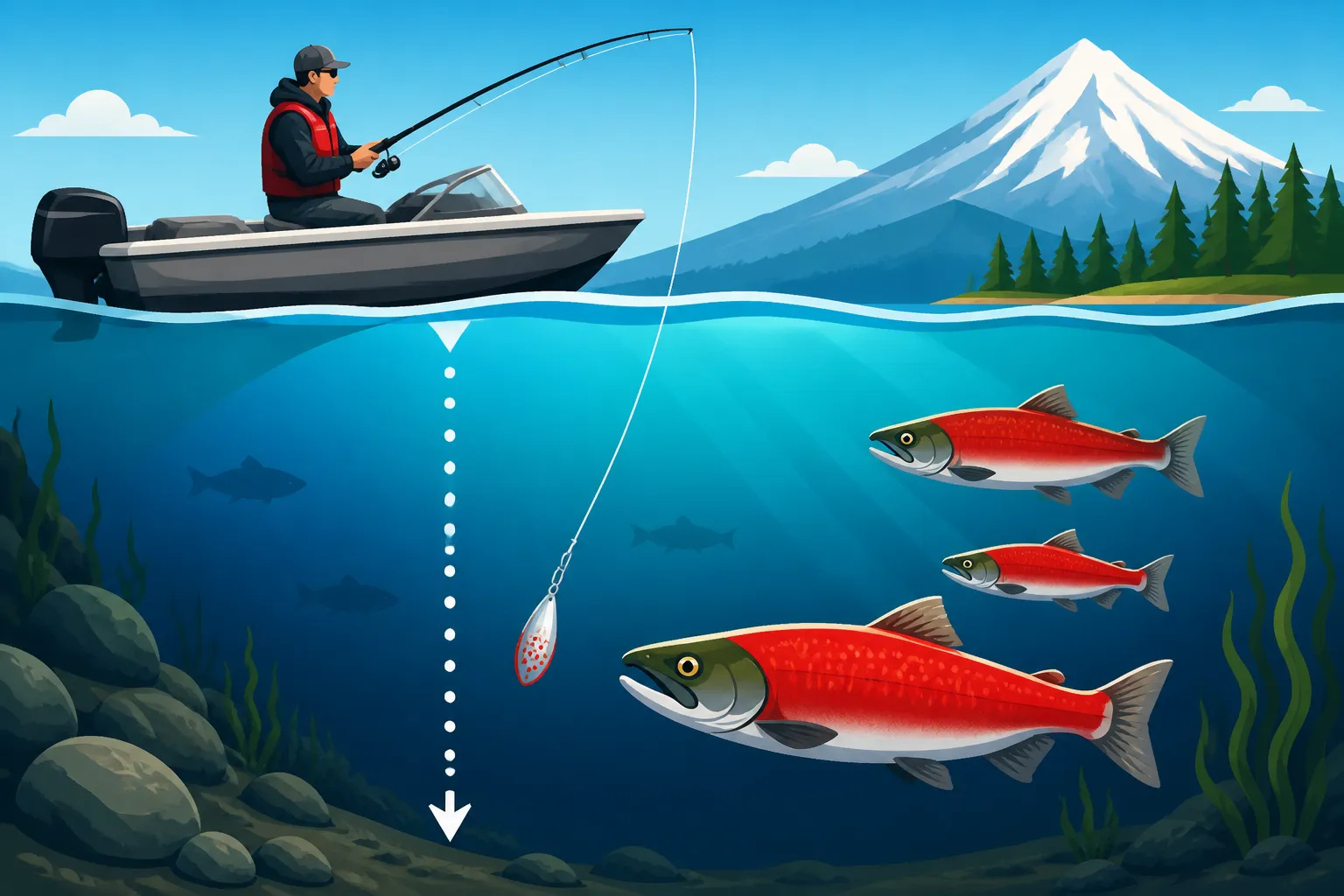
The most critical factor influencing where kokanee reside in the summer is the thermocline. Think of it as nature's invisible boundary in the water. As the sun heats the surface, a layer of warm water forms. Below that, there's a distinct transition zone where the temperature drops rapidly – that's your thermocline. Beneath the thermocline lies the colder, deeper water. Kokanee are incredibly sensitive to water temperature, typically preferring a range of about 48 to 58 degrees Fahrenheit (9 to 14 degrees Celsius). In summer, these ideal conditions are almost exclusively found within or just below the thermocline.
This thermal layering also affects oxygen levels and food sources. The colder, deeper water generally holds more dissolved oxygen, which kokanee need to thrive. Furthermore, their primary food source, zooplankton, often congregates around the thermocline, drawn to specific light levels and nutrient concentrations. So, when kokanee dive deep, they're not just escaping the heat; they're moving to a zone where temperature, oxygen, and food align perfectly for their summer survival. Neglecting to understand this fundamental behavior is often the biggest reason anglers struggle.
Light Penetration and Predator Avoidance
Beyond temperature, light penetration also plays a significant role in kokanee depth. These fish tend to be light-sensitive and will often retreat to deeper, darker waters during bright daylight hours. This is both a comfort preference and a survival instinct to avoid aerial predators like ospreys and eagles, as well as larger fish species that hunt in shallower waters. On overcast days, or during dawn and dusk, you might find kokanee a bit shallower, but generally, their summer habits are tied to the deeper, dimmer zones.
Considering all these factors, it becomes clear that successful summer kokanee fishing isn't just about tossing a lure; it's about understanding the subtle science of their underwater world. You're trying to meet them where they live, eat, and feel safe.
Key Factors for Pinpointing Kokanee Depth
Finding the right depth for summer kokanee is a bit like being an underwater detective. You're looking for clues, using tools, and making educated guesses based on conditions. It's rarely a static depth; what works one day, or even one hour, might not work the next.
Interpreting Your Fish Finder
Your fish finder is arguably the most crucial piece of equipment for finding kokanee in the summer. It's your eyes beneath the surface. Don't just look for fish arches; learn to interpret the entire screen.
- Locating the Thermocline: Most modern fish finders will display the thermocline as a distinct, often dense, horizontal line or band across the screen. Below this line, the water temperature (if your unit has a temperature sensor) will drop noticeably. This is your starting point. Kokanee will almost always be found at or just below this layer.
- Identifying Bait Balls: Often, kokanee won't appear as individual arches but as dense schools or "bait balls" of zooplankton, their primary food source. When you see these, you can bet kokanee aren't far behind. Adjust your trolling depth to run your lures right through the middle of these bait concentrations.
- Spotting Fish Arches: While not always distinct, kokanee can show up as arches. Look for small to medium-sized arches, often in groups or scattered within the thermocline. If you see larger, more isolated arches, those might be larger predators like lake trout or perhaps rainbow trout, depending on the lake, so be mindful of what you're targeting. For more specific guidance, read our article on how a fish finder help you locate kokanee.
- Bottom Contour and Structure: While kokanee are pelagic (open-water) fish, they can sometimes relate to underwater structure like humps, drop-offs, or submerged points, especially if bait is concentrating there. Keep an eye on the bottom contour on your fish finder and remember any areas where you consistently mark fish.
Time of Day and Weather Conditions
Just like with any fishing, the time of day and prevailing weather have a big impact on kokanee depth.
- Early Morning and Late Evening: These are prime times. With lower light levels, kokanee may rise shallower, sometimes as much as 10-20 feet compared to midday depths. If you're out at dawn on Lake Chelan or Lake Roosevelt, don't be afraid to start your lures a bit higher in the water column before the sun really climbs.
- Midday Sun: When the sun is high and bright, expect kokanee to go deep – often their deepest depths of the day. This is when the thermocline becomes an even more critical target.
- Overcast Days: Cloud cover acts like a natural dimmer switch. On heavily overcast days, kokanee might stay shallower for longer throughout the day, as the light penetration isn't as intense.
- Wind and Chop: A good chop on the water can break up light penetration, sometimes encouraging kokanee to rise slightly. It also provides surface disturbance that can make fish feel more secure. However, heavy wind can make controlling your trolling depth a challenge.
By combining your fish finder's intel with an understanding of daily and weather-driven patterns, you'll significantly increase your chances of finding that sweet spot. Remember, this isn't a "set it and forget it" game; constant observation and adjustment are key.
Essential Gear and Techniques for Deep Trolling
Successfully reaching those deep summer kokanee requires specialized gear and techniques. You can't just throw out a standard trout setup and expect results. Getting your lure into the strike zone, sometimes 50, 80, or even 100 feet down, takes planning.
Downriggers: Precision Depth Control
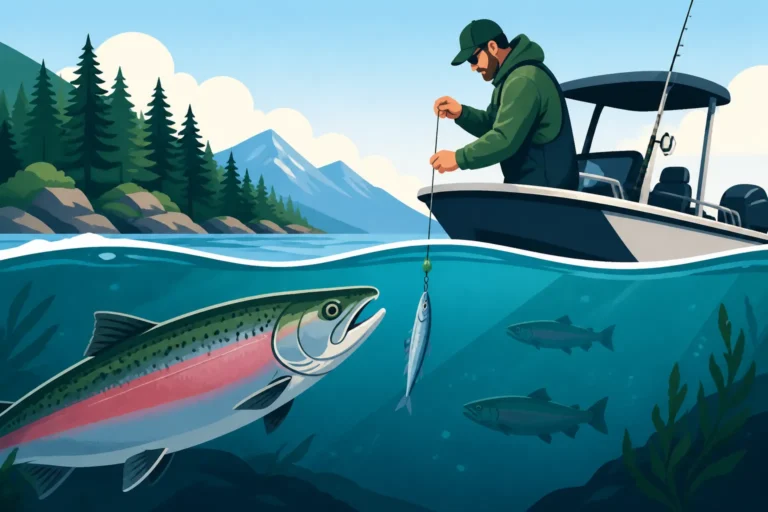
Downriggers are the gold standard for precision depth control when trolling for deep-water kokanee. These devices allow you to send your lure down to an exact depth, then release it from a clip, letting it run freely behind a weighted ball.
- How They Work: A heavy lead ball (typically 8-12 lbs) is lowered via a cable, and your fishing line is attached to this cable with a special release clip. Once the lure is at your desired depth, the clip holds your line until a fish strikes, at which point the line pops free, and you fight the fish directly, without the weight of the downrigger ball.
- Advantages: Unmatched depth control, minimal drag on your fishing line (allowing for lighter tackle and better fight), and the ability to run multiple lines at different depths off one boat. Many serious kokanee anglers swear by these for targeting fish. For an in-depth look, consider reading about Downrigging for Deep Kokanee in Summer.
- Considerations: Downriggers can be a significant investment, ranging from manual models to sophisticated electric units. You can find a wide range of downriggers, from manual models to electric ones, readily available on platforms like Amazon or specialized marine retailers. They also require some practice to set up and use efficiently.
Lead Core and Copper Line: Weighted Lines for Depth
For anglers who prefer a simpler setup or don't have downriggers, weighted lines like lead core or copper line are excellent alternatives.
- Lead Core Line: This line has a lead filament braided into its core, making it sink. It's often marked with different colors (typically every 10 yards) to help you estimate depth. A general rule of thumb for kokanee trolling is that each color (10 yards) will get you roughly 5 feet of depth at typical trolling speeds (1.0-1.8 mph), though this can vary with lure size, line diameter, and speed.
- Copper Line: Similar to lead core but denser, copper line sinks faster and achieves greater depths with less line out. It's more abrasion-resistant but also heavier and can be harder to manage on smaller reels.
- Advantages: More affordable than downriggers, allows for a more "hands-on" fight with the fish (as you're fighting the line weight as well), and can be very effective.
- Considerations: Depth estimation is less precise than with downriggers. You'll need specialized reels with high line capacity to hold enough lead core or copper to reach deep kokanee. You’ll also need to factor in the drag created by the line itself, which can make fighting a fish feel more cumbersome.
Trolling Weights and Planer Boards
Less common for deep kokanee, but worth mentioning for overall depth control:
- Snap Weights/Clip-On Weights: These are lead weights that clip directly onto your fishing line, typically several feet in front of your lure. They provide additional depth but are not as precise as downriggers or lead core. They are best for adding a bit more depth to a shallower setup.
- Diving Planers (e.g., Dipsy Divers, Jet Divers): These devices use water resistance to dive, carrying your lure to a specific depth. They are somewhat adjustable and can work well for kokanee, but are generally less precise than downriggers and can add significant drag.
- Planer Boards: While excellent for spreading out lines and covering more water, traditional planer boards are primarily for horizontal spread, not deep vertical depth. They typically keep your lure in the upper water column.
A combination of these methods is often employed. For instance, many anglers use downriggers for their primary deep lines and then run lead core or diving planers on other rods to cover different depths and spreads. The key is to experiment and find what works best for your boat, your budget, and the specific conditions on the water.
Lure Selection and Presentation at Depth
Once you've mastered getting your gear to the right depth, the next step is presenting a lure that kokanee can't resist. These fish have excellent eyesight and can be quite finicky, especially in clear summer waters.
Kokanee Lures That Shine Deep
Kokanee are attracted to flash, vibration, and scent. Your deep-water lures should maximize these attributes.
- Wedding Rings and Spinners: These classic kokanee lures are highly effective. The rotating blade creates flash and vibration, while the bead chain often includes scent-holding materials. They come in a dazzling array of colors. For further reading, check out our guide on Trolling Wedding Rings for Kokanee.
- Small Spoons (e.g., Kokanee Apex, Needlefish): These spoons have an erratic wobbling action that mimics small baitfish. They are excellent when tipped with corn or a commercially available kokanee scent.
- Squid or Hoochies: Small squid or hoochie skirts, especially in bright colors or with UV enhancements, are very popular. They have a subtle, enticing action when trolled slowly.
- Tinsel Flies: Similar to hoochies, tinsel flies offer flash and movement. They are often trolled behind a dodger or flasher.
- Color Choices: While specific colors can vary by lake and day, popular summer choices include pink, orange, green, chartreuse, and UV colors. Many anglers experiment with glow-in-the-dark or UV-enhanced lures for deep, darker waters. You can often find a great selection of these specialized lures and scent enhancers on Amazon.
Flashers and Dodgers: The Kokanee Calling Card
Kokanee often need an extra attraction to bring them in. This is where flashers and dodgers come into play.
- Flashers: These rotate or spin, creating significant flash and vibration in the water. They are typically rigged 12-36 inches in front of your lure. The action of the flasher imparts movement to your trailing lure.
- Dodgers: Dodgers have a more erratic, side-to-side kicking motion. They don't spin but "kick," making your trailing lure dart and weave. Dodgers typically require a shorter leader (6-18 inches) to properly transfer their action to the lure.
- Advantages: Flashers and dodgers are like billboards calling kokanee over. They cover more water with their attraction and can be crucial in murky or deep waters where visibility is low.
- Considerations: Choose the right size. Too large a flasher or dodger can overpower a small kokanee lure or turn off finicky fish. Experiment with different sizes and colors, again often favoring bright or UV options for deep water.
Scent and Bait Tipping
Kokanee have a keen sense of smell, and scent can be the difference between a slow day and a hot bite.
- Corn: Sweet corn, often dyed various colors (chartreuse, pink, red), is a staple for tipping kokanee lures. It adds scent, visual attraction, and a bit of buoyancy.
- Commercial Scents: Many anglers use specialized kokanee scents, often anise, garlic, or a combination, applied to their lures or corn. Brands like Pro-Cure or Pautzke's are popular. Apply these frequently to maintain a strong scent trail.
- Rigging: Typically, you'll tip one or two kernels of corn directly onto your hook. Some anglers will also use scent pads or sponges on their dodgers.
The ultimate goal is to create a presentation that is irresistible: a lure that flashes, wiggles, and smells appealing, presented right at the kokanee's eye level. Keep a variety of lures, flashers, and scents on board, and be prepared to change things up until you find what the fish want that day.
Fine-Tuning Your Approach and Adapting to Conditions
Successfully trolling for deep summer kokanee isn't about finding one magical depth and sticking to it all day. It's an ongoing process of observation, adjustment, and learning.
The Art of Depth Adjustment
Once you've identified a promising depth range on your fish finder, the real work begins.
- Stagger Your Lines: If you're running multiple rods, set them at slightly different depths, perhaps 5-10 feet apart. For example, if you're marking fish at 60 feet, run one downrigger at 55 feet, another at 60 feet, and a third at 65 feet. This helps you quickly determine the precise depth the fish are holding at.
- "Top Down" or "Bottom Up" Strategy: When you start fishing, if you're not seeing fish on the finder, try a systematic approach. Some anglers prefer starting shallower and working their way down in 5-10 foot increments until they get a bite. Others prefer starting deep and working their way up. The "top down" approach is often less likely to spook fish that might be shallower.
- Respond to Bites: The moment you get a bite, note the depth immediately. If you have multiple lines out, adjust the other lines to that productive depth. This is your strongest clue.
- Observe Other Anglers: While you should always fish your own water, respectfully observing where other successful anglers are fishing (if they're sharing information or clearly getting bites at a certain depth) can provide valuable hints. Just remember that what works for one boat might not work for another due to subtle differences in speed, lure, or boat noise.
Trolling Speed and Patterns
Speed and boat movement are just as crucial as depth and lure choice.
- Optimal Speed: Kokanee typically prefer slower trolling speeds, generally between 1.0 and 1.8 miles per hour (mph). Too fast, and your lures might not have the right action; too slow, and they might not be enticing enough. Use your GPS or boat speedometer to maintain consistent speed.
- S-Turns and Zig-Zags: Instead of trolling in a straight line, introduce gentle S-turns or zig-zags. This causes your outside lures to speed up and rise slightly, while your inside lures slow down and drop. This change in speed and depth can often trigger a strike from following fish that were hesitant to commit to a straight-line presentation.
- Direction and Wind: Pay attention to how the wind and current affect your boat. Trolling with or against the wind can change your actual lure speed and depth. Experiment with different directions. Sometimes, trolling into the wind (which naturally slows your boat) or with the current (which can speed it up) can be the ticket.
- Monitoring Lure Action: If possible, occasionally retrieve your lure to check its action. Is it spinning or wobbling correctly? Is it fouled with weeds or debris? Even a small piece of debris can drastically reduce its effectiveness.
Remember, every lake is a little different, and conditions change daily. What works on Lake Chelan might be slightly different than what works on Lake Roosevelt, even for the same species. Embrace the challenge of continuous learning and adaptation, and you'll become a much more successful summer kokanee angler. The most successful kokanee anglers are the ones who are constantly adjusting, learning, and refining their techniques. You might even find success with Jigging for Kokanee in Washington Lakes on slower days.
Disclaimer
Fishing regulations, seasons, and limits can change frequently in Washington State. Always consult the latest Washington Department of Fish and Wildlife (WDFW) regulations pamphlet or their official website before heading out. This guide provides general information and best practices, but it is the angler's responsibility to know and follow all current rules.