Albacore Tuna Off the Washington Coast
For many Washington anglers, the thought of heading offshore to chase albacore tuna is a distant dream, often overshadowed by the more accessible salmon and steelhead fisheries. But let me tell you, there's a whole different world out there, far from the calm bays and riverbanks, where these hard-fighting "longfins" put up an exhilarating battle. This guide is all about demystifying the pursuit of albacore tuna off the Washington Coast, helping you understand when, where, and how to tackle this incredible fishery.
Understanding Albacore Tuna: The Offshore Speedsters
Albacore tuna are truly unique fish, built for speed and long migrations. They're not your typical Puget Sound salmon; these are pelagic hunters that travel vast distances across the Pacific. What draws them to our Washington waters, usually from late summer into early fall, is often the pursuit of baitfish and favorable water temperatures.
What Makes Albacore Special
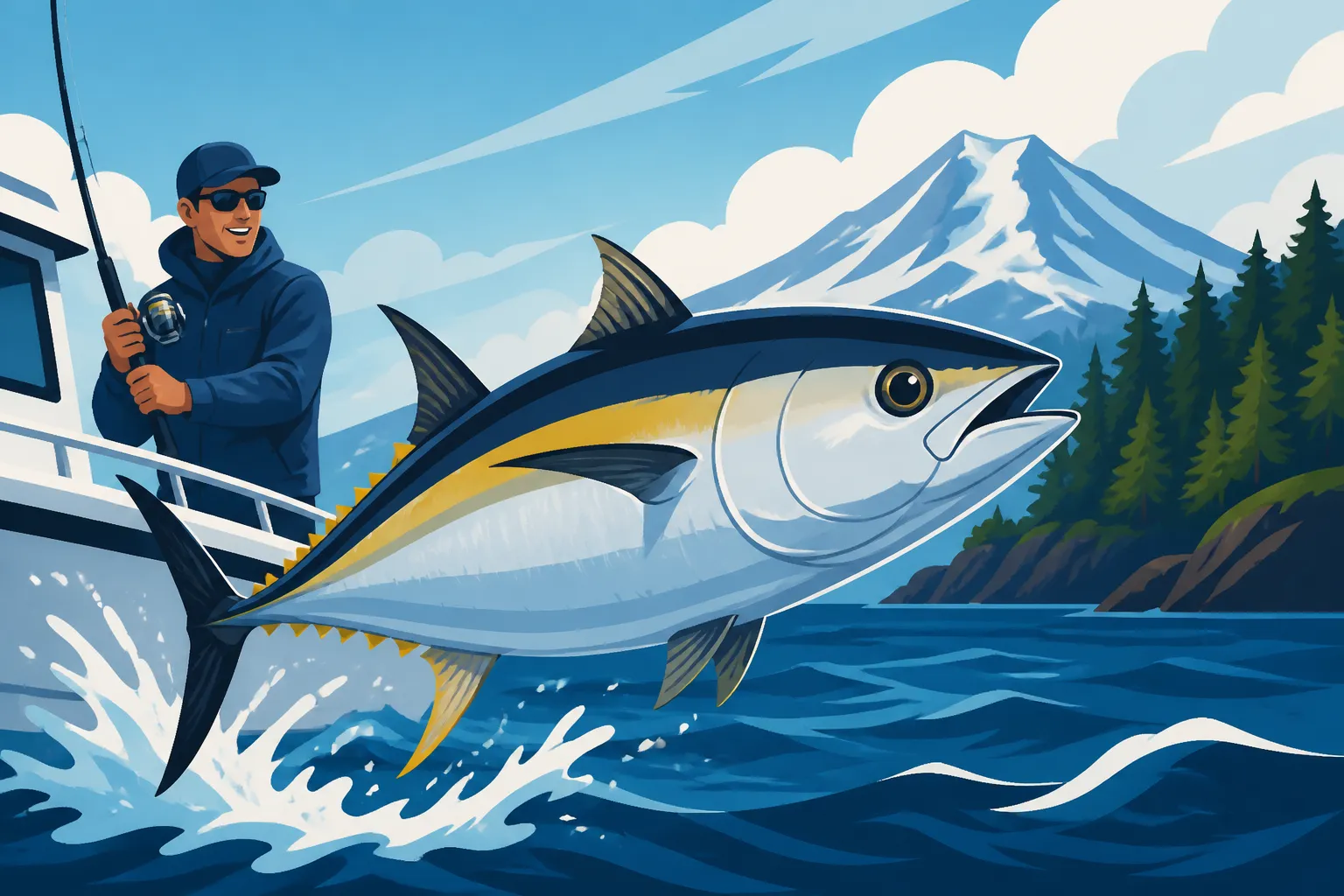
These fish are identifiable by their incredibly long pectoral fins, which can sometimes reach back past their anal fin – hence the nickname "longfin." Their bodies are streamlined, a beautiful metallic blue-black on top fading to silvery white on their bellies. Unlike some of our resident salmon, albacore are highly migratory, following warm ocean currents and bait schools. This nomadic lifestyle means finding them can be a challenge, as they might be 20 miles offshore one day and 60 miles the next. They're also known for their delicious, light-colored meat, making them a highly prized catch for the dinner table. If you've ever had canned tuna, chances are it was albacore!
The Migration and Seasonality of Albacore
The albacore tuna season off Washington typically kicks off in late summer, often starting in July, peaking through August and September, and sometimes lingering into October if the water stays warm enough. These fish follow warm water currents, usually looking for temperatures in the high 50s to low 60s Fahrenheit. They move up the coast from California and Oregon, chasing bait like anchovies, sardines, and squid. Predicting their exact arrival and departure can be tricky, as it’s heavily dependent on ocean conditions. Strong upwellings, for example, can bring cold water to the surface, pushing the tuna further offshore or south. It’s a dynamic fishery, and staying updated on sea surface temperatures (SST) and recent fishing reports is absolutely crucial for success. For a broader look at what Washington waters offer throughout the year, you might want to check out our guide on Washington Fishing Seasons: A Month-by-Month Guide.
Locating Albacore Tuna Off the Washington Coast
Finding albacore tuna isn't like fishing for trout in a lake; you can't just pick a spot and expect them to be there. This is a game of vast ocean expanses, keen observation, and sophisticated electronics. You're looking for subtle clues that indicate where these fast-moving predators are hunting.
Reading the Ocean: Temperature Breaks and Current Lines
Albacore are often found along "temperature breaks" or "thermoclines," which are areas where cooler offshore water meets warmer, inshore water. These zones concentrate baitfish, which in turn attract the tuna. Savvy anglers use satellite imagery and marine charts to identify these temperature gradients before they even leave the dock. You're also looking for current lines, rips, and areas of upwelling that can create similar feeding opportunities. Often, these visible lines on the water's surface are where different bodies of water, each with its own temperature and nutrient content, collide. It's in these confluence zones that the food chain really gets going, from plankton to baitfish, and ultimately, to the predatory albacore.
Signs of Life: Birds, Bait, and Debris
Visual cues are incredibly important when you're hunting albacore. Keep an eye out for flocks of working birds, especially shearwaters and gulls, diving into the water. This usually means they're feeding on baitfish pushed to the surface by tuna from below. If you see birds working, head towards them carefully and quietly. Look for jumping baitfish, nervous water, or even the tuna themselves boiling on the surface. Also, pay attention to floating debris, like logs or kelp paddies. These can create miniature ecosystems offshore, providing cover for baitfish, which then attract larger predators like albacore. Sometimes, the most productive fishing can be found simply drifting near a large piece of flotsam that's harboring a food source. It's like finding an oasis in the desert for these pelagic roamers. How Far Offshore to Troll for Washington Albacore Tuna covers some of these strategies in more detail.
Essential Gear for Albacore Tuna Fishing
Tackling albacore requires a robust setup. These fish are strong, fast, and will test your equipment to its limits. Skimping on gear can lead to heartbreak.
Rods, Reels, and Line: Built for Battle
For albacore, you're going to want a medium-heavy to heavy conventional rod, typically 6 to 7 feet long, with a fast action. The rod needs enough backbone to handle a powerful fish but also enough tip flexibility to absorb their headshakes. Paired with this, a reliable conventional reel with a strong drag system is non-negotiable. Think reels in the 30 to 50 size class, capable of holding at least 300-400 yards of line. Many anglers opt for braided main line in the 50-80 lb range, often with a monofilament top shot for stretch and shock absorption. The low stretch of braid gives you incredible sensitivity and helps you detect subtle bites while trolling. Some popular brands for these types of reels and rods can be found easily on sites like Amazon, which offers a wide selection from reputable manufacturers.
When it comes to terminal tackle, fluorocarbon leaders are a favorite for their invisibility in water and abrasion resistance. You'll typically run leaders in the 40-80 lb class, depending on water clarity and the size of the tuna being encountered. Strong, sharp hooks are paramount, whether you're using J-hooks for bait or treble hooks on your lures.
Lures and Bait: What Gets Their Attention
Albacore are aggressive feeders and will hit a variety of lures. The most common and effective method is trolling a spread of artificial lures behind the boat. Popular choices include:
- Cedar Plugs: These classic wooden plugs mimic small baitfish and create an enticing darting action. They're often trolled naked or with a small skirt.
- Tuna Feathers/Squid Skirts: These colorful, soft plastic skirts with weighted heads are highly effective. They come in a rainbow of colors, with blue/white, green/yellow, and pink/white being perennial favorites. You can find excellent multi-pack selections of these on Amazon.
- Swim Baits/Hard Baits: Some anglers have success with larger, lipped plugs or soft plastic swimbaits that imitate mackerel or other larger baitfish.
- Trolling Flies: These are smaller, often flashy flies trolled with a planer or small weight.
While trolling is king, when you find a school that's actively feeding, casting jigs or even live bait (like anchovies or sardines if available) can be deadly. "Chunking" — cutting up baitfish and tossing it into the water to create a scent trail and chum line — can also excite a school and bring them right to the boat, making them easier targets for casting or even handlining. How to Fish for Albacore Tuna Off Westport dives deeper into specific techniques.
| Lure Type | Best Use | Action | Key Features |
|---|---|---|---|
| Cedar Plugs | High-speed trolling | Erratic darting, skipping | Natural wood, classic design, no skirt |
| Tuna Feathers | High-speed trolling, various positions | Wiggling, swimming, vibrant flash | Feather or synthetic skirt, lead head, colorful |
| Squid Skirts | High-speed trolling, casting on schools | Life-like squid imitation | Soft plastic, various sizes, often weighted |
| Diving Plugs | Lower-speed trolling, deeper presentation | Deep diving, tight wobble | Hard plastic, internal rattles, specific dive depths |
Techniques for Catching Albacore Tuna
Catching albacore isn't just about putting a lure in the water; it's about strategy, observation, and quick reactions. The Pacific Ocean can be a vast and often empty place, so maximizing your chances when you do find fish is key.
Trolling Spreads and Speed
Trolling is the most common and effective method for finding and catching albacore. The idea is to run a "spread" of multiple lines at different distances and depths behind the boat, covering as much water as possible. A typical spread might involve 5-7 lines, using outriggers, planer boards, or even flat lines directly from the stern. The lures are usually staggered to prevent tangles and to present a varied appearance to the tuna. Longer lines on the outside (often from outriggers), shorter lines closer to the boat, and sometimes a "way-back" line run far behind in the prop wash.
Speed is critical. Albacore are fast, and you typically troll between 6 and 10 knots. The exact speed often depends on sea conditions and how your particular lures are performing. You want your lures to be swimming enticingly, not just dragging. Pay attention to your fish finder for bait schools, thermoclines, and even marks that might be tuna themselves. When you see activity, adjust your spread and speed. Don't be afraid to experiment with different lure colors and sizes until you find what the fish prefer on that particular day. If you're looking for specifics on how far to go, How Far Offshore an Albacore Charter Goes provides a good overview.
The Art of the "Jig Stop"
When you get a strike while trolling for albacore, it's often referred to as a "jig strike." What makes albacore unique is their schooling behavior. Where there's one, there are often many. This is where the "jig stop" technique comes into play, and it's exhilarating.
When the first rod goes off, instead of continuing to troll, many experienced captains immediately stop the boat. This sudden stop can often keep the school around the boat longer. Then, anglers on board will quickly cast out jigs or bait. The frantic activity of one hooked fish can incite a feeding frenzy among the rest of the school, leading to multiple hookups. It's not uncommon for every angler on the boat to be fighting a tuna at the same time during a hot jig stop. The key is speed and teamwork. Have your casting rods ready, keep extra jigs handy, and be prepared for chaos and excitement. This is where a good gaff is essential, as you'll be bringing fish over the rail quickly. You can often find durable fishing gaffs and accessories on Amazon that are suitable for offshore conditions.
Safely Handling and Processing Your Catch
Catching albacore is just the first part of the adventure. Bringing them aboard safely and processing them correctly is crucial for both quality and compliance. These fish are powerful, and the boat is often moving, so safety is paramount.
Bringing Tuna Aboard Safely
Albacore, especially larger ones (and How Big Albacore Tuna Get Off Washington can be quite substantial), will fight hard all the way to the boat. They're known for their powerful tail beats and can thrash violently once on deck. Always use a proper gaff – never try to lift a large tuna by the leader. Have at least one, preferably two, gaffs ready, and make sure the gaff hook is sharp. Once gaffed, bring the fish aboard swiftly and immediately dispatch it to prevent it from flopping around and injuring someone or damaging gear. A strong, sharp club or "billy" to the head is the most humane and effective method. It's often helpful to have a designated spot on the deck for landing fish to minimize mess and potential hazards.
Bleeding, Icing, and Preparing for the Table
The quality of your albacore tuna for eating depends heavily on how you handle it immediately after capture. Unlike some freshwater fish, tuna need to be bled and iced rapidly to preserve their flavor and texture.
- Bleeding: Immediately after dispatching, make a deep cut under the pectoral fin or sever the gill arch to allow the fish to bleed out thoroughly. This removes lactic acid and improves the taste. Many anglers will also cut the tail off to enhance bleeding.
- Icing: Get the bled fish into a cooler packed with ice as quickly as possible. The colder, the better. Submerging the fish completely in an ice-water slurry is ideal, as it rapidly drops the core temperature of the fish, slowing down spoilage. Having plenty of ice on board is non-negotiable for an albacore trip. You might consider large, rotomolded coolers, which are excellent for keeping your catch cold for extended periods, and many are available through retailers like Amazon.
- Processing: Once back at the dock, you can fillet your tuna or have it professionally processed. Albacore yield beautiful, light-colored meat. Remove the dark bloodline along the lateral line, as this can have a strong flavor. You can then portion the fillets for grilling, searing, or canning. Many anglers vacuum-seal their portions to preserve freshness for longer in the freezer.
Proper handling ensures that the delicious taste of your fresh Washington albacore tuna lasts, making all that effort offshore truly worthwhile.
The Broader Impact of Albacore Tuna Fishing
While the focus is often on the thrill of the catch and the bounty for the table, albacore tuna fishing off the Washington coast is part of a larger ecosystem and community. It's a significant fishery, both commercially and recreationally, and it supports numerous businesses and local economies.
Charters and Economic Contributions
Many anglers, especially those without their own offshore boats, rely on specialized fishing charters to experience albacore tuna fishing. Ports like Westport and Ilwaco are prime launching points for these excursions, with experienced captains and crews who know the offshore waters intimately. These charters provide not only access but also expertise, gear, and a focus on safety, which is crucial when heading miles out into the Pacific. The presence of these charters and the recreational anglers they serve contributes significantly to the local economies, from fuel docks and bait shops to restaurants and lodging. The demand for specific gear, from rods and reels to specialized lures and safety equipment, also means business for sporting goods stores and online retailers. If you're considering a trip, exploring options at Best Port for an Albacore Charter can be a great starting point.
Conservation and Sustainable Practices
As with any fishery, conservation is a critical aspect of albacore tuna fishing. While albacore stocks are generally considered healthy globally, responsible fishing practices are always encouraged. This includes adhering to all regulations, such as bag limits (which can change, so always check the current WDFW rules), and ensuring you're not wasting any part of your catch. The highly migratory nature of albacore means they are managed internationally, and continuous monitoring helps ensure the long-term sustainability of the species. Anglers are encouraged to stay informed about the health of the fishery and support organizations dedicated to marine conservation.
Albacore tuna fishing offers a truly unique and memorable experience on the Washington Coast, blending the challenge of offshore angling with the reward of a fantastic catch. It's an adventure that requires preparation, perseverance, and respect for the powerful ocean, but the memories and the delicious tuna make every effort worthwhile.
Disclaimer
This article is for general informational purposes only and does not constitute professional advice. Laws, prices and regulations vary by location and change over time. Consult a qualified professional for guidance on your specific situation.