How to Tell a Bull Trout From a Dolly Varden
There are few things as confusing for a Washington angler as trying to confidently distinguish between a Bull Trout and a Dolly Varden, especially when they're fresh out of the water and wiggling. These two members of the char family share so many visual similarities and often inhabit the same pristine, cold-water systems across our state, leading to endless debate and, sometimes, unintentional rule-breaking. This guide will meticulously break down the unique characteristics, subtle nuances, and practical field identification tips you need to accurately tell a Bull Trout from a Dolly Varden, ensuring you fish responsibly and stay within the lines of conservation.
The Enduring Confusion: Why Bull Trout and Dolly Varden Are So Often Mixed Up
For decades, even seasoned anglers and some scientists lumped Bull Trout and Dolly Varden together under the common name "Dolly Varden." It wasn't until further scientific research, primarily in the latter half of the 20th century, that these two were definitively recognized as distinct species, though both belong to the Salvelinus genus – the char. This historical ambiguity is a major reason why the confusion persists today, particularly in areas where their ranges overlap, such as many of Washington's incredible river systems and alpine lakes. They're like cousins who share a family resemblance, making it tricky for the untrained eye to spot the real differences.
A Shared Ancestry and Similar Habitats
Both Bull Trout (Salvelinus confluentus) and Dolly Varden (Salvelinus malma) are part of the char family, which also includes Brook Trout and Lake Trout, among others. This means they're not "true" trout in the same way Rainbow or Brown Trout are, but rather a closely related group of salmonids. Their evolutionary path has led them to thrive in similar environments: the cold, clear, well-oxygenated waters that define much of Washington's wild landscapes. You'll find them in the same river stretches, often darting under the same logs or holding in the same deep pools, especially as you move into the higher elevations or toward the coast.
Imagine yourself on a pristine Olympic Peninsula river, casting into a deep run. You hook into a beautiful, silvery fish with light spots. Your mind immediately races: Is it a Bull Trout or a Dolly Varden? The very fact that they occupy these overlapping niches contributes heavily to the difficulty in identification. They both exhibit a torpedo-like body shape, often with pale spots on a darker background, and can range from brilliant chrome to deep, camouflaged greens and browns depending on their diet and spawning stage. Without a keen eye for detail, it’s easy to dismiss one for the other, especially when the light isn't perfect or the fish is putting up a fierce fight.
The Critical Importance of Correct Identification
Beyond just satisfying an angler's curiosity, knowing the difference between a Bull Trout and a Dolly Varden carries significant weight, especially in Washington. Bull Trout are considered a threatened species under the Endangered Species Act in many parts of their range, including much of Washington State. This means that all Bull Trout caught in these protected areas must be immediately released unharmed. There are stringent rules and regulations surrounding their protection, and unintentionally keeping one can lead to serious penalties. Anglers often face citations and fines for retaining a protected species, even if it was an honest mistake.
Dolly Varden, while still a species requiring careful management, generally have more flexible regulations. In some Washington waters, keeping a limited number of Dolly Varden might be permissible, while in others, they too are catch-and-release. The key is that the specific rules often differ based on the species, which makes accurate identification not just good practice, but a legal necessity. You don't want to find yourself in hot water with a WDFW enforcement officer because you couldn't tell the difference between two char. For more details on the specific conservation status, you can read Bull Trout and Why It's Protected and Can You Keep a Bull Trout in Washington?. Understanding these rules is fundamental to being a responsible angler in Washington.
Unpacking the Bull Trout: Key Identification Features
When you're trying to distinguish a Bull Trout, you'll need to focus on a few key characteristics that, once you learn them, become quite apparent. Think of it as looking for a specific set of clues that, when pieced together, paint a clear picture. These fish are masters of camouflage and can vary in color, but their fundamental structure and spot patterns remain consistent.
Physical Characteristics: Head, Mouth, and Spots
One of the most defining features of a Bull Trout is its large, broad, and somewhat "shovel-shaped" head. This head often appears disproportionately large compared to its body, giving it a rather formidable profile. When you look at its mouth, you'll notice it's also quite large, with the upper jaw typically extending well beyond the back of the eye. This big mouth is a clear indicator of its predatory nature, as Bull Trout are known for eating smaller fish, insects, and even small rodents.
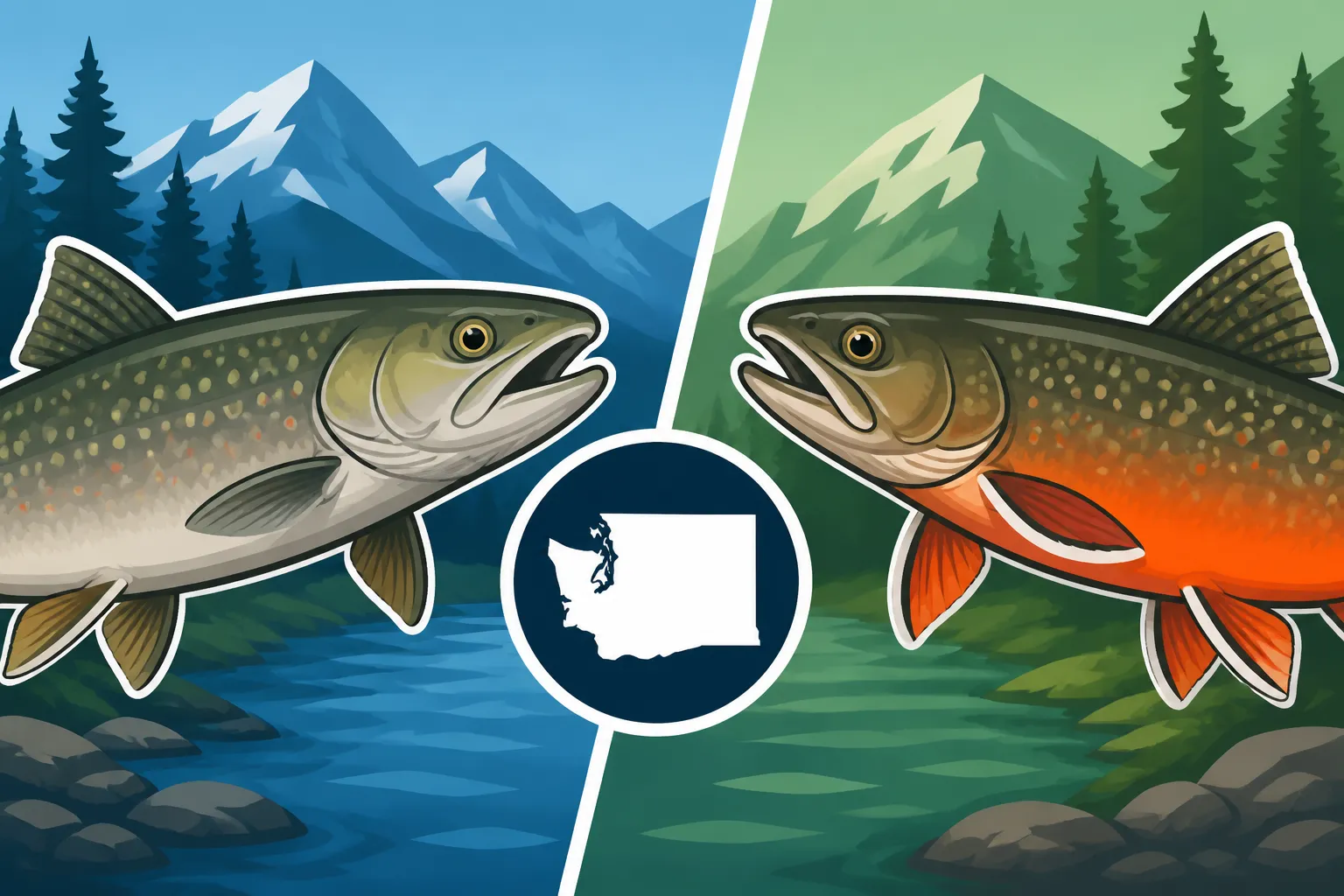
Now, let's talk about the spots, which are often the first thing anglers look at. Bull Trout typically have small, pale, yellowish, orange, or sometimes salmon-colored spots on a darker body background. The crucial detail here is that these spots are never red. If you see any distinctly red spots, you're almost certainly looking at a Dolly Varden. Another important spot characteristic is their location: Bull Trout will generally have spots on their backs and sides, but you won't typically find spots on their dorsal fin. Their overall body color can range from olive green, brown, or even bluish-gray on the back, fading to white or cream on the belly. Spawning males can take on a truly stunning, vibrant orange or reddish hue along their sides and belly, making the pale spots even more striking. Their tail is usually slightly forked, not deeply so, but also not perfectly square.
Habitat and Behavior Clues
Bull Trout are quintessential cold-water specialists. They absolutely demand the coldest, cleanest, and most complex aquatic environments. We're talking about headwater streams, deep mountain lakes, and larger rivers fed by snowmelt and glaciers. These fish need stable water temperatures, especially for spawning, and are highly sensitive to habitat degradation. If you're fishing a relatively warm or turbid river system, the likelihood of encountering a Bull Trout decreases significantly. They are often found hiding in deep pools, under logjams, or around large boulders, utilizing complex cover to ambush prey and escape predators.
They are also known for their highly migratory nature. Some populations might spend much of their lives in lakes, then migrate up rivers to spawn. Others are strictly river dwellers, moving between different sections based on temperature and food availability. Their diet primarily consists of other fish, which aligns with their large mouth and aggressive feeding behavior. They are apex predators in many of their native systems. While these habitat clues aren't definitive identification features when you have a fish in hand, understanding their preferred environments can certainly help narrow down possibilities before you even make a cast. You can learn more about their protected status and habitat needs in Washington by exploring Washington Sport Fishing Seasons and Emergency Closures to see which areas might be managed specifically for them.
Decoding the Dolly Varden: What Sets Them Apart
Now that we've painted a clear picture of the Bull Trout, let's turn our attention to the Dolly Varden. While they share a family resemblance, there are distinct features that will allow you to confidently identify them. Often, it's about looking for the presence or absence of a single, crucial detail that makes all the difference.
Distinguishing Physical Traits
When observing a Dolly Varden, you'll generally notice that its head is more proportionally sized to its body compared to the Bull Trout. It doesn't have that prominent, oversized "shovel-head" look. Similarly, its mouth is typically smaller and usually doesn't extend as far back past the eye. While still a capable predator, its mouth is not quite as exaggerated as that of a Bull Trout.
The most critical and often definitive characteristic for identifying a Dolly Varden lies in its spots. Dolly Varden typically have numerous, often larger, red, pink, or orange spots on their sides. The presence of true red spots, even just a few, is almost always a dead giveaway that you're looking at a Dolly Varden, not a Bull Trout. In fact, if you see any red spots, you can be quite confident it's a Dolly Varden. Unlike Bull Trout, Dolly Varden can also exhibit spots on their dorsal fin, though this isn't always present. Their overall coloration can be quite variable, ranging from silvery chrome in sea-run populations to darker olive or brownish tones with more vibrant spotting in stream-resident fish. Similar to Bull Trout, their tail is usually slightly forked.
Where to Find Dolly Varden and Their Lifestyle
Dolly Varden are also cold-water fish, favoring clean, cool water, but they can sometimes tolerate a slightly wider range of conditions than their Bull Trout cousins. They have a broader coastal distribution in Washington, and many populations are anadromous, meaning they spend part of their lives in saltwater before returning to freshwater to spawn. These sea-run Dolly Varden can be incredibly beautiful, displaying bright, silvery flanks with subdued spotting. You'll find them in a variety of habitats, from larger river systems and deep lakes to smaller coastal streams and estuaries, especially during their migratory phases.
Their diet is also varied, including insects, aquatic invertebrates, and smaller fish, though they might not be as strictly piscivorous (fish-eating) as Bull Trout. This adaptability to both freshwater and saltwater environments, and a slightly wider tolerance for habitat conditions, helps explain their more widespread presence in certain areas. Knowing that Are Dolly Varden Found in Washington? and where they roam is a helpful piece of the puzzle. If you're fishing in a coastal estuary or a river with good access to Puget Sound, the chances of encountering a sea-run Dolly Varden are higher.
Practical Tips for Anglers and a Quick Reference Guide
Identifying these two char can feel like a daunting task, especially when you're in the moment, but with a few practical tips and a clear comparison in mind, you'll become much more confident. The key is to slow down, observe, and remember the crucial distinguishing features.
Checklist for On-the-Water Identification
When you land a fish and suspect it might be one of these char, take a moment before release to go through a mental checklist. First, look at the head and mouth. Does the head look unusually large and shovel-like compared to the body? Does the jaw extend far past the back of the eye? If yes, lean towards Bull Trout. If the head and mouth are more proportionate, think Dolly Varden.
Next, and most importantly, examine the spots. This is often the clincher. Are there any bright red, pink, or orange spots on the sides? If you see even a few distinct red spots, you're almost certainly holding a Dolly Varden. If all the spots are pale yellow, orange, or salmon, but not red, then it’s likely a Bull Trout. Pay attention to the dorsal fin too: spots on the dorsal fin can indicate a Dolly Varden, though their absence doesn't rule out a Dolly. Consider investing in a good, waterproof field guide (you can find excellent options on Amazon) specific to Washington fish species, which can be invaluable for on-the-spot reference. A pair of polarized sunglasses (plenty of great options on Amazon for all budgets) will also help you see subtle markings more clearly on fish still in the water or just landed. If you're still unsure, the safest bet is always to assume it's a protected Bull Trout and release it immediately and carefully.
Side-by-Side Comparison: Bull Trout vs. Dolly Varden
To solidify your understanding, here's a quick reference table summarizing the key differences. This is the kind of information you might want to keep in mind, or even printed out, when you're out on the water. Always remember: when in doubt, release the fish unharmed. It's the best way to ensure conservation and avoid potential penalties. You can always check How Bag and Possession Limits Work in Washington for species-specific regulations.
| Feature | Bull Trout | Dolly Varden |
|---|---|---|
| Head Size | Large, broad, "shovel-shaped," disproportionate | More proportionate to body size |
| Mouth Extension | Upper jaw extends well past back of eye | Upper jaw typically does not extend far past eye |
| Spot Color | Pale yellow, orange, or salmon; NEVER red | Red, pink, or orange; often vibrant |
| Spot Location | On back and sides; generally no spots on dorsal fin | On back and sides; can have spots on dorsal fin |
| Overall Body Color | Olive green, brown, bluish-gray; spawning males turn vivid orange/red | Variable; silvery in sea-run, darker in resident |
| Legal Status (WA) | Federally protected; catch-and-release only in most areas | Managed; specific regulations vary, sometimes legal to keep |
Remember that conservation of these incredible native species is paramount. By taking the time to learn these key identifiers, you become a more responsible and effective steward of Washington's precious aquatic resources. If you accidentally hook a Bull Trout, handle it gently, keep it in the water as much as possible, and release it quickly. The same goes for any fish you're releasing, regardless of species. Knowing the specific rules for your fishing area is also crucial, and you can always consult Washington Fishing Regulations Every Angler Should Know or the Fish Washington app for the most current information. For more on safe release, check out Catch-and-Release Rules During Wild Steelhead Closures.
Disclaimer
This article is for general informational purposes only and does not constitute professional advice. Laws, prices and regulations vary by location and change over time. Consult a qualified professional for guidance on your specific situation.