Do Steelhead Die After Spawning Like Salmon?
Many anglers, especially those new to Washington's incredible fisheries, often wonder about the fate of salmon and steelhead after they spawn. There's a common misconception that all members of the salmonid family meet the same end after their arduous journey upstream to reproduce. This guide is here to unravel that mystery, focusing specifically on whether steelhead share the same post-spawning mortality as their salmon cousins, and what that means for our beloved Washington fishing experience.
The Salmonid Family Tree: Understanding the Basics
To truly understand why steelhead are a bit different, we first need to appreciate the broader family they belong to: Salmonidae. This family includes salmon, trout, and char, and while they share many similarities, there are crucial biological distinctions that dictate their life cycles, especially regarding reproduction and survival.
Pacific Salmon: The Ultimate Spawners
When most people think of salmon, they imagine an incredible journey from the ocean, battling currents and obstacles to return to their natal streams. This epic trek culminates in a powerful act of reproduction. For all five species of Pacific salmon found in Washington—Chinook, Coho, Sockeye, Pink, and Chum—this reproductive event is a one-way trip. They are what biologists call "semelparous," meaning they undergo a single reproductive cycle before dying.
These magnificent fish pour every ounce of their stored energy into migrating, developing their eggs or milt, finding a mate, and digging their redds (nests). By the time they have spawned, their bodies are utterly spent. Their immune systems collapse, their scales fade and fall off, and their flesh deteriorates. They become vulnerable to disease, predation, and the sheer exhaustion of their life's purpose. It's a truly amazing, albeit tragic, end to their life cycle, ensuring the next generation can begin its own journey. You'll often see these spent fish, sometimes called "carcasses," lining riverbanks after a run, a stark reminder of their sacrifice.
Steelhead: The "Rainbows" of the Ocean
Now, let's talk about steelhead. This is where the story diverges significantly. Steelhead are actually the anadromous (sea-run) form of rainbow trout. Unlike their Pacific salmon relatives, steelhead are "iteroparous," which means they have the biological capacity to spawn multiple times throughout their lives. This fundamental difference is a game-changer.
After spawning, a steelhead isn't necessarily doomed. While the process is still incredibly demanding and takes a massive toll on their bodies, a significant number of steelhead, particularly those that successfully make it back downstream, can recover, return to the ocean, and feed to regain their strength. They then have the potential to return to freshwater to spawn again in subsequent years. This ability to survive and reproduce more than once sets them apart and is a key reason why they are so revered by anglers. Understanding this distinction is crucial, especially when discussing Wild Steelhead vs Hatchery Steelhead in Washington and their conservation.
Why Steelhead Can Live to Spawn Again (and Again)
The ability of steelhead to be repeat spawners isn't just a random occurrence; it's rooted in their biology and life strategy. It’s a fascinating adaptation that allows them to build more robust populations over time.
The Key Biological Difference: Energy Reserves and Recovery
The primary reason steelhead can survive spawning, while Pacific salmon cannot, comes down to how they allocate their energy reserves. Pacific salmon, as mentioned, are programmed for a single, explosive reproductive effort. They cease feeding once they enter freshwater and rely entirely on the fat and protein reserves built up in the ocean. They metabolize virtually all their stored energy to fuel their migration and reproduction, leaving nothing for recovery. Their bodies literally consume themselves in the process.
Steelhead, on the other hand, employ a different strategy. While they also undertake a strenuous journey and expend immense energy, they typically retain more of their physiological resources. They don't deplete their bodies to the same critical degree. This allows them to have a 'reserve tank' for recovery. Additionally, some steelhead may undertake shorter freshwater migrations compared to certain salmon species, which can conserve crucial energy. This biological "safety net" is what gives them a fighting chance to make it back to the ocean, recover, and potentially return. Think of it like this: salmon are sprinters who run until they drop, while steelhead are marathon runners who can pace themselves for multiple races, even if each one is exhausting.
The Physical Toll and Survival Rates
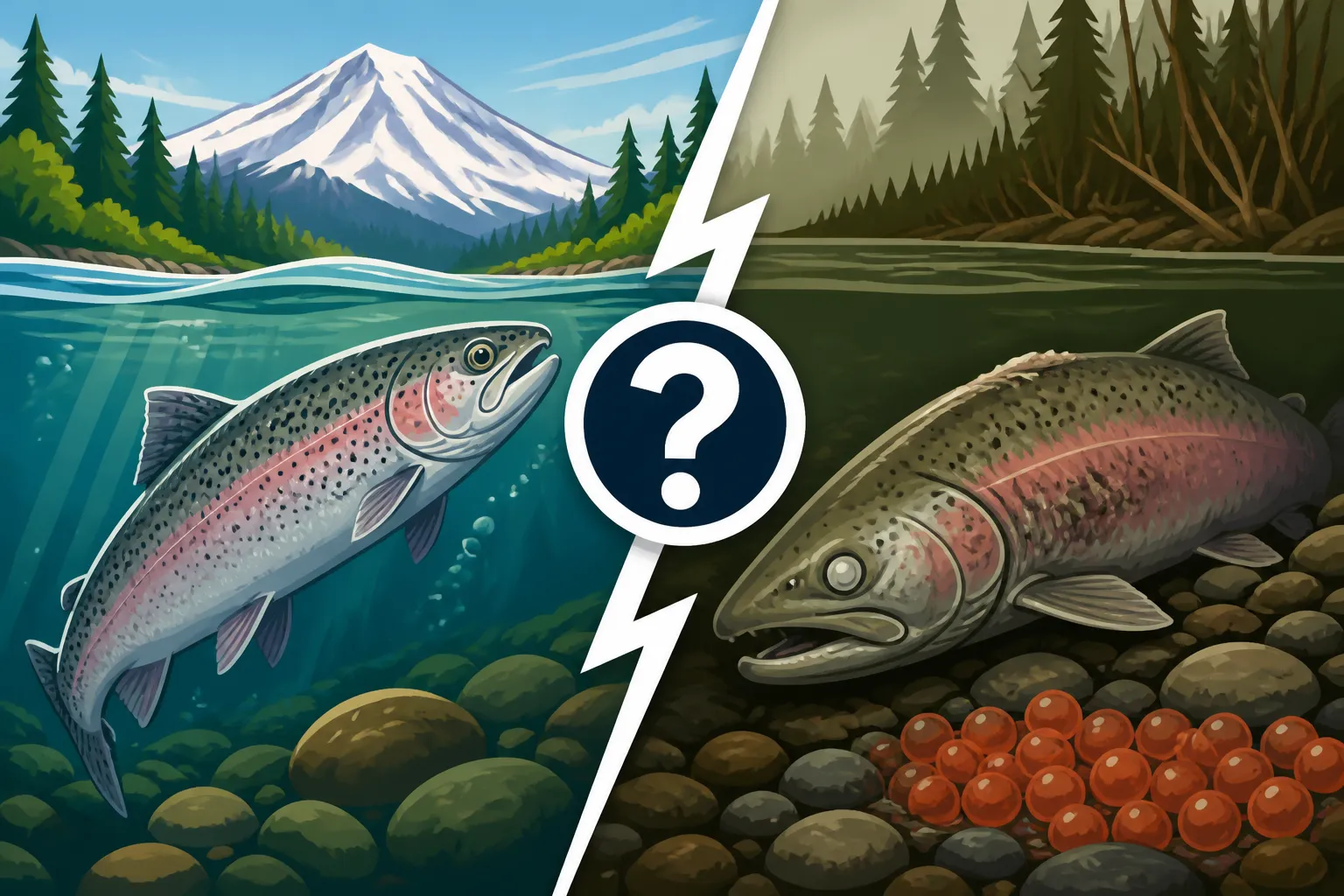
While steelhead possess the capacity to spawn multiple times, it doesn't mean every single one does. Spawning is still an incredibly grueling experience, and many factors can prevent a steelhead from becoming a repeat spawner. After spawning, these fish are often referred to as "kelts" or "spawned-out" fish. They are typically thin, dark, with noticeable scars and frayed fins from their journey and the act of spawning.
Their weakened state makes them highly vulnerable. They face increased risks from predators such as eagles, otters, and larger fish as they drift back downstream to the ocean. Disease can also take a toll on their exhausted bodies, especially in warmer water temperatures. Injuries sustained during migration, like scrapes from rapids or attacks from bears, can become fatal. Studies show that while repeat spawning is possible, the survival rate for kelts returning to the ocean varies greatly depending on river conditions, ocean conditions, and individual fish health. It's certainly not a guarantee, but enough survive to make a significant contribution to the gene pool. This incredible resilience is one of the many reasons why Washington's Olympic Peninsula Rivers are so special for steelhead anglers.
What This Means for Washington Anglers
Understanding the unique life cycle of steelhead compared to salmon has practical implications for anyone fishing in Washington State. It influences how we identify fish, how we approach catch-and-release, and why certain regulations exist.
Identifying Spawned-Out Fish (Kelts)
As anglers, it's really helpful to be able to identify a kelt, or spawned-out steelhead. These fish are pretty distinct and often don't provide the same thrilling fight as a fresh, ocean-bright fish. When you encounter a kelt, you'll notice they look quite different from the chrome-bright, robust steelhead that just entered the river. Their colors are much darker, often a dull gray, brown, or even black, and their vibrant rainbow stripe might be barely visible. Their bodies are typically lean, almost emaciated, as they've used up most of their energy reserves. Their fins can appear ragged, torn, or frayed, a testament to the battles they've endured. You might also see visible wounds or patches of fungus on their skin, indicating their weakened state.
When you hook a kelt, it’s an important moment for conservation. If you're fishing in a catch-and-release only section, or if you're targeting wild steelhead, gentle handling is absolutely paramount. These fish are on their way to recovery and are crucial for the future of the run. Minimizing their stress by keeping them in the water, quickly removing the hook, and supporting them until they swim away strongly dramatically increases their chances of survival. On Amazon, you can find a variety of landing nets with rubberized mesh, which are much gentler on fish scales and slime coats than traditional nylon nets, making them ideal for catch-and-release.
Conservation and Management Implications
The ability of steelhead to spawn multiple times makes them incredibly valuable to the overall health and resilience of their populations. Each repeat spawner represents not just one successful reproductive event, but the potential for several more, adding more genetic diversity and boosting fish numbers over time. This is a huge factor for conservationists and fisheries managers.
Because of this, many regulations are specifically designed to protect repeat spawners. For instance, in many Washington rivers, especially those with strong wild steelhead populations, there are strict Catch-and-Release Rules During Wild Steelhead Closures. Anglers might be required to use specific gear, like single-point barbless hooks, and must release all wild steelhead. The clipped adipose fin on hatchery steelhead often serves as a visual cue, allowing anglers to differentiate between a fish they can keep and one that must be released, further protecting the valuable wild population, including these potential repeat spawners. These rules are in place because every surviving kelt is a potential future contributor to the run.
| Feature | Pacific Salmon (e.g., Chinook, Coho) | Steelhead (Ocean-run Rainbow Trout) |
|---|---|---|
| Spawning Cycles | Semelparous (single reproductive event) | Iteroparous (multiple reproductive events possible) |
| Post-Spawning Fate | Typically die after spawning | Can survive, return to ocean, and spawn again |
| Energy Allocation | Deplete nearly all energy for one spawn | Retain more reserves for recovery |
| Body Condition | Rapid deterioration, emaciation | Weakened, but with capacity to rebuild |
| Nickname for Spents | Carcasses | Kelts, spawned-out fish |
| Conservation Impact | Single genetic contribution per individual | Multiple genetic contributions per individual |
The Journey Back: What Happens to Steelhead After Spawning
The ability of steelhead to recover and return to the ocean after spawning is one of nature's marvels, showcasing their incredible tenacity.
The Downstream Migration and Ocean Recovery
For a spawned-out steelhead, the journey isn't over when the eggs or milt have been deposited. The next critical phase is the downstream migration, often called "out-migration," where these kelts attempt to return to the ocean. This can be just as perilous as the upstream journey, as their bodies are weak and their energy stores low. They're often drifting with the current, trying to conserve every last bit of energy.
Once they successfully reach the estuary and then the vast expanse of the Pacific Ocean, the real recovery process begins. The ocean provides a crucial bounty of food, allowing these depleted fish to begin feeding vigorously. Over the next several months, or even a year or more, they will rebuild their strength, regain their weight, and shed their dark, worn spawning colors for the bright, chrome sheen of a healthy ocean-going fish. This period of intense feeding and recovery is vital for them to be strong enough to attempt another spawning run. It's a testament to their incredible resilience and adaptability.
Factors Influencing Repeat Spawning Success
While the biological capacity for repeat spawning exists, the actual success rate is influenced by a myriad of environmental and physiological factors. It's not a given that every kelt will make it back to spawn again.
Ocean conditions play a huge role. Years with abundant food sources and favorable water temperatures will lead to higher survival and recovery rates for kelts. Conversely, poor ocean conditions, characterized by scarce prey or unfavorable temperatures, can hinder recovery or increase mortality. Predation in the ocean by seals, sea lions, and larger fish is also a constant threat. In the river, conditions during their out-migration are critical too. High water flows can help them get to the ocean faster, reducing their exposure to in-river predators and stressors. Low, warm water, however, can stress them further and increase disease susceptibility.
Ultimately, genetics also play a part. Some individual steelhead may be genetically predisposed to being stronger repeat spawners than others. This complex interplay of environmental factors and individual fish biology is what makes steelhead such a fascinating and challenging species to manage and fish for. Resources on Amazon related to steelhead biology and conservation often delve into these intricate details, offering deeper insights for the dedicated angler. Understanding the full life cycle, including their remarkable ability to spawn multiple times, only deepens our appreciation for these incredible fish and highlights the importance of responsible angling practices.
Disclaimer
This article is for general informational purposes only and does not constitute professional advice. Laws, prices and regulations vary by location and change over time. Consult a qualified professional for guidance on your specific situation.