Rain Gear You Need for Winter Steelheading
There’s nothing quite like the thrill of chasing a winter steelhead in Washington, but let’s be honest, the romance can quickly fade when you’re shivering, soaked to the bone, and can’t feel your fingers. Many of us have experienced that miserable feeling of rain seeping through what we thought was waterproof gear, turning a promising day into a hypothermic nightmare. This comprehensive guide will walk you through the essential rain gear you need to stay warm, dry, and focused on the fish, ensuring your winter steelheading adventures are memorable for all the right reasons.
The Harsh Reality of Winter Steelhead Weather
Winter steelheading isn't for the faint of heart, especially when it comes to the weather. Washington's coastal rivers and Puget Sound tributaries are often subjected to a relentless onslaught of rain, wind, and chilly temperatures. Understanding why good gear is critical is the first step to making a smart investment in your comfort and safety.
The Pacific Northwest Winter: Rain, Wind, and Cold
Picture this: you’ve woken up before dawn, layered up, made the drive to your favorite stretch of river – maybe the Cowlitz or the Olympic Peninsula's legendary Sol Duc – and the moment you step out of the truck, a cold drizzle turns into a steady downpour. This isn't just a slight inconvenience; it's the standard operating procedure for much of Washington's winter steelhead season. We’re talking about days where the rain comes down sideways, driven by gusts of wind that steal every ounce of warmth from unprotected skin. The air temperature might hover just above freezing, but the wind chill can make it feel much colder. You might even find yourself fishing in conditions where Does Rain Improve Steelhead Fishing on Washington's Coastal Rivers? becomes a relevant question, and while the fish might bite, you need to be prepared. This isn't tropical fishing; it's an endurance test against the elements, and your gear is your shield.
Why "Water-Resistant" Just Won't Cut It
Many folks head out with gear labeled "water-resistant" thinking it'll be enough. And for a light, passing shower, it might be. But winter steelheading often involves prolonged exposure to heavy precipitation. "Water-resistant" typically means the fabric has a coating that repels water for a short period, causing it to bead up and roll off. However, under sustained pressure – like kneeling on a wet bank, sitting in a boat with rain splashing over the side, or simply standing for hours in a steady rain – that resistance quickly breaks down. The fabric wets out, absorbing water rather than repelling it, and before you know it, that cold, clammy feeling begins to creep in. Truly waterproof gear, often featuring membranes like GORE-TEX or similar proprietary technologies, creates an impenetrable barrier against water while ideally still allowing some breathability to manage internal moisture (sweat). Trust me, saving a few bucks on "water-resistant" will cost you dearly in comfort on a genuine Washington winter day.
Layering for Success: Beyond Just the Outer Shell
Thinking that one heavy, waterproof coat is all you need is a common mistake. The secret to staying warm and dry in Washington's unpredictable winter lies in a well-planned layering system. Each layer has a specific job, working together to manage moisture, trap warmth, and provide a barrier against the external elements. This system allows you to adapt to changing conditions, whether the sun briefly peeks out or an unexpected squall rolls through.
The Critical Base Layer: Wicking Away Moisture
Your base layer is the foundation of your entire system, and it's perhaps the most important for regulating your body temperature. Its primary job is to wick moisture (sweat) away from your skin. Why is this so crucial? Because wet skin gets cold, fast. Even if your outer shell is perfectly waterproof, internal moisture from exertion can turn your body into an ice cube if it's trapped against your skin.
When choosing a base layer, there are two main contenders:
- Merino Wool: This natural fiber is a superstar. It’s incredibly soft, naturally antimicrobial (meaning it resists odors, a big plus for multi-day trips), and excels at wicking moisture. Critically for winter, merino wool retains its insulating properties even when damp, which can be a lifesaver. It comes in various weights, from lightweight for moderate activity to heavy-weight for colder days.
- Synthetics (Polyester, Polypropylene): These materials are engineered for performance. They're often more affordable than merino, highly durable, and incredibly fast-drying. Synthetics also do an excellent job of wicking moisture and are a solid choice, though they might not offer the same "warm-when-wet" benefit as merino.
What you absolutely want to avoid is cotton. Cotton absorbs moisture like a sponge and holds onto it, drawing heat away from your body. A cotton t-shirt under even the best waterproof jacket is a recipe for misery in the cold. You can find excellent base layer options from brands like Smartwool, Icebreaker, or various outdoor brands on Amazon.
The Insulating Mid-Layer: Trapping Warmth
Once your base layer is handling moisture, your mid-layer steps in to provide the critical insulation that traps your body heat. This is where you adjust for the ambient temperature. On milder days, a lighter mid-layer might suffice, while truly frigid conditions will call for something more substantial.
Common choices for mid-layers include:
- Fleece: A perennial favorite for anglers, fleece is warm, relatively lightweight, and quick-drying. It comes in different weights (e.g., 100, 200, 300-weight) to match the temperature. Polartec is a well-known brand for high-quality fleece.
- Synthetic Insulated Jackets/Vests: These often use materials like PrimaLoft or similar synthetic fibers that mimic the warmth of down but perform much better when wet. They're excellent for layering under an outer shell, providing a high warmth-to-weight ratio.
- Down Jackets (with caution): Down is unparalleled for warmth and packability, but it has a major Achilles' heel: moisture. If down gets wet, it loses most of its insulating properties. If you choose a down mid-layer, ensure your outer waterproof shell is absolutely bulletproof.
The beauty of layering is flexibility. If you're hiking into a remote stretch of river, you might start with a light base and a mid-layer, then add or remove layers as your activity level or the weather changes. This adaptability is key to comfortable winter days on the water, especially when you might be Fly Fishing Techniques for Winter Steelhead in Washington one moment and then hiking to a new spot the next.
The Outer Shell: Your Fortress Against the Elements
This is the layer everyone thinks of first when discussing rain gear: your waterproof jacket and pants. While the inner layers keep you warm and manage sweat, the outer shell is your impenetrable barrier against the rain, wind, and even snow. Choosing wisely here means the difference between staying bone dry and being soaked through.
The Waterproof Jacket: Your First Line of Defense
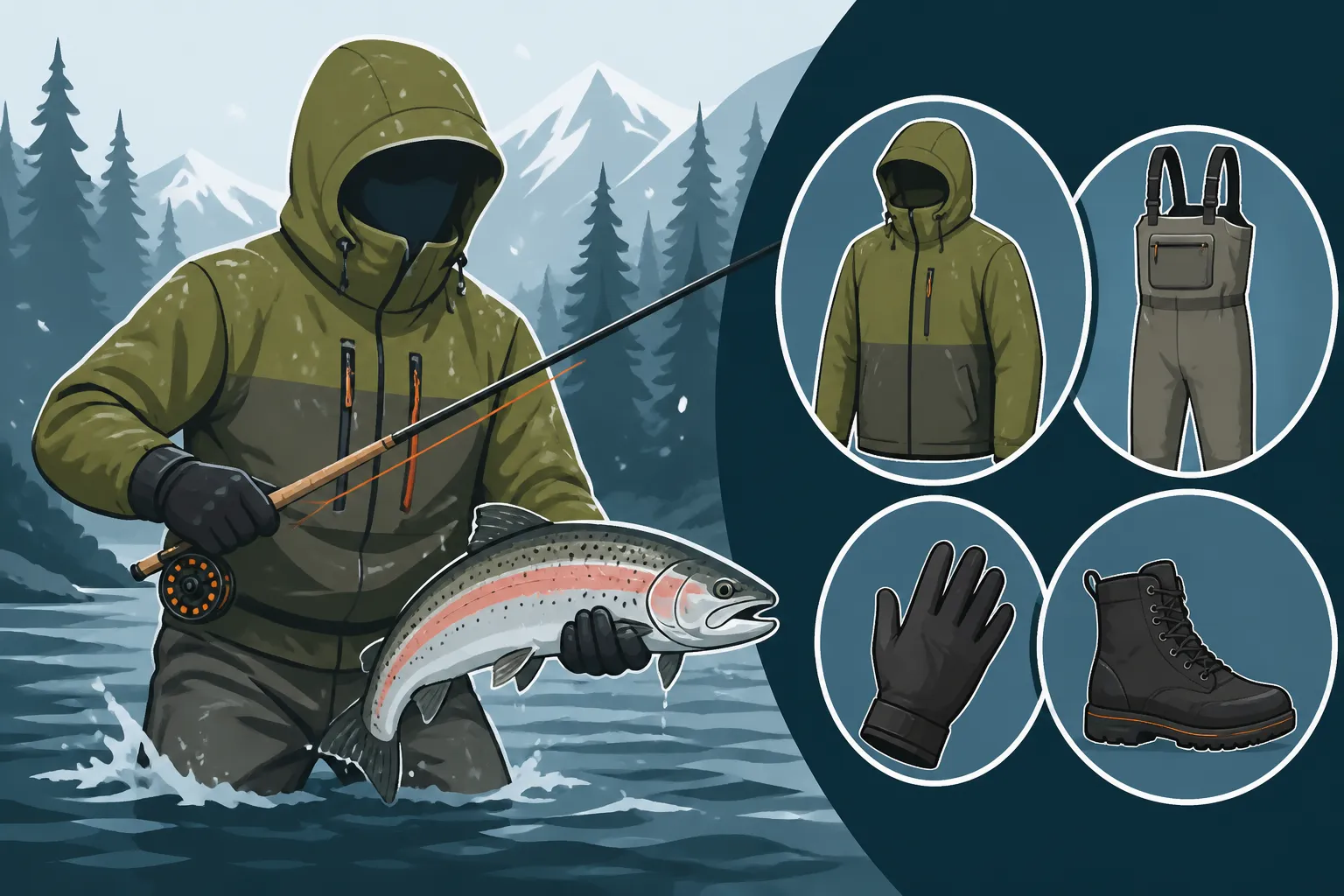
Your rain jacket is your primary defense. It needs to be truly waterproof, breathable, and durable enough to withstand snags from brush, repetitive casting motions, and the general abuse of fishing.
Here's what to look for:
- Waterproof/Breathable Membrane: This is non-negotiable. Look for jackets featuring GORE-TEX, eVent, or proprietary brand membranes (like Simms' Toray, Patagonia's H2No, or Columbia's Omni-Tech). These membranes have microscopic pores that are too small for liquid water to pass through but large enough for water vapor (sweat) to escape. This is what keeps you dry inside and out.
- Fully Taped Seams: A jacket can have the best membrane in the world, but if the seams aren't sealed, water will find its way in. Ensure all seams are factory-taped.
- Adjustable Hood: A good hood is crucial. It should be large enough to go over a hat, have drawstrings or cinches to adjust fit around your face, and allow for peripheral vision. Nothing is more annoying than a hood that falls off or funnels water down your neck.
- Water-Resistant Zippers and Storm Flaps: Main zippers should either be water-resistant (often coated or rubberized) or protected by external storm flaps to prevent water ingress.
- Adjustable Cuffs: Cuffs with Velcro or elastic closures help seal out water from running down your sleeves when you're casting or reaching into the water.
- Pocket Design: Consider the placement and number of pockets. Waterproof pockets are a huge plus for stashing essentials like your phone, keys, or a small fly box.
When researching options, you'll find a wide range of styles and prices. High-quality fishing-specific brands like Simms and Patagonia offer excellent options, but many general outdoor brands also have gear suitable for angling. A quick search on Amazon for "waterproof fishing jacket" will show you the breadth of available choices.
Waterproof Pants or Bibs: Protecting Your Lower Half
It’s easy to focus on the jacket and forget about your legs, but trust me, wet pants are just as miserable. Whether you choose waterproof pants or bibs, this layer is critical, especially if you're kneeling on a wet bank, sitting in a boat, or walking through damp brush.
- Waterproof Pants: These are typically worn over your base and mid-layers. Look for similar waterproof/breathable membranes as in jackets, with taped seams. Features like full-length side zippers can be incredibly convenient for pulling them on and off over boots without having to take them off.
- Bibs: For serious anglers, especially those in boats or constantly moving through wet environments, waterproof bibs offer superior protection. They extend higher up your torso, providing an extra barrier against splashes and keeping your back and chest warmer. Many winter steelheaders find bibs invaluable, especially when combined with a good wading boot and the right kind of waders, a crucial consideration for activities like Drift Fishing for Steelhead in Washington Rivers.
- Reinforcements: Look for reinforced knees and seat areas, as these are high-wear points that are often subjected to prolonged wetness.
Waders: The Ultimate Lower Body Protection
For river anglers, waders are the ultimate waterproof barrier for the lower body. While not strictly "rain gear" in the traditional sense, they are an integral part of staying dry when you're in or near the water. For Washington steelheading, breathable waders are almost a must, as they allow sweat vapor to escape, preventing that clammy feeling.
- Breathable Material: Just like your jacket, breathable waders use membranes to keep water out while letting sweat escape.
- Stockingfoot vs. Bootfoot: Stockingfoot waders require separate wading boots, which often offer better ankle support and traction. Bootfoot waders have integrated boots, which can be convenient for quick on-and-off. For the varied terrain of Washington rivers, many prefer stockingfoot waders with sturdy wading boots.
- Durability: Look for reinforced sections, especially in the knees and seat. Punctures are the bane of waders, so durability is key.
Essential Accessories: Don't Forget the Details
You can have the best jacket and waders, but if your hands are frozen or your head is exposed to the driving rain, you'll still be miserable. It's the small details that complete your defense against Washington's winter weather.
Hand and Head Protection: Often Overlooked
Keeping your extremities warm and dry is paramount for comfort and safety. Losing dexterity in your fingers can make simple tasks like tying a knot or handling a fish incredibly difficult.
- Gloves: This is a tricky one for anglers, as you need warmth but also feel for your line and gear.
- Neoprene Gloves: Excellent for warmth, even when wet. Many come with open fingertips or fold-back finger covers to allow for delicate tasks. They’re a common choice among steelhead anglers.
- Fleece or Wool Gloves with Waterproof Over-mitts: This two-part system allows you to remove the outer waterproof layer when you need more dexterity.
- Convertible Mittens: These offer the warmth of mittens with the option to expose your fingers when needed.
- Hats: A good hat does wonders for retaining body heat, as a significant amount of heat can be lost through your head.
- Wool Beanies: Excellent insulators, even when damp.
- Fleece Hats: Warm, quick-drying, and comfortable.
- Waterproof Hats: Some fishing hats are designed with waterproof membranes to keep rain off your head entirely, a great addition under a jacket hood.
- Neck Gaiters: These simple tubes of fleece or merino wool can make a huge difference, protecting your neck and lower face from cold wind and rain.
Waterproof Footwear: Keeping Your Toes Toasty
Beyond your waders and wading boots, consider what you wear to and from the river, or on days when waders aren't necessary. Cold, wet feet are a fast track to misery.
- Insulated Wading Boots: If you use stockingfoot waders, pair them with insulated wading boots designed for cold weather. Look for good traction on slippery river rocks.
- Waterproof Hiking Boots: For bank fishing or non-wading days, invest in a pair of truly waterproof, insulated hiking boots. Again, "water-resistant" won't cut it. Brands like Keen, Merrell, or Danner offer sturdy options.
- Warm Socks: Don't skimp on socks! Merino wool or synthetic blend socks are essential for warmth and moisture management inside your boots. Avoid cotton socks at all costs.
Dry Bags and Backpacks: Protecting Your Gear
While you need to stay dry, your essential gear needs protection too. Nothing ruins a trip faster than a drowned phone, soggy sandwiches, or a wet change of clothes.
- Dry Bags: These simple, roll-top bags are waterproof and come in various sizes. Use them inside your backpack to compartmentalize and protect crucial items like extra layers, electronics, first-aid kits, and lunch. You can easily find multi-packs on Amazon.
- Waterproof Backpacks: If you hike long distances or expect heavy rain, a fully waterproof backpack or a backpack with a rain cover is a smart investment. It provides an extra layer of defense for everything inside, including your Catch Record Card and What It Requires.
- Waterproof Cases for Electronics: A dedicated waterproof case for your phone is cheap insurance.
By assembling a complete system of high-quality rain gear and understanding how to use it through layering, you can transform your winter steelheading experience in Washington. No longer will you be fighting the elements; you'll be comfortable, focused, and ready to tackle whatever the river throws your way, perhaps even during one of the Months of Washington's Winter Steelhead Season.
Here’s a quick overview of essential rain gear components:
| Gear Component | Primary Function | Key Material/Feature | Why It's Essential for Steelheading |
|---|---|---|---|
| Base Layer | Wicks sweat from skin | Merino Wool or Synthetics | Prevents internal chill from sweat, keeps you dry under layers. |
| Mid-Layer | Insulates, traps body heat | Fleece or Synthetic Insulation | Provides customizable warmth for varying temperatures. |
| Outer Shell Jacket | Waterproof barrier for upper body | GORE-TEX, eVent, Taped Seams | Keeps rain and wind out, allows sweat to escape for comfort. |
| Outer Shell Pants/Bibs | Waterproof barrier for lower body | GORE-TEX, eVent, Taped Seams | Essential for sitting, kneeling, or wading in wet conditions. |
| Waders | Full waterproof lower body protection | Breathable Membrane | Allows you to stand in the river while staying dry. |
| Insulated Wading Boots | Traction and warmth for feet in waders | Rubber/Felt Sole, Insulation | Prevents cold feet when wading in icy rivers. |
| Waterproof Gloves | Hand warmth and dexterity | Neoprene, Fleece w/ waterproof shell | Protects hands from cold, maintains ability to tie knots and cast. |
| Warm Hat | Head insulation | Wool or Fleece | Prevents significant heat loss from the head. |
| Neck Gaiter | Neck and face protection | Fleece or Merino Wool | Seals out wind and cold from the neck area. |
| Dry Bag / Backpack | Protects gear and electronics | Roll-top closure, Waterproof fabric | Keeps spare clothes, food, and devices safe from water damage. |
Disclaimer
This article is for general informational purposes only and does not constitute professional advice. Laws, prices and regulations vary by location and change over time. Consult a qualified professional for guidance on your specific situation.