Rod and Reel You Need for Washington Puget Sound Salmon
Figuring out the right rod and reel setup for salmon fishing in Washington’s vast and varied Puget Sound can feel like trying to solve a complex puzzle, especially with so many species and techniques to consider. Many anglers find themselves overwhelmed by the sheer number of options, often ending up with gear that’s either too heavy, too light, or just not quite right for the unique challenges of our local waters. This guide aims to demystify the process, helping you choose the perfect rod and reel combination to confidently target salmon in Puget Sound, whether you're trolling, mooching, or casting from shore.
Navigating the Gear Maze for Puget Sound Salmon
The sheer diversity of Puget Sound makes choosing fishing gear a bit of a head-scratcher. We’re not talking about a single type of salmon or one way to catch them. From the powerful, deep-dwelling Chinook (King Salmon) to the acrobatic Coho (Silver Salmon), the chunky Chum, and even the feisty Pink Salmon that show up in odd years, each species presents its own unique fighting style and often requires slightly different tactics. Add to that the varying conditions – from the calm, shallow bays to the deep, open waters of the Sound – and it's easy to see why a one-size-fits-all approach just doesn't cut it here.
Why Puget Sound is Unique for Salmon Anglers
Puget Sound isn't your average fishing hole; it's a complex inland sea with diverse habitats, strong currents, and a mixed bag of salmon runs. You might be targeting Chinook in Marine Area 9 for their sheer size and pulling power, or chasing schools of Coho that are slashing at baitfish near the surface. The water can be deep, requiring downriggers and heavy gear for suspended fish, or shallow, where precise casting is key. This wide range of scenarios means your rod and reel need to be versatile enough to handle different species and techniques, or specialized enough if you plan to focus on one particular method. For instance, the gear you'd use for trolling herring for Puget Sound Chinook in the depths is quite different from what you'd want for casting spoons to schooling Coho closer to shore.
Common Gear Misconceptions and Frustrations
It’s completely understandable to feel frustrated when trying to piece together a salmon setup. A very common misconception is that "any heavy-duty saltwater setup" will work. While it might land a fish, it often makes the experience less enjoyable and less effective. Many beginners make the mistake of using trout gear, which is simply too light to handle a 20-pound King salmon that decides to peel off 100 yards of line. On the flip side, some anglers go too heavy, opting for offshore tuna gear, which can make fighting a 10-pound Coho feel like reeling in a wet sock – you lose all the sport and sensitivity.
Another frustration arises when you buy a rod and reel combination only to find it's great for trolling but awful for casting, or vice-versa. Or maybe the drag isn't smooth enough, leading to lost fish right at the boat. The goal isn't just to catch a salmon, it's to catch them efficiently and enjoyably, and that starts with having gear that feels balanced and appropriate for the specific fishing you plan to do in Puget Sound. Choosing between a Puget Sound Salmon Charters: What to Expect or a DIY approach also influences gear decisions, as charters often provide specialized equipment.
Selecting the Perfect Salmon Rod for Puget Sound
The rod is your direct connection to the fish, and its characteristics – length, power, and action – significantly impact your fishing success and enjoyment. For Puget Sound salmon, we’re looking for a balance of sensitivity, strength, and durability.
Rod Length and Action for Versatility
When it comes to rod length for Puget Sound salmon, you’ll typically find most anglers gravitating towards rods in the 8 to 10.5-foot range. A longer rod, say 9 to 10.5 feet, offers several advantages, particularly if you’re fishing from a boat. It allows for a wider spread of lines when trolling, helping to prevent tangles, and provides extra leverage when fighting a strong salmon, absorbing powerful runs and head shakes. If you’re bank fishing, a longer rod is invaluable for casting longer distances, especially when trying to reach deeper channels or cover more water from shore. You'll often see rods like this used when bank fishing for salmon.
The action of the rod refers to where it bends. For Puget Sound salmon, a moderate-fast to fast action is generally preferred.
- Moderate-fast action rods bend through the upper third to half of the blank. This provides a good balance of casting performance, fish-fighting power, and enough give to prevent hooks from tearing out during violent head shakes. This action is fantastic for mooching, as it allows the bait to flutter naturally and helps cushion the initial strike.
- Fast action rods bend mostly in the upper quarter of the blank, giving you maximum sensitivity and powerful hook sets. These are excellent for jigging or when you need to feel every subtle bite, but can be a bit less forgiving with aggressive fish.
Rod Power and Taper
Rod power refers to the rod's stiffness or lifting strength. For Puget Sound salmon, you’ll primarily be looking at medium-heavy to heavy power rods.
- Medium-heavy power rods are a fantastic all-around choice for the Sound. They’re strong enough to handle most Chinook, Coho, and Chum salmon you’ll encounter, typically rated for line weights from 15-30 pounds. This power range provides enough backbone for trolling with downriggers or fighting a powerful fish in current, while still offering enough finesse for effective mooching.
- Heavy power rods are reserved for targeting the largest Chinook or when fishing in areas with very strong currents where you need maximum lifting power. These might be rated for 20-50 pound line. They can be a bit overkill for average Coho or Pink salmon, but if you’re focused solely on trophy Kings, a heavy power rod provides that extra assurance.
The taper of a rod dictates its action. A faster taper means a faster action. For salmon, a rod that transitions smoothly from a sensitive tip to a strong backbone is ideal. This allows you to feel the subtle taps of a baitfish, absorb sudden strikes, and still apply significant pressure during the fight. Brands like Shimano, Fenwick, and Lamiglas offer excellent rods specifically designed for salmon and steelhead, often with these precise characteristics.
Material Matters for Salmon Rods
The material your rod is made from directly impacts its weight, sensitivity, and durability.
- Graphite (Carbon Fiber): Modern graphite rods are incredibly light and sensitive. This sensitivity is crucial for feeling light bites, especially when mooching or jigging in deep water. They offer excellent backbone and generally have a crisp, fast action, which translates to powerful hook sets. However, graphite can be more brittle than fiberglass and more susceptible to damage from impacts. Many high-performance salmon rods, especially for mooching and jigging, are predominantly graphite.
- Fiberglass: Fiberglass rods are renowned for their durability and forgiving nature. They tend to have a slower, more moderate action, bending deeply into the blank. This makes them excellent for trolling, as their flexibility absorbs shock from lures running through current and acts like a shock absorber when a fish strikes, preventing hooks from pulling out. They are typically heavier than graphite rods but are often more affordable and less prone to breakage from accidental knocks.
- Composite (Graphite/Fiberglass Blend): Many popular salmon rods today are composites, combining the best attributes of both materials. These rods often feature a graphite core for sensitivity and lightness, with a layer of fiberglass for added durability and a more forgiving action. This blend creates a versatile rod that can perform well across various Puget Sound salmon fishing techniques. When shopping on sites like Amazon, you'll find a wide array of composite rods tailored for salmon.
Pairing Your Rod with the Right Reel
The reel is just as crucial as the rod, providing the muscle, line capacity, and a smooth drag system needed to handle powerful Puget Sound salmon.
Conventional Reels vs. Spinning Reels
For Puget Sound salmon, the choice often boils down to two main types of reels:
- Conventional (Baitcasting) Reels: These are the workhorses of salmon fishing, especially for trolling and mooching. They excel in direct power, line capacity, and the ability to drop baits vertically with precision. Their spools rotate on a horizontal axis, making them incredibly strong for cranking in heavy fish or retrieving gear from deep water. For trolling with downriggers, a levelwind conventional reel is almost universally preferred. The direct line pull means less torque on the reel, and the powerful drag systems can withstand long, sustained runs from a big Chinook.
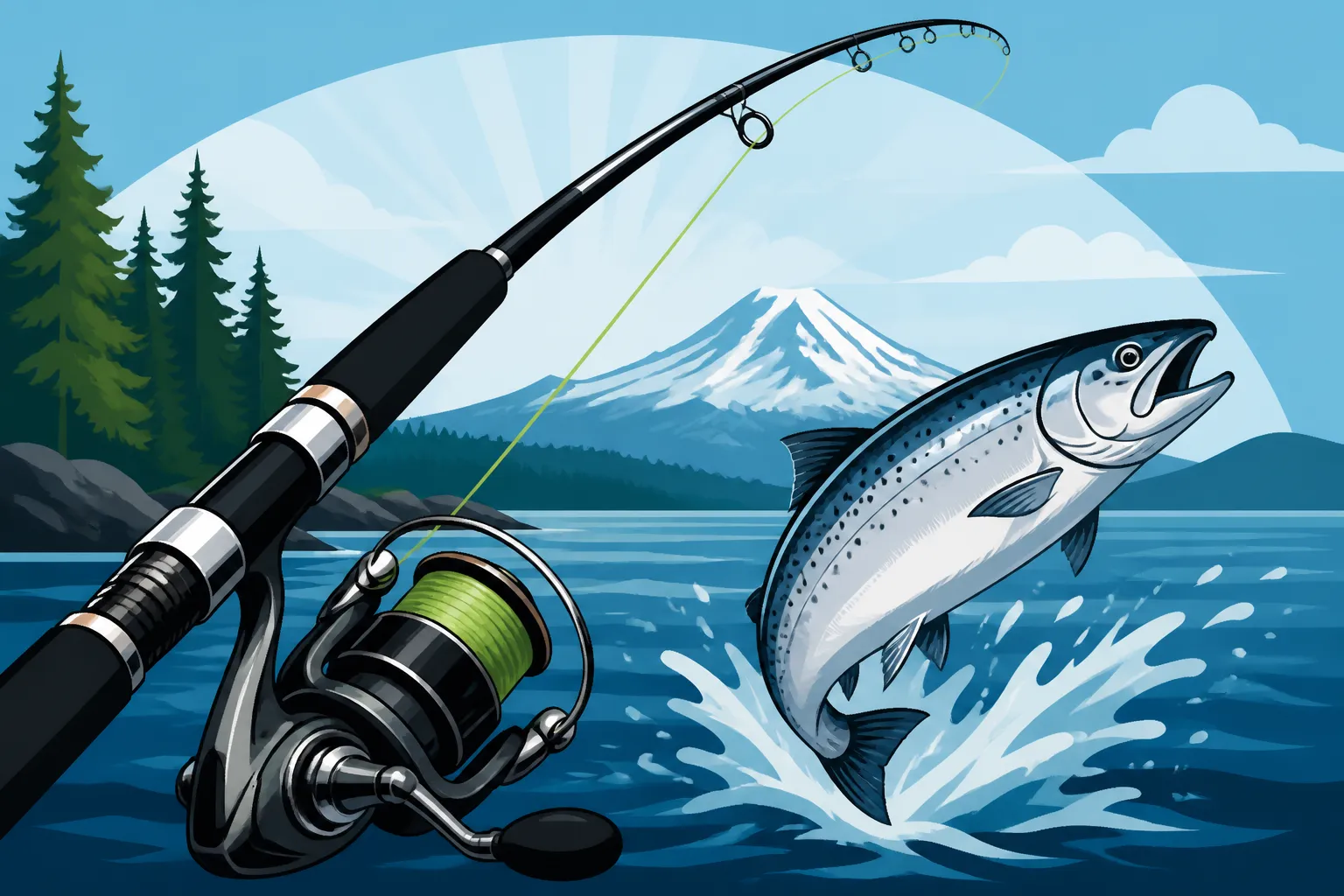
- Spinning Reels: While often associated with lighter freshwater fishing, heavy-duty spinning reels have a place in Puget Sound salmon angling, particularly for casting spoons or jigs from shore or boat. They are generally easier for beginners to learn, excel at casting light lures long distances, and prevent backlashes. However, they typically don't have the same cranking power or line capacity as a similarly sized conventional reel and their drag systems, while smooth, may not handle sustained runs from large Kings as effectively as a conventional reel.
For most Puget Sound salmon scenarios, especially if you're trolling or mooching from a boat, a good quality conventional reel is your best bet. If you primarily plan to cast from shore or jig lighter lures, a robust spinning reel can certainly get the job done.
Spool Size, Line Capacity, and Drag System
These three features are paramount for a salmon reel:
- Spool Size and Line Capacity: Salmon, especially Chinook, can make incredibly powerful and long runs. You need a reel with ample line capacity to allow for this. For most Puget Sound salmon, a reel that can comfortably hold 200-300 yards of 20-30 lb monofilament or equivalent braided line (which is thinner) is a good starting point. Look for reels often designated as "20," "30," or "40" size, depending on the brand. For example, a Penn Fathom 25 or an Avet MXL would be excellent choices, providing plenty of line for those drag-screaming moments.
- Drag System: This is arguably the most critical feature. A smooth, consistent drag system is essential to prevent line breakage and absorb the shock of a salmon's powerful surges. A jerky or inconsistent drag will lead to snapped lines or pulled hooks. Most quality salmon reels feature either a star drag (common on many conventional reels, adjusted by a star-shaped knob near the handle) or a lever drag (often found on higher-end conventional reels, offering precise, preset drag settings). Ensure the reel provides at least 15-20 pounds of usable drag pressure, and more for larger fish. Always test your drag before heading out!
Gear Ratio Considerations
The gear ratio of a reel tells you how many times the spool rotates with one full turn of the handle.
- Lower Gear Ratios (e.g., 4.0:1 to 5.5:1): These reels offer more cranking power. For every turn of the handle, the spool rotates fewer times, but with greater torque. This is beneficial when reeling in heavy weights, fighting large, powerful fish, or consistently retrieving heavy lures like large flashers. Many trolling and mooching reels fall into this category.
- Higher Gear Ratios (e.g., 6.0:1 and up): These reels retrieve line much faster. For every turn of the handle, the spool rotates more times, making them ideal for quickly reeling in slack line, rapidly retrieving jigs, or making multiple casts. While useful for certain techniques like jigging, they offer less brute cranking power than lower ratio reels.
For a versatile Puget Sound salmon reel, a middle-of-the-road gear ratio (around 5.0:1) often provides a good balance of power and speed.
Essential Line Choices for Puget Sound Salmon
Choosing the right fishing line is just as important as selecting your rod and reel. It’s the final link between you and the fish, and each type has its own strengths and weaknesses.
Mainline: Monofilament vs. Braided Line
The choice of mainline can significantly impact your feel for the bite and how you fight a fish.
- Monofilament Line (Mono): Mono is the traditional choice and still a very effective one. Its main advantages are its stretch, which acts as a shock absorber, helping to prevent hooks from tearing out during head shakes and absorbing the initial impact of a strike. It’s also generally more forgiving of nicks and abrasion, and it’s typically more affordable. Mono is a good choice for situations where you want that cushioning effect, like trolling or mooching with a more forgiving rod. A downside is its lower sensitivity due to stretch, making it harder to detect light bites, especially in deep water. Common breaking strengths for Puget Sound salmon are 20-25 lb test.
- Braided Line (Braid): Braid has gained immense popularity for salmon fishing due to its incredible strength-to-diameter ratio and zero stretch. The lack of stretch provides unparalleled sensitivity, allowing you to feel every bump, bite, and even the subtle action of your lure. This is a huge advantage for jigging and deep-water trolling where detecting light strikes is crucial. Braid's thin diameter also cuts through water better, reducing drag, which is useful when using downriggers. However, braid has no shock absorption, so it's critical to pair it with a rod that has some give, and to ensure your drag is set perfectly smooth to prevent pulled hooks. It can also be more abrasive on rod guides and requires a knot specifically designed for braid. Many anglers prefer 30-50 lb test braid for their mainlines.
Many seasoned anglers opt for braided mainline on their conventional reels, splicing in a monofilament or fluorocarbon top shot (50-100 feet) if they want some stretch or better abrasion resistance near the terminal tackle.
Leader Material: Fluorocarbon vs. Monofilament
Your leader is the section of line connecting your main line to your lure or bait. It needs to be tough, abrasion-resistant, and, ideally, less visible to the fish.
- Fluorocarbon Leaders: This is the top choice for Puget Sound salmon. Fluorocarbon is nearly invisible in water because its refractive index is very close to that of water. This is a massive advantage in clear Puget Sound waters where salmon can be line-shy. It’s also much more abrasion-resistant than monofilament, which is critical when fighting fish around structure or dealing with their sharp teeth. It has very low stretch, offering good sensitivity. The primary downside is that it's more expensive than monofilament. You’ll typically use 15-25 lb test fluorocarbon leaders for most salmon fishing in the Sound, sometimes heavier (30-40 lb) for large Chinook or if you're targeting fish around rough structure.
- Monofilament Leaders: While not as invisible or abrasion-resistant as fluorocarbon, monofilament leaders are a good, more affordable option. They offer a bit more stretch, which can be forgiving. Some anglers prefer it for mooching where a little extra stretch in the leader can help with the bait's natural presentation. If you’re fishing in turbid water where visibility isn't as critical, monofilament leaders can be perfectly effective.
Line Test Recommendations for Puget Sound Salmon
Here’s a general guideline for line tests, keeping in mind that specific situations might require adjustments:
| Component | Line Type | Recommended Test (lbs) | Notes |
|---|---|---|---|
| Mainline | Braided | 30-50 | High sensitivity, strength-to-diameter, no stretch. Great for deep water and detecting light bites. |
| Mainline | Monofilament | 20-30 | Good shock absorption, more forgiving, often preferred for surface trolling or with lighter setups. |
| Leader | Fluorocarbon | 15-25 (up to 40 for big Kings) | Nearly invisible, high abrasion resistance. Crucial for clear water and toothy fish. |
| Leader | Monofilament | 15-25 | More affordable, more stretch. Suitable for turbid water or specific bait presentations. |
Remember, using a Washington Fishing Regulations Every Angler Should Know is crucial, and regulations can sometimes specify minimum or maximum line tests or specific gear rules, especially concerning leaders and hooks.
Tailoring Your Setup to Specific Puget Sound Techniques
The beauty of Puget Sound salmon fishing lies in its variety of techniques. Matching your rod, reel, and line to the method you employ can make all the difference.
Trolling for Chinook and Coho
Trolling is perhaps the most popular method for targeting salmon in Puget Sound, especially for Chinook and Coho. This involves dragging lures or baits behind a moving boat, often using downriggers to get your gear down to the desired depth.
- Rod: You'll want a rod that's around 8'6" to 9'6" in length with a medium-heavy power and a moderate-fast action. The length helps spread lines and provide leverage, while the moderate-fast action offers a good blend of sensitivity for detecting subtle bites and enough backbone to fight powerful fish. A softer tip helps absorb the shock when a fish hits a trolled lure and provides a visible indicator of lure action or a bite. Lamiglas, Daiwa, and Shimano all make excellent salmon trolling rods that fit this description.
- Reel: A conventional levelwind reel is almost universally preferred for trolling. Look for one with a good line counter so you know exactly how much line you have out, especially when using downriggers. A smooth, powerful star or lever drag is essential. Models like the Daiwa Saltist or the Penn Warfare are popular choices, offering ample line capacity (250-300 yards of 30-pound braid) and robust gears.
- Line: Many trollers opt for 30-50 lb braided mainline due to its thin diameter (less water resistance on the downrigger release) and zero stretch (for immediate bite detection). A 15-30 lb fluorocarbon leader (6-10 feet long) is then tied to the mainline for stealth and abrasion resistance, especially when using dodgers, flashers, or popular lures like Silver Horde spoons or plug-cut herring. Understanding How Many Rods You Can Fish at Once in Washington is also important for trollers.
Mooching for Active Salmon
Mooching is a classic Puget Sound technique, particularly effective when salmon are actively feeding near the surface or suspended in the water column. It involves slowly drifting or back-trolling with cut-plug herring or anchovies, allowing the bait to sink and rise naturally with the boat's motion.
- Rod: A slightly longer rod, often 8' to 10' in length, with a medium power and a softer, more moderate action is ideal for mooching. The soft tip allows the bait to flutter enticingly and provides a forgiving cushion when a salmon mouths the bait, preventing them from feeling resistance and spitting it out. These rods often have a parabolic bend.
- Reel: A conventional reel without a levelwind is often favored by traditional moochers, as it allows for a faster, unobstructed line drop. However, levelwind reels are perfectly acceptable and more convenient for many. The key is a very smooth, consistent drag and a spool that allows for controlled free-spooling. A compact, palming-friendly reel is often preferred for mooching, such as a smaller Shimano Tekota or a classic Penn Senator.
- Line: A 20-25 lb monofilament mainline is often chosen for mooching because its stretch provides a natural presentation and acts as a shock absorber. However, some anglers use 30 lb braid with a long (10-20 ft) fluorocarbon top shot for increased sensitivity. Leaders are typically 15-25 lb fluorocarbon, matched to the size of the herring and the expected salmon. The Best Tide for Puget Sound Salmon Fishing in Washington can dramatically impact mooching success.
Jigging and Casting from Boats or Shore
Jigging involves dropping a weighted lure (jig) vertically and imparting an erratic, darting action to entice strikes. Casting involves throwing lures from a stationary boat or from shore.
- Rod for Jigging (Boat): A shorter (6'6" to 7'6"), fast-action rod with medium-heavy power is excellent for jigging. The fast action provides the necessary sensitivity to work the jig and detect strikes, while the power helps lift fish from depth. Both spinning and conventional setups work, but many prefer conventional for the direct power.
- Rod for Casting (Shore/Boat): For casting from a boat, a 7' to 8' fast-action, medium-heavy spinning rod is ideal for throwing spoons (e.g., Buzz Bombs, Luhr Jensen Spoons) or plastics. For bank fishing, you'll need a longer rod, typically 9' to 11', with a medium to medium-heavy power to achieve maximum casting distance. These are usually spinning rods. For more information, see Bank Fishing Techniques for Washington Salmon.
- Reel for Jigging/Casting: For boat jigging, a fast retrieve spinning reel or a high-speed conventional reel (e.g., 6.0:1 or higher gear ratio) helps you work the jig effectively and retrieve slack quickly. For shore casting, a large capacity, smooth-casting spinning reel (size 4000-6000) is a must.
- Line: Braided mainline (30-40 lb) is almost always preferred for jigging and casting due to its extreme sensitivity and lack of stretch, which translates directly into feeling bites and making solid hook sets. A 20-30 lb fluorocarbon leader, 3-6 feet long, is typically used for stealth and abrasion resistance.
Maintaining Your Puget Sound Salmon Gear
Investing in quality gear is only half the battle; proper maintenance is key to its longevity and reliability, especially when fishing in corrosive saltwater environments like Puget Sound.
Must-Have Tools for Gear Maintenance
Before you even leave the dock, having a few essential tools can save your trip and your gear.
- Pliers/Forceps: Crucial for unhooking fish safely and quickly, especially if you're practicing catch-and-release or dealing with deeply hooked fish. Look for saltwater-resistant pliers.
- Line Clippers/Scissors: For clean knot tying and cutting line.
- Fillet Knife: If you're keeping your catch, a sharp fillet knife is essential for processing your fish efficiently and respectfully.
- Measuring Device & Scale: To ensure your catch meets legal size requirements and to record the weight of your trophy fish. Remember to always consult the Washington Sport Fishing Seasons and Emergency Closures for current limits.
- Landing Net or Gaff: A quality net with rubberized mesh is gentler on fish you plan to release and prevents hooks from tangling. A gaff might be used for large salmon you intend to keep, but requires skill and care to avoid damaging the meat or violating regulations.
Gear Maintenance Tips for Saltwater Conditions
Saltwater is brutal on fishing gear. A little preventive maintenance goes a long way.
- Rinse After Every Use: As soon as you get off the water, thoroughly rinse your rod and reel with fresh water. Pay special attention to the reel, guides, and rod handle. A gentle spray is usually sufficient; avoid high-pressure jets that can force water into the reel's internal mechanisms.
- Dry Thoroughly: After rinsing, wipe down your rod and reel with a soft cloth and let them air dry completely before storing them. Never store wet gear.
- Lubricate Your Reel: Periodically, your reel will need cleaning and lubrication. This depends on how often you fish, but at least once a season (or more if you fish frequently) it's a good idea to disassemble, clean, and re-grease the gears and oil the bearings. Refer to your reel's manufacturer instructions or take it to a reputable tackle shop for servicing.
- Inspect Line and Guides: Regularly check your rod guides for any chips or cracks that could fray your line. Also, inspect your fishing line for nicks, abrasions, or signs of wear, especially the first 10-20 feet near your terminal tackle. Cut off any damaged sections, or if it's heavily worn, consider replacing the entire spool of line.
- Check Drag System: Ensure your drag washers are clean and functioning smoothly. If your drag feels sticky or inconsistent, it might be time to clean or replace the drag washers.
By taking these steps, your Puget Sound salmon rod and reel will stay in top condition, ready for many more exhilarating battles with Washington’s magnificent salmon.
Disclaimer
Fishing regulations can change frequently. Always consult the latest Washington Department of Fish and Wildlife (WDFW) regulations before heading out. This guide provides general information and recommendations; specific conditions or emergency rule changes may impact fishing opportunities and gear requirements.