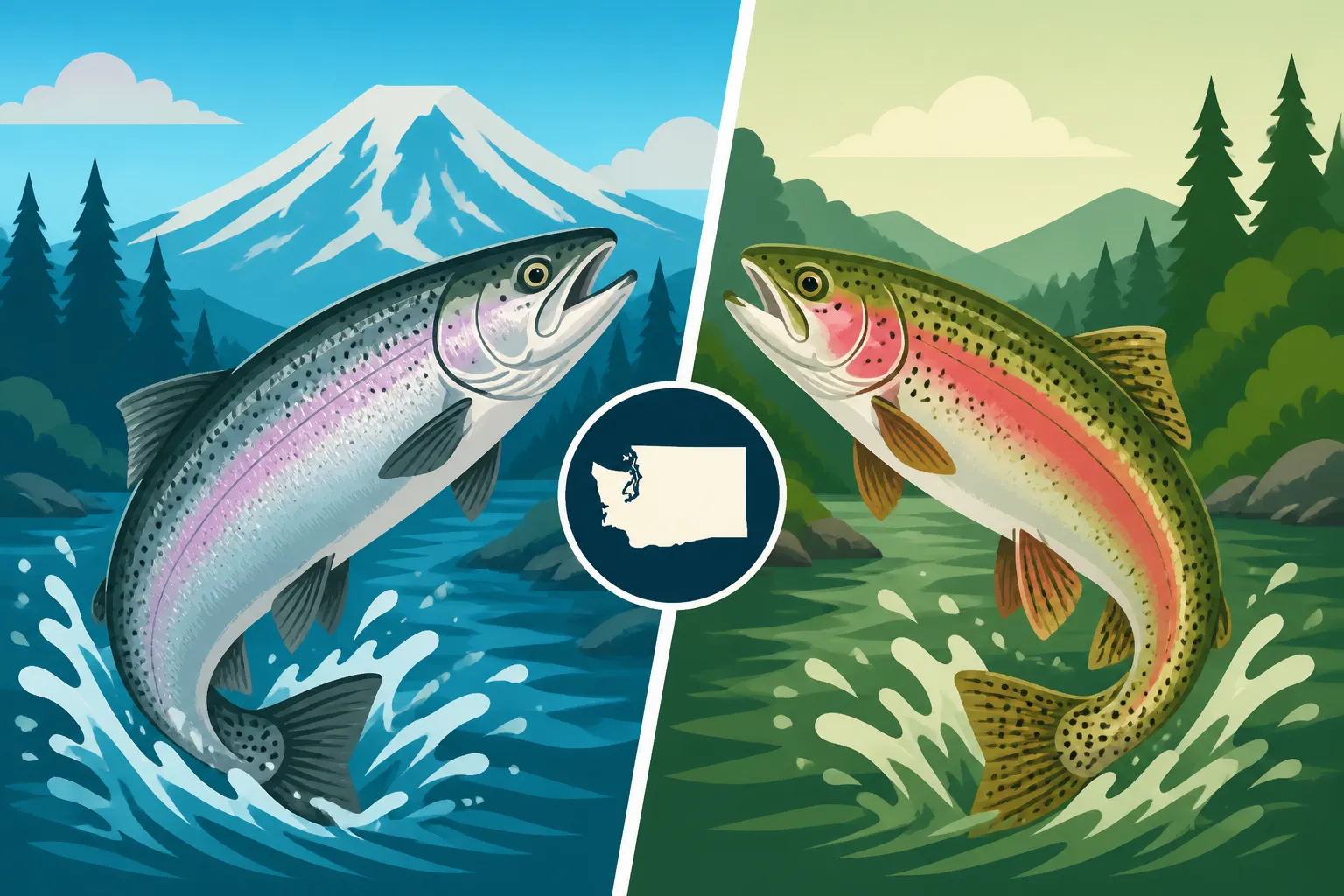
Steelhead vs Rainbow Trout: What’s the Difference?
Oh, the age-old question that has probably stumped more Washington anglers than a sudden regulation change! You're out there on a crisp morning, maybe on a beautiful river like the Skykomish or the Cowlitz, and you hook into something that just feels right. It's got that torpedo shape, that flash of silver, and then you see a hint of pink. Is it a steelhead? Is it a rainbow trout? The confusion is real, and honestly, it’s completely understandable because, at their core, they're the same species! This guide is here to untangle that knot, diving deep into what makes a steelhead a steelhead and a rainbow a rainbow, especially in the diverse waters of Washington State.
The Migratory Majesty: Understanding Steelhead
Let's start with the rockstar of the trout family, the one that inspires countless winter fishing trips and stories of epic battles: the steelhead. When anglers talk about steelhead, they're not just talking about any old rainbow trout. They're talking about a fish that has undergone an incredible transformation, a journey that defines its very essence.
A Tale of Two Worlds: Anadromy Defined
The defining characteristic of a steelhead is its anadromous nature. What does "anadromous" even mean, right? Simply put, it describes a fish that hatches in freshwater, migrates to the ocean to grow and mature, and then returns to freshwater to spawn. Think of it like a reverse commute for fish, but instead of going from suburbs to city, they go from river to ocean and back again. This isn't just a leisurely swim; it's a profound physiological and behavioral shift.
This migration to saltwater is what gives steelhead their incredible strength, size, and those iconic chrome-bright bodies. The rich feeding grounds of the Pacific Ocean allow them to pack on weight and build muscle in a way that freshwater-bound trout simply cannot. They transition from the spotted, camouflaged parr stage in their natal river to a sleek, silver bullet built for ocean survival. It's a testament to adaptation, a true marvel of nature that draws anglers from all over to Washington's fabled rivers. They are, in essence, ocean-going rainbow trout, but that oceanic life dramatically alters them.
The Steelhead Life Cycle in Washington Rivers
The journey of a steelhead through its life cycle is nothing short of epic, and it heavily influences when and where you’ll find them in Washington. It all begins in the cold, clear gravel beds of a freshwater river or stream. The eggs hatch into tiny alevin, then grow into fry, and eventually become parr, small fish with distinctive vertical markings for camouflage in the river. This freshwater rearing stage can last anywhere from one to three years, depending on the specific river system and environmental conditions.
Once they reach a certain size and age, usually around 5-8 inches, they undergo a process called smoltification. Their bodies change, becoming more streamlined and silver, preparing them for the saltwater environment. This is when they migrate downstream to the ocean, often in large groups, venturing out into the vast Pacific. Here, they spend one to three years (sometimes more!) gorging on a diverse diet, growing rapidly, and gaining that famous fighting power. Finally, driven by an instinct we barely understand, they return to their home rivers, often navigating hundreds of miles upstream, to complete the cycle and spawn. We have both winter and summer steelhead runs in Washington, with winter-runs typically returning from December to May and summer-runs from May to October, each offering unique angling opportunities. It's a cycle that defines Steelhead: Washington's Ocean-Run Rainbow Trout.
Physical Clues: Identifying a True Steelhead
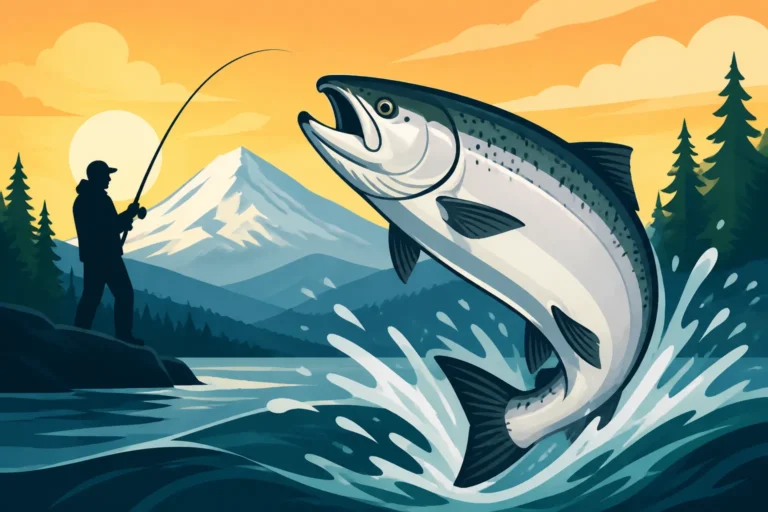
So, when you pull a fish out of the water, how can you tell if it's a steelhead, especially if it's fresh from the ocean? The most prominent clue is usually its overall appearance. Steelhead fresh from saltwater are incredibly sleek and torpedo-shaped. Their skin is typically a brilliant, reflective silver, almost like polished chrome, with a dark, often bluish-green back fading into silvery sides and a white belly. Their spots, while present, are usually smaller, less defined, and scattered more evenly over their back and fins, rather than being concentrated.
Compare this to a resident rainbow trout (which we'll get to in a moment), and the difference can be striking. A steelhead's fins, particularly its tail, will often be more robust and squared off, indicative of the powerful swimming required for ocean life and upstream migration. The rosy stripe, while sometimes present, is generally very faint or entirely absent in a fresh ocean-run steelhead, only becoming more pronounced as they spend time in freshwater and approach spawning condition. Understanding these visual cues is crucial for compliance with Washington Fishing Regulations Every Angler Should Know, as different rules often apply to these magnificent fish.
The Resident Beauty: Understanding Rainbow Trout
Now let's turn our attention to the other side of the coin: the rainbow trout. These are just as beloved by anglers, offering fantastic fishing opportunities across Washington's vast network of lakes and rivers. But what sets them apart from their anadromous cousins?
Homebodies of Washington's Waters
Unlike steelhead, rainbow trout are the homebodies of the aquatic world. They live their entire lives in freshwater, adapting perfectly to the specific lakes, rivers, and streams they inhabit. From the smallest mountain stream to the deepest, coldest lake, rainbow trout have found a way to thrive. They complete their entire life cycle within these freshwater systems, never venturing out to sea.
This freshwater existence means they are subject to different environmental pressures and food sources than steelhead. In a clear, fast-flowing river, they might feed primarily on insects, small crustaceans, and smaller fish. In a large lake, their diet could include zooplankton, minnows, or even other trout. Their growth rate and ultimate size are often dictated by the abundance of food and the overall health of their freshwater habitat. This incredible adaptability makes them a fantastic target for anglers year-round, whether you're fly-fishing a small creek or trolling a large reservoir. Rainbow Trout Fishing in Washington is truly diverse!
Stocked vs. Wild Rainbows: A Crucial Distinction
Within the realm of rainbow trout, there's another important distinction that often shapes an angler's experience: stocked fish versus wild, naturally reproducing populations. Washington Department of Fish and Wildlife (WDFW) runs extensive hatchery programs, releasing millions of rainbow trout into lakes and rivers across the state each year to enhance recreational fishing opportunities. These stocked trout are often raised in protected environments, fed commercially, and released at a catchable size, providing ready action for anglers, especially beginners or those looking for a guaranteed bite.
Wild rainbow trout, on the other hand, are the result of natural spawning and survival in their native habitat. These fish tend to be more elusive, hard-fighting, and often have more vibrant, natural coloration. They are finely tuned to their environment, relying on natural food sources and exhibiting more cautious behavior. Visually, hatchery-raised trout often have eroded fins or malformed tails due to confinement, while wild fish are typically pristine. This distinction is vital for conservation efforts, as wild populations often require more protection and specialized management. Understanding this difference is key, and if you're ever wondering How to Tell Wild Steelhead From Hatchery Steelhead, much of the same logic applies to resident rainbows.
The Classic Rainbow Look
When most people picture a rainbow trout, they're likely thinking of the classic freshwater resident. These fish typically exhibit a much more pronounced, vibrant coloration than their ocean-going counterparts. Their most famous feature, of course, is the iridescent, reddish-pink stripe that runs horizontally along their sides, resembling a rainbow – hence the name! This stripe can be incredibly bright and vivid, especially in spawning fish or those in healthy, clear water.
Their backs are usually darker, often olive green or brownish, fading into lighter sides and a white belly. They are heavily spotted, with distinct black spots covering their backs, sides, and all their fins. The spots are typically larger and more numerous than those on a steelhead. The body shape of a resident rainbow can vary greatly depending on its environment; a lake-dwelling rainbow might be deeper-bodied, while a river fish might be more streamlined. These are the fish that you'll often see leaping from the water, flashing their beautiful colors, providing a thrill for anglers with lighter tackle.
Unpacking the Differences: Beyond Skin Deep
So, we know they're the same species, Oncorhynchus mykiss, but their life choices lead to vastly different characteristics. It's like comparing a marathon runner to a powerlifter – both are human, but their training and lifestyle make them distinct.
The Defining Life Cycle Divergence
At the heart of the steelhead vs. rainbow trout debate is their divergent life cycle. This isn't just a minor difference; it's a fundamental split in their strategy for survival and reproduction. The decision (or genetic predisposition, coupled with environmental triggers) to migrate to the ocean is a high-risk, high-reward gamble. While the ocean offers abundant food and rapid growth, it also exposes steelhead to a myriad of dangers – predators, harsh conditions, and vast distances to navigate. Those that survive, however, return as large, powerful, and often multiple-spawning individuals, contributing significantly to the gene pool.
Resident rainbow trout, by contrast, lead a comparatively safer, albeit growth-limited, life. They don't face the gauntlet of the open ocean, but they also don't get access to its rich larder. Their growth is tied to the productivity of their freshwater system, meaning they generally remain smaller. However, their survival rate from year to year might be higher, and they can often spawn annually within their home waters. This difference in life strategy has profound implications for their ecology, evolution, and how fisheries managers approach their conservation.
Habitat Preferences and Behavioral Traits
Their chosen life paths also dictate where you'll find these fish and how they behave. Steelhead, because of their migratory nature, are predominantly found in major river systems that connect to the ocean, such as the Columbia River, the Olympic Peninsula rivers, or many Puget Sound tributaries. When they return to freshwater, their primary focus shifts from feeding to migration and spawning. They'll hold in deep pools, riffles, and behind structure, conserving energy as they push upstream. Their diet in freshwater is often minimal, as they rely on stored energy from the ocean.
Resident rainbow trout, however, can be found in virtually any freshwater body capable of supporting them. This includes high mountain lakes, sprawling low-elevation lakes, meandering rivers, and tiny feeder streams. Their behavior is consistently geared towards feeding and avoiding predation within these freshwater confines. In lakes, you might find them cruising shorelines, lurking near drop-offs, or suspended in the water column chasing baitfish. In rivers, they'll actively feed in riffles, eddies, and seams where food is plentiful. Their feeding habits make them more amenable to a wider range of lures and baits throughout their lives. When shopping for gear tailored to these behaviors, you might find yourself browsing various options on Amazon, from specific fly patterns for river trout to trolling gear for lake rainbows.
Genetic Roots and Environmental Triggers
The most mind-bending part of this whole debate is that steelhead and rainbow trout are indeed the same biological species: Oncorhynchus mykiss. The difference isn't a hard genetic barrier but rather a fascinating interplay of genetics and environmental cues. Think of it like a switch that can be flipped. Some Oncorhynchus mykiss populations are genetically programmed to be anadromous (steelhead), while others are genetically programmed to be resident (rainbow trout). However, there's also a great deal of plasticity.
In some cases, individuals from anadromous populations might "choose" to remain in freshwater if ocean conditions are poor or if a migration barrier exists. Conversely, some resident populations might produce individuals that smolt and head to sea if conditions are favorable. It's a complex dance where genetics provide the potential, and the environment dictates the expression. This genetic flexibility is part of what makes the species so successful and widespread. It's a truly unique aspect of their biology that complicates identification but also highlights the incredible adaptability of fish to their surrounding world.
Angling for Both: Techniques and Regulations
Given their differing life cycles and habitats, it's no surprise that fishing for steelhead and rainbow trout often requires different approaches and, crucially, adherence to distinct sets of regulations in Washington.
Tailored Techniques for Each
When you're targeting steelhead, especially the returning adults, you're often dealing with powerful fish in dynamic river environments. Techniques like drift fishing with bait (like cured roe or beads), float fishing with jigs, or even specialized fly fishing methods like Spey casting are common. These methods aim to present an offering naturally to fish that are often not actively feeding but might strike out of aggression or instinct. Gear for steelhead tends to be heavier: robust rods, strong reels, and heavier line to handle powerful runs and the potential for larger fish. Many anglers spend considerable time researching and acquiring the right gear, perhaps even finding specialized steelhead floats or specific lure colors on Amazon.
For resident rainbow trout, the techniques are much more varied, reflecting their diverse habitats. In lakes, trolling with lures like Wedding Rings or Kokanee Killers, casting spoons or spinners from shore or boat, and bait fishing with worms or power bait are all popular. For river trout, fly fishing with nymphs, dry flies, or streamers is a classic, alongside light spin fishing with small spinners or jigs. Lighter tackle is typically the order of the day, allowing for more finesse and sensitivity to subtle bites. Whether you're chasing that elusive wild river trout or filling your creel with stocked fish, there's a rainbow trout technique for every angler. If you're planning a quick trip, knowing Best Washington License for a Weekend Trip will be helpful, as short-term licenses are available.
Navigating Washington's Regulations
This is where the distinction between steelhead and rainbow trout becomes critically important for anglers in Washington. The Washington Department of Fish and Wildlife (WDFW) often implements separate regulations for steelhead due to their conservation status and migratory patterns. Steelhead seasons are frequently more restrictive, with specific open periods for certain rivers or river sections, limits on gear (like mandatory single-point barbless hooks in many steelhead waters), and often strict catch-and-release rules for wild steelhead. The goal is to protect these valuable anadromous populations and ensure sufficient spawners return to perpetuate the species. You might find explicit rules for Wild Steelhead Release Rules on Washington's Olympic Peninsula Rivers.
For resident rainbow trout, regulations are generally more liberal, particularly for stocked populations in lakes and ponds, which are managed primarily for recreational harvest. Daily bag limits are often higher, and gear restrictions are typically fewer. However, wild resident trout populations, especially in specific river sections or high-alpine lakes, can also have more restrictive rules, including reduced bag limits, size restrictions, or even catch-and-release mandates. It's an ever-changing landscape, which is why it's absolutely vital to always check the latest WDFW fishing pamphlet or their website before every trip. This includes being aware of any Emergency Rule Changes: Why Washington's Rules Shift Mid-Season that could affect your plans.
Catching and Releasing: Ethical Considerations
Regardless of whether you're targeting a magnificent steelhead or a vibrant rainbow trout, ethical angling practices are paramount. For wild steelhead, in particular, the focus is almost always on careful catch-and-release to ensure these fish can continue their spawning journey. This means using appropriate gear to land fish quickly, minimizing their time out of water, handling them gently with wet hands, and using barbless hooks to facilitate easy release. Even if you're planning a catch-and-release only trip, you'll still need a license, so checking Do You Need a License for Catch-and-Release Only? is important.
For resident rainbow trout, especially in waters managed for harvest, responsible angling includes knowing and adhering to bag limits, avoiding unnecessary waste, and respecting the health of the fishery. Even with stocked fish, quick and clean dispatch is humane. For both species, understanding how to properly handle a fish you intend to release or keep is a skill every angler should master. If you accidentally hook a wild steelhead in a closed area, knowing What to Do If You Catch a Wild Steelhead by Accident can help you act responsibly. A quality pair of forceps or pliers for hook removal, easily found on Amazon, is an essential item in any angler's kit.
The Ongoing Debate and Conservation Landscape
The nuanced relationship between steelhead and rainbow trout isn't just an academic discussion for biologists; it's a living, breathing part of Washington's fisheries management and a frequent topic of conversation among anglers.
Why the Distinction Matters for Conservation
The ability to distinguish between steelhead and rainbow trout is fundamentally important for conservation. Wild steelhead, as anadromous fish, represent a unique and often vulnerable life history strategy within the species Oncorhynchus mykiss. Their populations face enormous challenges, from habitat degradation in rivers to ocean conditions and dam passage issues. Therefore, they are often managed with stringent conservation measures, including specific protections for spawning adults and their critical habitats. The goal is to preserve their genetic diversity and ensure their long-term survival as a wild resource.
Resident rainbow trout, while also important, are typically less of a conservation concern from a species perspective, especially stocked populations. They are a resilient, adaptable fish that provides a backbone for recreational fisheries. However, wild resident rainbow populations, particularly those in isolated or pristine environments, can also warrant specific protection to maintain their unique genetic strains and local ecosystems. Fishery managers must balance the needs of wild populations with the desires of anglers, leading to the complex mosaic of rules we see across Washington.
Hatcheries and Wild Fish Interaction
One of the most complex and ongoing debates in Washington fisheries involves the interaction between hatchery-raised fish and wild populations. While hatcheries play a vital role in providing fishing opportunities and, in some cases, supplementing struggling wild runs, there are also concerns about their potential impacts. Hatchery fish, bred in a controlled environment, can sometimes be less genetically diverse or less adapted to survival in the wild. When they interbreed with wild fish, there's a risk of diluting the wild gene pool, potentially reducing the fitness of wild populations.
Furthermore, large numbers of hatchery-released fish can compete with wild fish for food and habitat. This is a particularly sensitive issue for steelhead, where balancing the desire for robust recreational fisheries with the need to protect declining wild steelhead stocks is a constant challenge. WDFW continually evaluates its Hatchery Brood Stock Programs, Explained to find the best balance, but it remains a point of passionate discussion among scientists, managers, and anglers.
Angler's Role in Stewardship
As anglers, we have a crucial role to play in the stewardship of both steelhead and rainbow trout. Our actions on the water can directly impact the health of these fisheries. This begins with education: understanding the species we target, knowing their life cycles, and recognizing the visual cues that differentiate them. It also means meticulous adherence to regulations – checking the pamphlet or online resources like the Fish Washington app before every trip, understanding bag and size limits, and knowing when and where specific gear is allowed.
Beyond compliance, practicing responsible angling, such as proper catch-and-release techniques, is essential. Supporting conservation organizations that work to protect and restore fish habitat, advocating for sound fisheries management, and sharing knowledge respectfully with fellow anglers also contribute to the long-term health of Washington's incredible fishing resources. Whether you're chasing the chrome bright flash of a steelhead or the vibrant leap of a resident rainbow, your dedication to responsible fishing helps ensure these magnificent fish continue to thrive for generations to come. This commitment extends to understanding the nuances of your license choices, whether it's an Annual vs Short-Term License: Which to Buy for your particular fishing habits.
| Feature | Steelhead | Rainbow Trout |
|---|---|---|
| Species Name | Oncorhynchus mykiss (anadromous form) | Oncorhynchus mykiss (freshwater resident form) |
| Life Cycle | Born in freshwater, migrates to ocean, returns to spawn | Spends entire life in freshwater |
| Appearance | Silver, sleek, few spots, robust, often larger | Brighter colors, prominent rosy stripe, more spots, variable size |
| Habitat | Rivers (spawning/migration), Ocean (feeding) | Lakes, rivers, streams (entire life) |
| Growth Rate | Generally faster, larger due to ocean feeding | Slower, smaller overall, limited by freshwater resources |
| Spawning | Anadromous, returns to natal streams | Freshwater spawning in streams/rivers |
| Regulation Focus | Highly regulated, often catch & release for wild | More liberal for stocked, varied for wild |
Disclaimer
This article is for general informational purposes only and does not constitute professional advice. Laws, prices and regulations vary by location and change over time. Consult a qualified professional for guidance on your specific situation.