Pacific Halibut Identification and Size in Washington
There’s nothing quite like the thrill of hooking into a Pacific halibut off the Washington coast. These are truly magnificent fish, but let’s be honest, trying to identify them correctly in the heat of the moment, and then making absolutely sure they meet the legal size requirements, can feel like you’re trying to solve a riddle while holding onto a thrashing beast. This guide is here to untangle all that confusion, giving you a clear picture of how to identify these impressive flatfish and understand Washington’s crucial size regulations.
The Majestic Pacific Halibut: A Washington Icon
For many anglers, the Pacific halibut isn't just a fish; it's a quest. These large, flat-bodied denizens of the deep are truly iconic in Washington's saltwater fisheries, drawing enthusiasts from all over. They represent a significant challenge and a highly rewarding catch, making them one of the most sought-after species out there.
Why Halibut Are Such a Coveted Catch
The allure of the halibut is multifaceted. First and foremost, they are incredible fighters. When you hook into a decent-sized halibut, you're not just reeling in a fish; you're engaging in a serious tug-of-war that can test your strength and your gear. The initial run can be powerful, often taking line, and even when you think you've got them licked, they can summon a surprising burst of energy right at the boat, making the final moments of the fight absolutely heart-pounding. It’s a full-body workout and an adrenaline rush all in one.
Beyond the fight, their reputation as table fare is legendary. Pacific halibut meat is firm, flaky, and wonderfully white, with a mild, sweet flavor that makes it incredibly versatile for cooking. Whether you pan-fry it, bake it, grill it, or turn it into fish and chips, it's consistently delicious. This combination of an exhilarating fight and exceptional eating quality makes every halibut caught a prized trophy, definitely worth the effort and the sometimes long waits between bites. It’s no wonder so many of us dream of landing one of these giants When Washington's Halibut Season Opens.
General Overview of Halibut Characteristics
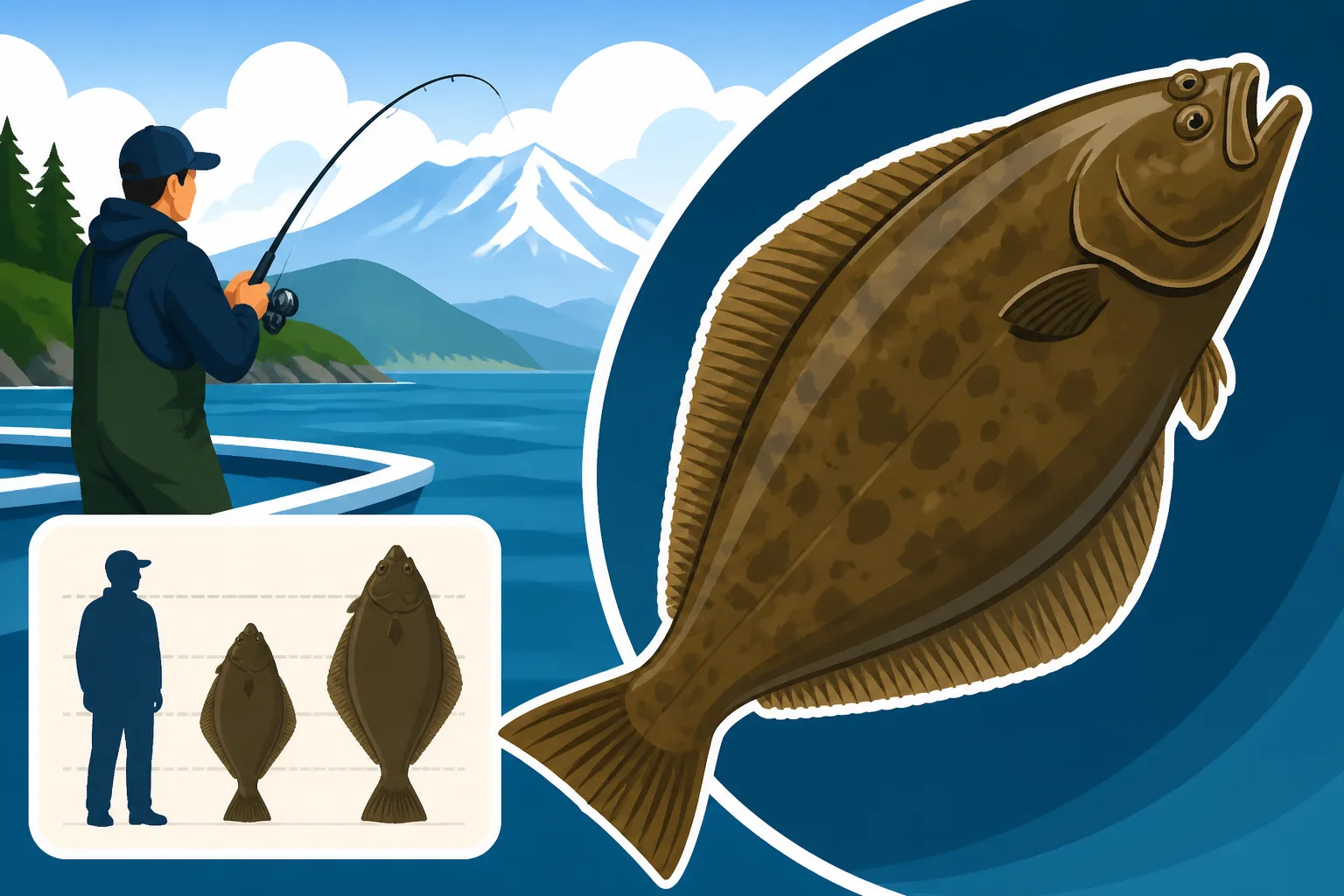
At first glance, a halibut is unmistakably a flatfish. They spend their lives lying on the seabed, perfectly adapted to their benthic lifestyle. Their bodies are remarkably compressed laterally, meaning they're tall and thin, but they lie on their side, with both eyes migrating to the "upper" side of their head during their larval development. This unique arrangement allows them to observe their surroundings while remaining camouflaged on the bottom.
These fish are truly built for life in the deep. They possess a broad, powerful tail fin, which they use to propel themselves with surprising speed when chasing prey or evading predators. Their dorsal and anal fins run almost the entire length of their body, providing stability and subtle control. Unlike many other fish, their bodies are covered in very small, smooth scales that are barely noticeable to the touch, which adds to their sleek, torpedo-like efficiency when they need to move.
Decoding Pacific Halibut Identification
When you're out on the water, especially if you're targeting other bottomfish, it's easy to pull up something that looks like a halibut but isn't. Knowing the distinct features of a Pacific halibut is crucial not only for correctly identifying your prize but also for ensuring you're compliant with regulations. It’s a skill that builds confidence every time you drop a line.
Key Physical Features: The Flatfish Advantage
The most defining characteristic of a Pacific halibut is, of course, its flat body shape. They are asymmetrical, with both eyes on their right side when viewed from above (meaning they lie on their left side on the ocean floor). The upper side is typically a mottled dark brown, greenish-brown, or grey, which allows them to blend seamlessly with the ocean floor. The underside, however, is pure white, a stark contrast designed to disappear against the lighter surface when viewed from below by potential prey.
Pay close attention to their mouth; it's large and extends back to below the middle of the eye, armed with strong, sharp teeth designed for snatching up prey. Their lateral line, which is a sensory organ running along the side of the fish, makes a distinct, high arch above the pectoral fin. This arched lateral line is a very reliable identifier that helps distinguish halibut from other flatfish. Finally, their tail fin (caudal fin) is broad and crescent-shaped or lunate, a powerful propeller that's quite different from the straight or rounded tails of many flounder or sole species. Learning How to Tell a Halibut From a Flounder is a fundamental skill for any bottomfisher.
Coloration and Camouflage: Masters of Disguise
Pacific halibut are true chameleons of the deep. Their dorsal (upper) side exhibits an amazing ability to change its color and pattern to mimic the substrate they are resting on. This can range from dark olive greens to deep chocolate browns, sometimes speckled with lighter spots or blotches that perfectly match rocky or sandy bottoms. This incredible camouflage is their primary defense mechanism, allowing them to ambush prey and evade larger predators, making them incredibly difficult to spot in their natural environment.
The intensity and specific shade of their coloring can vary based on the depth they inhabit, the type of seafloor, and even their geographical location. For example, a halibut caught over a muddy bottom might appear darker and more uniform, while one from a sandy, gravelly area might have a lighter, more mottled appearance. This adaptive coloration is a testament to their evolutionary success as apex predators of the seabed. It’s important to remember that while the top side is variable, the bottom side almost always remains a clean, bright white.
Distinguishing Halibut from Lookalikes
In Washington waters, you might encounter several other species that, to the untrained eye, could be mistaken for a halibut. These often include various species of sole (like Dover sole or petrale sole), flounder, or even less commonly, larger skates or rays. However, a closer look at a few key features will help you tell them apart quickly. True halibut have that distinctive deeply arched lateral line above the pectoral fin, which is much less pronounced or straight in most other flatfish.
Additionally, consider the mouth. Halibut have a noticeably larger mouth relative to their body size compared to most sole or flounder, which tend to have smaller, more delicate mouths. The shape of the tail fin is another dead giveaway; halibut have that crescent-shaped tail, while many other flatfish have a straighter or slightly rounded tail. While other flatfish can be good eating, mistaking them for halibut, especially if they are undersized, could lead to regulatory issues, so it's always best to be absolutely certain.
Understanding Halibut Size Regulations in Washington
Once you've positively identified a Pacific halibut, the next crucial step is ensuring it meets the current Washington state size regulations. This isn't just about following the rules; it's about contributing to the long-term health and sustainability of this incredible fishery. Missing this step can lead to citations, but more importantly, it can negatively impact future fishing opportunities.
The Importance of Length Limits and Slot Limits
Washington, like many other states and provinces, implements specific length limits and often "slot limits" for Pacific halibut. These aren't arbitrary rules; they are carefully determined by fisheries biologists to manage the population responsibly. Minimum size limits protect juvenile fish, allowing them to grow and mature enough to spawn at least once, contributing to the next generation. Maximum size limits, on the other hand, are often in place to protect the largest, most prolific breeding females, which are critical for maintaining a robust population. These bigger fish produce a disproportionately higher number of eggs.
Slot limits combine both, requiring anglers to release fish that are either too small or too large, keeping only those within a specific size range. This approach creates a "protected slot" for those key reproductive fish. It's a highly effective conservation strategy that ensures the fishery remains healthy and productive for years to come. Checking Washington Fishing Regulations Every Angler Should Know before every trip is non-negotiable, as these rules can change annually or even in-season.
Measuring Your Catch Accurately
Measuring a halibut accurately can be a bit of a dance, especially on a rocking boat with a lively fish. However, precision is absolutely key. The standard method involves laying the fish flat on a measuring board or against a tape measure. You need to measure from the tip of the jaw or snout to the absolute end of the tail, with the tail squeezed together to get the maximum length. Do not measure along the curve of the body, as this will give you an inaccurate, shorter measurement.
It’s always a good idea to have a durable, clearly marked measuring tape or a specialized fish ruler permanently affixed to your boat or easily accessible. Many anglers even mark their boat's deck with permanent markers at common legal sizes to quickly gauge a fish. If you need a reliable, waterproof measuring tape, you can often find excellent options on Amazon. Always measure twice if you're in doubt. If a fish is even slightly shy of the minimum length, it must go back immediately and with minimal harm.
Washington's Halibut Slot Limits in Practice
Washington's halibut regulations frequently include a slot limit, which means you can only keep fish that fall within a very specific size window. For example, a common regulation might be "not less than 32 inches and not more than 46 inches." This means if you catch a halibut that is 30 inches, it’s too small and must be released. If you catch one that is 50 inches, it’s too big and also must be released. Only those fish falling precisely within that 32-46 inch range are legal to keep. Why Is There a Size Limit on Some Washington Halibut? often comes down to protecting those vital breeding fish.
This system is in place to ensure that the middle-aged, often male, halibut are harvested, while the younger fish get a chance to mature and the very large, often female, fish are protected to continue spawning. It requires vigilance on the angler's part, but it's an investment in the future of the fishery. Always carry a reliable measuring device, like a high-quality tape measure, and make sure you understand the specific slot limits for the marine area you are fishing in. These regulations, along with daily and Halibut Possession Limit in Washington, are frequently updated, so checking the Washington Department of Fish and Wildlife (WDFW) website right before your trip is essential.
Here’s a quick comparison of key features for Halibut and some common Washington flatfish lookalikes:
| Feature | Pacific Halibut | Starry Flounder | Petrale Sole | Sand Sole |
|---|---|---|---|---|
| Eyes | Both on right side of head | Can be on right or left side, often right | Both on right side of head | Both on right side of head |
| Lateral Line | Distinct, high arch above pectoral fin | Fairly straight or slight curve | Slight curve over pectoral fin | Straight, no prominent arch |
| Mouth Size | Large, extends to below middle of eye | Small, doesn't extend past front of eye | Small, doesn't extend past front of eye | Small, doesn't extend past front of eye |
| Tail Shape | Lunate (crescent-shaped), powerful | Rounded or slightly pointed | Rounded | Rounded to straight |
| Color (Upper) | Mottled dark brown/green/grey, adaptive | Dark brown with prominent dark bands across fins, star-like scales | Uniform light brown to olive | Light brown to yellowish-brown |
| Texture | Smooth with very small scales | Rough, prominent star-shaped scales | Smooth | Smooth |
| Typical Size | Can grow very large (How Big Pacific Halibut Get Off Washington) | Up to 2-3 feet | Up to 2 feet | Up to 1.5 feet |
Where and How Halibut Grow So Large
The sheer size that some Pacific halibut can achieve is truly astounding. These aren't your average panfish; they are among the largest bony fish in the sea. This impressive growth isn't accidental; it's a testament to their long lifespans, efficient feeding strategies, and the deep, rich environments they inhabit off the Washington coast.
Halibut Growth Rates and Lifespan
Pacific halibut are slow-growing, long-lived fish. They can live for many decades, with some individuals reaching ages well over 50 years. This extended lifespan is one of the primary reasons they can attain such enormous sizes, sometimes exceeding 8 feet in length and weighing hundreds of pounds. Unlike some faster-growing species, halibut mature relatively slowly; females typically don't reach full reproductive maturity until they are about 8-12 years old. This delayed maturity highlights the critical importance of protecting older, larger fish through regulations like slot limits.
Their growth rate is influenced by a variety of factors, including the abundance of food, water temperature, and their genetic makeup. In areas with rich foraging grounds, halibut can grow more quickly. However, even under ideal conditions, their growth is a steady, gradual process over many, many years. It’s a stark reminder that when you’re pulling up a big halibut, you’re often holding a fish that has been a part of the ecosystem for a very long time, making its careful management all the more important.
Habitat and Feeding Habits of Big Halibut
Big halibut aren't found just anywhere; they prefer specific habitats that cater to their predatory lifestyle and allow for their impressive growth. They are typically found on or near the bottom of the ocean, preferring sandy, gravelly, or even rocky bottoms, often near drop-offs, underwater pinnacles, or submerged canyons where prey congregates. Depths can vary widely, from relatively shallow coastal waters to thousands of feet deep, but the largest individuals often reside in deeper, colder environments.
Their diet is extensive and contributes significantly to their size. Pacific halibut are opportunistic and voracious predators, eating almost anything they can fit into their large mouths. This includes a wide array of bottom-dwelling fish such as cod, pollock, rockfish, sculpins, and sablefish. They also feast on crabs, clams, octopus, and squid. This diverse, protein-rich diet, combined with their ability to effectively ambush prey from their camouflaged positions on the seabed, provides them with the abundant energy needed to grow into the giants we all dream of catching when Pacific Halibut Fishing on the Washington Coast.
Why Size Limits Matter for Sustainable Fishing
The careful management of Pacific halibut through size limits isn't just about ensuring there are fish for you to catch next year; it's about preserving an entire ecosystem and a cultural heritage. These regulations are the backbone of sustainable fishing practices, crafted to maintain healthy fish populations for generations to come.
Protecting Spawning Stock
One of the most critical reasons for size limits, particularly the maximum size limit in a slot, is the protection of the spawning stock. Larger, older female halibut are incredibly important to the health of the population because they are exponentially more productive than smaller, younger females. A large female halibut can produce millions more eggs per spawning season than a smaller one. Removing these super-spawners from the population could have a disproportionately negative impact on future recruitment – the number of young fish entering the fishery.
By implementing slot limits that protect these large breeders, fisheries managers ensure that the most valuable reproductive contributors remain in the ocean to replenish the stock. This strategy helps maintain genetic diversity and ensures that the species has a robust capacity to recover from environmental fluctuations or fishing pressure. It’s a testament to long-term thinking, prioritizing the resilience of the species over short-term harvest gains.
Managing the Fishery for Future Generations
Ultimately, Washington's halibut size limits are a cornerstone of a broader management strategy aimed at managing the fishery for future generations. The Washington Department of Fish and Wildlife (WDFW) works in conjunction with federal agencies and international commissions to set quotas, seasons (How Many Halibut Fishing Days Washington Gets in 2026), and gear restrictions based on scientific assessments of the stock. Size limits play a direct role in regulating the harvest, ensuring that anglers don't deplete the resource.
Every angler who respects and follows these regulations becomes an active participant in conservation. By releasing undersized or oversized fish, you're directly contributing to a healthier, more sustainable halibut fishery. This collective responsibility ensures that the thrilling experience of Halibut Fishing Techniques for the Washington Coast and the joy of a fresh halibut dinner remain available for our children and grandchildren. It’s a partnership between nature, science, and the angling community, ensuring that this incredible resource continues to thrive.
Disclaimer
This article is for general informational purposes only and does not constitute professional advice. Laws, prices and regulations vary by location and change over time. Consult a qualified professional for guidance on your specific situation.