How Big Washington Largemouth Bass Get
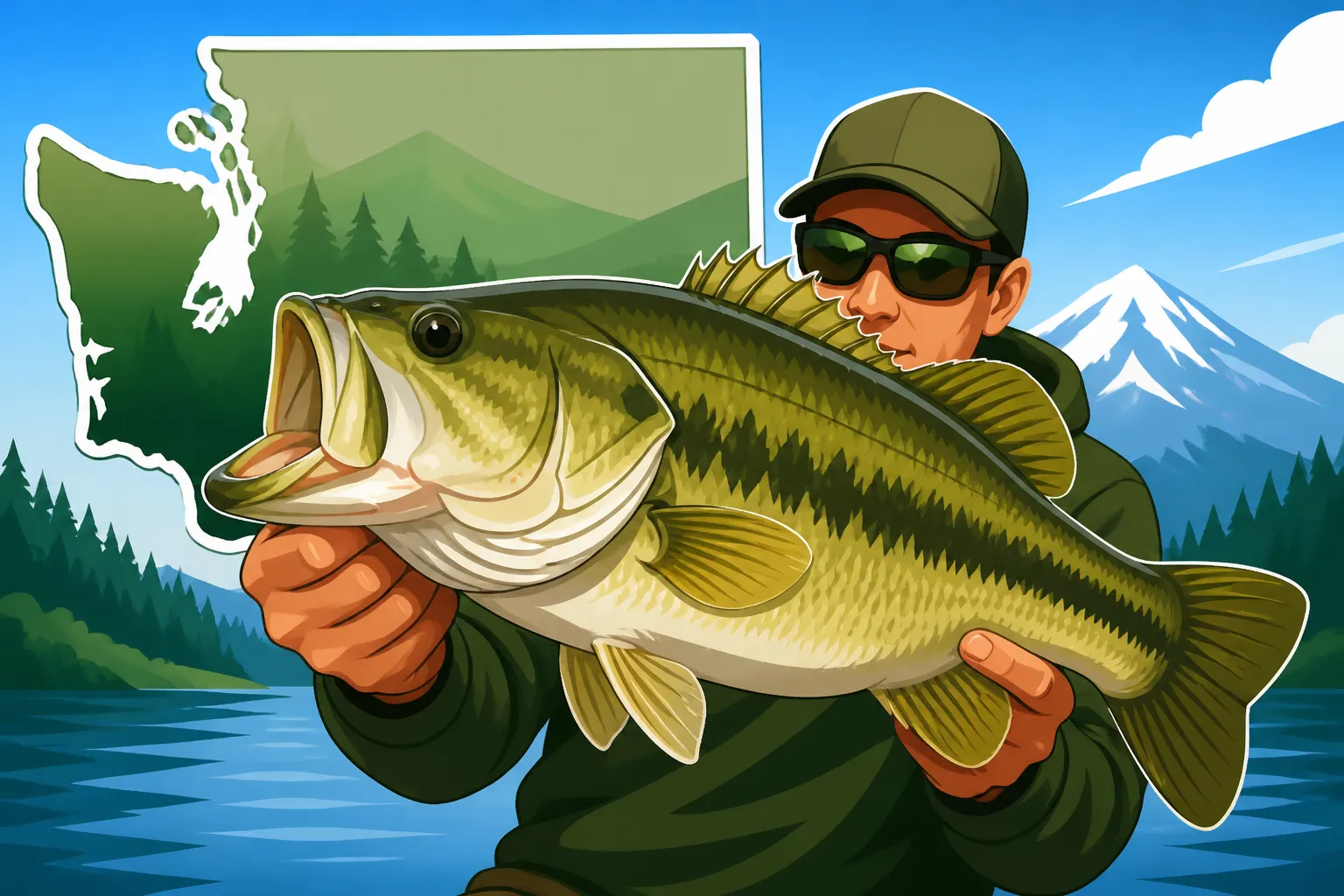
Many anglers, especially those coming from other parts of the country, often wonder if Washington State can really deliver big largemouth bass. You might see pictures of huge fish from southern states and assume our cooler, often deeper waters don't allow for those kinds of giants. However, while Washington might not be nationally famous for gargantuan bass, our waters certainly hold some respectable bucketmouths, and understanding their growth patterns and preferred habitats is key to finding them. This guide will explore the typical sizes of largemouth bass caught in Washington, delve into the environmental factors influencing their growth, and pinpoint the best locations and tactics for targeting these elusive trophy fish.
Understanding Largemouth Bass Growth in Washington
Largemouth bass are adaptable fish, but their growth is heavily influenced by their environment. In Washington, this means a different growth curve compared to, say, Texas or Florida, where warmer temperatures allow for longer feeding seasons and faster maturation. Here in the Evergreen State, our bass grow at a steady, often slower pace, but they can still achieve impressive sizes given the right conditions.
Factors Influencing Largemouth Bass Size
Several critical factors determine just how big a largemouth bass will get in Washington waters. It's not just about how long they live, but how well they live, and what kind of pantry they have access to.
Firstly, water temperature plays a huge role. Bass are cold-blooded, so their metabolism and activity levels are directly tied to the water temperature. Warmer waters mean more active feeding periods, leading to faster growth. In Washington, our growing seasons are shorter, and water temperatures in many lakes don't reach the consistent high 70s or 80s that are optimal for explosive bass growth in other regions. This doesn't mean they don't grow, but it means they take longer to reach larger sizes. Lakes that warm up faster and hold their heat longer typically produce bigger fish.
Secondly, prey availability and type are paramount. A bass needs to eat, and it needs to eat well, to put on weight. Lakes rich in forage fish like kokanee, squawfish (now northern pikeminnow), yellow perch, or even abundant crayfish provide a high-calorie diet that fuels substantial growth. If a lake has a booming population of smaller fish that are easy for bass to ambush, you're likely to find bigger bass. Conversely, lakes with sparse forage or primarily small, less nutritious prey tend to produce a higher number of smaller, "stunted" bass.
Thirdly, habitat structure and water quality are crucial. Largemouth bass are ambush predators and prefer environments with plenty of cover—think submerged timber, weed beds, lily pads, rock piles, and docks. These structures not only provide hiding spots for bass to ambush prey but also offer protection from predators (like eagles or ospreys) and harsh sunlight. Good water quality, with appropriate oxygen levels and minimal pollution, is also essential for a healthy, thriving bass population capable of producing large individuals.
Finally, fishing pressure and genetics contribute. Lakes that are heavily fished, especially with high harvest rates, can see a reduction in the average size of fish over time, as bigger fish are removed. Catch-and-release practices, common among dedicated bass anglers, help maintain the population of larger, older fish. Genetically, some bass strains simply have the potential to grow larger than others, though this is less of a differentiating factor within Washington compared to, say, stocking Florida-strain bass in southern states.
Average vs. Trophy Size Expectations
When you're out chasing largemouth in Washington, it's important to set realistic expectations for what constitutes an "average" catch versus a "trophy." What might be considered a trophy in a local pond could be just a good fish in a renowned bass lake.
An average largemouth bass in many Washington lakes will typically fall into the 1-3 pound range. These are healthy, feisty fish that provide excellent sport. You'll catch plenty of these on a good day, and they represent the bulk of the population in most fisheries. They are often a few years old, having grown through several seasons.
Moving up, a "good" largemouth bass in Washington might be in the 3-5 pound category. These are solid fish, and catching one will definitely put a smile on your face. They've managed to evade predators, find ample food, and survive long enough to reach a more substantial size. Many dedicated bass anglers spend their time trying to consistently land fish in this range.
A "trophy" largemouth bass in Washington typically starts around 6 pounds and goes up from there. Any bass over 7 pounds is considered a truly exceptional catch, and a fish nearing or exceeding 8 pounds is a legitimate giant for our state. These are the fish that have survived for many years, likely upwards of 8-10 years or more, and have found optimal conditions to grow to their maximum potential. Landing a fish of this caliber often requires specific knowledge of the fishery, advanced techniques, and a healthy dose of patience.
Here's a quick overview of what to generally expect:
| Size Category | Weight Range (lbs) | Typical Length (inches) | Rarity in Washington |
|---|---|---|---|
| Small/Juvenile | < 1 | < 10 | Very Common |
| Average Catch | 1 – 3 | 10 – 15 | Common |
| Good Catch | 3 – 5 | 15 – 19 | Less Common |
| Trophy Potential | 6 – 8+ | 20+ | Rare |
Remember, these are general guidelines. Some smaller, nutrient-rich lakes might produce 4-pounders more regularly, while a huge, deep lake might make a 3-pounder feel like a triumph.
Washington's Largemouth Bass Hotspots and Their Potential
Washington is a geographically diverse state, and so are its bass fisheries. You'll find different types of lakes and different average sizes of largemouth bass depending on whether you're fishing west or east of the Cascade Mountains.
Western Washington Bass Lakes
Western Washington, known for its dense forests and abundant rainfall, has numerous lakes that hold largemouth bass. While the waters here are generally cooler than in Eastern Washington, some lakes have the right mix of depth, structure, and forage to produce impressive fish.
Lakes like Lake Washington and Lake Sammamish are prime examples. These large, deep lakes, while primarily known for their salmon and kokanee, also have vast shallow areas, lily pads, and docks that largemouth bass absolutely love. The sheer size of these lakes means there's a lot of habitat, and while you might work harder for them, the bass you do find can be substantial. It's not uncommon to pull 4-6 pound largemouth from these systems, with bigger ones lurking. The availability of diverse forage, including abundant panfish and even juvenile salmon, helps fuel their growth. Anglers often target these areas with jigs, soft plastics, and topwater lures around structure. Lake Sammamish, Washington for Kokanee and Bass provides more insights into that particular fishery.
Beyond the major lakes, many smaller, shallower lakes in Western Washington can also be excellent bass producers. These often warm up faster in the spring and retain heat longer into the fall, creating a more extended growing season for bass. Think about lakes in the greater Seattle-Tacoma area. These smaller bodies of water often have heavy weed growth and submerged cover, making them ideal bass habitat. While they might not yield state-record breakers, they consistently produce fish in the 3-5 pound range, with occasional larger surprises. Fishing these lakes often involves careful navigation through heavy cover and precise presentations with weedless baits. Many of the necessary lures and fishing tools, from specialized weedless hooks to robust braided line, are readily available on Amazon.
Eastern Washington Powerhouses
If you're truly chasing big largemouth bass in Washington, you need to head east of the Cascades. The climate is drier, the summers are hotter, and the lakes often have different characteristics that are incredibly beneficial for bass growth. This region is home to some of the state's most famous bass fisheries, where 5-7 pound fish are more common, and true giants push the 8-pound mark.
Potholes Reservoir is arguably the crown jewel of Eastern Washington bass fishing. This massive reservoir, part of the Columbia Basin Project, is famous for its "dunes" area—thousands of submerged islands, humps, and sand dunes covered in aquatic vegetation. This diverse and extensive habitat, combined with a rich forage base of yellow perch, crappie, and other baitfish, allows largemouth bass to thrive and grow to exceptional sizes. It's one of the few places in Washington where you can consistently target 5-6 pound fish, and there's always the chance of hooking into an 8-pound behemoth. The growing season here is much longer and warmer, giving the bass more time to feed aggressively.
Banks Lake, another large Columbia Basin reservoir, is also a fantastic destination for big bass. While perhaps more renowned for its walleye and smallmouth, the largemouth fishery is strong, especially in the shallower bays and areas with good rock and brush cover. Like Potholes, Banks Lake benefits from warmer temperatures and an abundant food supply, contributing to a population of large, healthy bass. Banks Lake in Washington for Walleye and Smallmouth Bass offers a broader look at this productive lake.
Other Eastern Washington lakes and reservoirs, such as Moses Lake, Lake Roosevelt (in specific areas), and numerous smaller impoundments, also hold excellent populations of largemouth. These lakes often feature extensive weed beds, flooded timber, and fertile waters. The key is finding areas with adequate cover and consistent forage. Many experienced anglers here swear by flipping jigs and pitching heavy texas-rigged soft plastics into dense cover to coax out the biggest fish. Having a diverse selection of these lures, often found in bulk on Amazon, can be a game-changer.
The Washington State Record and What It Means
Every dedicated angler dreams of catching a record-breaking fish. While state records for species like salmon or steelhead can be incredibly tough to beat due to the sheer volume of fish caught and the history of the fisheries, bass records are a different story, reflecting individual growth in specific waters.
The Elusive State Record
The Washington state record for largemouth bass is a testament to the potential our waters hold. While records can shift over time as bigger fish are caught, the longstanding record has been in the impressive 12 to 13-pound range, a truly monumental fish for any state, let alone Washington. This fish was typically caught decades ago from a private pond or a highly fertile, less-pressured public lake in Western Washington. Such a fish is an absolute anomaly and a testament to a perfect storm of genetics, abundant forage, warm water, and sheer luck.
It's important to understand that catching a fish of this magnitude is incredibly rare. The state record bass is not indicative of the average or even "trophy" fish you'll encounter on most public waters. It represents the absolute pinnacle of growth potential under ideal, often unique, circumstances. However, knowing that such a fish can exist in Washington provides inspiration and shows that our state is capable of producing world-class bass, even if they are few and far between.
Chasing Your Own Personal Best
While breaking the state record might be a long shot, chasing your own personal best largemouth bass in Washington is an entirely achievable and exciting goal. For most anglers, landing a 6, 7, or even 8-pound largemouth would be the fish of a lifetime.
To increase your chances of catching a personal best, you'll want to focus your efforts on the known big-bass lakes like Potholes Reservoir, Banks Lake, and some of the larger Western Washington lakes mentioned earlier. These waters simply have a higher probability of holding bigger, older fish.
Furthermore, it's not just about where you fish, but how you fish. Big bass are typically older, wiser, and more wary. They've seen a lot of lures and heard a lot of boat noise. Targeting them often means fishing during less crowded times, using larger baits, and focusing on prime structure during optimal feeding windows (like low light conditions at dawn or dusk, or during specific weather patterns). Patience is a virtue, and sometimes it means making hundreds of casts for just one bite from a truly giant fish. Having quality gear that can handle a battle with a big bass is essential, and you can find many high-performance rods and reels, like those from Shimano or Daiwa, on Amazon, often with competitive pricing.
Gear and Tactics for Targeting Big Largemouth
Catching bigger bass often requires a slightly different approach than simply catching numbers of smaller fish. It's about efficiency, power, and understanding what triggers a large predator.
Essential Tackle for Trophy Bass
When you're serious about targeting large largemouth bass in Washington, your gear needs to be up to the task. You don't want to lose a potential personal best because of an underpowered rod or weak line.
- Rods: Opt for medium-heavy to heavy power casting rods, typically 7 to 7.5 feet in length. This provides the backbone needed to drive hooks through thick plastic baits, handle heavy cover, and wrestle big bass out of their hiding spots. For open water presentations or specific techniques like deep cranking, a moderate-fast action might be preferred, but a fast action is generally ideal for jigging and soft plastics, giving you sensitivity and quick hook sets. You can find excellent options from brands like St. Croix or Fenwick on Amazon.
- Reels: Pair your heavy rod with a low-profile baitcasting reel that has a smooth, strong drag system and a high gear ratio (7.1:1 or higher is popular). A high gear ratio helps you quickly pick up slack line and get a fish moving out of cover. Capacity for heavier line is also a plus. Quality baitcasters offer the power and precision needed for big bass techniques.
- Line: For most big bass presentations, especially around cover, braided line is king. Choose 30-65 pound test braid for its incredible strength, sensitivity, and lack of stretch. This allows you to feel subtle bites and pull fish out of thick weeds or wood. If you're fishing clearer water or for techniques requiring a bit more stealth, you might tie a fluorocarbon leader (15-25 pound test) to your braid. For open water cranking or techniques where line stretch is desired, a good quality 12-20 pound fluorocarbon or monofilament line can work. It's always a good idea to check different line options and reviews on Amazon before making a purchase.
Proven Lures and Techniques
Big bass often behave differently than their smaller counterparts. They are more energy-conscious, preferring larger, more substantial meals and often holding tighter to cover.
- Jigs: Flipping and pitching jigs are perhaps the most consistent big bass producers. Heavy jigs (1/2 oz to 1 oz) with bulky trailers (like crawfish or beaver-style plastics) are excellent for penetrating dense cover like lily pads, submerged timber, and brush piles. Work them slowly and methodically, allowing them to fall through cover, and be ready for a subtle "thump" or a sudden sideways movement in your line. This technique excels in both Western and Eastern Washington's heavily vegetated lakes.
- Soft Plastics: Texas-rigged soft plastics are another staple. Creature baits, large worms (10-12 inches), and oversized crawfish imitations rigged weedless are incredibly effective. The key is to use enough weight (3/8 oz to 3/4 oz tungsten bullet weights) to get your bait quickly to the bottom and through cover. Work these baits slowly, dragging or hopping them along the bottom, pausing frequently. When fishing clearer waters, try different colors like green pumpkin or junebug, which can be easily ordered from Amazon.
- Swimbaits: For aggressive fish or when you're looking to imitate larger forage, larger soft plastic swimbaits (4-6 inches) or even hard-bodied glide baits can be incredibly effective. These are excellent for covering water and targeting bass actively feeding on baitfish. Fish them around bait balls, points, or submerged structure.
- Topwater Lures: Don't overlook topwater baits during low-light conditions or when bass are shallow and aggressive. Frogs, poppers, and walking baits (like a Zara Spook) can elicit explosive strikes from big bass, especially around heavy cover or shallow weed beds. These are particularly thrilling ways to catch a trophy, and many patterns for these lures are available from online retailers.
- Deep Cranking: In deeper lakes or when bass are holding on offshore structure, deep-diving crankbaits can be effective. Look for baits that dive to the depth where you're marking fish or structure. Color patterns that mimic perch or crayfish are often good choices in Washington's diverse lakes. Trolling or casting these over submerged humps and ledges can produce some serious bites.
Remember to vary your retrieve, experiment with different colors, and always pay attention to subtle changes in your line or rod tip. Sometimes the biggest bass give the softest bite. The Washington fishing regulation pamphlet offers further advice on gear restrictions in certain areas. Reading the Washington Sport Fishing Regulations Pamphlet. Many anglers also consult specific resources like Washington Lakes With the Best Bass Fishing to hone in on prime locations.
By understanding the unique aspects of Washington's fisheries and applying these targeted strategies, you'll be well on your way to catching some impressive largemouth bass and perhaps even a personal best.
Disclaimer
This article is for general informational purposes only and does not constitute professional advice. Laws, prices and regulations vary by location and change over time. Consult a qualified professional for guidance on your specific situation.