Mountain Whitefish, Explained
Many anglers in Washington are laser-focused on chasing salmon, steelhead, or big trout, often overlooking a subtle but incredibly rewarding fish: the mountain whitefish. These often-misunderstood residents of our colder rivers and lakes offer a unique challenge and a fantastic opportunity for sport and table fare, especially during times when other fisheries might be slow. If you've ever found yourself wondering about those silvery, somewhat salmon-like fish that aren't quite trout, then this guide is for you. We're going to dive deep into what mountain whitefish are, where to find them, how to catch them, and whether they truly deserve a spot on your dinner plate.
What Exactly Is a Mountain Whitefish?
The mountain whitefish, Prosopium williamsoni, is a freshwater fish native to the cooler waters of western North America. Despite its name and a superficial resemblance to some salmon and trout, it actually belongs to the family Salmonidae, which also includes salmon, trout, and char. However, they're not a "trout" in the common sense, and their unique characteristics set them apart from their more famous relatives. Many anglers mistakenly identify them as "chubs" or "suckers," but a closer look reveals a fish designed for life in clear, flowing, cold water.
Physical Characteristics and Identification
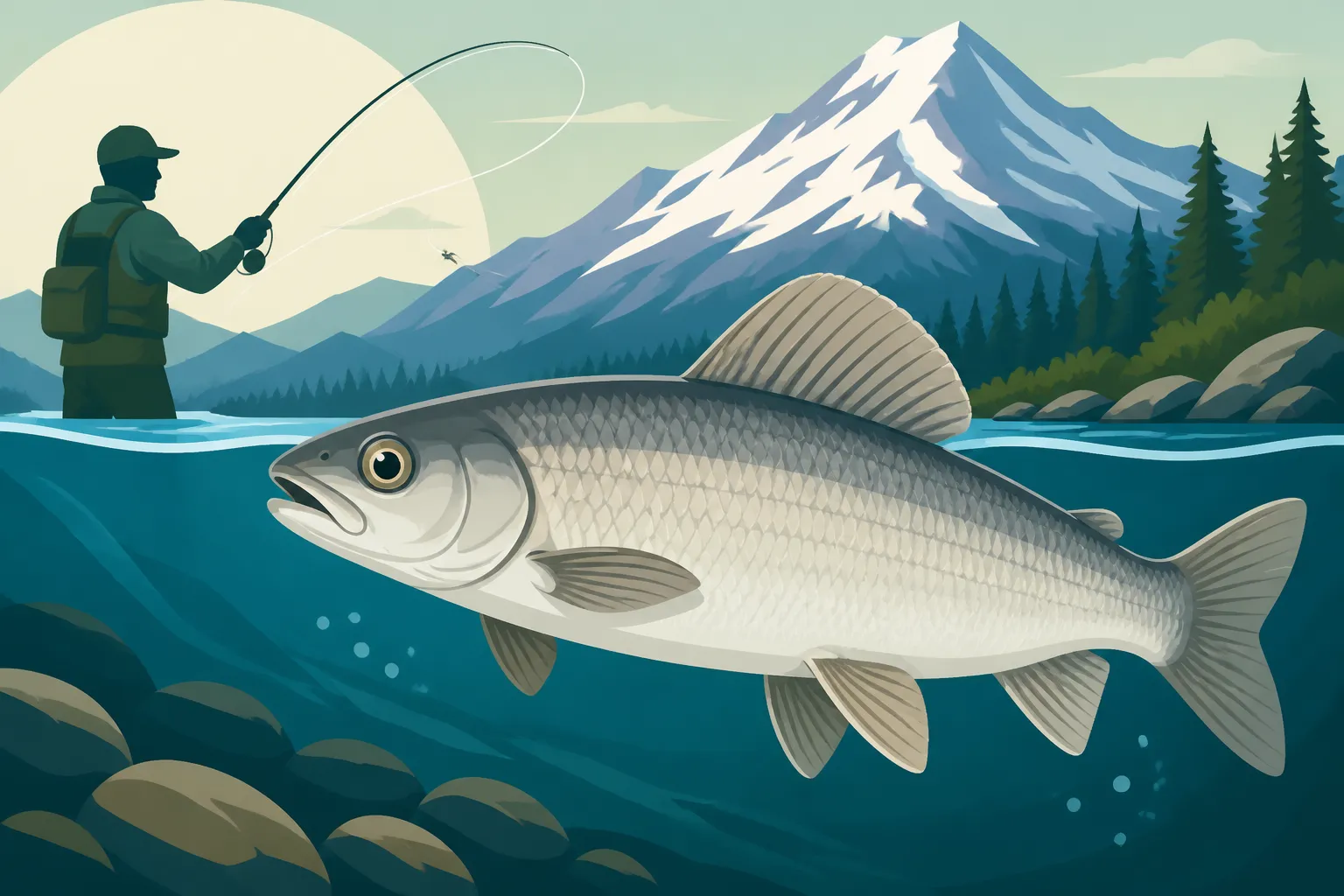
When you first encounter a mountain whitefish, you might notice its torpedo-shaped body, which is generally slender and covered in relatively large, smooth scales. Their coloration tends to be silvery on the sides, fading to a darker olive or brownish-green on the back, and a white or cream belly. They possess a small, subterminal mouth, meaning it's located slightly underneath the snout, which is perfectly adapted for bottom-feeding on aquatic insects. This mouth structure is a key differentiator from most trout, which have more forward-facing mouths.
Another distinct feature is their small adipose fin, a fleshy fin without rays located between the dorsal and caudal (tail) fins, a trait they share with all salmonids. Their tail fin is typically forked, similar to a trout, providing efficient propulsion in river currents. Unlike many trout, mountain whitefish lack any distinct spotting on their bodies, which can be a quick way to tell them apart when you're trying to figure out what you've just hooked. Knowing how to identify a fish you've never caught before is crucial, especially when fishing in waters with diverse species and varying regulations.
Habitat and Range in Washington
In Washington, mountain whitefish thrive in cold, clean, well-oxygenated rivers and streams, particularly those with gravel or cobble bottoms where aquatic insects abound. You'll find them predominantly in the larger river systems east of the Cascade Mountains, such as the Yakima, Wenatchee, Methow, and Columbia River tributaries. They are less common, though not entirely absent, in some of the colder rivers on the west side of the state. These fish are generally found in the deeper runs, riffles, and pools, often congregating in schools, especially during cooler months.
Their adaptability to various stream conditions, as long as the water is cold and clear, means you might find them in main stem rivers, but also in many of their larger tributaries. They are a true indicator of healthy aquatic ecosystems, as they require good water quality and plenty of invertebrate food sources. Understanding their preferred habitat is the first step in successfully targeting them, as they aren't often found in the same slackwater areas as some warm-water species.
Where and How to Find Mountain Whitefish in Washington
Finding mountain whitefish often means looking in the right type of water, which usually involves cooler, moving currents rather than stagnant pools. Once you understand their preferred hangouts, you can tailor your approach to increase your chances of a successful day.
Preferred Waters and Locations
Mountain whitefish are creatures of current. They love sections of rivers and larger streams that feature a moderate to fast flow, often interspersed with deeper pools and runs. Think about areas where the current slows just enough for them to hold comfortably without expending too much energy, but still brings a steady supply of food. Tailouts of riffles, the heads of deeper pools, and seams where fast water meets slower water are prime spots. They'll also hold behind larger rocks or submerged structures that break the current.
In the Yakima River, for instance, you'll find them throughout the colder sections, often in runs alongside the main trout populations. The Wenatchee and Methow Rivers also hold strong populations, particularly in the lower to mid-sections. Pay close attention to current breaks and gravel bottoms; these are often teeming with the insects that make up the bulk of a whitefish's diet. While they might occasionally be found in lakes, rivers are their true domain in Washington.
Seasonal Considerations and Behavior
While you can catch mountain whitefish year-round in Washington, their activity and congregations become particularly noticeable during the colder months, especially fall and winter. As water temperatures drop, many trout become less active, but whitefish often school up in deeper pools, making them a more concentrated target. This is when they become a favorite quarry for anglers looking for some action when salmon and steelhead seasons are winding down or closed. Checking Washington Sport Fishing Seasons and Emergency Closures is always a good idea to know what's open.
During the summer, they tend to be more spread out, and while still catchable, they might require a bit more searching. Fall is an excellent time, as they begin to school up for spawning, often moving into shallower, gravelly runs to deposit their eggs. This pre-spawn and spawn aggregation can lead to some truly epic fishing days. Post-spawn, they retreat to deeper holes to recuperate and feed heavily through the winter. This seasonal behavior dictates not only where you look but also how they might be feeding.
Gear and Techniques for Catching Mountain Whitefish
You don't need highly specialized gear to catch mountain whitefish, which is part of their appeal. Many anglers can use their existing trout or light steelhead setups. However, a few tweaks to your terminal tackle and presentation can make a big difference.
Recommended Tackle and Lures
For mountain whitefish, lighter is generally better. A light to medium-light spinning rod (6'6" to 7'6") paired with a small spinning reel spooled with 4-6 pound monofilament or fluorocarbon line is ideal. The lighter line helps with presenting smaller baits naturally and provides a better feel for their subtle takes. If you prefer fly fishing, a 3- to 5-weight fly rod with a floating line is perfect, often used with a weighted nymph rig.
When it comes to lures and baits, mountain whitefish are primarily insectivores. Small offerings that mimic their natural food sources are key.
- Worms and Maggots: A small piece of a worm or a few maggots on a small hook (size 10-14) can be incredibly effective, especially when drift fished close to the bottom.
- Small Jigs: Tiny jigs (1/32 to 1/16 ounce) in colors like white, pink, or chartreuse, tipped with a maggot or a piece of worm, are deadly. Cast them upstream and let them bounce along the bottom with the current.
- Egg Patterns: During the fall and winter, especially when salmon or trout are spawning, whitefish will readily feed on loose eggs. Small egg-imitation flies or commercially available egg clusters can be very productive.
- Nymph Flies: For fly anglers, standard trout nymph patterns like Prince Nymphs, Hare's Ears, Pheasant Tails, and Stonefly imitations (sizes 12-18) are highly effective. Using a strike indicator and plenty of split shot to get your flies down is crucial. Check out Nymphing for Trout on Washington's Yakima River for more detail on this technique. You can find a fantastic selection of these flies on Amazon.
- Small Spinners: While less common, very small inline spinners (like a #0 or #1 Mepps or Panther Martin) can sometimes entice an aggressive bite, particularly in shallower riffles.
Remember, whitefish have small mouths, so keep your hook sizes appropriate. A small, sharp hook is paramount for good hooksets.
Fishing Strategies and Tips
The most important strategy for catching mountain whitefish is to get your presentation on the bottom. They are bottom feeders, constantly rooting around for aquatic insects, larvae, and eggs.
- Bottom Bouncing/Drift Fishing: This is perhaps the most effective method. Use just enough weight (split shot or a slinky sinker) to tick the bottom occasionally as your bait or jig drifts downstream with the current. Cast upstream and allow your rig to drift naturally into likely holding water. A common mistake is not using enough weight, resulting in your bait floating above where the fish are feeding. This technique is similar to what's often used for trout, but with a focus on heavier bottom contact. Understanding Sinker Weight for Drift Fishing is critical here.
- Pay Attention to Subtle Bites: Whitefish bites can be incredibly subtle, often feeling like a light tap or just added weight on your line. Watch your line closely for any hesitation or unnatural movement. A sensitive rod tip is a huge asset.
- Fish in Schools: Once you catch one whitefish, chances are there are more in the same vicinity. Work the same run thoroughly, as they often congregate. You can sometimes catch multiple fish from the exact same spot.
- Stay Mobile: If a spot isn't producing after 15-20 minutes, move to another likely area. Whitefish can be picky, or they might simply not be in that particular spot at that moment.
- Use a Dropper Rig: For fly anglers or even spin anglers using jigs, a dropper rig can be very effective. This involves tying a second, shorter leader and fly/jig off the bend of your first hook or off a small swivel above your main presentation. This allows you to present two different offerings or cover a slightly larger vertical zone in the water column. How to Fish a Dropper Rig for Trout gives great insight into this.
While less common, some anglers enjoy targeting whitefish with dry flies during prolific insect hatches, especially in summer. However, the bulk of the action will be subsurface.
Mountain Whitefish: A Culinary Delight or Just a Bycatch?
This is where the debate often heats up among anglers. Many people catch whitefish as a "bycatch" while targeting trout or steelhead and dismiss them as not being good table fare. However, a significant number of dedicated whitefish anglers will tell you they are missing out on a delicious secret.
The Debate on Eating Whitefish
Historically, mountain whitefish were a vital food source for indigenous peoples in the Pacific Northwest, valued for their firm, white flesh. Fast forward to today, and opinions are divided. Some anglers consider them bony and bland, while others swear they are one of the best-eating freshwater fish, especially when properly prepared. The truth, as often is the case, lies somewhere in the middle, and heavily depends on how they are handled and cooked.
The flesh of a mountain whitefish is white, flaky, and delicate. It's mild in flavor, which some might interpret as bland, but others see as a blank canvas for seasonings. One of the biggest factors in taste is the water they come from; fish caught from cold, clean, flowing rivers tend to taste better than those from warmer or muddier waters. They are not known for being particularly oily, unlike salmon, which can be a pro or con depending on your preference. When caught and kept fresh, they offer a very pleasant eating experience. Remember, Is It Illegal to Waste a Legally Caught Salmon? – this principle applies to any legally caught fish in Washington, including whitefish.
Preparing Your Catch
To truly appreciate mountain whitefish on the table, proper handling is paramount. As soon as you catch a whitefish you intend to keep, dispatch it quickly and get it on ice. This chills the meat, prevents spoilage, and helps preserve its delicate flavor. Many anglers advocate for bleeding them as well, which can further improve the taste and texture.
Cleaning them is straightforward. They can be filleted like any other fish, though their smaller size and numerous small bones can make filleting a bit trickier than with a larger trout. Some prefer to scale and gut them, then cook them whole.
When it comes to cooking, versatility is key:
- Pan-Frying: This is a classic method. Lightly flour or bread the fillets or whole fish, then pan-fry in butter or oil until golden brown and flaky. A squeeze of lemon juice and some fresh herbs are all you need.
- Baking/Roasting: Whole, gutted whitefish can be baked with herbs, lemon slices, and a pat of butter inside the cavity. This keeps the meat moist and enhances its subtle flavors.
- Smoking: Whitefish take well to smoking, developing a rich, savory flavor. This is an excellent way to prepare a larger batch of fish.
- Fish Tacos: Flaky whitefish fillets make fantastic fish tacos when seasoned and quickly pan-fried.
Don't let preconceived notions about "trash fish" stop you from trying a mountain whitefish. When caught from pristine Washington waters and prepared with care, they can certainly hold their own against some of the Best-Eating Fish in Washington Waters. You might just discover a new favorite.
Disclaimer
This article is for general informational purposes only and does not constitute professional advice. Laws, prices and regulations vary by location and change over time. Consult a qualified professional for guidance on your specific situation.