Sinker Weight for Drift Fishing
One of the most frustrating things for any river angler is watching your bait or lure either zoom past the fish zone or get instantly snagged on the bottom. Getting that perfect, natural drift is absolutely critical for success, and it all hinges on one often-overlooked detail: your sinker weight. This guide will dive deep into understanding how to choose and fine-tune your sinker weight for effective drift fishing in Washington's diverse waters, helping you present your offering right where the fish are holding.
The Drift Fishing Challenge: Why Sinker Weight Matters So Much
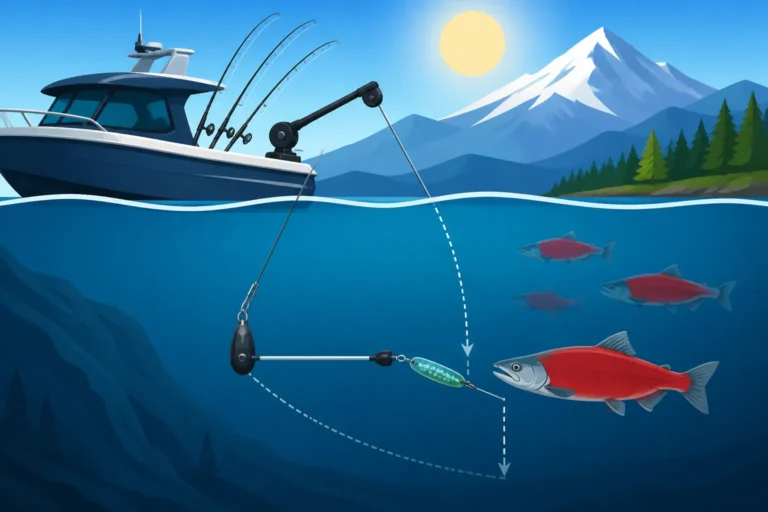
Drift fishing, particularly for prized species like steelhead and salmon in Washington rivers, is all about presenting your bait or lure in a way that mimics natural food tumbling along the bottom. You want your offering to travel at the same speed as the current, occasionally ticking the riverbed without getting hung up. This sounds simple enough, right? But anyone who's spent time on rivers knows it's a constant battle against varying currents, depths, and bottom structures.
The core frustration many anglers face is finding that Goldilocks zone: not too heavy, not too light, but just right. If your sinker is too light, your bait or lure will "fly" over the heads of holding fish, staying suspended in the water column above where they're typically looking for food. It might look natural to you from above, but below the surface, it’s not reaching the strike zone. You're effectively fishing unproductive water, and you'll likely go home empty-handed.
Conversely, an overly heavy sinker is a recipe for disaster. While it will certainly get your bait to the bottom, it'll drag and plow through the riverbed, looking completely unnatural. Worse yet, it'll snag constantly, leading to lost tackle, wasted time re-tying, and potentially spooking any fish in the vicinity. There’s nothing more disheartening than feeling that solid thump of a snag when you were sure it was a fish. Mastering the art of drift fishing for species like steelhead, as detailed in our guide on Drift Fishing for Steelhead in Washington Rivers, means understanding this delicate balance.
Factors Influencing Your Sinker Weight Choice
Choosing the correct sinker weight isn't a "one size fits all" decision; it's a dynamic process influenced by several key environmental and tackle-related factors. Understanding these elements will empower you to make informed adjustments on the water, greatly increasing your chances of success.
Water Speed and Current
The speed and strength of the river's current are perhaps the most dominant factors dictating your sinker weight. Imagine trying to hold a feather in a strong wind versus a light breeze – the principle is much the same underwater. In slow-moving water, where the current is gentle and lazy, you'll need significantly less weight to get your presentation down to the bottom. Sometimes, even just a few small split shots might be enough to achieve a natural drift.
However, as the current picks up, so too must your sinker weight. Fast, powerful currents, common in many of Washington's salmon and steelhead rivers, particularly during high-water events or seasonal run-offs, will quickly lift a light sinker off the bottom. You'll find yourself needing to step up to heavier pencil lead, slinkies, or even pyramid weights to cut through the water column and maintain bottom contact. Rivers like the mighty Cowlitz, the swift Skagit, or even the Skykomish with its varied runs, can demand vastly different weights depending on the section and current conditions.
Water Depth
It might seem obvious, but the depth of the water also plays a crucial role. A shallow riffle, perhaps only a few feet deep, will require far less weight than a deep, swirling hole or a long, dark run that plunges to 10 or 15 feet. Gravity is constant, but the amount of water your line and leader have to cut through, and the time it takes for your sinker to reach the bottom, increases with depth.
In deeper water, the current can also behave differently, sometimes being slower closer to the bottom due to friction, or having swirling eddies that can make maintaining a consistent drift challenging. More weight helps your sinker maintain a more vertical path through the water column, getting it to the bottom faster and keeping it there during the drift. Conversely, too much weight in shallow water not only increases snags but also makes your presentation less subtle, potentially alarming wary fish.
Line Diameter and Type
The fishing line you choose, specifically its diameter and material, has a subtle yet important impact on how much sinker weight you'll need. Thicker fishing lines, typically monofilament, create more drag in the water. This increased resistance acts like a tiny underwater parachute, causing your line and by extension, your sinker, to be lifted more easily by the current. If you're using a heavier monofilament line, say 15-pound test or more for leader material, you might find yourself needing to add a touch more weight to achieve the same bottom-ticking drift you'd get with a thinner line.
Braided lines, on the other hand, have a much smaller diameter for their breaking strength. This thinner profile cuts through the water with significantly less resistance. While braid is usually used as your main line, and you'd still have a leader of mono or fluorocarbon, the reduced drag from the main line means the current has less leverage to lift your entire presentation. This often allows anglers to get away with slightly lighter sinker weights when using braid, leading to a more sensitive feel and fewer snags. Every small advantage counts when you're trying to fool a wary fish.
Type of Bait or Lure
Believe it or not, the bait or lure you're using can also influence your sinker weight requirements. Some baits have a natural buoyancy or density that can either help or hinder your desired drift. For instance, a large, juicy cured roe bag, especially one that's been tied tightly, has a certain amount of mass that helps it sink. If you're learning How to Fish Roe Bags for Salmon, you'll notice this. While not enough to negate the need for a sinker, it might mean you can use a slightly lighter weight than you would with a highly buoyant lure.
Conversely, some popular drift fishing lures, like certain types of plastic worms or even large drift bobbers (like a Cheater) used in combination with bait, can be quite buoyant. These buoyant offerings actively resist sinking, trying to float up in the water column. To counteract this lift and ensure your presentation stays near the bottom, you’ll need to increase your sinker weight. It's a constant give-and-take, balancing the inherent properties of your bait with the environmental conditions.
Common Sinker Weights and When to Use Them in Washington
The world of fishing sinkers is surprisingly diverse, with different shapes and materials designed for specific applications. For drift fishing in Washington, a few types stand out for their effectiveness and manageability.
Pencil Lead and Slinky Weights
These are absolute workhorses for river drift fishing, and for good reason. Pencil lead is literally just a length of lead wire, often threaded through surgical tubing to create a "slinky" that's attached to your line. Slinky weights, pre-made versions often containing small lead shot inside a tough fabric tube, are designed to be extremely snag-resistant. Their long, slender profile allows them to slither over and around rocks and other bottom obstructions rather than wedging into them.
Typical weights range from 1/4 ounce for slower, shallower stretches to 1 ounce or even 1.5 ounces for faster, deeper water. You'll find these invaluable on rivers known for their rocky bottoms, like many of the Olympic Peninsula rivers such as the Hoh River or Sol Duc River, where traditional lead can get hung up almost instantly. They provide a continuous, light "tick" as they bounce along, signaling bottom contact without constant snagging.
Pyramid and Bell Sinkers
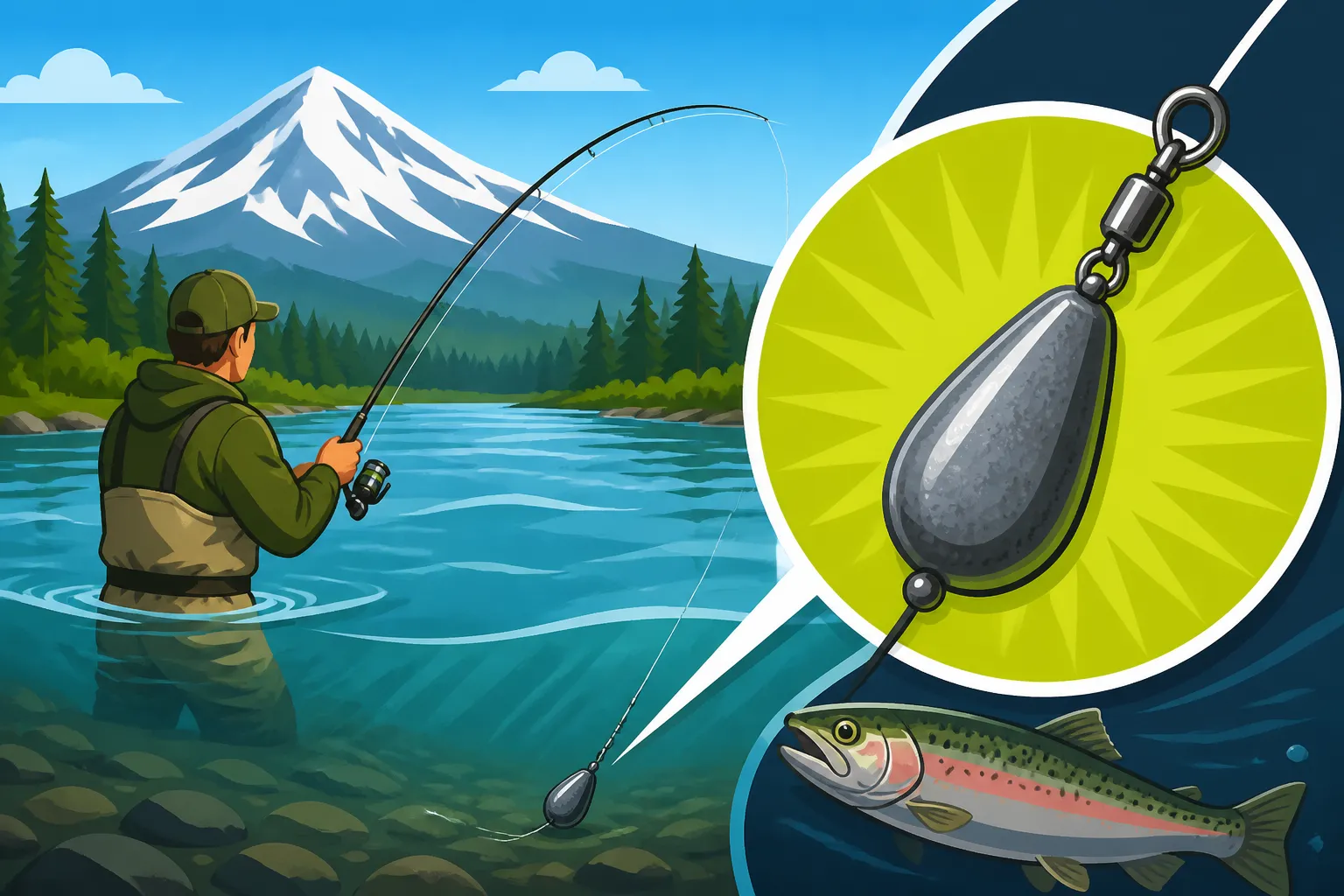
Pyramid and bell sinkers are classic lead weights, recognizable by their distinct shapes. Pyramid sinkers, with their four-sided, pointed design, are excellent at digging into sandy or muddy bottoms and holding their position, which makes them popular for still-fishing or plunking rigs. Bell sinkers are teardrop-shaped and also offer decent bottom-holding capability.
However, for active drift fishing in rivers, these are generally less ideal. Their shape, especially the points of a pyramid, makes them prone to wedging between rocks. While they can range from 1/2 ounce up to several ounces, using them for drift fishing on anything but the cleanest, sandiest bottoms will likely lead to frequent snags and lost tackle. They might see occasional use in very slow, soft-bottomed sections, but for the typical varied riverbed in Washington, you'll want to opt for something more snag-resistant when drift fishing.
Disc or Flat Weights
Disc or flat weights, sometimes called "cannonball" weights but with a flattened profile, offer a good compromise between holding power and snag resistance. Their flat sides help them "tumble" and roll along the bottom rather than getting stuck. They don't dig in as aggressively as a pyramid, nor do they snake through rocks quite like a slinky, but they offer a natural presentation and can be quite versatile.
You'll commonly find these in weights from 1/2 ounce to about 1.5 ounces. They're a solid all-around choice for many drift fishing scenarios where you need to get down and stay down, but still want to minimize snags. They are particularly effective in runs with a mix of gravel and smaller rocks, providing good bottom feel without constant hang-ups.
Split Shot and Removable Weights
Split shot and other small, removable weights are your fine-tuning tools. These are generally much lighter, ranging from tiny BB-sized shots to larger sizes around 1/8 ounce or 1/4 ounce. They're excellent for adding incremental weight to an existing setup, or for very light presentations in extremely slow or shallow water. They can be pinched directly onto your leader or main line (though be careful not to damage the line) or come in soft, reusable forms.
These smaller weights are often used in conjunction with float fishing rigs, where they help balance a bobber and jig for steelhead, as explained in How to Fish a Bobber and Jig for Steelhead. In drift fishing, they might be used to subtly adjust the sink rate of a highly buoyant bait or to add just enough extra weight to a slinky to get it to tick bottom more consistently. They are rarely used as the sole sinker in strong currents but are indispensable for precise adjustments.
The "Feel" of the Drift: Mastering Your Sinker Weight
Beyond the science of water speed and sinker types, there's an art to drift fishing that comes down to feel. This tactile connection to the bottom of the river is what separates a truly effective drift angler from someone just blindly casting.
Adjusting on the Fly
The mantra for sinker weight is simple: start light and add weight until you occasionally feel the bottom. When you cast your drift fishing rig upstream and let it tumble down, you should be able to feel a faint "tick-tick-tick" through your rod. This is your sinker gently bouncing off the gravel and rocks. It’s not a constant drag, which indicates too much weight, but a periodic, subtle contact. If you don't feel anything at all, your sinker is too light and is riding above the fish. Add a bit more weight – perhaps go from a 3/8 oz slinky to a 1/2 oz, or add a few more pieces of pencil lead if using a custom rig.
Conversely, if you're constantly feeling a heavy drag, or worse, getting snagged every few drifts, you're too heavy. Immediately reduce your weight. The goal is a controlled, natural drift, not a plowing motion. Many experienced anglers in Washington carry a small assortment of various sinker weights in a vest or small tackle box, making it easy to swap them out in seconds. The quicker you can adjust, the more time your bait spends in the strike zone.
River Conditions and Dynamic Adjustments
Washington's rivers are incredibly dynamic. What worked perfectly yesterday might be completely wrong today. After a heavy rain, rivers like the Cowlitz or the Green River can swell dramatically, bringing increased flow and turbidity. Our guide on Does Rain Improve Steelhead Fishing on Washington's Coastal Rivers? delves into this. During these "blown out" conditions, the current will be much stronger, demanding significantly heavier sinkers, sometimes double or triple what you might use during normal flows. Conversely, during low, clear summer flows, you'll need to lighten up considerably to avoid spooking fish and to achieve a more delicate presentation.
Furthermore, different sections of the same river will present varying conditions. A deep, fast run where the main current rips through will require more weight than a slower, shallower tail-out or a quiet eddy. It’s crucial to observe the water, understand its nuances, and be prepared to change your weight as you move from one fishing spot to another. Learning How to Read Water for Bank-Fishing Salmon is a skill that directly translates into knowing when and where to adjust your sinker weight. The angler who pays attention to these details and adjusts accordingly is the one who consistently puts fish in the net.
Practical Tips for Washington Anglers
Fishing in Washington offers an incredible variety of waters and species, but the constant thread of effective drift fishing remains. Here are some actionable tips to help you master sinker selection:
- Carry a Range of Weights: Never go to the river with just one size sinker. Aim for an assortment that covers various conditions, typically from 1/4 ounce up to 1.5 ounces in the lead or slinky style. This preparedness is key for adjusting to unexpected river changes.
- Observe Local Anglers: If you're new to a particular river or spot, watch what the seasoned locals are doing (respectfully, of course!). While you might not see their exact weight, you can often deduce if they're fishing heavy or light based on their drifts and snag rates. This aligns with a broader strategy of What to Check Before Every Washington Fishing Trip.
- Match the Fish: For most salmon and steelhead, a slow, methodical drift that occasionally ticks the bottom is often preferred. These fish are usually holding close to the riverbed, and a bait that tumbles naturally into their strike zone is irresistible. Trout, on the other hand, might sometimes suspend higher, allowing for lighter weights.
- Experiment Fearlessly: Don't be afraid to try different weights. If you're not getting bites or are snagging too much, change it up! Sometimes, just a slight increase or decrease can make all the difference. The beauty of drift fishing is that it encourages active experimentation.
- Source Your Sinkers Wisely: While local tackle shops are fantastic resources for advice and gear, you can also find a good selection of various sinker types, including slinkies and pencil lead, from online retailers like Amazon. This ensures you're always stocked for your next trip to The Best Places to Fish in Washington State.
By internalizing these principles and practicing on the water, you'll quickly develop an intuitive sense for the right sinker weight, making your drift fishing experiences in Washington far more productive and enjoyable.
| Sinker Type | Typical Weight Range (oz) | Ideal Conditions | Pros | Cons |
|---|---|---|---|---|
| Pencil Lead/Slinky | 1/4 – 1.5 | Rocky, snaggy bottoms; varied currents | Highly snag-resistant, natural drift, good bottom feel | Can be costly if lost often, may twist line without swivels |
| Disc/Flat | 1/2 – 1.5 | Mixed gravel/rock, moderate currents | Tumbles naturally, less snag-prone than pyramids, good bottom contact | Not as snag-resistant as slinkies, can roll too fast in heavy current |
| Pyramid/Bell | 1/2 – 2+ | Sandy/muddy bottoms; still fishing/plunking | Holds bottom well in current, widely available, inexpensive | Very prone to snagging on rocks, unnatural drift for active fishing |
| Split Shot | 1/32 – 1/4 | Very light presentations, fine-tuning, shallow | Highly adjustable, subtle, inexpensive, easy to add/remove | Too light for most primary drift fishing in current, can damage line |
Disclaimer
The information provided in this guide is for general informational purposes only. Fishing regulations in Washington State can change frequently, often with little notice, due to in-season rule changes by the Washington Department of Fish and Wildlife (WDFW). It is the sole responsibility of the angler to consult the most current WDFW regulations pamphlet and emergency rule updates before engaging in any fishing activity. Adherence to all local, state, and federal fishing laws and regulations is mandatory.