Resident Coho and Blackmouth, Explained
For many anglers, especially those new to the beautiful, yet complex, waters of Washington, terms like "resident coho" and "blackmouth" can sound a bit like secret code. You might hear seasoned locals talk about them, leaving you wondering if you're missing out on some incredible fishing opportunities or, worse, if you're accidentally targeting the wrong fish. It's a common frustration, trying to keep up with the unique life cycles and local lingo of our salmon. This guide is designed to cut through the confusion, explaining exactly what resident coho and blackmouth are, where they fit into the broader Washington fishing scene, and how you can successfully pursue these fascinating fish.
Understanding Resident Salmon: What Makes Them Stay?
When we talk about salmon, most people envision a grand migration: young fish heading out to the ocean to feed and grow for years, then returning to their natal rivers as adults to spawn. This is the classic, epic journey that defines most Pacific salmon species. However, nature is full of surprises, and some salmon decide to break from tradition, opting for a more localized existence. This is precisely what happens with "resident coho."
The Life Cycle of a Salmon: A Quick Primer
To truly appreciate resident coho, it helps to briefly touch on the typical salmon life cycle. Most coho salmon, after hatching in freshwater streams and spending a year or two as juveniles (called parr and then smolts), undergo a dramatic physiological change that allows them to survive in saltwater. They then migrate out to the vast Pacific Ocean, often traveling hundreds or even thousands of miles, where they feed voraciously on smaller fish and invertebrates. After one to three years in the ocean, they return to the very same freshwater systems where they were born, driven by an instinct to spawn and complete their life cycle. It's an incredible feat of navigation and endurance.
Why Some Coho Become Residents
So, why do some coho skip the ocean adventure altogether? It's not a decision they make consciously, of course, but rather a combination of genetic predispositions and environmental factors. Some populations of coho have adapted to remain in freshwater or brackish estuarine environments year-round. This often happens in systems where there's an abundant food supply, consistent water quality, and refuge from predators, making the perilous ocean journey unnecessary or even less advantageous for survival.
These resident coho typically don't grow as large as their ocean-going brethren, as the ocean offers a much richer buffet for rapid growth. However, they can still provide fantastic fishing action, often displaying aggressive feeding habits. Their smaller size also makes them a great target for lighter tackle, providing an exciting fight without requiring heavy gear. For many anglers, the opportunity to catch a salmon species without having to brave the open ocean or navigate complex river systems during a big run is a welcome change. These smaller, feisty coho are a testament to salmon's adaptability and offer a unique, often overlooked, angling experience.
Where You'll Find Resident Coho in Washington
In Washington, resident coho are typically found in a few key environments. The most common places are larger lakes and reservoirs that are connected to salmon-bearing rivers or were historically part of a salmon's natural range. These lakes provide ample food and habitat for coho to thrive without ever feeling the pull of the saltwater. Think of places like Lake Washington, Lake Sammamish, or even some of the larger reservoirs in the eastern part of the state.
They might also be found in certain estuaries or lower river reaches where salinity levels are fluctuating, allowing them to adapt to a semi-saltwater existence without fully committing to the open sea. These fish are usually targeted in the spring, summer, and fall, outside of the main ocean-run coho seasons. Anglers seeking these fish often use smaller spoons, spinners, or even fly patterns designed for trout, as their diet and behavior often mimic that of larger resident trout. It's a different kind of salmon fishing, one that often rewards stealth and finesse over sheer power. When you're planning your trip, remember to check the specific regulations for the lake or river you're visiting, as they can differ significantly from ocean or mainstem river rules. Washington Fishing Regulations Every Angler Should Know is always a good read before heading out.
Decoding "Blackmouth": The Young Kings of Puget Sound
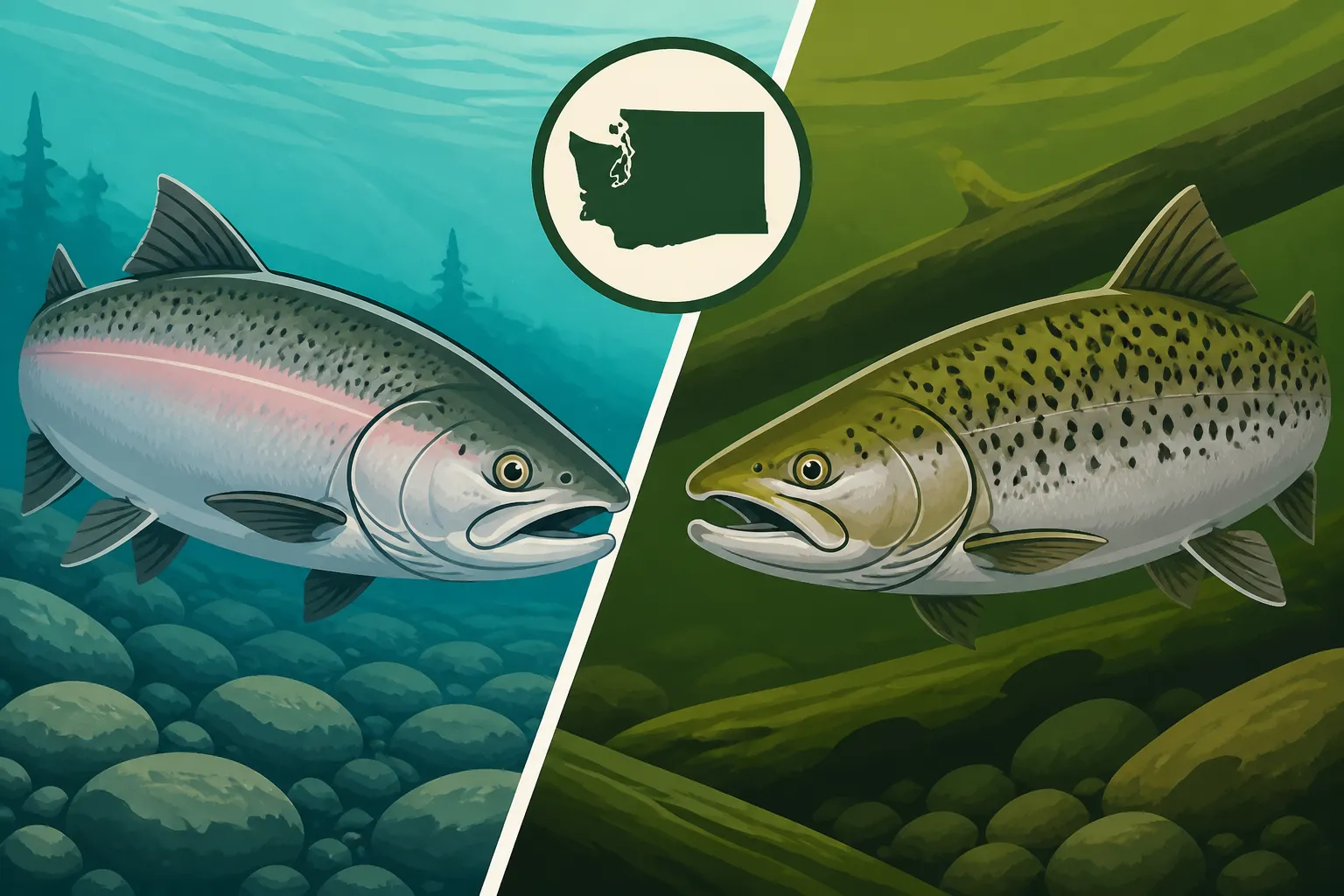
Now, let's talk about "blackmouth." This term doesn't refer to a distinct species of salmon, but rather a specific life stage and behavior of Chinook salmon, Washington's revered "King" salmon. While resident coho choose to stay, blackmouth are merely biding their time, feeding and growing stronger before their grand ocean migration.
What Exactly is a Blackmouth?
A "blackmouth" is simply an immature Chinook salmon that spends its adolescent years feeding and growing in the protected, nutrient-rich waters of Puget Sound, Hood Canal, or the Strait of Juan de Fuca. Unlike the adult Chinook that return to spawn in the summer and fall, blackmouth are typically caught during the winter months, from roughly October through April, when they are actively bulking up before heading out to the open Pacific Ocean. They are usually one to three years old and haven't yet developed the mature characteristics or the powerful fighting spirit of their larger, older counterparts, but they still put up a fantastic battle.
These fish are the future of our Chinook runs, making their presence in Puget Sound a sign of healthy populations. They are often smaller than returning adults, usually ranging from 5 to 20 pounds, though larger ones can certainly be caught. For many Puget Sound anglers, the blackmouth season is a cherished tradition, offering consistent salmon fishing opportunities during the colder months when other fisheries might be closed or less productive. It’s a chance to get out on the water, even when the air is crisp, and feel the thrill of a king salmon tugging on your line.
Why They Call Them Blackmouth
The name "blackmouth" comes from a very literal and easy-to-spot characteristic: the inside of their mouth. If you gently lift the gill plate or open the mouth of a Chinook salmon, you'll notice that the entire gum line and mouth cavity are black. This is a distinguishing feature of Chinook salmon. While all Chinook have this characteristic, the term "blackmouth" specifically refers to these immature, feeding fish in the marine waters of Puget Sound.
It's a simple, descriptive name that has stuck with generations of anglers, helping to differentiate these adolescent fish from the mature, returning adult Chinook, which are often just referred to as "kings" or "Chinook." Knowing this small detail can be helpful when trying to identify your catch on the water, especially if you're new to salmon fishing. How to Identify a Blackmouth Chinook dives deeper into the specific identification traits.
Prime Blackmouth Territory and Seasons
The best place to find blackmouth is within the marine waters of Puget Sound, the Strait of Juan de Fuca, and Hood Canal. These areas serve as vast feeding grounds for these young Chinook, offering a buffet of baitfish like herring, candlefish, and anchovies. They tend to congregate around structure—underwater ledges, points, reefs, and humps—where baitfish are likely to hold. Washington's Puget Sound Fishing Spots for Salmon and Bottomfish is an excellent resource for pinpointing these areas.
The prime blackmouth season typically runs from late fall through early spring, roughly October through April, though specific marine areas will have different opening and closing dates based on conservation goals. During these months, the blackmouth are actively feeding and growing, making them receptive to various trolling and jigging techniques. You'll often find them suspended at various depths, anywhere from 50 to 200 feet, depending on bait concentrations and water temperatures. This time of year, while often chilly, provides some of the most consistent salmon fishing action in the region, drawing anglers out in droves.
Fishing for Resident Coho and Blackmouth: Techniques and Considerations
Fishing for resident coho and blackmouth requires slightly different approaches due to their varied habitats, sizes, and feeding behaviors. Understanding these nuances will significantly increase your chances of success.
Gear and Tactics for Resident Coho
When you're chasing resident coho, particularly in lakes, think lighter tackle. These fish are generally smaller than their ocean-going cousins, so ultra-heavy gear isn't necessary and can actually be counterproductive.
- Rods and Reels: A light to medium-light spinning rod (7-8 feet) paired with a reel spooled with 6-10 pound test monofilament or fluorocarbon is often ideal. If you're a fly angler, a 5-7 weight fly rod can offer incredible sport.
- Lures: Resident coho love small, flashy presentations that mimic baitfish or insects. Think spoons in silver, brass, or bright colors (like a size 0 or 1 Dick Nite or a small, lightweight Kastmaster). Small spinners (Mepps, Rooster Tail) in similar colors or with bright orange accents are also very effective. For fly fishing, woolly buggers, small clousers, or even trout-style nymphs can work wonders. Many anglers also have success trolling small wedding ring spinners tipped with a piece of worm.
- Bait: While lures are popular, bait can also be deadly. A small piece of cured coho roe, a prawn tail, or even a worm can be fished under a float or trolled slowly.
- Techniques:
- Trolling: This is a very popular method in lakes. Use a small dodger or flasher ahead of your lure or bait, trolling at slow speeds (1-2 mph). Vary your depth until you find where the fish are holding. Downriggers are often used to precisely control depth.
- Casting & Retrieving: From shore or a boat, casting and retrieving small spoons or spinners near drop-offs, weed lines, or structure can be productive.
- Fly Fishing: For fly anglers, stripping streamers or nymphing near lake inlets or outflows can yield results.
- Key Consideration: Resident coho can be quite spooky, especially in clear lake waters. Being stealthy and presenting your offering naturally is often more important than sheer power. Think about casting accuracy and subtle retrieves.
Targeting Blackmouth: Trolling and Jigging
Blackmouth fishing in Puget Sound is generally a boat-based affair, requiring more robust gear to handle deeper water and potentially larger fish, as well as the currents of the Sound.
- Rods and Reels: A medium to medium-heavy trolling rod (8.5-10.5 feet) paired with a levelwind or conventional reel spooled with 25-30 pound test monofilament or braided line is standard. Many anglers opt for braided line with a fluorocarbon leader for increased sensitivity and less stretch.
- Lures and Bait: Blackmouth are voracious eaters, often targeting herring and other baitfish.
- Trolling: The most common method involves trolling a flasher (like a Hot Spot or Pro-Troll) ahead of a spoon, hoochie, or bait. Popular spoons include Coho Killers, Silver Horde, and Tomic plugs in baitfish patterns (greens, blues, whites, chrome). Hoochies (squid imitations) are often fished behind a flasher. Real or artificial herring is a go-to bait, often rigged in a herring helmet or with a double-hook rig. You can find a good selection of these on Amazon to get started.
- Jigging: When blackmouth are schooling deeper, heavy jigs (e.g., P-Line Laser Minnow, Point Wilson Dart) in chartreuse, blue, or glow patterns can be very effective. Drop the jig to the bottom, then reel up 10-20 feet and begin a sharp jigging motion.
- Techniques:
- Downrigger Trolling: This is the dominant method for blackmouth. Downriggers allow you to precisely control the depth of your lures or bait, which is crucial for hitting the narrow feeding zones of blackmouth. Vary your trolling speed (usually 2-3 mph) and depth until you find where the fish are active. Trolling for Salmon in Washington's Puget Sound offers more in-depth techniques.
- Mooching: While not as common as downrigger trolling for blackmouth, mooching (fishing cut-plug herring on a slow drift) can be effective in certain areas with good currents.
- Jigging: As mentioned, this is a great alternative when fish are congregated.
- Key Consideration: Blackmouth often feed aggressively, but locating them can be the biggest challenge. A good fish finder is invaluable for spotting bait balls and salmon schools. Paying attention to current breaks, tide changes, and reports from other anglers can make a huge difference. For more insights on when to fish, check out Best Time to Fish for Chinook in Washington's Puget Sound.
Key Differences in Behavior
While both offer exciting angling, there are distinct behavioral differences between resident coho and blackmouth that inform fishing strategy:
| Feature | Resident Coho | Blackmouth (Chinook) |
|---|---|---|
| Habitat | Primarily freshwater lakes, some estuaries/rivers. | Marine waters of Puget Sound, Strait of Juan de Fuca. |
| Size | Generally smaller (1-5 lbs), rarely exceeding 10 lbs. | Larger (5-20 lbs average), can exceed 30 lbs. |
| Diet | Insects, small baitfish, zooplankton, crustaceans. | Larger baitfish (herring, candlefish, anchovies). |
| Season | Typically spring, summer, fall (varies by lake/river). | Primarily winter (Oct-April), feeding before ocean migration. |
| Growth Stage | Mature, freshwater-adapted fish. | Immature, ocean-bound Chinook salmon. |
| Fight Style | Energetic, acrobatic jumps, strong runs. | Powerful, deep runs, head shakes, often staying deep. |
| Preferred Depth | Variable, often shallower near structure/thermocline. | Often deep (50-200ft) following bait. |
| Tackle | Light to medium-light spinning/fly gear. | Medium to medium-heavy trolling/jigging gear. |
Understanding these distinctions allows you to approach each fishery with the right mindset and equipment, ensuring a more productive and enjoyable experience. For example, knowing that How Big Washington Coho Salmon Get can help you select appropriate tackle, while recognizing How Big Washington Chinook Salmon Get will prepare you for a stronger fight.
Regulations and Conservation: Protecting These Unique Fisheries
Washington State takes its salmon conservation seriously, and rightly so. Both resident coho and blackmouth play crucial roles in our ecosystem, and their management is designed to ensure sustainable fisheries for future generations. Understanding the specific regulations is not just about avoiding fines; it's about being a responsible angler and contributing to conservation.
Licensing and Endorsements
First things first: regardless of what you're fishing for, you need a valid Washington fishing license. For resident coho in freshwater lakes, a freshwater fishing license is typically sufficient. However, for blackmouth in Puget Sound, you'll need a saltwater endorsement or a combination license that covers both freshwater and saltwater. It’s always best to have the right paperwork in order before you even wet a line. Check the current Washington Department of Fish and Wildlife (WDFW) regulations pamphlet or their website for the most up-to-date licensing requirements. You can often purchase these licenses online or through licensed vendors, making it easy to prepare for your trip.
It's critical to know that regulations are subject to emergency rule changes, often announced with little notice, especially for migratory species. Always check for updates before you head out, as daily limits, open areas, and even allowed gear can change overnight.
Specific Rules for Resident Coho
Regulations for resident coho primarily focus on daily bag limits, minimum size restrictions, and specific gear restrictions that might apply to individual lakes or river sections. Because these fish don't undergo the same mass migration as ocean-run coho, their management is often integrated into broader freshwater trout or general salmon regulations for the specific body of water.
For example, a lake might have a general trout limit, but then a specific provision for coho. Some lakes might have slot limits, where fish within a certain size range must be released, or a maximum size limit to protect larger, spawning-potential fish. In some cases, bait might be restricted, or only artificial lures with single barbless hooks might be allowed. Always, and I mean always, consult the WDFW fishing regulations pamphlet for the specific lake or river you intend to fish. It's truly your bible for staying legal and fishing ethically. The Washington Catch Record Card and What It Requires might also apply if you're keeping salmon, so know your requirements.
Blackmouth Regulations
Blackmouth regulations tend to be more complex due to their status as immature Chinook and their presence in marine areas with fluctuating populations. Management is often broken down by specific Marine Areas within Puget Sound, each with its own set of rules.
Key aspects of blackmouth regulations include:
- Season Dates: As mentioned, blackmouth seasons are typically in the winter, but exact open and close dates vary significantly by Marine Area. Some areas might open later, close earlier, or have intermittent closures.
- Daily Bag Limits: There will always be a daily bag limit, often one or two salmon per angler.
- Minimum Size Limits: Blackmouth often have a minimum size limit (e.g., 20 or 22 inches), designed to protect smaller, still-growing fish. Keeping undersized fish is a serious violation.
- Marked vs. Unmarked Fish: Many regulations specify whether you can keep "marked" (hatchery-origin, indicated by a missing adipose fin) or "unmarked" (wild-origin, with an intact adipose fin) salmon. Wild Chinook conservation is a high priority, so often, only marked hatchery fish can be retained.
- Barbless Hooks: In many marine areas, especially during blackmouth season, barbless hooks are mandatory. This is a conservation measure to increase the survival rate of released fish. You can find many compliant hooks easily on Amazon or at your local tackle shop.
- Catch Record Card: Any time you keep a salmon (including blackmouth) or steelhead, it must be immediately recorded on your Catch Record Card. This data is vital for WDFW to monitor fish populations and adjust future seasons. Failing to fill out your card correctly or immediately is a common violation.
The dynamic nature of these regulations means you can never assume last year's rules are this year's rules. Conditions change, populations fluctuate, and conservation needs evolve. Make it a habit to check the WDFW website for emergency rule changes, especially if you're fishing near areas like the mouth of the Columbia or popular Puget Sound spots. Staying informed is the best way to enjoy your time on the water and help ensure these incredible fisheries remain healthy for everyone.
Disclaimer
This article is for general informational purposes only and does not constitute professional advice. Laws, prices and regulations vary by location and change over time. Consult a qualified professional for guidance on your specific situation.