How Many Rods You Can Fish at Once in Washington
It’s a tale as old as time, or at least as old as fishing regulations themselves: you’re out on a beautiful Washington lake, the bite is on, and you can’t help but think, “If only I had another line in the water!” This common daydream quickly leads to a nagging question for many anglers – just how many rods are you actually allowed to fish with at once in Washington State? Navigating the rules around rod limits can feel like trying to untangle a particularly nasty leader knot, especially when different waters and species seem to have their own unique mandates. This guide is here to unravel that confusion, detailing the standard rules, explaining the popular Two-Pole Endorsement, and helping you understand when and where you can legitimately maximize your lines in the water.
The Standard Rule: One Rod Per Angler (Typically)
For most recreational fishing in Washington State, the baseline expectation is that each licensed angler is allowed to fish with one rod and line. This isn't just a random guideline; it's a foundational principle embedded in fisheries management across many states, designed to ensure fair chase, manage fishing pressure on finite resources, and distribute the opportunity to catch fish more equitably among anglers. Imagine if everyone could run a dozen lines simultaneously; it would dramatically increase harvest rates and could quickly deplete fish populations, especially in smaller rivers or lakes.
This "one rod" rule applies across a vast majority of Washington’s diverse fishing opportunities. Whether you’re fly-fishing a pristine mountain stream for trout, casting from the bank of a local pond, or even trolling in many parts of Puget Sound, your fishing license generally covers the use of a single rod and reel setup at any given time. It means your active engagement with that one line is what's expected. If you're a beginner, mastering one rod is often challenge enough, letting you focus on technique and presentation rather than managing multiple setups. This principle also helps reduce incidental catch and snagging, as you're more directly attuned to what one line is doing.
For instance, if you're targeting smallmouth bass on the Snake River, you'd typically have one rod in hand, actively casting and retrieving. Leaving a second rod unattended with bait in the water, even just a few feet away, would generally be considered a violation of this fundamental rule unless you possess the proper endorsement for that specific water. Game wardens take these rules seriously, not to be killjoys, but to protect the resource for everyone. Getting caught with more lines than allowed can lead to fines, confiscation of gear, and even the suspension of your fishing privileges. It's a risk simply not worth taking when the regulations are clearly laid out.
This single rod principle also extends to many sensitive fisheries, such as those targeting wild steelhead in various rivers. These areas often have highly restrictive rules to protect vulnerable populations, and maintaining a one-rod limit helps minimize impact. It encourages skill and deliberate effort rather than relying on multiple lines to cover more water, aligning with the conservation-minded spirit often found in these specialized fisheries.
The Two-Pole Endorsement: Doubling Your Chances
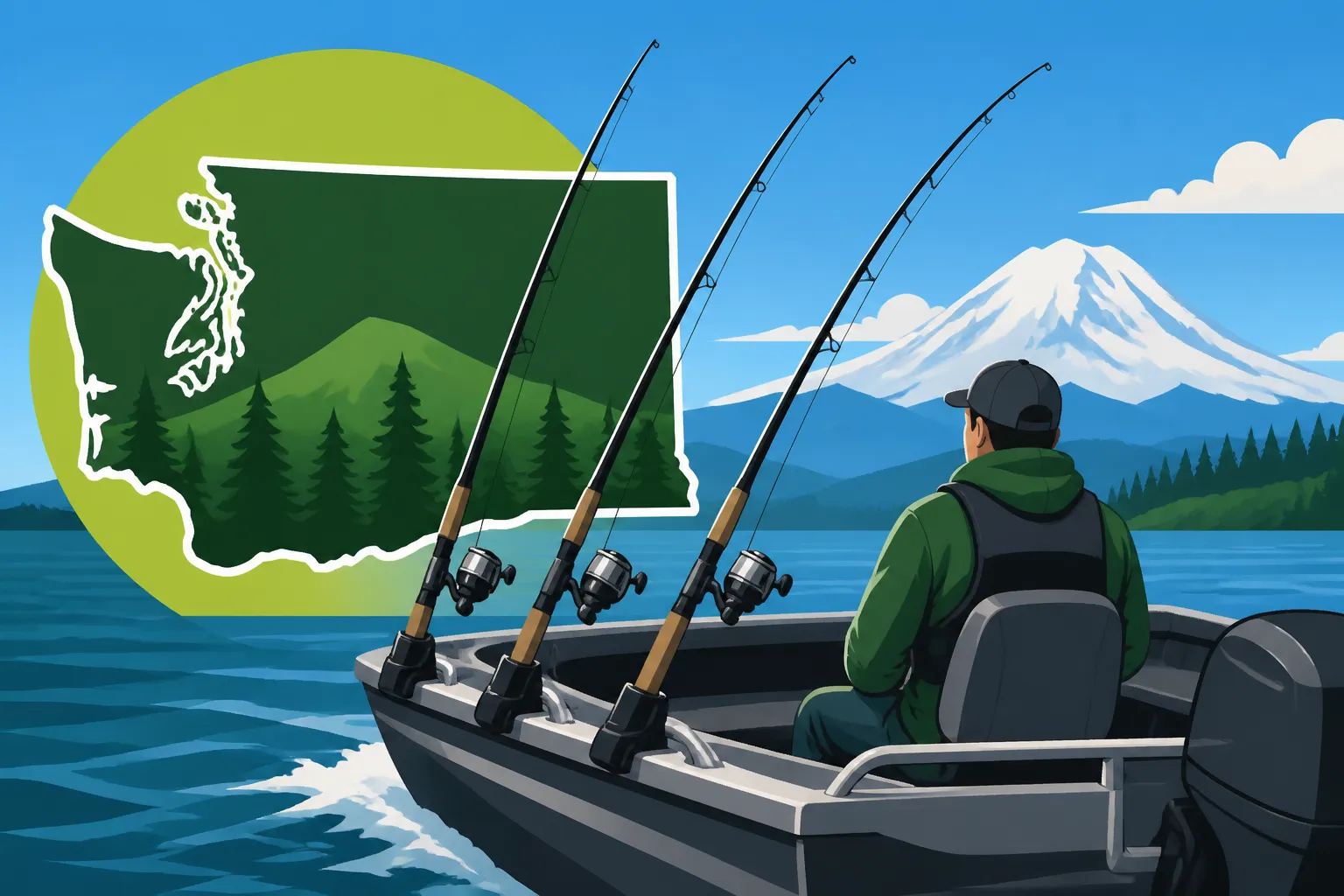
Now, here's where things get interesting and where many anglers can legitimately double their fun. Washington State offers a specific add-on to your fishing license called the "Two-Pole Endorsement." This endorsement is a game-changer for many, allowing you to use two fishing poles at once in designated waters. It’s immensely popular for good reason: having two lines in the water effectively doubles your presentation options, your chances of a bite, and your overall efficiency, especially when still-fishing or trolling.
The Two-Pole Endorsement isn't a blanket pass for all waters, though. It's specifically designed for certain lakes, ponds, and some marine areas where fish populations can sustain additional pressure and where using multiple lines is a common and effective technique. You'll find it incredibly useful in many of Washington’s popular trout lakes, like Lake Chelan for Mackinaw or Lake Roosevelt for kokanee, where having one line deep and another shallower can make a significant difference. It's also frequently permitted in certain marine areas for salmon, allowing you to run different lures or baits at varying depths or speeds. However, it is not valid for use in rivers, streams, or tributaries. This is a critical distinction that many anglers unfortunately overlook, leading to unintended violations.
To get your hands on this endorsement, you'll need to purchase it in addition to your regular Washington fishing license. It's usually a fairly inexpensive add-on, available wherever you buy your standard license – be it online through the Washington Department of Fish and Wildlife (WDFW) website, at a licensed dealer like a local sporting goods store, or even through the MyWDFW app on your smartphone. Many anglers will purchase their annual license and simply add the two-pole endorsement right then and there. If you're looking to gear up for a two-pole adventure, checking out fishing tackle on Amazon before your trip can be a convenient way to get a second rod and reel setup, ensuring both your rigs are ready for action. You can find detailed information on getting this endorsement by checking out our guide on Washington's Two-Pole Endorsement and Who Needs One.
For example, imagine you're out on Lake Washington targeting kokanee. With a Two-Pole Endorsement, you could have one rod set up with a downrigger, trolling a Wedding Ring spinner at 40 feet, while your second rod might be rigged with a weighted jig, actively jigging for fish marked on your sonar at 25 feet. This versatility is precisely why the endorsement is so valued. However, remember the "per person" rule still applies: even with the endorsement, you cannot set up three or more poles, nor can one person "lend" their two-pole endorsement to a friend who doesn't have one to fish four rods. It’s always two poles per individual who holds the endorsement.
When the Rules Get Specific: Bait Bans, Gear Restrictions, and Hook Limits
Understanding rod limits is just one piece of the regulatory puzzle in Washington fishing. These rules often intersect with other critical regulations like bait bans, gear restrictions, and hook limits, which can further dictate how you can effectively use one or two rods. It’s crucial to be aware of these interconnected rules because violating one can lead to trouble, even if you’re technically within your rod limit.
Bait Bans and Their Impact: Many rivers and sometimes specific marine areas in Washington implement bait bans. These bans are typically in place to protect sensitive fish stocks, particularly wild steelhead or salmon, by reducing mortality from deep hooking. If a bait ban is in effect, it means you cannot use any natural baits, such as worms, roe, shrimp, or even scented soft plastics. You’re often limited to artificial lures or flies. This directly affects how you might use multiple rods, even with a two-pole endorsement (though remember, endorsements don't apply to rivers where bait bans are most common). For instance, if you're planning a trip to a river with a bait ban, having two rods rigged with different artificial lures for varying presentations is fine if the rod limit allows, but if one is set up with roe, you're out of compliance. Always check Washington Bait Bans and When They Apply before heading out.
Gear Restrictions and Hook Limits: Beyond bait bans, certain fisheries impose specific gear restrictions or hook limits. A common one is the requirement for single-point barbless hooks, often mandated in selective fisheries or on rivers with sensitive wild fish populations, like many on the Olympic Peninsula. This rule aims to minimize injury to fish that are caught and released. If you're using two rods where this rule applies, both rods must be equipped with single-point barbless hooks. You can't have one barbless and one barbed. Our article on When Single-Point Barbless Hooks Are Required delves deeper into this.
Another important gear restriction often pertains to the number of hooks per line. For species like halibut, there's usually a strict limit on how many hooks you can have on a single line, regardless of whether you’re using one or two rods. For example, some regulations might limit you to one or two hooks per line to reduce the chance of foul-hooking multiple fish or other marine life. This rule is per line, so even with a two-pole endorsement, each of your two lines must adhere to the hook limit. We have an in-depth piece on Hook Limit for Washington Halibut Fishing that explains this further.
Furthermore, some rivers are designated as "fly-fishing only," meaning only fly-fishing gear (fly rod, reel, line, and artificial fly) is permitted. If you're on a river like parts of the Sauk, which may have such restrictions, even if you theoretically had a two-pole endorsement (which again, doesn't apply to rivers), you couldn't use a spinning rod. Understanding if Is the Sauk River in Washington Fly-Fishing Only? is crucial for planning. These restrictions are often seasonal or apply to specific river sections, so checking the current regulations pamphlet is paramount.
Navigating Complex Waters: Marine Areas and Special Regulations
Washington's diverse fishing landscape, from vast marine areas to mighty rivers, means that rod limits and associated rules can vary significantly based on your location and target species. What's perfectly legal in one spot might be a violation just a few miles away. This complexity means that a thorough understanding of localized regulations is absolutely essential for every angler.
The Columbia River Endorsement: One of the most prominent examples of special regulations is fishing the Columbia River. For salmon and steelhead fishing on the mainstem Columbia and some of its tributaries, in addition to your regular license and potentially a Catch Record Card, you might need a specific Washington's Columbia River Salmon and Steelhead Endorsement, Explained. While this endorsement doesn't directly dictate rod limits, it’s a prerequisite for targeting these species in this iconic river system. The general rule of one rod per angler still applies here unless specifically stated otherwise for certain fisheries (which is rare on rivers), but having the correct endorsements is non-negotiable. The complexity of fishing the Columbia often means very specific gear rules, season dates, and even daily and possession limits.
Puget Sound Distinctions: Fishing in Puget Sound is another area where regulations can be highly nuanced. Different marine areas within Puget Sound often have varying seasons, bag limits, and sometimes even gear restrictions for salmon, bottomfish, and shellfish. While the Two-Pole Endorsement can be used in many marine areas for certain species, you must verify that its use is allowed for your target species and in the specific Marine Area you're fishing. For example, some sensitive salmon fisheries might revert to a single-rod rule to manage harvest, even if the general marine area allows two poles for other species. Our guide on Puget Sound Salmon Closures: What Washington Anglers Need to Know highlights how quickly these rules can change.
Emergency Rule Changes: Perhaps the most challenging aspect of Washington fishing regulations is the prevalence of "emergency rule changes." These aren't just minor tweaks; they can drastically alter seasons, bag limits, and even gear restrictions, sometimes mid-week or even mid-season. These changes are often triggered by real-time data, like lower-than-expected fish returns or conservation concerns. This means that what was legal yesterday might be illegal today. An emergency rule change could, for instance, temporarily prohibit the use of a two-pole endorsement in a specific marine area for a certain species, or it might introduce a bait ban where none existed before. You might find a great deal on a second rod for your trip on Amazon, but if an emergency rule change suddenly restricts you to one pole, that extra gear will have to stay in the boat. For a deeper dive into these dynamic shifts, read Emergency Rule Changes: Why Washington's Rules Shift Mid-Season.
Always Check Current Regulations: Given the dynamic nature of Washington’s fishing regulations, the single most important piece of advice is to always check the most current rules before every fishing trip. This isn’t just good practice; it's a legal requirement. The WDFW website, its Fish Washington app, and physical regulation pamphlets (available at license dealers and often downloadable online) are your official sources. Relying on old pamphlets, anecdotal advice, or what was legal last year is a recipe for a citation. Our guide on Where to Find Current Washington Fishing Rules can point you in the right direction to stay informed.
Staying informed means checking not just the general rules for your body of water but also any specific exceptions or emergency rules that might apply. A quick check of the WDFW website's emergency rule section can save you a lot of headache and potential fines.
Summary of Washington Rod Limits
To make things a bit clearer, here’s a quick overview of the typical rod limits in Washington:
| Rule Category | Standard Angler (No Endorsement) | Angler with Two-Pole Endorsement |
|---|---|---|
| Default Rod Limit | One (1) Rod | Two (2) Rods |
| Applicable Waters | All Washington waters | Designated lakes, ponds, and some marine areas |
| Rivers/Streams/Tributaries | One (1) Rod (always) | Not applicable (endorsement invalid) |
| Columbia River | One (1) Rod (plus endorsement for salmon/steelhead) | Not applicable for the two-pole endorsement on the river mainstem/tributaries; one rod still applies for the individual angler. |
| Puget Sound (General) | One (1) Rod | Two (2) Rods (verify specific Marine Area & species rules) |
| Coast (Ocean) | One (1) Rod | Two (2) Rods (verify specific species & area rules) |
| Additional Considerations | Must adhere to all bait, gear, and hook limits for the specific fishery. | Must adhere to all bait, gear, and hook limits for the specific fishery for both rods. |
This table provides a general guideline, but remember, the detailed regulations for your specific fishing location and target species are the ultimate authority.
Conclusion
Understanding how many rods you can fish with at once in Washington State is a fundamental aspect of responsible angling. While the standard rule is typically one rod per angler, the Two-Pole Endorsement offers a fantastic opportunity to use two lines in many lakes and marine areas, significantly enhancing your fishing experience. However, always remember that these rules are intertwined with other regulations, like bait bans, gear restrictions, and dynamic emergency rule changes. Taking the time to consult the most current WDFW regulations before each trip will ensure you're compliant, respectful of the resource, and set up for a successful and legal day on the water.
Disclaimer
Fishing regulations can change frequently. The information provided in this guide is for general informational purposes only and should not be considered legal advice. Always consult the official Washington Department of Fish and Wildlife (WDFW) regulations, including emergency rule changes, before engaging in any fishing activity.