Gear Allowed on the Cowlitz in 2026
Ah, the Cowlitz River! It's one of Washington's true workhorse rivers, churning out incredible salmon and steelhead opportunities year after year. But let's be honest, figuring out exactly what gear is allowed on the Cowlitz, especially with rules that seem to shift like the river's currents, can feel like trying to solve a complicated puzzle. It's frustrating to drive all the way there, only to realize your favorite setup might land you in hot water with a WDFW enforcement officer. This guide is here to untangle those complexities, helping you understand the gear regulations for the Cowlitz River so you can fish with confidence and stay on the right side of the rules, even as we look ahead to potential changes.
Navigating the General Gear Rules on the Cowlitz River
Fishing the Cowlitz River is a quintessential Washington experience, but it comes with a strict set of rules designed to protect our precious fish stocks. These regulations cover everything from the hooks you use to the number of rods you can have in the water. While we’re talking about 2026, the foundational principles tend to remain consistent year to year, with specific seasonal amendments. Always think about conservation and fair chase when selecting your gear. The underlying philosophy of the WDFW rules on a river like the Cowlitz is to ensure sustainable fishing for generations to come, which often means limiting gear that could lead to excessive harvest or harm to non-target species, especially wild fish.
Understanding Barbless Hook Requirements
One of the most consistently applied rules on the Cowlitz, especially when targeting salmon and steelhead, is the requirement for single-point, barbless hooks. This isn't just a suggestion; it's a critical regulation aimed at increasing the survival rate of fish that are caught and released, particularly wild steelhead and salmon that must go back into the water. A barbless hook minimizes tissue damage, making it easier to remove the hook quickly and with less stress to the fish. Imagine trying to gently remove a barbed hook from a struggling fish—it’s much tougher and causes more harm than a smooth, barbless one.
This means before you even tie on your first lure or bait, you need to check your hooks. If they have barbs, you must pinch them down. You can do this easily with a pair of pliers, carefully flattening the barb against the hook shank. If you're buying new hooks or lures, look specifically for "barbless" in the description. Many popular brands now offer barbless options right out of the package. This simple act of pinching a barb down is a small effort that makes a huge difference in fish survival, allowing those future spawners to continue their journey. You can find a wide array of single-point barbless hooks and even pre-rigged barbless lures on platforms like Amazon, making it convenient to stock up before your next trip. To learn more about specific requirements, check out our guide on Barbless Hook Requirements on Washington Rivers.
The Two-Pole Endorsement: When and Where It Applies
For many anglers, the dream of fishing with two rods at once is pure efficiency, covering more water and increasing your chances. On the Cowlitz River, the "Two-Pole Endorsement" can make that dream a reality, but it's not a blanket permission. This endorsement allows you to fish with two rods simultaneously for game fish (like trout and bass) and for hatchery salmon and steelhead when those fisheries are open. However, there are significant caveats. You absolutely cannot use two poles when targeting wild steelhead, or in areas where regulations specifically state "one pole only." This distinction is incredibly important.
The purpose of the two-pole endorsement is to enhance recreational opportunities while still maintaining conservation efforts. If you're fishing a popular stretch of the Cowlitz for hatchery coho, having two lines in the water can be a game-changer. But if an emergency rule comes into play, or you're fishing a section dedicated to wild fish, that second rod needs to be stowed away. Always, always check the current WDFW regulations for the specific section of the Cowlitz you plan to fish, as rules can vary even along different stretches of the same river. It's a fantastic option when available, but knowing exactly Washington's Two-Pole Endorsement and Who Needs One is key to avoiding an unnecessary citation.
General Regulations for Line and Tackle
Beyond hooks and poles, the overall construction of your fishing setup on the Cowlitz is also subject to some general guidelines. While there aren't typically specific restrictions on line weight or type (monofilament, fluorocarbon, braid are all generally accepted), the WDFW does emphasize what's considered "legal gear." This means your terminal tackle—the hooks, leaders, weights, and lures—must be rigged in a way that promotes fair-chase fishing and doesn't encourage snagging. The idea is that the fish should actively bite your offering, not get accidentally hooked on the outside of its body.
This means avoiding excessive weights that pin your line to the bottom in a way that makes it hard for a fish to pick up your bait naturally. Leaders should be of a reasonable length, preventing your bait or lure from drifting too far from the main line in a way that could lead to foul-hooking. While specific leader lengths aren't usually mandated, common sense and the principle of fair chase dictate that your setup should be designed for an active bite. Anglers often experiment with different leader materials like fluorocarbon for its invisibility and abrasion resistance, especially in the clearer waters of the Cowlitz, and many find good quality leader material readily available through retailers like Amazon.
Species-Specific Gear Considerations for the Cowlitz
The Cowlitz River is a diverse fishery, hosting runs of Chinook, coho, and steelhead, along with resident trout and even some bass. Because different species behave differently and present different conservation concerns, the gear rules often get refined based on what you're targeting and when you're targeting it. Understanding these nuances is crucial for success and compliance. What works for a fall Chinook might be entirely inappropriate for a winter steelhead.
Salmon Fishing: Lures, Bait, and Tactics
Salmon fishing on the Cowlitz is incredibly popular, with anglers flocking to chase robust Chinook in spring and fall, and acrobatic coho in late summer and fall. For these powerful fish, a variety of gear is often permitted, depending on the season and specific river section. You'll commonly see anglers employing methods like drift fishing with cured eggs or roe, often paired with floats or bottom-bouncing rigs. The natural scent and appearance of bait can be irresistible to migrating salmon.
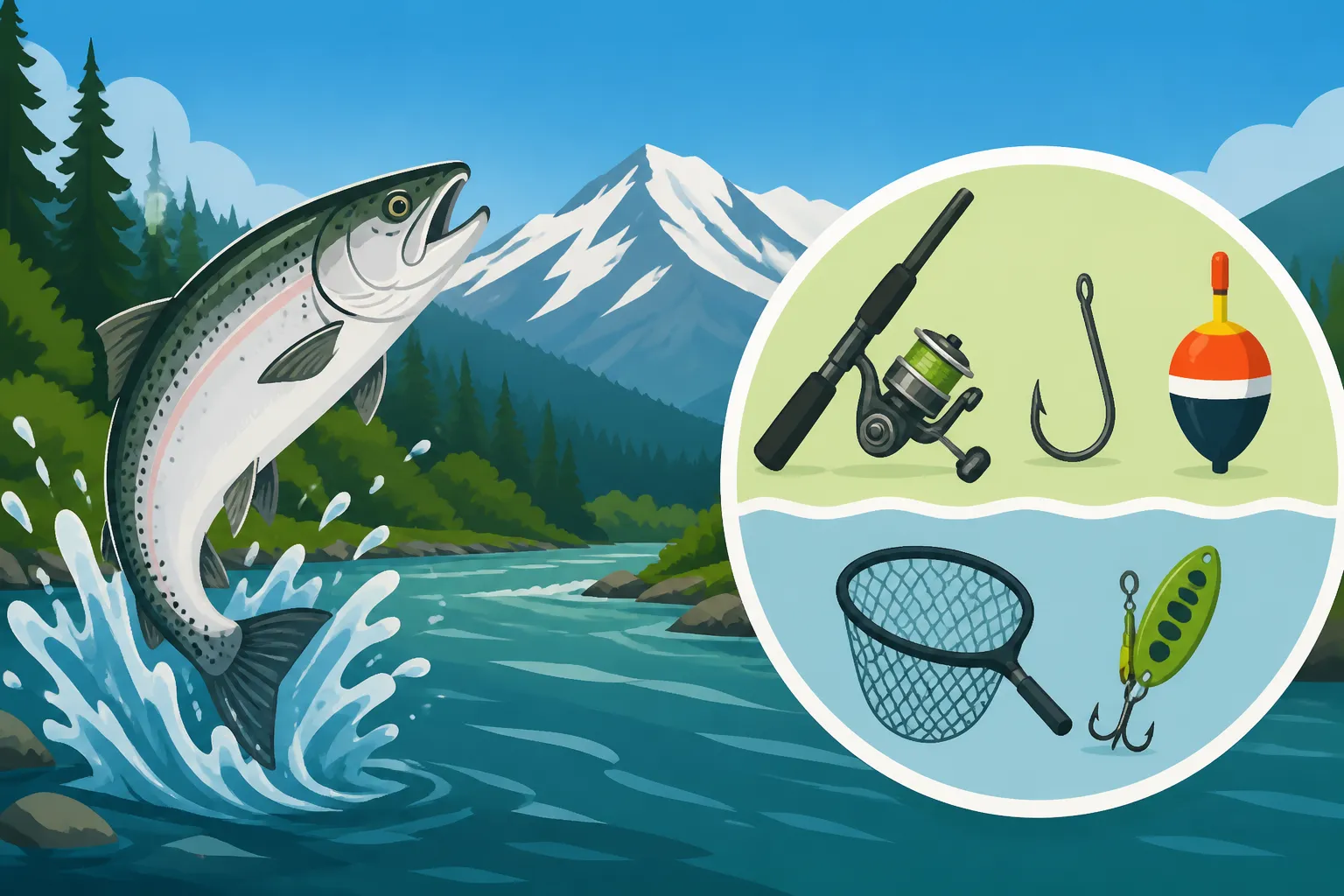
Beyond natural baits, artificial lures like spinners, twitching jigs, and wobblers are highly effective. Spinners, often brightly colored or with metallic blades, mimic small baitfish and create vibrations that attract salmon. Wobblers, like the popular 'Brad's Killerfish' or 'Kwikfish,' dive and wiggle, presenting a broad profile that salmon can't resist. Plunking, a static bank-fishing method using heavy weights to hold bait or lures in current, is also a favorite technique, especially during strong runs. When plunking for salmon, anglers often use large Spin-N-Glos or similar attractants to entice fish. Just remember that no matter your method, if salmon are in season, those barbless hooks are usually a must. For a deeper dive into one popular method, check out How to Plunk for Salmon on a Washington River.
Steelhead Fishing: Adapting to Wild and Hatchery Rules
Steelhead fishing on the Cowlitz, particularly for winter steelhead, draws a dedicated crowd. This is where the rules can get particularly intricate, especially concerning wild vs. hatchery fish. Most winter steelhead fishing on the Cowlitz requires the use of single-point, barbless hooks. The distinction between wild and hatchery steelhead is paramount, as wild steelhead must almost always be released unharmed. Hatchery fish, identified by a clipped adipose fin, are generally fair game to keep within limits. This means your gear should facilitate easy, quick release if you hook a wild fish.
Popular steelhead gear includes drift fishing with various presentations: pink worms, soft beads, jigs under floats, or small clusters of cured roe (when bait is permitted). Float fishing with a weighted jig or a small bead can be incredibly effective, allowing your offering to drift naturally in the current. Fly fishing is also a productive and popular method, with anglers using nymphs, streamers, and egg patterns. Many guides on the Cowlitz specialize in specific steelhead techniques, often emphasizing gear that targets the fish ethically. To learn more about this technique, take a look at our guide on Drift Fishing for Steelhead in Washington Rivers, and to help with identification, refer to Wild Steelhead vs Hatchery Steelhead in Washington.
Trout and Other Game Fish Gear
While salmon and steelhead steal the limelight, the Cowlitz River and its connected waters also offer opportunities for trout and other game fish like bass. When regulations don't specifically target salmon or steelhead, the gear rules for trout are often a bit more relaxed, though always check the specific section you're fishing. For stocked rainbow trout, common gear includes light spinning tackle with small spinners, spoons, or bait like PowerBait, worms, or even corn. Small jigs under a bobber can also be very effective.
Bass fishing on the Cowlitz, while not as prominent as salmon or steelhead, can be productive in slower sections and backwaters. Anglers targeting smallmouth bass will use traditional bass lures like crankbaits, spinnerbaits, soft plastics, and jigs. For these species, the barbless hook rule is less universally applied, but it's always a good practice, especially if you plan on catch-and-release. The key is to consult the WDFW pamphlet for the specific body of water you're fishing, as general statewide trout rules can sometimes be superseded by river-specific or seasonal regulations on the Cowlitz.
Prohibited Gear and Practices on the Cowlitz
Just as important as knowing what is allowed is understanding what is strictly prohibited on the Cowlitz River. These rules are in place for various reasons, from protecting fragile fish populations to maintaining the integrity of fair-chase angling. Violating these regulations can lead to fines, loss of fishing privileges, and a significant damper on your fishing trip.
Bait Bans and Sensitive Areas
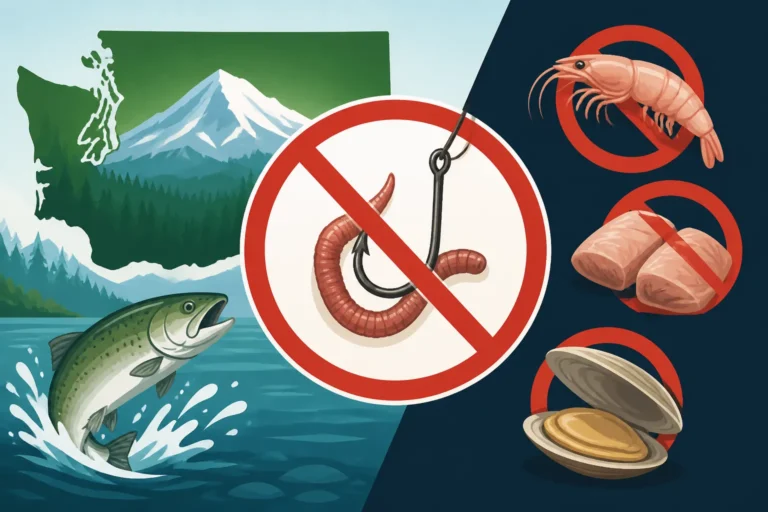
One of the most common restrictions you'll encounter on the Cowlitz, particularly during certain times or in sensitive areas, is a "bait ban." A bait ban means exactly what it sounds like: no natural baits, including cured eggs, worms, shrimp, or any other organic material designed to attract fish through scent or taste. When a bait ban is in effect, you are typically restricted to artificial lures and flies. These bans are usually implemented to reduce mortality on wild fish or to manage fisheries during periods of low returns, as fish tend to swallow bait more deeply, leading to higher release mortality.
Specific areas, like the popular Blue Creek tributary or sections immediately below the Barrier Dam, might have bait restrictions or even "fly-fishing only" regulations, particularly during critical spawning periods or for specific species management. It's not enough to know the general river rules; you need to pinpoint the exact location you intend to fish. Imagine showing up at Blue Creek, ready with your favorite jar of cured roe, only to read the sign that clearly states "Artificial Lures Only." That's a frustrating wasted trip! Always check for specific local rules, as these can override the broader river regulations. Our comprehensive guide on Washington Bait Bans and When They Apply offers more clarity on these critical restrictions.
Illegal Hooking Methods: Snagging and Foul-Hooking
Fair chase is a fundamental principle of sport fishing in Washington. This means fish must be hooked in the mouth or jaw to be legally retained. Any other method, intentionally or unintentionally, falls under the category of "snagging" or "foul-hooking," which is strictly illegal. Snagging, where you intentionally try to hook a fish anywhere on its body other than the mouth, is considered poaching and carries severe penalties. Foul-hooking, which can happen accidentally, is when a fish is hooked outside the mouth. If you foul-hook a fish, you must immediately release it.
The rules on tackle are often designed to prevent foul-hooking. For example, using excessively large treble hooks or jigging aggressively in schools of fish with no intent for a natural bite can easily lead to foul-hooking. WDFW enforcement officers patrol the Cowlitz regularly, and they are adept at identifying illegal snagging attempts. It’s an ethical issue as much as a legal one; true anglers take pride in coaxing a fish to bite, not in foully snatching it. To fully understand these critical regulations and avoid potential violations, refer to our detailed post on Snagging and Foul-Hooking: What's Illegal in Washington.
Other Restricted Gear and Common Misconceptions
Beyond bait bans and snagging rules, there are other types of gear that might be restricted or completely prohibited on the Cowlitz. For instance, using artificial lights to attract fish is generally illegal in freshwater. There are also limits on the number of hooks you can use on a single line or lure. While many lures come with multiple treble hooks, you need to ensure they comply with the total hook point count allowed. For example, many regulations define a "single hook" as one hook, and a "treble hook" as three points. Exceeding the allowed number of hook points is a common mistake.
Gaffs, which are large hooks used to land fish, are also often prohibited, especially in freshwater and for species like steelhead, where a net is preferred for safer release. Using gear that isn't designed for a natural bite, or that creates an unfair advantage, is generally frowned upon and often explicitly illegal. Always assume that if a piece of gear seems "too effective" in a way that bypasses the fish's natural feeding behavior, it might be illegal. When in doubt, err on the side of caution and check the regulations.
Staying Updated: Emergency Rules and the WDFW
The Cowlitz River, like many of Washington's fisheries, is a dynamic ecosystem. Fish runs fluctuate, environmental conditions change, and conservation needs evolve. This means that the rules you read in the annual WDFW pamphlet for 2026, while foundational, are not always the final word. Emergency rule changes are a regular part of managing these fisheries, and understanding how they work is absolutely critical for any Cowlitz angler.
Why Rules Change Mid-Season
Imagine a situation where a forecasted salmon run for the Cowlitz comes in significantly weaker than expected. If anglers continue to harvest at the anticipated rate, the spawning escapement—the number of fish that make it to the spawning grounds to reproduce—could be jeopardized. In such scenarios, the WDFW often steps in with an emergency rule change. This could mean reducing bag limits, closing certain sections of the river, prohibiting certain gear (like bait), or even closing the fishery entirely for a period.
These changes aren't arbitrary; they are usually based on real-time data from test fisheries, escapement goals, and in-season monitoring. While they can be frustrating for anglers who have planned trips, they are essential for long-term sustainability. The good news is that these changes are announced publicly and quickly. Being aware of these potential shifts is part and parcel of being a responsible Washington angler. Our guide on Emergency Rule Changes: Why Washington's Rules Shift Mid-Season dives deeper into this often confusing aspect of fishing regulations.
How to Check for the Latest Cowlitz Regulations
Given the fluid nature of fishing regulations, relying solely on a printed pamphlet from January for your November fishing trip is a recipe for trouble. The most reliable and up-to-date source for Cowlitz River regulations is always the Washington Department of Fish and Wildlife (WDFW) website. They maintain a dedicated "Emergency Rules" page where all in-season changes are posted as soon as they are implemented. This page should be your first stop before every fishing trip to the Cowlitz, even if you just fished it last week.
Beyond the website, the WDFW's Fish Washington app is an invaluable tool for on-the-go access to current regulations. It allows you to search by waterbody and instantly see what's open, what the limits are, and any emergency rules in effect. Many local tackle shops around the Cowlitz, like those in Castle Rock or Longview, are also excellent resources. They often have printed copies of emergency rules or can verbally confirm the latest updates. You can even find fishing regulations pamphlets on Amazon. Being diligent about checking these resources is the single best way to ensure your gear and practices align with the latest rules and beyond. For a comprehensive overview of where to find this critical information, be sure to read Where to Find Current Washington Fishing Rules.
| Species Targeted | Common Allowed Gear | Typical Hook Rule | Bait Permitted? | Two-Pole Endorsement Applicable? | Notes on Restrictions |
|---|---|---|---|---|---|
| Salmon (Hatchery) | Spinners, Wobblers, Jigs, Cured Roe, Shrimp | Single-point barbless | Often, check specific section | Yes, when open | Requires clipped adipose fin for retention. |
| Steelhead (Hatchery) | Jigs, Soft Beads, Pink Worms, Cured Roe (seasonal) | Single-point barbless | Often, check specific section | Yes, when open | Requires clipped adipose fin for retention. |
| Steelhead (Wild) | Jigs, Soft Beads, Flies, Spinners (no bait) | Single-point barbless | No, usually artificial lures/flies only | No | Catch-and-release only, often immediate release. |
| Trout | Spinners, Spoons, PowerBait, Worms, Flies | Barbed or barbless (check local rules) | Yes, often | Yes, when open | Less restrictive, but still check specific river sections. |
| Bass | Crankbaits, Soft Plastics, Jigs, Spinnerbaits | Barbed or barbless | Yes, often | Yes, when open | Target smallmouth and largemouth in slower sections. |
Disclaimer
The information provided in this guide is for general informational purposes only and is based on typical Washington Department of Fish and Wildlife (WDFW) regulations. Fishing rules, especially on dynamic rivers like the Cowlitz, are subject to frequent change through emergency rule updates. Always consult the official WDFW website or the current annual sport fishing regulations pamphlet for the most accurate and up-to-date information before heading out to fish. Failure to do so could result in fines or penalties.