What to Do If You Catch More Than Your Limit by Accident
It’s a scenario no angler wants to face: you’re out on the water, the fish are biting, and in the excitement of the moment, you suddenly realize you’ve caught one too many. That sinking feeling in your stomach is entirely normal; figuring out what to do when you accidentally exceed your Washington fishing limit can feel like navigating a minefield of regulations and ethical dilemmas. This guide is here to walk you through those tricky situations, offering practical advice on how to handle an accidental over-limit, minimize harm, and ensure you stay on the right side of the law.
Understanding Washington's Fishing Limits and Why They Exist
Before we dive into the "what ifs," it’s crucial to truly grasp the foundation of Washington’s fishing regulations. These aren’t just arbitrary rules designed to make your life difficult; they are carefully crafted measures aimed at protecting our precious fish populations and ensuring sustainable fishing opportunities for everyone, for generations to come.
The Purpose Behind Daily Bag and Possession Limits
Washington's fishing limits, whether they're a "daily bag limit" or a "possession limit," serve vital conservation purposes. A daily bag limit dictates how many fish of a certain species you can keep in a single day, typically from midnight to midnight. This helps spread the catch among more anglers and reduces the overall pressure on a specific run or population during peak times. For instance, if a particular salmon run is struggling, reducing the daily limit can help ensure enough fish make it upstream to spawn.
A possession limit, on the other hand, refers to the total number of fish you can have in your possession at any given time, regardless of how many days it took you to catch them. This often applies to your home, freezer, or vehicle and is usually a multiple of the daily limit. For example, if the daily limit for hatchery steelhead is two, the possession limit might be four, meaning you can't have more than four cleaned or uncleaned hatchery steelhead anywhere in your control. These limits are especially critical for species that are highly sought after, like Chinook salmon, or those with sensitive populations, such as wild steelhead. They ensure that even if you have a phenomenal week of fishing, you're still adhering to a sustainable take. Without these limits, unchecked harvesting could quickly decimate fish stocks, leading to closures and severely impacting the long-term health of Washington's fisheries. This complex system is detailed further in our guide on How Bag and Possession Limits Work in Washington.
How Limits Are Communicated and Change Seasonally
One of the biggest frustrations for Washington anglers is how often and how quickly regulations can change. It’s not uncommon for limits to be modified mid-season due to evolving stock assessments or environmental factors. The Washington Department of Fish and Wildlife (WDFW) communicates these rules primarily through their annual Sport Fishing Regulations pamphlet, but this is just a baseline.
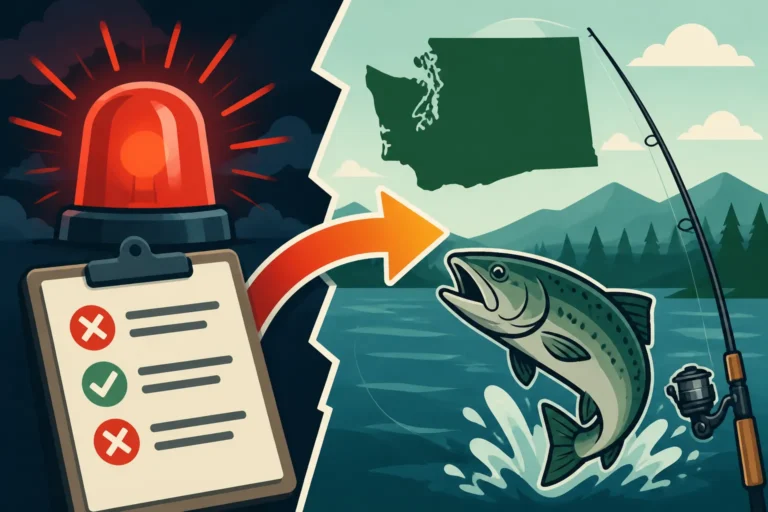
What many anglers don't realize is that this pamphlet is often supplemented by "emergency rules" that can change daily limits, open or close specific areas, or alter gear restrictions. These emergency rules are published regularly on the WDFW website and are absolutely critical to check before every fishing trip. A rule that was in effect last week might be different today, especially for dynamic fisheries like salmon or steelhead. For example, a river might be open for retention of hatchery steelhead one day, and then an emergency rule might suddenly make it catch-and-release only due to low returns. This constant flux can be incredibly challenging to keep up with, and it’s a valid concern that leads to many accidental over-limits. Understanding Washington Sport Fishing Seasons and Emergency Closures is paramount, and it's why we always recommend checking the WDFW website for Emergency Rule Changes: Why Washington's Rules Shift Mid-Season right before you leave the house. You can find detailed explanations on how to navigate these changes by Reading the Washington Sport Fishing Regulations Pamphlet.
The "Oh No!" Moment: Immediate Steps After Exceeding Your Limit
So, you’ve just reeled in a fish, and as you bring it aboard, the cold realization hits: you've now got one more than your legal limit. This is the moment to act decisively and responsibly. Panic is a natural reaction, but it won't help the fish or your situation.
Prioritizing the Fish: Proper Release Techniques
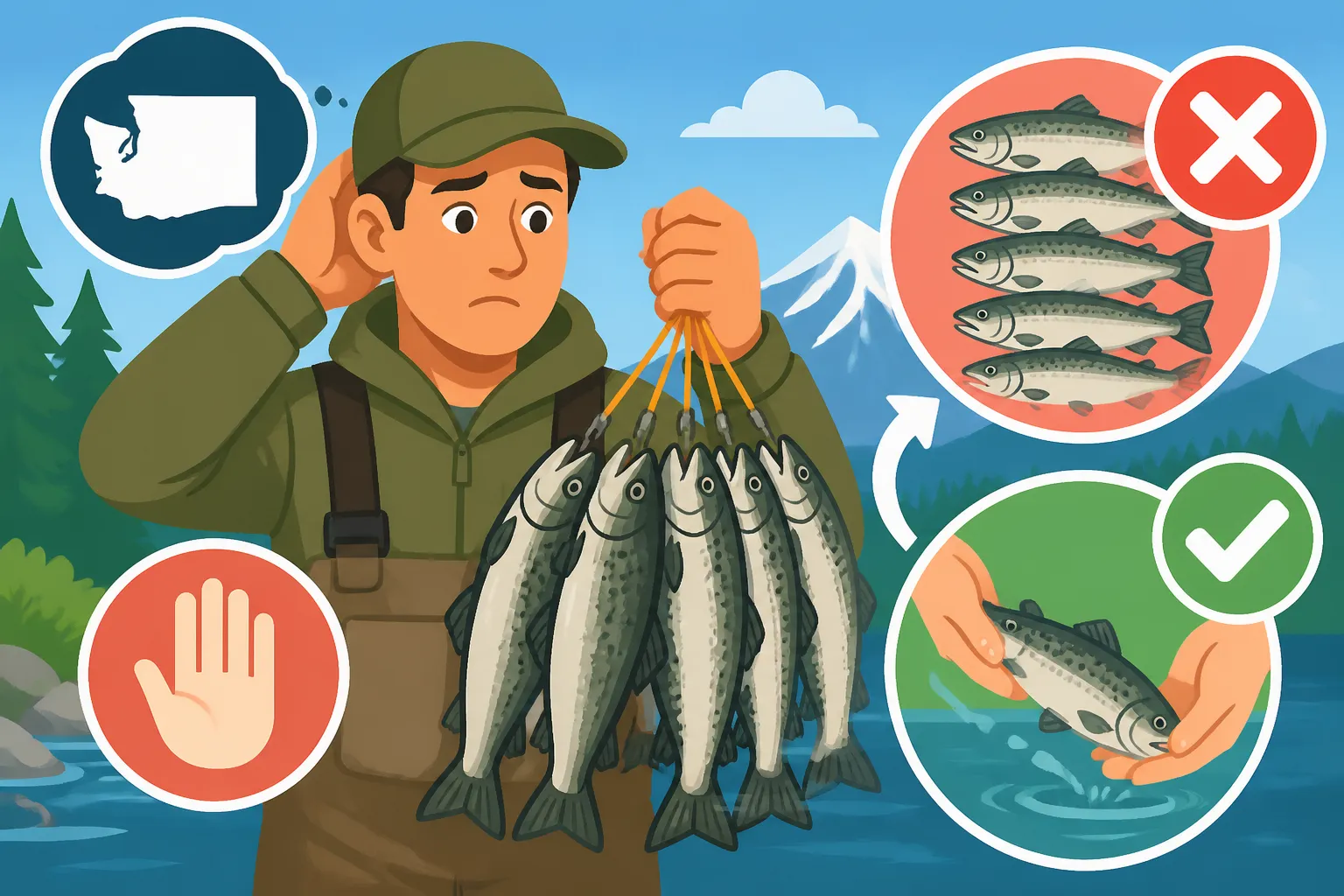
Your absolute first priority, once you realize you're over the limit, is the immediate and careful release of the excess fish. This applies to any fish that puts you over the legal count, whether it’s a target species or an accidental bycatch that must be released. The goal is to maximize its chances of survival.
Here's a breakdown of proper release techniques:
- Handle with Care: Always wet your hands before touching the fish. Dry hands can remove the fish's protective slime coat, making it vulnerable to disease. Avoid squeezing the fish or holding it by the gills. If possible, keep the fish in the water while you remove the hook.
- Quick Hook Removal: Use needle-nose pliers or a de-hooking tool to remove the hook as quickly and gently as possible. If the fish is deeply hooked and removing the hook would cause excessive damage, it's often better to simply cut the line as close to the hook as possible. Barbless hooks, which are often required in Washington rivers for species like steelhead, make this process much easier and less traumatic for the fish. Our guide on Catch-and-Release Rules During Wild Steelhead Closures offers more insights into minimizing stress.
- Revive, Don't Just Release: Don't just toss a lethargic fish back into the water. Hold it gently in the current, facing upstream, allowing water to flow over its gills. Move it back and forth slightly until it regains its strength and can swim away on its own. Watch for a strong tail kick before letting go.
- Descending Devices for Deep-Water Fish: If you're fishing in saltwater and accidentally catch a species like rockfish from deep water, they often suffer from barotrauma (expanded swim bladder) when brought to the surface. These fish need to be returned to depth using a descending device, which helps them recompress and survive. These tools are crucial for ethical fishing and are often required or highly recommended by WDFW. You can learn more about these tools and how they work in our article on Descending Devices for Rockfish and How to Use One.
The overarching principle here is "act fast, be gentle." The longer the fish is out of the water or under stress, the lower its chances of survival.
Assessing the Situation: Ethical vs. Legal Implications
It’s easy to think, "Well, I just released it, so no harm, no foul." However, legally, the moment you possess a fish that puts you over your limit, even if only for a few seconds, you’ve technically violated the regulation. This is a tough pill to swallow, but it’s the reality of the law. WDFW officers are generally more understanding of accidental situations where you immediately and properly release the fish, especially if you’re honest and cooperative.
- Intent Matters (but not always legally): While your intent to abide by the rules is ethically sound, legally, an accidental over-limit is still an over-limit. However, if a WDFW officer observes you immediately and carefully releasing an excess fish, it will be viewed far more favorably than if you try to hide it or keep it.
- Transparency is Key: Should you encounter a WDFW officer after an accidental over-limit, be completely transparent. Explain what happened, how you realized your mistake, and what steps you took to correct it by properly releasing the fish. Honesty and immediate corrective action demonstrate responsible angling and can significantly influence how an officer handles the situation. Trying to conceal the violation or deny it will almost certainly lead to a citation.
When a Fish Cannot Be Released Safely
Sometimes, despite your best efforts, a fish is simply too injured to survive after being caught, especially if it's deeply hooked or bleeding profusely. This puts you in a truly difficult position. Legally, keeping an over-limit fish is a violation. Ethically, wasting a fish that won't survive anyway feels wrong.
The WDFW regulations generally state that if you retain a fish, it counts towards your limit, regardless of its condition. If a fish is so badly injured that it's highly unlikely to survive, even with careful release, and you've already reached your limit, you should still release it as gently as possible. It might sound counterintuitive or even wasteful, but keeping it would be an over-limit violation.
This is where the grey area truly hits home. Some anglers, in a moment of despair, might keep the fish rather than see it wasted, hoping to process it quickly or offer it to another angler. However, doing so puts you squarely in violation of the possession limit. The safest legal course of action is still to release it, even if it's heartbreaking. This highlights the importance of using proper gear, such as barbless hooks, and techniques to minimize injury in the first place. For questions around fish with injuries, you might want to look into topics like Can You Keep a Fish With a Damaged Fin?.
Preventing Future Over-Limit Situations
The best way to handle an accidental over-limit is to prevent it from happening in the first place. While mistakes can occur even with the most diligent anglers, several proactive steps can significantly reduce your risk.
Thorough Pre-Trip Planning and Regulation Review
Preparation is your best defense against inadvertently breaking the rules. Before every single trip, no matter how familiar you are with the area or the species, make a point to thoroughly review the current regulations.
- Check the WDFW Website: The WDFW website is your most up-to-date resource. Look for emergency rules specific to your chosen body of water and target species. What was open yesterday might be closed today, or limits might have changed.
- Print or Save Key Info: It's a great habit to print out the relevant pages from the WDFW website or save screenshots on your phone. Cell service can be spotty on the water, so having offline access is invaluable. Many anglers even laminate small cards with the daily limits, sizes, and specific regulations for their frequent fishing spots. You can find robust waterproof cases for your phone on Amazon if you plan to rely on digital copies.
- Talk to Local Experts: Bait shops, local guides, and experienced anglers can be fantastic resources for understanding nuances that might not be immediately obvious in the rule book. They often have firsthand knowledge of current conditions and recent rule changes.
- Review Your Catch Record Card: If you're fishing for salmon, steelhead, sturgeon, or halibut, you'll have a Catch Record Card. Make sure you understand The Washington Catch Record Card and What It Requires and how to properly fill it out, especially when it comes to recording your catch immediately.
Utilizing Tools and Best Practices on the Water
Once you're fishing, there are several practical tools and habits you can adopt to keep track of your catch and avoid exceeding limits.
- Clickers or Counters: Simple, inexpensive clicker counters are a lifesaver. Keep one clipped to your vest, belt, or boat console, and click it every time you retain a fish. It’s an instant visual reminder of where you stand relative to your limit.
- Separate Coolers/Livewells: If you're fishing with multiple people or targeting different species with varying limits, consider having separate coolers or compartments. This helps prevent confusion, especially if one person reaches their limit before others. For instance, having one cooler specifically for legal salmon and another for smaller trout can prevent mix-ups.
- Measuring Devices: For species with length restrictions, a reliable measuring device is essential. A good quality, non-stretch measuring board or tape, easily available from retailers like Amazon, should be permanently affixed or kept readily accessible in your boat or tackle bag. Always measure fish carefully against the WDFW guidelines (e.g., tip of nose to fork of tail).
- Double-Check Your Regulations Mid-Trip: If you have any doubt about a limit or a specific rule, take a moment to look it up again. A few minutes of checking can save you a lot of headache (and potential fines) later. Remember, wardens expect you to know the rules. This diligent approach is part of What to Check Before Every Washington Fishing Trip.
Knowing When to Quit (or Switch Tactics)
Part of being a responsible angler is knowing when to call it a day, or at least switch up your approach, to avoid inadvertently going over your limit.
- Self-Imposed Limits: If you’re having an exceptionally good day and are nearing your legal limit, consider setting a personal "stop fishing for this species" point a fish or two before the legal max. This gives you a buffer in case of an unexpected bite.
- Switching Species or Locations: Once you’ve reached your limit for a particular species, rather than tempting fate, switch your focus to another species with an open limit, or move to a different area with different regulations. For instance, if you’ve limited out on Puget Sound coho, maybe try some bottomfishing for flounder or sole if regulations allow.
- Catch and Release Mindset: If the fish are really biting and you want to continue the thrill of the catch without keeping more fish, switch to a pure catch-and-release mindset. Ensure you have appropriate gear (like barbless hooks) and are committed to careful handling to maximize survival rates. This also applies if you find yourself fishing a river that has a specific slot limit or catch-and-release only rule for certain species.
The Role of Enforcement and Self-Reporting
Encountering a Washington Fish and Wildlife officer is a common part of fishing. Understanding their role and how to interact with them, especially in an over-limit situation, is crucial.
Interacting with Washington Fish and Wildlife Officers
WDFW officers are there to enforce regulations and protect resources. Most are reasonable professionals who appreciate honesty and cooperation. If you've accidentally exceeded your limit and immediately corrected the situation by releasing the fish, being upfront with an officer is your best course of action.
- Be Prepared: Always have your valid fishing license, endorsements, and Catch Record Card (if applicable) readily available. Having your ID handy will also speed up any interaction. Our article on Carrying Your Washington Fishing License: Paper, Phone or the MyWDFW App provides options for this.
- Be Courteous and Honest: When an officer approaches, be polite and cooperative. If asked, explain what happened truthfully. For example, "Officer, I accidentally caught one too many trout, but I immediately realized my mistake and properly released it." This level of honesty is much better received than attempting to hide something or lie, which can lead to more serious charges like obstruction or intent to violate.
- Understand Potential Penalties: While an officer might issue a warning or a lesser citation for an honest, accidental, and immediately corrected over-limit, they are within their rights to issue a full citation. Fines and penalties for common fishing violations can range from monetary penalties to, in more severe cases, loss of fishing privileges. This is why immediate, proper release and honesty are so important – they can significantly influence the outcome.
The Importance of Accurate Catch Recording
For species that require a Catch Record Card (CRC), such as salmon, steelhead, sturgeon, and halibut, accurate and immediate recording is a legal requirement. This is not just for your kept fish. Even if you accidentally catch an over-limit fish that you immediately release, if that fish would have been a keeper and counts towards an annual limit, you might still need to mark it down on your CRC, depending on the specific regulations for that species and area. Always consult the specific rules for the species you are targeting.
- Why CRCs Matter: CRCs provide critical data to WDFW, helping them manage fish populations, track harvest rates, and set future seasons and limits. Failure to accurately or immediately record a legal catch is itself a violation, regardless of bag limits.
- Electronic Options: Washington has been moving towards more digital solutions, including the Fish Washington app which can help with catch recording for some fisheries. While not a substitute for carrying your physical card where required, these tools can aid in tracking.
In essence, even in the confusing aftermath of an accidental over-limit, your actions speak volumes. By understanding the rules, acting quickly, prioritizing the fish’s welfare, and being honest with authorities, you demonstrate a commitment to responsible angling, even when mistakes happen.
Disclaimer
The information provided in this guide is for general informational purposes only and does not constitute legal advice. Fishing regulations in Washington State are complex and subject to change. Always consult the most current Washington Department of Fish and Wildlife (WDFW) regulations and emergency rules before heading out to fish. Compliance with all applicable laws and regulations is the sole responsibility of the individual angler.