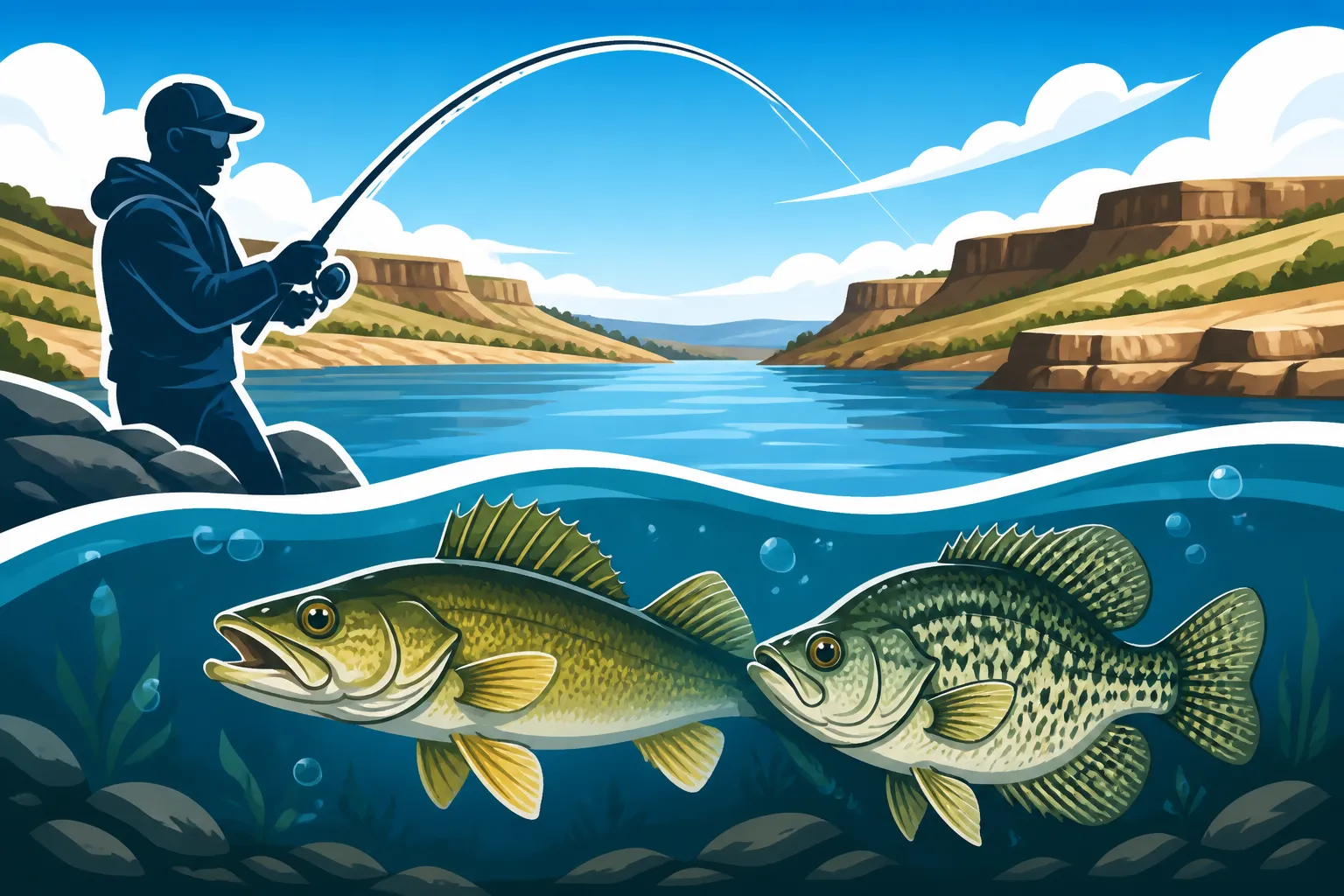
Potholes Reservoir in Washington for Walleye and Crappie
Venturing out to Potholes Reservoir can sometimes feel like stepping onto another planet with its unique landscape of submerged sand dunes and vast open water, which can be incredibly intimidating for anglers trying to unlock its secrets, especially when targeting popular species like walleye and crappie. Many folks arrive feeling overwhelmed by its sheer size and the seemingly endless options, making it tough to know where to even start or what gear to bring to find those elusive fish. This guide is designed to cut through that confusion, giving you a clear, comprehensive roadmap to confidently fish Potholes Reservoir, whether you're chasing the delicious walleye or the panfish paradise of crappie.
Understanding Potholes Reservoir's Unique Landscape
Potholes Reservoir isn't just another lake; it's a massive, shallow impoundment formed by the O'Sullivan Dam in central Washington, a true jewel in the desert landscape of Grant County. What makes it so utterly distinctive, and sometimes challenging, are the hundreds of partially submerged sand dunes (locally known as "the dunes") that create a maze of islands, channels, and humps. This isn't your typical clear-water mountain lake; Potholes is a fertile, productive body of water, meaning it can support a huge number of fish, but finding them within its complex structure is often the biggest puzzle.
The Dune System and Its Fishing Implications
Imagine a vast desert landscape that slowly filled with water – that's essentially what the dune system is. These sandy islands and underwater humps provide an incredible amount of structure for fish. Walleye, being ambush predators, absolutely love these areas where they can hide along drop-offs, breaks, and points, waiting for unsuspecting baitfish to swim by. Crappie, too, utilize these structures, often schooling up around the submerged brush and timber that can be found in the deeper channels between the dunes. Understanding how these dunes create current breaks, deeper pockets, and shallow flats is key to locating concentrations of fish. The sheer scale means you can spend days, even weeks, exploring new spots, and that's part of the enduring appeal and challenge of Potholes.
Navigating this maze requires careful attention, both for fishing success and for safety. The channels can be tricky, and water levels fluctuate, revealing or submerging hazards. It's not uncommon for new anglers to get disoriented among the dunes, as many of them look surprisingly similar. Always keep an eye on your charts and GPS, and if you’re fishing an area for the first time, take it slow. The sand itself provides a relatively soft bottom in many areas, which is great for certain bait presentations, but the wind can kick up quickly, creating choppy conditions that make precise boat control difficult, especially when trying to stay on a specific dune edge.
Water Conditions and Fertility
Potholes Reservoir is known for its relatively warm and nutrient-rich waters, a stark contrast to the cold, deep, glacial lakes found in other parts of Washington. This fertility is a double-edged sword: it allows for a robust ecosystem that supports a phenomenal fishery, but it can also lead to algae blooms in the warmer months, impacting water clarity. The water color often has a greenish tint, especially as summer progresses, which means your lure choices and presentations might need to adapt. Bright, contrasting colors often perform well in these conditions, and lures that create a lot of vibration or scent can help fish locate them in lower visibility.
The shallow nature of much of the reservoir also means water temperatures can change more rapidly than in deeper lakes. In spring, the water warms up quickly, signaling fish to become active and move into shallower spawning areas. In the heat of summer, the fish might retreat to deeper channels or seek cooler refuge in the shade of structures. Understanding these temperature fluctuations and their effect on fish behavior is crucial for consistent success. This rapid warming and cooling also influence the growth rates of both game fish and their forage, contributing to the healthy, abundant populations found here.
Mastering Walleye Fishing at Potholes
Walleye are undoubtedly one of the crown jewels of Potholes Reservoir, drawing anglers from all over the region eager to catch these elusive and delicious fish. Their reputation for being finicky can be frustrating, but with the right techniques and a good understanding of their habits in this unique environment, you can have some truly memorable days on the water. It’s not about luck; it’s about persistence and precision.
Prime Techniques for Potholes Walleye
There's no single magic bullet for Potholes walleye, but a few techniques consistently out-perform others. Trolling, jigging, and slip bobber fishing with live bait are among the most popular and effective methods, each offering distinct advantages depending on the season and fish activity.
Trolling with Crankbaits: This is often the go-to method for covering water and locating active walleye, especially when they are spread out. Hard-bodied crankbaits, designed to dive to specific depths, are particularly effective. Many anglers swear by Rapala Shad Raps, Berkley Flicker Shads, or Wally Divers, choosing colors that mimic local baitfish like perch or shiners, or bright, contrasting patterns like firetiger or chartreuse in stained water. The key to successful trolling at Potholes is matching your lure depth to the fish's holding depth, often found along the edges of the sand dunes or in deeper channels. Using line counter reels helps immensely in replicating successful presentations. Slowly varying your boat speed, from 1.5 to 2.5 miles per hour, can often trigger strikes as the lure changes its action.
When trolling, pay close attention to your electronics. Your sonar will show you the depth of the water, the contour of the submerged dunes, and often, the fish themselves. If you mark fish at 15 feet near a drop-off, you’ll want your crankbaits running right at or just above that depth. Experimentation is crucial, as walleye can be picky about color, size, and even the subtle wobble of a particular lure. Don't be afraid to run multiple rods with different lures and depths until you dial in what they prefer on any given day. Remember, the goal is often to provoke a reaction strike, not necessarily to perfectly imitate a struggling baitfish, so bright, aggressive colors can often perform wonders.
Jigging: Once you've located a concentration of walleye, jigging becomes a highly effective, often more precise, technique. This method allows you to present a lure directly in the strike zone and often works best when fish are schooled up or holding tight to structure. Vertical jigging with a ¼ to ¾ ounce lead head jig tipped with a plastic grub (like a Berkley Gulp! Minnow or a soft plastic swimbait) or live bait such as a nightcrawler or a minnow is a deadly combination. The key is a slow, methodical lift-and-drop presentation, keeping your bait just off the bottom or at the depth where fish are holding. The subtle tail action of a soft plastic or the natural scent of live bait can be irresistible to walleye.
Another popular jigging approach is using blade baits or lipless crankbaits, especially in cooler water. These lures create a lot of vibration and flash, triggering aggressive strikes from walleye. A sharp, upward snap of the rod tip, followed by a controlled fall, is often all it takes. Pay close attention to your line during the fall; many walleye strikes are subtle and occur as the lure descends. A good sensitive rod and braided line will help you detect these faint taps. Whether you're casting jigs to sandy flats or dropping them into deep holes, maintaining bottom contact and experimenting with different retrieve speeds is paramount for success.
When and Where to Find Walleye
Walleye activity at Potholes Reservoir is highly seasonal, dictated largely by water temperature and their spawning cycle. Understanding these patterns is key to being in the right place at the right time.
Spring (Pre-Spawn & Spawn): As ice melts and water temperatures climb into the low 40s to low 50s Fahrenheit (around 4-12°C), walleye begin their pre-spawn migration. They'll move from deeper wintering holes towards shallower spawning areas, often rocky points, riprap shorelines, or gravel flats. Areas around the main lake and near the mouth of Crab Creek are known hotspots during this time. Night fishing can be particularly productive during the spawn, as walleye move into very shallow water. After the spawn, they'll often recuperate in slightly deeper water nearby before scattering to feeding grounds. This is a great time for slow trolling shallow-diving crankbaits or casting jigs with live bait. For more detailed information on seasonal changes, consider checking out our guide on Washington Fishing Seasons: A Month-by-Month Guide.
Summer (Post-Spawn & Feeding Frenzy): Summer sees the walleye spread out across the reservoir, primarily congregating around the numerous submerged sand dunes. As water temperatures rise into the 60s and 70s Fahrenheit (15-24°C), they become highly active feeders. Look for them on the tops and edges of the dunes, as well as in the deeper channels. Trolling crankbaits (often deeper-diving models as the season progresses) remains highly effective, as does bottom-bouncing with a crawler harness tipped with a nightcrawler. The warm water means a higher metabolism, making them more willing to chase down a meal. Early mornings and late evenings, or even after dark, are often the most productive times during the heat of summer.
Fall (Migration & Feeding Up): As water temperatures begin to cool in the fall (down to the 50s and 60s F), walleye enter a major feeding period as they fatten up for winter. They'll often school up again and become more aggressive. This is a fantastic time for both trolling and jigging, often finding fish concentrated on specific dune structures or in deeper transition areas. The bite can be fantastic, with bigger fish often being caught. While their location might shift slightly as they follow baitfish into deeper water as the season progresses, they remain active until the water gets truly cold.
Winter (Ice Fishing): For those brave enough to venture out onto the ice when it's safe (which can be a variable proposition on Potholes due to its size and winds), ice fishing for walleye can be very rewarding. Look for them in deeper holes and channels, often near the base of the dunes. Vertical jigging with small spoons, lipless crankbaits, or dead sticks with live minnows are popular choices. Always prioritize safety and check ice conditions meticulously before venturing out.
Pursuing Panfish: Crappie at Potholes Reservoir
While walleye often steal the spotlight, Potholes Reservoir also boasts an incredible crappie fishery that can offer fast-paced action and generous limits, perfect for a family outing or simply filling the cooler with some delicious fillets. These speckled beauties are a blast to catch and provide a fantastic alternative, or complement, to targeting walleye.
Effective Crappie Fishing Techniques
Crappie at Potholes can be caught using a variety of methods, from simple bait presentations to more active jigging. Their schooling nature means that once you find one, you've often found a whole mess of them!
Jigging with Small Plastics: This is perhaps the most popular and effective method for crappie, especially when they are schooled up around structure. Use light tackle – an ultralight spinning rod with 4-6 pound test monofilament or braided line is ideal. Small lead head jigs, typically 1/32 to 1/8 ounce, tipped with tiny soft plastic bodies are crappie magnets. Think small tubes, grubs, or crappie minnows in colors like chartreuse, white, black, or pink. Fish these jigs around submerged brush piles, timber, dock pilings, and the edges of the sand dunes. A slow, steady retrieve with occasional twitches, or a vertical presentation directly over a school, works wonders. The beauty of jigging is its versatility; you can cast and retrieve or drop it straight down, adapting to how the fish are holding.
When fish are deep, a technique called "spider rigging" (using multiple long rods extended from the boat with jigs or minnows at different depths) is very effective, allowing you to cover a wide range of the water column. This strategy really shines when you're trying to locate the depth at which the crappie are suspending. Pay close attention to your electronics; crappie often show up as "clouds" or distinct arches in brush piles. A sensitive rod is critical for detecting their often incredibly subtle bite – sometimes it just feels like your line went slack.
Slip Bobber and Live Bait: For a more relaxed, yet highly effective, approach, a slip bobber rig with live bait is hard to beat. This setup allows you to present a small crappie minnow, a piece of nightcrawler, or even a few maggots at a precise depth, which is perfect when crappie are suspended over structure or holding tight to cover. The slip bobber allows for easy casting and lets you quickly adjust your bait depth by sliding the bobber stop up or down your line. Set your bait a foot or two above where you're marking fish, or try different depths until you find the active zone.
This method is particularly excellent for targeting specific pockets in the dunes that might hold brush or downed trees. The slow, natural presentation of a live minnow can entice even the most finicky crappie. It's also a fantastic technique for kids or beginner anglers, as the visual indication of the bobber disappearing underwater is exciting and easy to understand. Just remember to use small, sharp hooks (size 4-8 light wire hooks work well) to maximize your hook-up ratio and minimize harm to smaller fish you might need to release.
Where and When to Find Crappie in Potholes
Crappie are generally found throughout Potholes, but certain areas and seasons are more productive than others. They are structure-oriented fish, so thinking about where they can find cover and food is your best bet.
Spring (Pre-Spawn & Spawn): Similar to walleye, spring is prime time for crappie as they move into shallower water for spawning when temperatures hit the upper 50s and low 60s Fahrenheit (13-17°C). Look for them in protected bays, around submerged brush, and shallow timber near the edges of the main reservoir and within the dune system. The area around MarDon Resort, and many of the shallower, calmer bays within the dunes, can be excellent. They will school up in large numbers, making for fast action once you find them. Small jigs under bobbers or slowly retrieved plastics are deadly. The pre-spawn period is arguably the best time to target crappie in Potholes, as they are aggressive and concentrated.
Summer: As waters warm further in summer, crappie often move to deeper water, seeking refuge from the heat and bright sunlight. They'll relate to deeper submerged timber, brush piles in the channels between the dunes, and even the shade provided by the larger sand islands. They might suspend at specific depths over open water, following schools of baitfish. Your fish finder becomes an invaluable tool here, helping you locate these suspended schools or brush piles. Vertical jigging or spider rigging with minnows become very effective for pinpointing their depth. Early mornings and evenings will typically provide the most consistent bites during this season.
Fall & Winter: In the fall, crappie will again become more active, feeding heavily in preparation for winter. They can often be found deeper than in spring, but still relating to prominent structure. Jigging and minnow fishing remain productive. During safe ice conditions in winter, crappie will often be found in the same deeper holes and channels as walleye, though they may suspend higher in the water column. Small ice jigs tipped with plastics or a single maggot are the ticket for success. While the bite might be slower, winter crappie can be some of the largest and most delicious catches.
Essential Gear and Tackle for Potholes
A successful day on Potholes Reservoir, whether you're targeting walleye or crappie, really boils down to having the right tools for the job. The diverse techniques and unique environment demand a thoughtful approach to your gear. Don't worry, you don't need to break the bank, but having some specialized items will definitely boost your success and enjoyment.
Rods, Reels, and Line Choices
Choosing the right rod, reel, and line setup is fundamental to effectively presenting your lures and feeling those subtle bites that Potholes fish are famous for.
For Walleye:
- Trolling: For trolling crankbaits or bottom bouncers, a medium-heavy baitcasting or spinning rod, typically 7 to 9 feet long, with a moderate fast action is ideal. This length provides good leverage for controlling lines and absorbing the shock of a strike. Pair it with a baitcasting reel spooled with 10-15 pound test monofilament or fluorocarbon line, or even braid with a fluorocarbon leader. The stretch of mono or fluoro can be forgiving when a walleye hits a fast-moving crankbait. Line counter reels are incredibly useful for precision trolling, ensuring you can replicate the exact depth and distance that gets strikes.
- Jigging/Slip Bobber: A medium-light to medium power spinning rod, 6'6" to 7' long, with a fast action is perfect. This setup offers the sensitivity needed to detect light bites and the backbone to set the hook. Spool your spinning reel with 6-10 pound test braided line, which offers superior sensitivity and minimal stretch, tying on a 6-8 pound fluorocarbon leader for invisibility and abrasion resistance. The low stretch of braid is a game-changer for feeling those light walleye bites, especially in deeper water. For more on line choices, check out our article on Rod and Reel You Need for Washington Puget Sound Salmon, which, while focused on salmon, covers general principles of rod and reel selection.
For Crappie:
- General Crappie Fishing: An ultralight to light power spinning rod, 5'6" to 6'6" long, with a fast action is the sweet spot. This setup provides maximum sensitivity for feeling delicate crappie bites and allows you to cast tiny jigs with ease. Match it with a small spinning reel spooled with 4-6 pound test monofilament or light braided line. If using braid, a short fluorocarbon leader (2-4 lb test) is often recommended for stealth. The light tackle makes even small crappie feel like trophies, adding to the fun.
- Spider Rigging: If you plan on doing a lot of "spider rigging," you'll want multiple long (10-14 foot) jigging rods specifically designed for this technique. These rods are usually very light in power and action, designed to simply hold the bait out from the boat, often without reels as you hand-line the fish in.
Lures, Baits, and Terminal Tackle
Having a diverse tackle box is key at Potholes, as fish preferences can change daily.
Walleye Specifics:
- Crankbaits: A variety of crankbaits in different diving depths and colors (natural baitfish patterns, firetiger, chartreuse, clown). Brands like Rapala, Berkley, Salmo, and Bandit are popular.
- Jigs: Lead head jigs (1/4 to 3/4 oz) in various colors (chartreuse, white, black, orange). Pair them with soft plastic grubs, paddle tails, or minnow imitations (e.g., Berkley Gulp! Minnow, Keitech Swing Impact).
- Bottom Bouncers & Crawler Harnesses: Essential for slower trolling or drifting. Carry a range of bottom bouncer weights (1 to 3 oz) and several crawler harnesses with different bead colors and blade types (Colorado, Indiana, Willowleaf).
- Live Bait: Nightcrawlers, shiner minnows, and leeches are consistent walleye producers, especially under a slip bobber or on a crawler harness.
- Terminal Tackle: A good selection of swivels, snap swivels, and small lead weights for slip bobber rigs.
Crappie Specifics:
- Jigs: Tiny lead head jigs (1/32 to 1/8 oz) in bright colors (chartreuse, pink, white, black).
- Soft Plastics: Small crappie tubes, grubs, and minnow bodies (e.g., Bobby Garland, Johnson Crappie Buster).
- Live Bait: Crappie minnows (the smaller the better), waxworms, or maggots are irresistible.
- Bobbers: Both fixed and slip bobbers. Slip bobbers are crucial for deeper presentations.
- Hooks: Small, sharp Aberdeen or tru-turn hooks (size 4-8) for live bait.
Navigational Tools and Electronics
Given the complex nature of the dune system, good navigation and fish-finding electronics are not just helpful, they're practically essential for efficient fishing at Potholes.
GPS/Chartplotter: A reliable GPS unit with detailed mapping of Potholes Reservoir is paramount. This allows you to mark productive fishing spots, navigate safely through the dunes, and return to specific areas. Many anglers pre-load their units with waypoints of known structure, or use mapping chips from companies like Navionics or LakeMaster. This can prevent you from getting lost and ensures you can relocate those hot spots.
Fish Finder/Sonar: A quality fish finder is your eyes below the surface. Modern units with Down Imaging, Side Imaging, and traditional 2D sonar can reveal submerged timber, brush piles, individual fish, and bait schools along the dune edges. Learning to interpret these readings will dramatically increase your success rate. Look for subtle changes in bottom contour, baitfish activity, and distinct fish arches. Being able to "read the water" with your electronics helps you understand what's happening beneath your boat and target specific features that hold fish.
Planning Your Potholes Reservoir Adventure
A successful fishing trip to Potholes Reservoir isn't just about the right techniques; it's also about good planning. From understanding regulations to considering local services, a little foresight goes a long way.
Access Points and Facilities
Potholes Reservoir is readily accessible, with several boat launches and camping options that cater to anglers.
Boat Launches: The primary access point for many is MarDon Resort, located on the east side of the reservoir. They offer multiple paved boat launches, ample parking, and full-service facilities including a store, fuel, and lodging. This is a very popular spot, especially during peak seasons, so expect company. On the west side, near the O'Sullivan Dam, there's the Potholes State Park boat launch, which also provides good access and facilities. Other, smaller launches may exist, but these two are the main hubs. Always check the water levels, especially later in the season, as some launches might become less accessible.
Camping and Lodging: Both MarDon Resort and Potholes State Park offer excellent camping options, from RV sites with full hookups to tent camping. MarDon is particularly well-known for its cabin rentals and friendly atmosphere, making it a great base camp for extended trips. If you prefer more primitive camping, some areas within the dune system itself might offer opportunities, but check WDFW regulations for specific rules regarding dispersed camping. Moses Lake, a short drive away, also provides a wider range of hotels and amenities if you prefer not to camp.
Local Resources and Fishing Reports
Tapping into local knowledge can give you a significant edge, especially on a complex system like Potholes.
Fishing Reports: Before you go, check the latest fishing reports. Websites like the Washington Department of Fish and Wildlife (WDFW) often provide general updates. Local tackle shops in Moses Lake or at MarDon Resort are goldmines of real-time information. They'll know what baits are working, what depths fish are holding, and what areas have been productive. Sometimes, a quick call to the tackle shop the day before your trip can save you hours of fruitless searching. Online forums and Facebook groups dedicated to Washington fishing can also be great for current conditions and tips.
Local Guides: If you're new to Potholes or want to maximize your chances, hiring a local fishing guide is an excellent investment. They know the reservoir intimately, understand the seasonal patterns, and can put you on fish quickly. Many guides specialize in walleye, crappie, or both, and can teach you the nuances of fishing this unique body of water. Booking a guide can be particularly helpful for navigating the dune system safely and efficiently. If you're looking for an experienced hand, services like FishingBooker can connect you with reputable local guides who specialize in Potholes Reservoir. They often provide all the necessary gear, so all you need to bring is your license and enthusiasm.
Regulations and Conservation Efforts
Staying informed about fishing regulations is paramount. Washington has very specific rules designed to protect and enhance its fisheries.
Licenses and Endorsements: Anyone aged 15 or older needs a valid Washington State fishing license. Depending on your residency, you'll need either a resident or nonresident license. Make sure to check if any specific endorsements are required for certain species or areas, though for Potholes Reservoir, a standard freshwater license is typically sufficient. Always carry your license with you when fishing; a physical copy or an electronic version on your phone via the MyWDFW app is acceptable. If you're new to Washington's licensing system, our detailed guide on Washington Fishing License Guide for Nonresidents or Where and How to Buy a Washington Fishing License can help clarify the process.
Bag and Size Limits: Potholes Reservoir has specific daily bag and possession limits for walleye and crappie, which can vary. For example, walleye often have a daily limit of 8 fish, but there might be a slot limit, meaning fish within a certain size range must be released, and only one fish over a certain length can be retained. Crappie typically have a generous daily limit, but it's crucial to verify the current regulations before your trip. Always refer to the most current WDFW Sport Fishing Rules pamphlet, available online or at license vendors. These rules can change annually or even mid-season, so always double-check, especially our article on Emergency Rule Changes: Why Washington's Rules Shift Mid-Season if you want to understand how and why rules change.
Conservation: Practicing catch and release, especially for larger breeding fish or if you quickly reach your limit, helps sustain the fishery. Proper handling of fish you intend to release, minimizing their time out of water and using appropriate tools like rubber nets, is crucial. Walleye and crappie are both excellent eating fish, but adhering to limits ensures that future generations of anglers can enjoy this fantastic resource. Understanding How Bag and Possession Limits Work in Washington is essential for responsible angling.
Seasonal Strategies and Considerations
Fishing Potholes Reservoir effectively means adapting your approach throughout the year. The behavior of walleye and crappie is largely governed by water temperature and their biological cycles. What works in spring won't necessarily be the best strategy in summer, and vice-versa.
Spring Fishing: Awakening and Spawning
Spring is arguably one of the most exciting times to fish Potholes. As the ice recedes and the sun begins to warm the shallow waters, both walleye and crappie become increasingly active. This is their pre-spawn and spawning period, and they move into predictable, shallower areas.
Walleye in Spring: Early spring, as soon as water temperatures hit the low 40s F (around 4-7°C), walleye start their migration towards spawning grounds. They'll be found along rocky points, riprap shorelines, and hard-bottomed flats. Night fishing is particularly effective during the actual spawn when water temperatures are in the mid-40s to low 50s F (7-12°C), as walleye move into very shallow water to lay their eggs. During this time, slow trolling shallow-diving crankbaits (like a Rapala Shad Rap or a Frying Pan) along shorelines and over rocky reefs is a prime tactic. You can also anchor and cast jigs tipped with a nightcrawler or minnow into likely spawning areas. After spawning, they might be lethargic for a short period before aggressively feeding to recover. This transition phase is when they'll often scatter a bit more but can still be found relatively shallow.
Crappie in Spring: Crappie mirror the walleye in their spring movement, but often prefer brushier, more vegetated cover in shallower, warmer bays. When water temperatures reach the mid-50s to low 60s F (13-17°C), crappie will be thick in these areas. Look for submerged brush piles, downed trees, and reed beds within the dune system, especially in protected coves. A small jig (1/32 to 1/16 oz) tipped with a small plastic grub or a crappie minnow under a slip bobber is a deadly combination. Cast it out, let it sit, or retrieve it very slowly with subtle twitches. Once you find a school, the action can be non-stop. This is an excellent time for bank anglers as well, as crappie move close to shore in many areas.
Summer Fishing: Deep Water and Dune Dynamics
Summer heat transforms Potholes, driving many fish to deeper, cooler waters or making them more active during low-light conditions. The extensive dune system becomes the primary hunting ground.
Walleye in Summer: As water temperatures soar, walleye move from their shallow spawning areas to the deeper sections of the reservoir, particularly concentrating around the edges and deep troughs of the sand dunes. They often suspend or hold tight to the bottom in 15-30 feet of water. Trolling deep-diving crankbaits like a Berkley Flicker Shad or a Bandit 300 Series is highly effective for covering these depths. Using bottom bouncers with crawler harnesses is another summer staple, presenting a juicy nightcrawler directly to fish holding near the bottom. Early mornings, late evenings, and even night fishing become incredibly productive, as walleye are light-sensitive and feed more actively in low light. Some anglers even prefer targeting them after dark, drifting with live bait or casting shallow-running stickbaits over the dune tops.
Crappie in Summer: Summer crappie can be a bit more challenging to locate, as they often suspend in open water or retreat to the deepest, shadiest brush piles they can find. Your fish finder is essential for locating these suspended schools. Look for them over brush in the deeper channels between dunes or even suspended over open water bait schools. Vertical jigging with small plastics or fishing live minnows on slip bobbers at precise depths are the best strategies. Pay attention to how deep the baitfish are holding, as crappie will often be nearby. During the brightest parts of the day, focus on dense cover or deeper shade.
Fall Fishing: The Feed Bag is On
Fall is a fantastic, often overlooked, time to fish Potholes Reservoir. As water temperatures begin to cool down, both walleye and crappie enter a significant feeding period, aggressively trying to fatten up for the leaner winter months.
Walleye in Fall: Walleye become incredibly active in the fall, often schooling up again. They'll be found on prominent dune structures, main lake points, and deeper flats. Trolling crankbaits (adjusting depths as fish move deeper) and jigging with soft plastics or blade baits become extremely effective. They are less finicky now, and the bites can be aggressive. This is often when some of the largest walleye of the year are caught, as they are actively pursuing larger meals. As the season progresses and water cools further, they'll concentrate in deeper wintering holes.
Crappie in Fall: Fall crappie fishing can be just as good, if not better, than spring. They will move back into slightly shallower areas compared to summer, but still relating to prominent structure. Look for them around large brush piles, submerged timber, and along the deep edges of the dunes. They will be schooling tightly and aggressively feeding on baitfish. Small jigs and minnows are still the top producers. The cooler temperatures mean they might hold in these areas for longer periods throughout the day, offering more consistent action than in summer.
Table: Potholes Reservoir Walleye & Crappie Quick Reference
| Feature / Species | Walleye (Sander vitreus) | Crappie (Pomoxis spp.) |
|---|---|---|
| Best Seasons | Spring (pre-spawn), Summer (low light), Fall (feeding) | Spring (spawn), Fall (feeding) |
| Key Locations | Dune edges, drop-offs, rocky points, deep channels | Submerged brush, timber, weed lines, shallow bays |
| Prime Depths | Spring: 5-15 ft; Summer/Fall: 15-30+ ft (or suspended) | Spring: 3-10 ft; Summer/Fall: 10-25 ft (or suspended) |
| Top Techniques | Trolling crankbaits, Jigging plastics/live bait, Bottom Bouncing | Jigging small plastics, Slip bobber with minnows/worms |
| Preferred Lures | Crankbaits (Shad Rap, Flicker Shad), Jigs (Gulp! Minnow), Crawler Harnesses | Small jigs (1/32-1/8 oz), Soft plastics (tubes, grubs), Small minnows |
| Optimal Rod Setup | M/MH action spinning/casting, 7-9 ft (trolling); M/ML fast action spinning, 6'6"-7' (jigging) | UL/L fast action spinning, 5'6"-6'6" (jigging/bobber) |
| Line Weight | 10-15 lb mono/fluoro (trolling); 6-10 lb braid + fluoro leader (jigging) | 4-6 lb mono/braid + light fluoro leader |
| Bite Signature | Often subtle "thump" or spongy resistance; can be aggressive in fall | Very subtle "tick" or just line going slack |
| Eating Quality | Excellent, flaky white meat | Excellent, sweet white meat, great for frying |
Navigating WDFW Regulations and Conservation
Fishing in Washington, especially for popular species like walleye and crappie, means being a responsible angler. The Washington Department of Fish and Wildlife (WDFW) works hard to manage these fisheries for sustainability, and that often involves specific regulations that can sometimes feel a bit like a moving target. However, understanding and respecting these rules is not just about avoiding fines; it's about preserving the incredible fishing opportunities Potholes Reservoir offers for everyone, now and in the future.
Staying Up-to-Date with Rule Changes
One of the biggest frustrations for many anglers is when rules change mid-season. This isn't done to annoy us, but often in response to real-time data from fish counts, environmental conditions, or harvest levels. For example, if a specific species is being harvested too quickly, WDFW might implement an emergency closure or modify bag limits. The best way to stay informed is to frequently check the official WDFW website for emergency rule changes before every trip. Many local tackle shops and guides also post these updates. This proactive approach ensures you're always fishing legally and responsibly.
It's not uncommon for changes to pop up, sometimes with very little notice, especially for species that have sensitive populations or specific conservation goals. So, before you even load up the boat, make it a habit to check the WDFW's "Emergency Rules" section online. This is especially true for our larger river systems, but reservoirs like Potholes can also see adjustments to things like slot limits for walleye if the population dynamics require it. A quick read of Washington Sport Fishing Seasons and Emergency Closures can help you understand the broader context of these adjustments.
Responsible Angling Practices
Beyond just following the rules, responsible angling is about ethics and good stewardship. For walleye and crappie in Potholes, this means a few key things that help maintain a healthy fishery for years to come.
Catch and Release Best Practices: If you're practicing catch and release, or if you're releasing fish that don't meet the legal size limits, handling them correctly is vital. Minimize their time out of the water; use wet hands or a rubberized net to protect their slime coat. If a fish is deeply hooked, it's often best to cut the line as close to the hook as possible rather than trying to rip the hook out, which can cause internal damage. A descending device should be considered for any fish caught from deep water (especially over 30 feet) to help them recover from barotrauma if the rules require their release. While often discussed for saltwater bottomfish, it's a good practice for any deep-caught fish you plan to release.
Preventing the Spread of Aquatic Invasive Species: Potholes Reservoir is a vibrant ecosystem, and we all have a role in keeping it healthy. Always practice "Clean, Drain, Dry" when moving your boat or gear between different bodies of water. This means thoroughly cleaning your boat, trailer, and all fishing gear to remove any visible plants, animals, or mud. Drain all water from your bilge, live wells, and engine. Finally, allow everything to completely dry before launching into another lake or river. This simple habit is incredibly effective in preventing the spread of harmful invasive species like quagga and zebra mussels, which can devastate local ecosystems and fisheries. For more general regulation information, our article on Washington Fishing Regulations Every Angler Should Know covers the broad strokes.
Disclaimer
Please remember that fishing regulations, seasons, and conditions can change rapidly. Always consult the official Washington Department of Fish and Wildlife (WDFW) regulations pamphlet or their website before heading out on any fishing trip. This guide is for informational purposes only and does not supersede official WDFW rules.