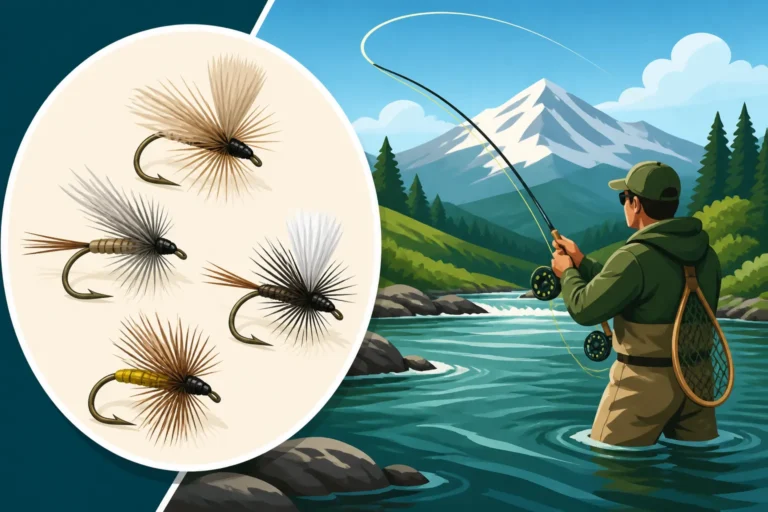
Dry Fly Fishing Washington’s Rivers
There's nothing quite like the heart-stopping moment when a trout sips your carefully presented dry fly from the surface of a crystal-clear Washington river. Many anglers chase this exact experience, but the journey to consistent dry fly success can feel daunting, filled with frustrating refusals and tangled leaders. This guide is here to unravel the mysteries of dry fly fishing on Washington's diverse waterways, helping you connect with those elusive surface feeders.
The Allure of Dry Fly Fishing in Washington Rivers
For many, dry fly fishing isn't just a technique; it's a philosophy, a dance between angler, insect, and fish that culminates in one of the most visually rewarding experiences in the sport. It's about more than just catching fish; it's about the connection to nature, the challenge of imitation, and the sheer thrill of watching a fish rise to your offering.
Why Dry Flies Capture Anglers' Hearts
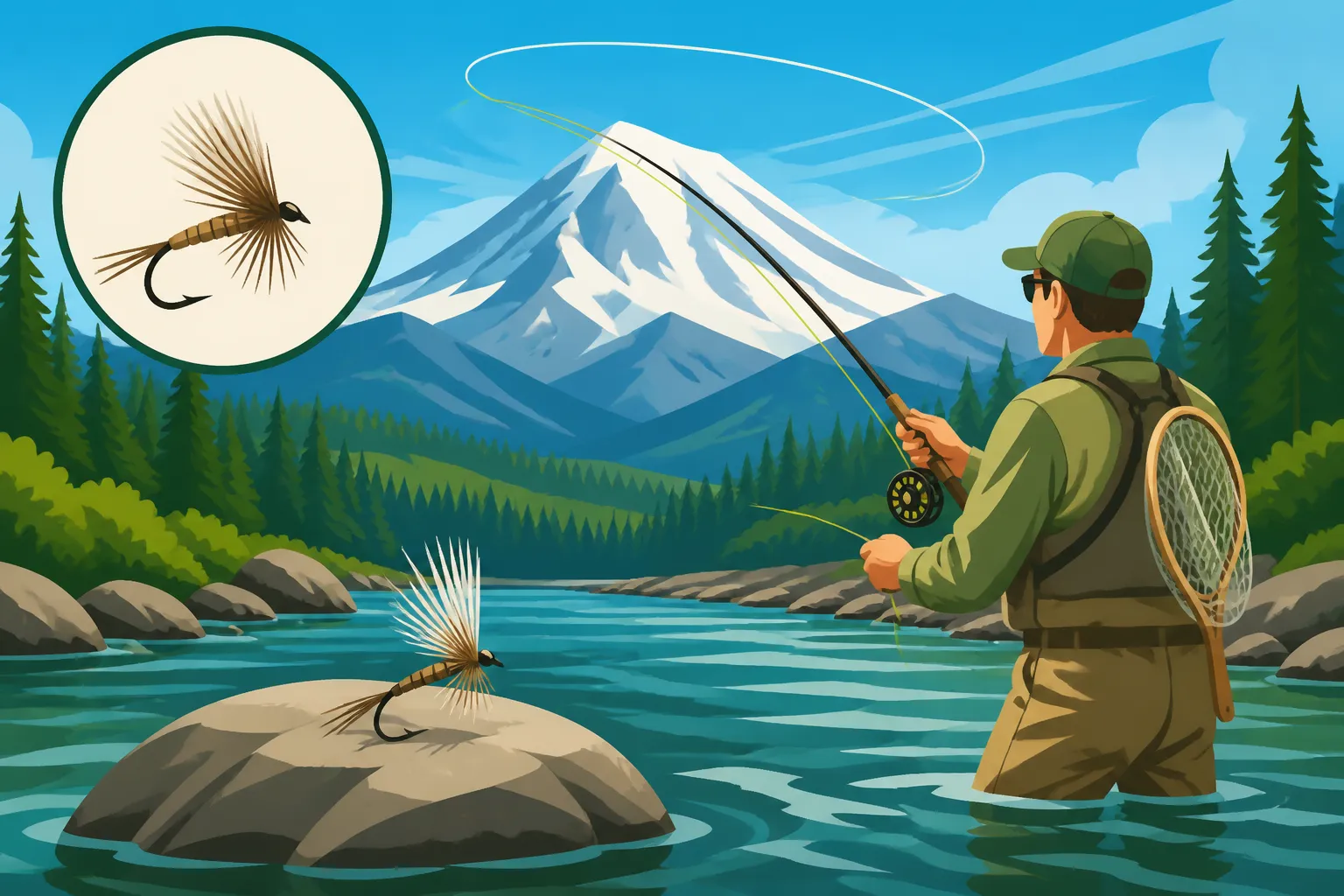
Imagine standing in the gentle current of a river, the air buzzing with insects, and then, a subtle dimple appears on the surface. You cast, your fly lands softly, and drifts downstream. Suddenly, that dimple appears again, right where your fly was, and you lift the rod into a fish that just couldn't resist. This direct, visual interaction is what makes dry fly fishing so addictive. Unlike subsurface techniques like nymphing, where the take is often felt, a dry fly strike is seen. It's a moment of pure anticipation and exhilarating reward. Many purists consider it the most elegant and engaging form of fly fishing, a true test of observation, casting skill, and imitation. It validates your ability to "match the hatch" and fool a wild creature with a tiny collection of feathers and fur.
In Washington, this often means targeting our abundant trout populations, especially aggressive rainbow and cutthroat trout in rivers like the Yakima or the various Olympic Peninsula systems. Sometimes, even eager juvenile steelhead, often called "half-pounders," will rise to a well-presented dry fly, particularly in late summer. It's a special kind of magic, feeling like you've truly outsmarted the fish on its own terms, presenting a perfect meal right to its waiting mouth. This direct observation of the fish's behavior and the immediate consequence of your cast creates an incredibly immersive and satisfying experience that keeps anglers coming back for more.
Understanding Washington's Unique River Ecosystems
Washington state is blessed with an incredible variety of river systems, each with its own character, insect life, and fish populations that make them prime dry fly destinations. Understanding these different ecosystems is key to unlocking their dry fly potential.
On the eastern side of the Cascades, rivers like the famous Yakima River are often characterized as "tailwaters" or "freestones." The Yakima, for example, is primarily a tailwater fishery below its reservoirs, meaning water flows are often regulated, and temperatures are generally more stable than a natural freestone river. This stability can lead to prolific and consistent hatches throughout the year, making it a fantastic destination for dry fly anglers. It's known for its robust populations of rainbow and cutthroat trout, which frequently key in on surface insects. Further east, you find rivers like the Methow River, a more classic freestone river, where flows and temperatures fluctuate more naturally with the seasons and snowmelt. These rivers can offer explosive dry fly action during peak hatches but might require more adaptation to changing conditions.
Over on the Olympic Peninsula, you have wild, untamed rivers like the Sol Duc, Hoh, and Quillayute. These are largely freestone systems, heavily influenced by rainfall and snowmelt, and often run through dense rainforests. While famous for their steelhead and salmon, these rivers also hold healthy populations of sea-run cutthroat trout, which can be incredibly eager dry fly takers, especially in the estuaries and lower river sections during summer and early fall. The sheer diversity of insect life in these regions, from tiny midges to large stoneflies, means anglers always have a challenge and an opportunity. Each river offers a distinct set of conditions, from gradient and bottom structure to water clarity and surrounding vegetation, all of which influence the resident insect populations and, by extension, the best dry fly strategies.
Essential Gear for Washington Dry Fly Anglers
Having the right tools for the job makes all the difference when you're trying to fool a wary trout with a bit of feather and thread. While fly fishing gear can get overwhelming, dry fly fishing primarily demands finesse and precision, which influences your choice of rod, reel, and line.
Rods, Reels, and Lines for the Job
When it comes to dry fly fishing in Washington, your rod is your primary instrument for delicate presentations. For most trout applications on our rivers, a fly rod in the 7-9 foot range with a 3- to 5-weight rating is ideal. A 3-weight rod is incredibly sensitive and excels at presenting small flies on fine tippets, especially when you're targeting selective fish on calm water. However, it might struggle in windy conditions or when you need to cast larger attractor patterns. A 4-weight is often considered the perfect all-around dry fly rod, offering a good balance of delicacy and power for a wide range of flies and conditions. If you anticipate fishing larger rivers, dealing with wind, or throwing bigger terrestrial patterns like hoppers, a 5-weight provides a bit more backbone without sacrificing too much finesse.
As for action, a medium-fast action rod is often preferred. This type of rod allows for delicate presentations at close range while still having enough power to handle longer casts or fight a larger fish without feeling completely outmatched. Faster action rods might appeal to some for their ability to generate line speed, but they can make soft landings and precise presentations with light tippets more challenging.
Reels for dry fly fishing are usually quite simple. Their primary purpose is to hold your fly line and backing. A lightweight click-and-pawl reel or a basic disc drag reel will serve you perfectly. You don't need a heavy, high-tech drag system because you'll be fighting most trout by hand-lining them or using the flex of your rod, not relying on the reel's drag. When selecting a reel, aim for one that balances well with your chosen rod, creating a comfortable, natural feel in your hand. Many reliable entry-level and mid-range options are available, and you can easily find a good selection of quality fly reels and lines on Amazon, as well as at your local fly shop.
Your fly line is crucial because it's what carries your fly to the target. A weight-forward (WF) floating line is the standard choice for dry fly fishing. The weight-forward taper helps with casting distance and turnover, while the floating nature keeps your line on the surface, allowing for proper dry fly presentation. Some anglers prefer a double-taper (DT) line for very delicate presentations at shorter ranges, as it can be less intrusive on the water. Look for lines with low-stretch cores for better sensitivity and slick coatings for easier casting. Brands like Rio, Scientific Anglers, and Cortland are highly respected for their quality fly lines that perform exceptionally well in various conditions.
Leaders, Tippets, and Dry Fly Floatant
Beyond the main fly line, the connection between you and your fly is made through a leader and tippet, both vital for effective dry fly fishing.
A tapered leader is essential. These leaders gradually decrease in diameter from the thick butt section (which connects to your fly line) down to a fine tippet end. This taper allows the energy from your cast to transfer smoothly, resulting in your fly turning over gracefully and landing softly on the water. For most dry fly situations on Washington rivers, a 7.5-foot to 12-foot tapered leader is appropriate. Shorter leaders (7.5-9 ft) are good for windy conditions, larger flies, or when fishing choppy water. Longer leaders (10-12 ft) are perfect for spooky fish, calm water, and delicate presentations, as they help keep the brightly colored fly line further from the fish's view. Leader strength is typically expressed in "X" ratings, with higher numbers indicating finer diameters (e.g., 5X is finer than 3X). For dry flies, you'll commonly use 4X to 6X leaders, sometimes even 7X for tiny flies and extremely selective fish.
Tippet is the final, finest section of line that you attach to the end of your tapered leader, and it's what your fly is ultimately tied to. Carrying spools of tippet in various X-sizes (matching or finer than your leader's end) is crucial. Monofilament tippet is generally preferred for dry fly fishing because it floats better than fluorocarbon. It's also typically more supple, allowing for more natural fly movement. Fluorocarbon sinks and can pull your dry fly under the surface, making it generally less suitable, although some anglers use it in very specific scenarios. Tippet material is critical for achieving a drag-free drift and making subtle presentations. You might start with 5X for general dry fly fishing and then drop down to 6X or even 7X if fish are refusing your fly due to a thick tippet or if you're using very small patterns. Conversely, if you're throwing larger flies or fishing for bigger, aggressive fish, you might go up to 4X.
Finally, dry fly floatant is your best friend. Even the best-tied dry fly will eventually become waterlogged and sink. Floatant, available as gels, liquids, or powders, helps your fly stay buoyant on the surface. Gels like Loon Aquel or Tiemco Dry Dip will coat your fly, making it water-resistant. Powders, often combined with a desiccant, are excellent for drying out a waterlogged fly and restoring its buoyancy. For example, a shake in a container of desiccant powder will often bring a drowned fly back to life. You'll find a good selection of these on Amazon or at your favorite local fly shop. Always apply floatant generously before you start fishing with a new fly, and reapply as needed throughout the day to ensure your fly continues to ride high and visible on the surface, ready for that anticipated take.
Decoding the Hatch: Bugs and Seasons
Successful dry fly fishing is deeply intertwined with understanding insect life cycles and knowing what the fish are eating. This "matching the hatch" concept is at the heart of the dry fly game, and Washington's rivers offer a rich, dynamic tapestry of insect activity throughout the year.
Key Hatches and Their Timing on Washington Rivers
The life of a dry fly angler revolves around the "hatch"—the emergence of aquatic insects from the water, which often triggers intense feeding by fish. Knowing what bugs are active and when is paramount for success on Washington's rivers.
Spring (March – May): As water temperatures begin to rise after winter, the first major hatches kick off. Skwala Stoneflies are often the earliest and most anticipated, particularly on rivers like the Yakima. These large, dark stoneflies get fish looking up early in the season. Following closely are the March Browns, a medium-sized mayfly, and various species of Caddisflies. Grannoms, a type of caddis, can emerge in huge numbers, creating frenzied dry fly action. During this period, fish are often hungry after a lean winter and can be less selective, making for exciting fishing opportunities. The key is to be on the water when these hatches begin, as they can be intense but sometimes short-lived.
Summer (June – August): This is prime time for dry fly fishing on many Washington rivers. The warmer water and longer days bring a plethora of insects. Pale Morning Duns (PMDs) are ubiquitous, small-to-medium sized mayflies that hatch consistently through the summer months, often in the late morning or afternoon. Green Drakes, larger and more robust mayflies, also provide substantial meals for trout. Stoneflies, including Golden Stones and Little Yellow Sallies, continue to emerge, especially in freestone rivers. As summer progresses, terrestrial insects become increasingly important. Grasshoppers, ants, and beetles often fall into the water from streamside vegetation, providing large, calorie-rich meals for trout. Fishing with large foam hopper patterns along grassy banks on rivers like the Yakima can be incredibly effective.
Fall (September – November): As temperatures cool and days shorten, the hatches shift again. Blue-Winged Olives (BWOs) become the dominant mayfly, often hatching on overcast, rainy days. These small, dark mayflies can bring even large trout to the surface in glassy water, requiring delicate presentations and fine tippets. October Caddis, a large, orange-bodied caddisfly, is another significant hatch during this period, often emerging in the late afternoon. Fall can offer some of the most consistent and rewarding dry fly fishing, with fewer anglers on the water and robust, well-fed fish.
Winter (December – February): While less common, dry fly opportunities can still exist in winter, especially on milder days or tailwater fisheries. Tiny Midges are the most prevalent insect, often hatching in slow, deep pools. You'll need very small flies (sizes 20-24), fine tippets (7X), and meticulous observation to spot subtle rises. Small BWO hatches can also occur on warmer winter afternoons. Fly Fishing Techniques for Winter Steelhead in Washington primarily focus on subsurface presentations, but don't count out a chance encounter with a rising trout during this colder period. This time of year truly tests your patience and observation skills, but the rewards of a winter dry fly take are incredibly sweet.
Reading the Water for Feeding Fish and Insect Activity
More than just knowing what hatches, a truly successful dry fly angler masters the art of reading the water—interpreting subtle cues from the fish and the environment to understand when and where to present a fly.
The first thing to look for is rises. Not all rises are created equal, and understanding the type of rise can tell you a lot about what the fish is eating. A gentle sip or dimple usually indicates a trout taking small, emerging insects or spent adult flies just under or in the film of the water. This is often associated with mayfly hatches or midge emergences. A more aggressive splashy rise might mean a fish is chasing a skittering caddisfly or a large terrestrial that has just hit the surface. If you see a fish consistently rising in the same spot, that's your target. This indicates a "feeding lane" where the fish is positioned to intercept a conveyor belt of insects.
Beyond the rises themselves, observe the water's surface for insect activity. Are there spent mayflies floating lifelessly? Are caddisflies skating across the surface? Are adult stoneflies crawling on streamside rocks? Are there flying ants in the air? These visual cues are your best indicators of what the fish are keying in on. Sometimes, fish will be feeding subsurface on nymphs and emergers even during a hatch, so keep an eye out for any "nose prints" or subtle bulges that suggest fish are feeding just below the surface. A good angler takes the time to observe for 5-10 minutes before making a cast, allowing them to formulate a plan.
Different water types will also hold different insects and provide different feeding opportunities. Riffles (faster, shallower water) often produce heavy hatches of caddisflies and smaller mayflies. Fish in riffles tend to be less selective due to the limited time they have to inspect a fly. Runs (deeper, smoother flows) are classic feeding lanes where fish will position themselves to intercept drifting insects. This is often where you'll see consistent rising fish during a strong hatch. Pools and eddies (slower, deeper water) are where insects often collect, and fish can be incredibly selective due to the ample time they have to examine your fly. They are also prime spots for midge hatches and BWO emergences in calmer conditions. Even in smaller tributary streams that feed into larger rivers, you might find concentrations of specific insects that attract feeding trout.
Always scan the water for drift lines, which are seams or currents where foam, debris, and insects congregate. Fish will often sit just below or within these lines, waiting for food to come to them. Your goal is to get your dry fly into these natural drift lines. Don't be afraid to move and explore different sections of the river. Sometimes, a particular reach or bend will have a stronger hatch or more active fish than another. Consulting resources like Washington Sport Fishing Seasons and Emergency Closures can give you an idea of general fishing conditions, but on-the-water observation is always the most valuable tool.
Mastering Dry Fly Presentation Techniques
Catching a fish on a dry fly isn't just about picking the right pattern; it's heavily dependent on how you present it. A flawless drift, a delicate landing, and the ability to fool a fish into thinking your artificial fly is a natural insect are the hallmarks of a skilled dry fly angler. This often involves precise casting and meticulous line management.
The Perfect Drift: Casting and Mending
The holy grail of dry fly fishing is the "drag-free drift." This means your fly floats on the surface at the exact same speed as the natural current, without any unnatural tugging or pulling from your fly line. Achieving this takes practice and attention to detail in your casting and line management.
First, your cast needs to be accurate and delicate. A dry fly should land softly, like a natural insect alighting on the water, not with a "splat" that spooks every fish in the vicinity. This means aiming to present your fly 2-5 feet upstream of where you expect the fish to be, allowing it to settle before drifting into the feeding zone. Upstream presentations are generally preferred as they allow the fish to see the fly first, rather than the line or leader, and make it easier to achieve a drag-free drift. Downstream presentations can work in specific situations, especially in tight quarters or when targeting fish directly below you, but they make drag management more challenging.
Mending is arguably the most critical skill for achieving a drag-free drift, especially on rivers with complex currents. Mending involves repositioning your fly line on the water without moving your fly itself. This technique allows you to compensate for different current speeds between your fly and your fly line. For example, if the current closer to you is faster than the current where your fly is drifting, your line will pull your fly unnaturally, creating drag. An upstream mend involves flipping a loop of line upstream, giving your fly more slack and extending its drag-free drift. Conversely, a downstream mend might be used to pull excess line out of a faster current to prevent it from swinging your fly too quickly.
There are various types of mends:
- Roll cast mend: A subtle repositioning of the line with a quick roll cast action.
- Reach cast: An intentional cast where you extend your rod arm in the direction of the desired drift after the forward cast, causing the line to land in a curve or "reach" that provides immediate slack.
- Aerial mend: A mend made while the line is still in the air during the cast, allowing you to lay the line down in an "S" curve that gives more time before drag sets in.
Effective line management also means keeping excess slack to a minimum. Too much slack makes it hard to detect subtle takes and impedes a quick, effective hookset. Conversely, too little slack can lead to immediate drag. It's a delicate balance that comes with experience. Every cast should be a deliberate attempt to achieve that perfect, undisturbed float, allowing your fly to ride the current as if it were truly alive. Learning to read current seams and anticipating where drag will occur is part of the ongoing learning process.
Choosing the Right Dry Fly Pattern
Once you've mastered the art of presentation, the next step is selecting the right fly pattern. This is where "matching the hatch" truly comes into play, but it also involves knowing when to deviate from perfect imitation.
The most effective strategy is usually to match the hatch. This means observing the natural insects on the water or flying in the air and choosing an artificial fly that closely mimics their size, shape, and color. If you see medium-sized tan mayflies hatching, you'd likely reach for a Pale Morning Dun (PMD) pattern in a similar size. If large, dark stoneflies are abundant, a Skwala or Salmonfly imitation is in order. It's not about being absolutely identical, but rather about presenting a "fishy" impression that is close enough to fool the trout. This is why spending time observing before casting is so valuable; it tells you exactly what the fish are seeing.
However, sometimes there's no obvious hatch, or the fish aren't responding to your match-the-hatch efforts. This is when attractor patterns come into their own. These flies don't imitate a specific insect but instead feature bright colors, buggy profiles, or flashy materials that simply grab a fish's attention. Attractors are excellent for searching for fish in new water or when fish are less selective. Classic attractor patterns that work well on Washington rivers include the Royal Wulff, Stimulator, and the Parachute Adams. These flies are often a bit larger and more visible, making them good choices for choppy water or when you need a fly that can "float a little raft" (support a small nymph dropper underneath).
When selecting a fly, size and color are crucial. If fish are rising but refusing your fly, often the first adjustment to make is changing the size, usually going down a size or two. If that doesn't work, then try a different shade or tint. Sometimes, trout can be incredibly selective, keying in on minute details. For example, fish feeding on tiny midges might ignore a size 18 fly but eagerly take a size 20 or 22. Light conditions also play a role; darker flies might be better on bright days, while lighter-colored flies might stand out better on overcast days.
For Washington rivers, a well-stocked fly box should include staples such as:
- Elk Hair Caddis: A versatile caddisfly imitation, great for skating or dead-drifting.
- Parachute Adams: A classic mayfly imitation that sits low in the water, mimicking an emerging or spent adult.
- Stimulator: A buoyant, buggy attractor that can imitate a variety of stoneflies or large terrestrials.
- Royal Wulff / Humpy: Excellent attractors that float well in various conditions.
- PMD, BWO, Green Drake patterns: For specific mayfly hatches.
- Hopper, Ant, Beetle patterns: For terrestrial season in summer and early fall.
A well-stocked fly box with these staples can be easily built with selections found on Amazon or local outfitters. Remember, trout are creatures of habit and opportunity, and providing them with an offering that looks, smells (to them), and acts like their natural food source is the ultimate goal of dry fly fishing.
Common Challenges and Troubleshooting
Dry fly fishing, for all its beauty, can also be incredibly frustrating. Wary fish, complex currents, and the delicate nature of the presentation mean that even experienced anglers face challenges. The key is to recognize the problem and have a mental toolkit for troubleshooting.
Dealing with Drag and Tricky Currents
The most common nemesis of the dry fly angler is drag. It's the moment when your perfectly chosen fly, after an otherwise flawless cast, suddenly speeds up, slows down, or changes direction unnaturally because your fly line is being pulled by different current speeds. A fish that was just moments from rising will often refuse a fly that's dragging, immediately identifying it as a fake.
Drag is caused by several factors:
- Current differentials: The most frequent culprit. Rivers rarely flow at a uniform speed. There are faster currents, slower eddies, and seams all within a few feet. If your line crosses these different currents, it will pull on your fly.
- Wind: Can push your fly line or leader, causing your fly to move unnaturally.
- Poor line management: Too much slack on the water, or incorrect mending, can exacerbate drag.
Overcoming drag requires a combination of casting adjustments, active mending, and keen observation.
- Longer leaders and finer tippets: These can help by putting more distance between your fly line and the fly itself, making it harder for the current to directly influence the fly's drift. Using a 10-12 foot leader can give you a significant advantage in drag-prone situations.
- Casting angles: Adjusting your casting angle can help. Sometimes casting more directly upstream or downstream, rather than across multiple currents, can simplify the drift. The reach cast, as mentioned earlier, is a fantastic tool for immediately building slack into your line upon presentation.
- Advanced mending: Learning to execute precise and timely mends is crucial. It's a continuous process throughout the drift. Watch your fly, and as soon as you see any sign of unnatural movement, mend. Sometimes, a series of small, subtle mends is more effective than one large, disruptive mend.
- "Curve" or "parachute" casts: These casts intentionally land the line in a curve or pile, which buys you extra time for a drag-free drift on complex currents before the current catches up.
- High-sticking: In faster, turbulent water, holding your rod tip high to keep as much line off the water as possible can minimize drag by reducing the surface area exposed to conflicting currents.
Ultimately, mastering drag is an ongoing journey that emphasizes practice and observation. Each river, and even different sections of the same river, will present unique current challenges. The more you watch your fly, observe the water, and experiment with different presentations, the better you'll become at achieving that perfect, natural drift.
Refusals, Spooks, and Finicky Fish
Even with a perfect drift, sometimes fish just don't cooperate. You'll witness the heart-stopping moment a fish rises, inspects your fly, and then turns away without taking it—a "refusal." Or, worse yet, you might accidentally "spook" a fish, sending it darting for cover. Dealing with these finicky fish is a core challenge in dry fly fishing.
Refusals are incredibly frustrating because they indicate you're almost there. When a fish refuses, it's usually because:
- Wrong fly: The size, shape, or color isn't quite right.
- Bad drift: Even a subtle bit of drag can cause a refusal.
- Too much leader/tippet: The fish sees the connection to your line.
- Improper float: The fly isn't sitting correctly in the water (e.g., on its side, or waterlogged).
When facing refusals, implement a systematic troubleshooting approach:
- Change tippet: First, try going down one size in tippet (e.g., from 5X to 6X). A finer tippet is less visible and allows the fly to move more naturally.
- Change fly size: If the tippet change doesn't work, try going down a size or two in your fly pattern, even if it doesn't perfectly match the naturals. Sometimes, a smaller, less intimidating fly is more appealing.
- Change fly pattern: If size isn't the issue, try a different pattern that still generally matches the hatch, perhaps one that sits lower in the water, like a comparadun or a parachute pattern, or one that has a different profile.
- Check floatation: Reapply floatant. Ensure your fly is riding high and proud, exactly like a natural.
- Re-evaluate drift: Are you absolutely certain you're getting a drag-free drift? Sometimes a slight angle adjustment or a different mend is all it takes.
Spooked fish are another common problem, and they can ruin a good feeding opportunity for both you and other anglers. Fish get spooked for various reasons:
- Shadows: Casting your shadow or your rod's shadow over a fish.
- Heavy footsteps: Vibrations on the bank or wading carelessly can send fish fleeing.
- Poor casting: A fly line "splatting" on the water or over-casting a fish with too much line.
- Bright clothing: Wearing high-contrast clothing that stands out against the bank.
To avoid spooking fish:
- Approach stealthily: Walk softly, stay low, and approach the river bank carefully, especially if it's a calm, clear day.
- Wear subdued clothing: Earth tones blend in better with the natural environment.
- Observe from a distance: Try to spot feeding fish before you get too close.
- Cast accurately, not over: Aim to land your fly gently and avoid false casting directly over a fish. Minimize the number of false casts.
- Use the current to your advantage: Often, approaching from downstream and casting upstream allows you to present your fly without revealing your presence.
Sometimes, despite your best efforts, fish will simply be "finicky." This often happens in heavily fished waters like certain sections of the Yakima River or during periods of low, clear water. The "angler's dilemma" is real – sometimes the fish are just not biting on dries, and it's time to switch to a different technique like nymphing or streamers, or simply move to another spot. Remember, even the best anglers have days where the fish win. It's part of the challenge and the charm of dry fly fishing in Washington. Checking Where to Find Current Washington Fishing Rules can also sometimes reveal specific gear restrictions or closures that might be affecting fish behavior or your ability to fish certain areas.
Etiquette and Conservation on Washington's Rivers
Our beautiful Washington rivers are shared resources, and as anglers, we have a responsibility to not only enjoy them but also protect them for future generations. This means adhering to ethical angling practices, especially when dry fly fishing, which often involves targeting delicate wild fish.
Practicing Catch and Release with Dry Flies
Many of Washington's premier dry fly fisheries, particularly those known for wild trout and steelhead, operate under catch-and-release regulations or encourage responsible release practices. Practicing careful catch and release is paramount to preserving these precious fisheries.
- Barbless Hooks: This is perhaps the most critical component. Many Washington rivers, particularly those managed for wild fish, require the use of barbless hooks. Even where not required by law, using barbless hooks dramatically reduces harm to fish. They penetrate easier and, more importantly, are much easier to remove. You can either buy flies tied on barbless hooks or crimp down the barb on a regular hook with a pair of pliers. This is also covered in detail in Barbless Hook Requirements on Washington Rivers.
- Minimize Handling: The less you handle a fish, the better its chances of survival. Try to keep the fish in the water as much as possible. If you must handle it, do so with wet hands. Dry hands can remove the fish's protective slime layer, making it susceptible to disease. Avoid squeezing the fish, especially around its internal organs.
- Quick Photos: If you want a photo, prepare your camera beforehand. Lift the fish gently, snap a quick shot, and return it to the water immediately. Avoid holding fish by the jaw or tail in an unnatural position.
- Appropriate Release Tools: Carry a good pair of forceps or hemostats to quickly and efficiently remove hooks, especially if the fish has swallowed the fly. A net with rubber mesh (not nylon) is also beneficial, as it's much gentler on the fish's fins and slime coat.
- Revive the Fish: After unhooking, hold the fish gently facing upstream in the current, allowing water to flow over its gills. Don't move it back and forth; this doesn't help. Wait until the fish is strong enough to swim away on its own power.
- Protect Wild Fish: Many of Washington's rivers are home to precious wild fish populations, including various species of trout, cutthroat, and steelhead. The survival of these fish is vital for the health of the ecosystem. Being mindful of What to Do If You Catch a Wild Steelhead by Accident and knowing the difference between wild and hatchery fish (often identified by an adipose fin clip) is crucial.
By following these guidelines, you're not just adhering to regulations; you're actively contributing to the sustainability of Washington's incredible fishing resources.
Respecting Fellow Anglers and the Environment
Fishing in Washington's beautiful outdoors is a privilege, and maintaining good etiquette and environmental stewardship ensures everyone can continue to enjoy these places.
- Wading Safely and Minimally: Be conscious of your surroundings. Avoid stomping through prime fish lies, especially when approaching a spot where other anglers might be fishing. Wade only when necessary, and do so carefully to avoid disturbing the riverbed and potentially dislodging insect larvae. Some sensitive areas may have specific rules about wading; always check Washington Fishing Regulations Every Angler Should Know before you go.
- Maintaining Distance: It's an unwritten rule of angling that you give fellow anglers plenty of space. A good rule of thumb is to allow at least 100 feet (or more, depending on the river and conditions) between yourself and another angler. Don't "crowd" someone or cut them off by wading in directly above or below them. If you arrive at a spot where someone is already fishing, either find another open spot or politely ask if you can fish nearby, respecting their decision if they decline.
- Pack it in, Pack it out: This is fundamental. Whatever you bring onto the river, take it home with you. This includes all trash, broken tippet, old leaders, and discarded fishing line. Leave no trace of your visit. Consider picking up any trash you find, even if it's not yours.
- Respect Private Property: Many river access points border private land. Always be mindful of property lines, avoid trespassing, and park your vehicle responsibly without blocking access or driveways.
- Know the Rules: Washington's fishing regulations can be complex and change frequently due to conservation efforts or emergency closures. Always consult the latest WDFW regulations pamphlet or website, as found in Reading the Washington Sport Fishing Regulations Pamphlet, before each trip. Specific rivers might have unique regulations regarding gear, bait, and catch limits. Ignorance of the law is not an excuse for a violation.
By being a considerate and responsible angler, you help foster a positive community on the water and ensure that Washington's rivers remain pristine and productive for generations to come.
Washington's River Hatches & Dry Fly Pairs
Knowing when specific insects are most active can drastically improve your dry fly success. Here's a general guide to some of the most prominent hatches on Washington rivers and popular dry fly patterns to imitate them.
| Hatch/Insect Type | Primary Season | Typical Sizes | Rivers You Might Find Them On | Recommended Dry Fly Patterns (Examples) |
|---|---|---|---|---|
| Skwala Stonefly | Early Spring (Mar-Apr) | #8 – #12 | Yakima, Wenatchee, Olympic Peninsula rivers | Goddard Caddis (large), Stimulator, Skwala Stonefly |
| March Brown Mayfly | Spring (Apr-May) | #12 – #14 | Yakima, Green, Skykomish, Snoqualmie | March Brown, Parachute Adams, Hare's Ear Parachute |
| Caddisfly (Grannom, etc.) | Spring-Fall | #14 – #18 | Most rivers, especially Yakima, Skagit, Cowlitz | Elk Hair Caddis, Goddard Caddis, X-Caddis |
| Pale Morning Dun (PMD) | Summer (June-Aug) | #14 – #18 | Yakima, Green, Naches, Olympic Peninsula rivers | Parachute PMD, Sparkle Dun PMD, Compara-Dun |
| Green Drake Mayfly | Early Summer (June-Jul) | #10 – #12 | Yakima (upper), Methow, some mountain streams | Green Drake Comparadun, Green Drake Cripple |
| Golden Stonefly | Summer (June-Aug) | #6 – #10 | Yakima, Methow, Wenatchee, larger freestone rivers | Rogue River Stonefly, Sofa Pillow, Stimulator |
| Terrestrials (Hoppers, Ants, Beetles) | Mid-Summer-Early Fall (Jul-Sep) | #6 – #16 | Rivers with grassy banks: Yakima, Methow, Grande Ronde | Foam Hopper, Parachute Ant, Beetle-mania |
| Blue-Winged Olive (BWO) | Fall (Sep-Nov), Winter (mild days) | #18 – #22 | Most rivers, especially Yakima, Green, Hoh, Sol Duc | Parachute BWO, Baetis Comparadun, Thorax Dun |
| October Caddis | Fall (Sep-Oct) | #8 – #10 | Yakima, Skykomish, Skagit, Green | Orange Elk Hair Caddis, October Caddis |
| Midges | Year-round, especially Winter | #20 – #24 | Slower pools, tailwaters like Yakima | Griffith's Gnat, Zebra Midge (emerger), Adult Midge |
Please note that hatch timing can vary significantly year-to-year based on weather, water levels, and geographical location within the state. Always observe conditions on the water to confirm what the fish are actually feeding on.
Disclaimer
Fishing regulations in Washington State can change frequently and without much prior notice due to fish run forecasts, conservation efforts, or emergency closures. Always consult the latest Washington Department of Fish and Wildlife (WDFW) regulations pamphlet or their official website before heading out. This guide is for informational purposes only and should not be considered a substitute for official WDFW regulations.