How to Nymph for Trout on the Yakima
Getting started with nymphing for trout on a river like the Yakima can feel incredibly daunting. You see experienced anglers gracefully casting, their lines barely visible, and then suddenly, they're hooked up to a beautiful rainbow or cutthroat, while your own indicator sits lifelessly on the surface. It's frustrating to know the fish are there but not quite grasp how to present your fly effectively beneath the surface. This comprehensive guide is designed to demystify the art of nymphing on the iconic Yakima River, breaking down the techniques, gear, and river-reading skills you’ll need to consistently fool those clever trout.
Understanding the Yakima River and Its Trout
The Yakima River is a gem in Washington State, renowned for its incredible wild trout fishery. Unlike many rivers, it’s primarily a freestone river, meaning its flows are largely dictated by snowmelt and rainfall, though some sections are regulated by dams. This combination creates a dynamic environment, presenting diverse fishing challenges and opportunities. What makes the Yakima so special for nymphing, specifically, is its consistent insect life.
The river is an aquatic insect buffet, teeming with caddisflies, mayflies, stoneflies, and midges throughout the year. These insects, in their nymphal and larval stages, form the vast majority of a trout's diet. While dry fly fishing can be spectacular during hatches, the reality is that trout spend most of their time feeding subsurface, where these insects live and drift. Therefore, understanding the river's character – its riffles, runs, deep pools, and current seams – and how these relate to insect life and trout behavior, is crucial. You're not just casting; you're trying to mimic a natural food source drifting along the riverbed, often in currents that can be deceptively tricky. The wild trout here, predominantly robust rainbow trout and native cutthroat trout, are savvy and require a thoughtful approach, but once you crack the code, the rewards are immense. For a deeper dive into fishing this incredible waterway, check out our guide on Yakima River Fly Fishing for Wild Trout in Washington.
Essential Nymphing Gear for the Yakima
Having the right tools for the job on the Yakima can make a world of difference. Nymphing isn't just about the flies; it's about the entire system working together to give you the most natural presentation and the best chance to detect those subtle takes.
Rods, Reels, and Lines Designed for Nymphing
When it comes to nymphing, a slightly longer fly rod often gives you an advantage. Many anglers opt for rods in the 10 to 11-foot range, typically in a 3- to 5-weight. The extra length allows for better line control, especially when high-sticking or performing European nymphing techniques, keeping more line off the water and reducing drag. A medium-fast action rod is usually a good choice, offering enough sensitivity to feel lighter takes but still providing backbone for fighting larger trout in strong currents. Brands like Orvis, Sage, and Redington all offer excellent nymphing-specific rods.
Your reel doesn't need to be a high-end, large arbor drag system for nymphing, as you're often fighting fish on the rod itself, but a reliable reel with a smooth drag is always a good investment. What's more critical is your fly line. For traditional indicator nymphing, a weight-forward floating line that matches your rod weight is standard. However, for Euro nymphing, specialized thin-diameter lines or even just a long, level monofilament leader are preferred, as they cut through the wind and water more efficiently, enhancing sensitivity. You'll also need sighter material – bright, multi-colored monofilament or fluorocarbon tied into your leader system that acts as a visual indicator for subtle strikes. Many anglers purchase these pre-tied or buy spools of sighter material from retailers like Scientific Anglers or Rio, easily found on Amazon.
Leader Setups and Fly Selection
The leader setup is the heart of your nymphing rig. For indicator nymphing, a standard tapered leader (7.5 to 9 feet, 3X or 4X) with an added section of tippet (5X or 6X, sometimes even 7X in clear, low water) below the indicator is common. You'll attach your weighted nymphs to this tippet, often in a two-fly dropper rig where a heavier "point fly" acts as an anchor, and a lighter "dropper fly" trails above it. Ensure your tippet material is fluorocarbon; its low visibility and fast sink rate are perfect for subsurface presentations.
Fly selection on the Yakima can vary widely by season and water conditions, but some patterns are consistently productive. Here’s a basic rundown of essential Yakima nymphs:
| Fly Category | Common Patterns | Sizes (Hook) | Description & Use |
|---|---|---|---|
| Stoneflies | Pat's Rubber Legs, Copper John (Rubber Leg), Kaufmann's Stone | #6 – #12 | Imitates large stonefly nymphs; excellent anchor fly. |
| Mayflies | Pheasant Tail Nymph, Hare's Ear Nymph, Flashback Pheasant Tail | #14 – #20 | General mayfly imitations; highly versatile. |
| Caddisflies | Green Rock Worm, LaFontaine's Sparkle Pupa, Caddis Larva | #12 – #18 | Essential for caddis-rich sections of the Yakima. |
| Attractors/Jigs | Squirmy Wormy, Squiggly Worm, Perdigon Nymphs, Blowtorch Nymph | #10 – #18 | Highly visible and effective, especially in off-color water. |
| Midges | Zebra Midge, Blood Midge | #18 – #22 | Crucial for winter and low-water conditions. |
Always carry a variety of sizes and weights (beadheads vs. non-beadheads) to match differing current speeds and depths. Don't forget split shot in various sizes, easily found in multi-packs on Amazon, to add extra weight when needed, and a set of forceps or hemostats for de-barbing hooks and removing flies. For more about specific trout species, you might find our article on Rainbow Trout Fishing in Washington particularly helpful.
Mastering Nymphing Techniques for Yakima Trout
Once you have your gear sorted, it's time to talk about putting it into action. Nymphing isn't a one-size-fits-all approach; the Yakima demands adaptability.
Indicator Nymphing: The Classic Approach
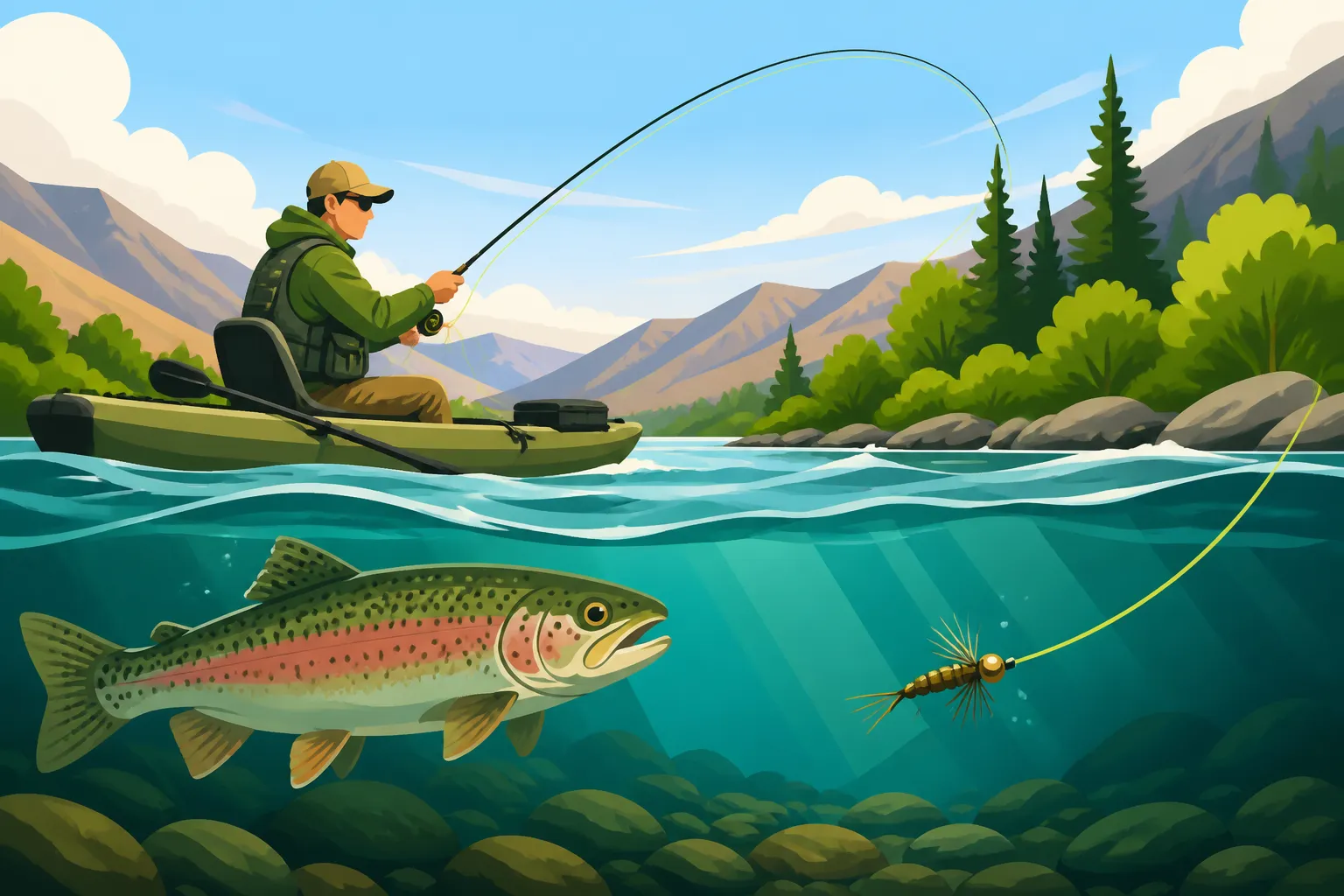
Indicator nymphing is probably what most people visualize when they think of subsurface fly fishing. A buoyant strike indicator (think small bobber) is attached to your leader, and your weighted nymphs hang beneath it. The key here is achieving a "dead drift" – allowing your flies to drift naturally at the same speed as the current, without any drag from your fly line.
To do this effectively:
- Cast Upstream and Across: Aim to land your flies a good distance upstream from where you expect fish to be, allowing them time to sink to the appropriate depth.
- Mend Your Line: Immediately after your cast, and throughout the drift, make subtle upstream mends (lifting your rod tip and flipping a loop of line upstream) to keep your fly line from being pulled downstream faster than your flies. This is where a longer rod really shines.
- Watch the Indicator: Any hesitation, twitch, or sudden movement of the indicator that isn't consistent with the current could be a strike. Set the hook! Don't wait for a hard tug; Yakima trout can be incredibly subtle. Sometimes, all you see is your indicator stop for a split second.
- Control Depth: Adjust the distance between your indicator and your lead fly to match the depth of the water you're fishing. You want your flies to be bouncing occasionally along the bottom.
This technique is excellent for covering wider sections of water, especially in moderate currents and deeper pools.
European Nymphing: Precision and Sensitivity
Also known as Euro nymphing, contact nymphing, or tight-line nymphing, this technique foregoes the traditional strike indicator in favor of direct contact with your flies. It's incredibly effective for sensitive takes and intricate river features.
The core principle is to use a long, light rod, a specialized leader (often just a long piece of level mono or a specialized Euro nymphing line), and heavily weighted flies. The sighter material in your leader acts as your visual cue, detecting subtle movements or stops.
Here’s the breakdown:
- Positioning: You'll typically be much closer to the water and the fish than with indicator nymphing, often wading upstream.
- Cast and Lead: A short, controlled cast places your flies upstream. You then lead them through the drift, holding your rod tip high, keeping your fly line and most of your leader off the water.
- Maintain Contact: The goal is to keep tension in your line, feeling for every tick and subtle take. Your sighter will show you slight pauses or movements, but you'll also feel them as a faint tug or stop in your rod hand.
- Set the Hook: As with indicator nymphing, set the hook at the slightest irregularity. This technique requires constant focus and hand-eye coordination but offers unparalleled sensitivity.
Euro nymphing is particularly deadly in pocket water, swift riffles, and complex current seams where conventional indicator rigs struggle with drag. If you're looking to explore more advanced fly fishing methods, our article on Dry Fly Fishing Washington's Rivers offers a great contrast to subsurface techniques. For anglers keen on optimizing their leader for specific conditions, understanding Leader Length for Clear Water Steelhead in Washington can offer valuable insights, even for trout.
Reading the Water and Troubleshooting Your Nymphing Game
Successfully nymphing on the Yakima isn't just about technique; it's about understanding where the fish are and how to adjust when things aren't working. The river is a complex system, and knowing how to read its "pages" is a skill developed over time.
Identifying Prime Holding Lies
Trout, especially wild ones, are efficient predators. They position themselves in places where food is abundant and easily accessible, but where they also expend minimal energy and feel secure. Look for these prime holding lies:
- Current Seams: Where fast water meets slow water. Food is funneled down the faster current and then deposited into the slower seam, creating an easy feeding lane.
- Riffles and Runs: These oxygen-rich areas are insect factories. Focus on the transition zones at the head and tail of riffles, and the deeper slots within them.
- Deep Pools: While seemingly calm, deep pools often have subtle currents that concentrate food. Fish will often hold near the bottom in these areas, especially in slower currents.
- Structure: Any rocks, logs, undercut banks, or submerged vegetation provides cover and breaks the current. Fish will hold tight to these features.
- Eddies and Backwater: Although sometimes overlooked, these slower areas can hold fish looking for an easy meal caught in the swirling currents.
Think like a trout: where would you sit to eat without fighting the current all day? Our guide on Reading Water for Bank-Fishing Salmon provides general principles that are highly applicable here, even if the target species differs.
Adjusting Depth, Weight, and Presentation
If you're not getting bites, don't keep doing the same thing. Nymphing is all about subtle adjustments.
- Depth is King: The number one reason for not catching fish while nymphing is not getting your flies deep enough. If you're not occasionally tickling the bottom or getting snagged, you're likely too shallow. Add more split shot, move your indicator up, or use a heavier point fly. Remember our discussion on Sinker Weight for Drift Fishing – those principles apply directly to nymphing.
- Weight Distribution: When using a two-nymph rig (also known as a How to Fish a Dropper Rig for Trout), putting the heavier fly on the bottom as your "point fly" helps both flies sink faster and keeps the trailing dropper fly swimming naturally above the bottom.
- Presentation and Drift: Ensure your dead drift is truly dead. Any drag from your line will make your flies look unnatural and spook wary trout. Practice your mends and focus on keeping your indicator or sighter moving at the same speed as the surrounding bubbles and debris.
- Fly Selection: If certain patterns aren't working, switch them up. Go smaller, go bigger, change colors. Sometimes, a subtle change to a different colored bead on a fly can make all the difference. In high, off-color water, attractor patterns like a Squirmy Wormy or a brighter Perdigon might be more visible.
- Water Conditions: Pay attention to water clarity and temperature. The Yakima can fluctuate. On bright, clear days, especially in low water, you'll need smaller flies and finer tippet, like 6X or 7X. Conversely, in off-color or higher flows, you might size up your flies and tippet. Understanding How Water Clarity Affects Steelhead Fishing can give you insights into how these factors affect trout behavior as well. In particularly tough conditions, like How to Fish for Steelhead in Low, Clear Water, these finer points of nymphing become even more critical.
Nymphing can be an incredibly rewarding way to fish the Yakima River. It demands focus, patience, and a willingness to adapt, but when you connect with one of those hard-fighting wild trout, all the effort feels completely worth it.
Disclaimer
Please remember that fishing regulations in Washington State, especially on rivers like the Yakima, can change frequently. Always consult the most current Washington Department of Fish and Wildlife (WDFW) regulations pamphlet or their website before heading out. Be aware of specific gear restrictions, catch limits, and any emergency rule changes that might be in effect for the section of river you plan to fish. Responsible angling ensures this incredible fishery remains vibrant for generations to come.