Crab Pots vs Rings in Washington’s Puget Sound
Oh, the age-old question for anyone looking to drop a line (or a cage!) in Washington's abundant waters: Should I go with crab pots or crab rings in Puget Sound? It’s a classic dilemma that can leave even seasoned anglers scratching their heads, let alone someone just getting into the thrilling world of crabbing. Choosing the right gear isn't just about what's available; it's about understanding your crabbing style, your budget, and the specific conditions you'll face out on the water. This guide is here to untangle that confusion, breaking down the ins and outs of both crab pots and rings so you can make an informed decision and hopefully, fill your cooler with some delicious Dungeness.
Understanding the Basics: What Are Crab Pots and Rings?
Before we dive into the nitty-gritty of pros and cons, let's make sure we're all on the same page about what these two pieces of crabbing gear actually are. It might seem obvious to some, but the subtle differences in their design and function are key to understanding their effectiveness in various situations.
The Classic Crab Pot Design and How It Works
When most people picture crabbing, they likely imagine a crab pot. These are essentially traps designed to lure crabs in and keep them there until you come back to check. Think of them as a crab motel – easy to check in, but a real struggle to check out!
A typical crab pot consists of a sturdy frame, usually made from steel or plastic, covered in a mesh netting. The design can vary quite a bit; you'll see square pots, pyramid-shaped pots, round pots, and even collapsible ones that are fantastic for storage. What they all have in common are one or more entrance funnels. These funnels are designed in a way that allows crabs to easily crawl inside, following the scent of your bait. Once inside, the opening makes it difficult for them to find their way back out.
Beyond the basic structure, modern crab pots come with essential features mandated by Washington State fishing regulations to promote responsible crabbing. One critical component is the "escape ring." These are strategically placed openings in the pot, usually a certain size, that allow smaller crabs (those below the legal minimum size for retention, like undersized Dungeness or smaller Red Rock Crabs) to escape. This helps ensure that only legal-sized crabs are retained, minimizing unnecessary mortality of juveniles. Another vital feature is the "rot cord" or "biodegradable escape device." This is a piece of untreated cotton cord, often securing a portion of the pot lid or an escape panel. If a pot is lost in the water, this cord eventually degrades, creating an escape opening that prevents the pot from "ghost fishing" – continuously trapping and killing crabs indefinitely. This is a huge step towards conservation and something every crabber should appreciate.
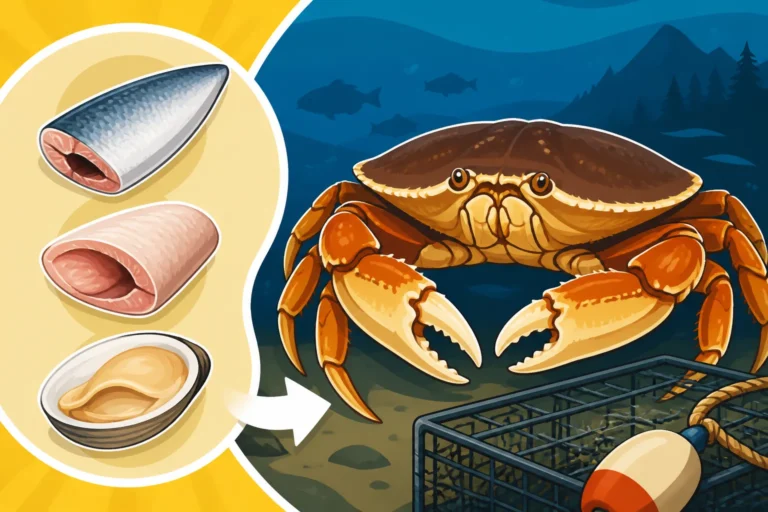
You'll bait your pot, typically with something smelly like chicken, fish carcasses, or even specially formulated crab bait, secure the bait inside a bait cage or sack within the pot, and then lower it to the seabed. A line attached to a buoy (marked with your WDFW license number) floats on the surface, letting you know where your pot is. The idea is to leave it soaking for a period, allowing crabs to enter at their leisure.
Crab Rings: Simplicity and Active Crabbing
Crab rings, often called crab nets or crab snares in other regions, are a much simpler and more active form of crabbing gear. If crab pots are the passive "set it and forget it" option, crab rings are the energetic "stay engaged" choice.
A crab ring typically consists of two concentric metal rings with a mesh net sewn between them. The larger ring forms the base, and the smaller ring sits above it. When deployed, the rings lie flat on the bottom, allowing crabs easy access to the bait placed in the center. The magic happens when you pull the line. As you retrieve the ring, the smaller top ring is pulled upwards, effectively creating a "basket" or "cage" that scoops up any crabs that happen to be feeding on your bait. It’s a bit like a snare, but instead of trapping, it's more about scooping them up quickly before they can scuttle away.
The simplicity of crab rings means they don't have escape rings or rot cords like pots, because they are designed for immediate retrieval. You don't leave them unattended for long periods. Instead, you're constantly monitoring your line, waiting for the tell-tale tugs that indicate a crab might be on the bait, then pulling it up swiftly. This active involvement is what makes rings so different and, for many, so much fun. It's a very visual and hands-on way to crab, perfect for those who want to be deeply involved in the process from start to finish.
Diving Deep into Crab Pots: Pros, Cons, and Best Uses
Now that we understand the fundamental differences, let's break down crab pots specifically. They are the workhorses of the crabbing world, favored by many for their efficiency and ability to cover more ground, but they come with their own set of considerations.
The Advantages of Using Crab Pots
There’s a reason crab pots are so popular, especially among those who are serious about bringing home a substantial catch.
First and foremost, pots offer passive fishing. You can deploy them, go do other things – maybe fish for salmon, enjoy a picnic on your boat, or even head home for several hours – and then return later to check your harvest. This "set it and forget it" convenience is a huge draw, especially if you're trying to combine crabbing with other activities, like salmon fishing in one of Puget Sound's productive marine areas, or just kicking back with friends. You don't need to hover over your gear constantly.
Because of their design, crab pots also boast a higher holding capacity for longer soak times. The funnels and internal design are specifically engineered to keep crabs inside once they enter. This means you can leave your pots out for several hours, or even overnight (as long as regulations allow and you're confident in your gear's security), and expect to find a good number of crabs still inside when you retrieve them. They are much less prone to crabs escaping compared to rings, which rely on quick retrieval. This makes them inherently more efficient for capturing and retaining a larger quantity of crabs per deployment.
The less active effort required is another big plus. Once deployed, the physical work is minimal until retrieval. This can be particularly appealing for those with physical limitations, or simply those who prefer a more relaxed approach to their time on the water. Imagine enjoying a calm afternoon on the water, knowing your pots are doing the work for you.
Pots are also often good for deeper water or when fishing other species. If you're dropping your gear down into 60, 80, or even 100 feet of water, pulling a crab ring every 15-20 minutes can become quite a workout. Pots are designed to sit and collect in these deeper zones where Dungeness crab often reside. And as mentioned, if you're out targeting other species, like you might when Trolling for Salmon in Washington's Puget Sound, you can multitask by leaving your pots to soak simultaneously.
Finally, there's the security of the catch. Once a crab is in a well-designed pot, its chances of escape are significantly lower than with a ring. This means less frustration from crabs slipping away at the last second, and a higher percentage of the crabs that enter your gear actually making it into your cooler.
The Downsides and Challenges of Crab Pots
While highly effective, crab pots are not without their drawbacks, and it's important to understand these before investing in them.
First, cost is a major factor. Crab pots are generally more expensive than rings. A quality, durable crab pot can easily run you anywhere from $50 to $100 or more, especially for heavy-duty commercial-grade pots. If you plan to run multiple pots, which many crabbers do to increase their odds, the initial investment can add up quickly.
Then there's the issue of storage and transportation. Crab pots, particularly the rigid, non-collapsible types, can be quite bulky and heavy. If you have a small boat or limited space in your vehicle or garage, storing and transporting several pots can be a real headache. Even collapsible pots, while better for storage, still take up considerable space and weight. Imagine trying to load four heavy pots into a compact car – it's not ideal. You might find a good selection of various pots on Amazon, but always consider their dimensions.
A significant concern with pots is the risk of gear loss. Puget Sound, like any marine environment, has strong currents, tidal swings, and plenty of underwater obstacles. Losing a pot to a snagged line, a strong current dragging it away, or even another boater inadvertently cutting your line is a common, frustrating, and expensive occurrence. This also leads to the problem of "ghost fishing" if a pot is lost without its rot cord functioning correctly. A lost pot can continue trapping crabs for months or even years, leading to unnecessary mortality. This is why understanding and correctly rigging the rot cord is so crucial.
Speaking of regulations, pots require specific escape mechanisms like escape rings and rot cords to comply with WDFW rules. Failing to have these correctly installed or using non-compliant gear can result in fines. Make sure you understand all the specifics regarding Washington Fishing Regulations Every Angler Should Know before you even think about deploying your gear.
When and Where Crab Pots Shine in Puget Sound
So, given these pros and cons, when are crab pots truly your best choice in Puget Sound?
Commercial crabbing operations almost exclusively use pots due to their efficiency and ability to capture large quantities of crab over extended periods. For recreational crabbers, pots are ideal if you have a dedicated boat with ample storage space and are planning on longer crabbing sessions or multi-day trips where you want to leave your gear soaking for several hours at a time.
They are also excellent for targeting specific depths or areas for Dungeness. Dungeness crab often prefer deeper, softer bottoms, and pots are well-suited for these environments. If you’ve done your homework and found a promising spot, dropping a few pots and letting them work while you enjoy other activities can be incredibly productive. Leaving your gear out overnight is also a common and often successful strategy with pots, again, provided you adhere to specific soak time regulations and buoy marking rules. This makes them superior for someone who wants to maximize their catch with minimal active involvement. You just need to know How Long to Soak a Crab Pot in Puget Sound to get the best results.
Exploring Crab Rings: Pros, Cons, and Ideal Scenarios
Now let's turn our attention to the other contender: crab rings. These are the lightweight, agile alternative, perfect for a different kind of crabbing experience.
The Benefits of Active Crabbing with Rings
Crab rings offer a unique set of advantages that make them incredibly popular, especially for casual crabbers or those with specific needs.
Perhaps the biggest draw is their affordability. Crab rings are significantly cheaper than pots, often costing a fraction of the price. You can usually pick up several rings for the cost of a single quality pot. This makes them a fantastic entry-level option for beginners or families who want to try crabbing without a large upfront investment. If you're just dipping your toes into Puget Sound crabbing, rings are an economical way to start.
Their portability and storage are also huge benefits. Rings are lightweight, foldable, and collapse almost flat, making them incredibly easy to store in a small boat, a car trunk, or even a backpack. They take up minimal space, which is perfect if you have limited storage at home or on your vessel. This ease of transport means you can spontaneously decide to go crabbing without much fuss.
Rings provide immediate gratification. Because you're actively monitoring and pulling them frequently, you get to see your catch much faster. There's a certain thrill in pulling up a ring and seeing a crab scrambling on the net, knowing you acted quickly enough to capture it. This constant engagement is what some crabbers love most about rings.
Since you're actively managing your gear, there's less risk of gear loss. You're constantly present, so the chances of a ring getting snagged, drifting away, or being lost are much lower than with a pot that sits unattended for hours. This saves you money and reduces environmental impact.
Finally, rings are great for kids and beginners. The active nature of pulling rings, the excitement of seeing a crab come up, and the lighter weight of the gear make it a highly engaging and approachable activity for younger crabbers or those new to the sport. It's a fantastic way to introduce someone to the joys of Crabbing and Shellfishing in Washington's Puget Sound.
The Limitations and Drawbacks of Crab Rings
Despite their charm, crab rings do have their limitations, and it's important to be realistic about what they can and cannot do.
The most significant drawback is that rings require constant attention and pulling. You can't just drop them and walk away. To be effective, you need to pull them up every 10-20 minutes, sometimes even more frequently if the crabs are active. This can be physically demanding and limits your ability to do other things while crabbing. It’s an "all-in" activity.
This constant monitoring is directly related to their lower catch rates if not pulled frequently. Crabs are not trapped in a ring; they are merely lured onto a flat surface. If you don't pull the ring up quickly enough, they will simply walk off the bait and escape. This means that a neglected ring is essentially useless.
Indeed, crabs can easily escape if not pulled fast enough. It takes a certain knack and speed to pull a ring swiftly and smoothly, preventing crabs from scuttling off as it rises through the water column. There will be times when you see a monster Dungeness only for it to slip off the edge right before it breaks the surface – a frustrating but common experience with rings.
Rings are also less effective in strong currents or deeper water. In strong currents, the flat design of the ring can make it prone to tumbling or drifting, and it's harder to keep the bait stable. In very deep water, the time it takes to pull the ring from the bottom can give crabs ample opportunity to escape, and the effort required for frequent retrieval becomes exhausting.
Lastly, rings are not suitable for long soak times. Their design simply doesn't allow for passive trapping over extended periods. If you drop a ring and leave it for an hour, it's highly unlikely you'll find any crabs still there when you return. They are designed for active, short-duration crabbing.
When Crab Rings Are Your Best Bet in Puget Sound
Considering these points, when should you opt for crab rings?
If you're operating on a limited budget, rings are definitely the way to go. They offer an affordable entry point into crabbing. They are also perfect if you plan on fishing from docks, public piers, or kayaks where space is at a premium and portability is key. Imagine walking onto a public pier in Seattle with a collapsible ring and a bucket of bait – it's a simple, effective setup.
Rings truly shine when families with kids are involved. The active nature of pulling the rings keeps children engaged and excited, and the immediate visible results are much more satisfying for younger anglers than waiting hours for a pot to soak.
For short, focused crabbing sessions, perhaps a quick two-hour outing before dinner, rings are incredibly efficient. You can hit a spot, pull rings for a while, and if the crabs are biting, you can quickly accumulate a decent catch. They're also often preferred when targeting red rock crab closer to shore, as these crabs tend to be in shallower water and are often quicker to grab the bait.
Making Your Choice: Factors to Consider for Puget Sound Crabbing
The "best" gear isn't universal; it's deeply personal and depends entirely on your specific situation. Let's break down the key factors you need to weigh when making your decision for crabbing in Puget Sound.
Budget, Storage, and Transportation Considerations
This is often the first hurdle for many aspiring crabbers. As we discussed, crab pots require a larger initial investment. If you're on a tight budget or just want to try crabbing without committing a lot of money, rings are the clear winner. You can often find decent quality rings for under $20 each, while pots can easily range from $50-$100 or more.
Think about the space on your boat/car and your home storage. Do you have a large fishing boat with plenty of deck space and a spacious garage? Then a few rigid crab pots might not be an issue. But if you're working with a smaller craft, a kayak, or even just fishing from shore with a regular sedan, the bulk of pots can be a deal-breaker. Collapsible pots help, but even they are more cumbersome than rings. If you're looking for gear, remember that online retailers like Amazon often have a wide variety of both pots and rings, and you can usually find customer reviews that speak to their durability and ease of storage.
Consider the ease of moving your gear. Are you planning to hike a bit to get to your crabbing spot, or will you be driving right up to a boat launch? Rings are inherently more portable for land-based access or small vessel excursions.
Fishing Location, Water Depth, and Current
Where you plan to crab will significantly influence your gear choice.
Are you primarily shore-based, crabbing from a public pier, dock, or beach? Crab rings are generally much better suited for this. They are easier to deploy and retrieve by hand, and you don't have to worry about the logistics of anchoring buoys or managing a heavy pot from a fixed position. However, ensure you know the specific rules for public access points – some piers may have restrictions on gear types or sizes.
If you're boat-based, you have more flexibility. For shallow water (say, under 30 feet), both rings and pots can work, but rings are easier to pull quickly. As you move into deep water (50+ feet), pots start to gain a distinct advantage. The effort to pull rings from significant depths repeatedly can be exhausting, and crabs have more time to escape.
How currents affect gear stability is also critical. Puget Sound can have some strong tidal currents, especially in narrower passages or near points. Crab pots, with their heavier construction, are generally more stable on the bottom in currents. Lighter crab rings can get swept away or tumble, making them less effective and harder to position correctly. If you anticipate strong currents, a heavier pot might be a safer bet to ensure your bait stays put.
Time Commitment and Desired Activity Level
Your personal preference for engagement is a huge factor.
Do you prefer passive vs. active crabbing? If you want to drop your gear, kick back, and enjoy the scenery or fish for other species, pots are your go-to. If you thrive on constant engagement, the thrill of the pull, and immediate results, rings will offer a more satisfying experience.
Think about how long you plan to leave your gear in the water. If you're thinking short, focused bursts of 15-30 minutes per pull, rings are efficient. If you want to leave your gear soaking for several hours, or even overnight, only pots are designed to effectively hold crabs for that duration.
If you're crabbing with family involvement, especially kids, rings often provide a more interactive and enjoyable experience. Children love the immediacy of pulling up a ring and seeing what's inside, and the lighter gear is easier for them to manage.
Washington WDFW Regulations and Responsible Crabbing
Regardless of whether you choose pots or rings, understanding and adhering to Washington WDFW regulations is paramount. These rules are in place to ensure sustainable crabbing and protect the crab populations we all cherish.
For pots, as mentioned, escape rings and rot cord are not optional; they are mandatory. You need to know the specific dimensions for escape rings (e.g., 4 1/4 inches for Dungeness crab) and how to properly rig your rot cord (untreated cotton twine no larger than 21 thread count). Ignoring these can lead to fines and contribute to ghost fishing.
You also need to be aware of daily limits, size limits, and sex identification for the crabs you catch. For instance, in Washington, it's illegal to keep female Dungeness crab. You must release them unharmed. Knowing Dungeness Crab Identification and Legal Size and Can You Keep Female Dungeness Crab in Washington? are absolute musts. Always have a crab gauge on hand and know how to use it.
Every crabber 15 years and older needs a valid Washington fishing license that includes shellfish, and for certain areas and species, a The Washington Catch Record Card and What It Requires is also necessary, even for crabbing. You'll need to report your catch as required. Always check the latest Washington Sport Fishing Seasons and Emergency Closures pamphlet or the WDFW website for current regulations, as they can change seasonally or even with emergency rule updates.
Here's a quick comparison to help you visualize the differences:
| Feature | Crab Pots | Crab Rings |
|---|---|---|
| Crabbing Style | Passive, set-and-forget | Active, constant pulling |
| Cost (per item) | Higher (typically $50-$100+) | Lower (typically $15-$30) |
| Storage/Transport | Bulky, heavy, can be difficult | Compact, lightweight, easy to transport |
| Catch Retention | High, crabs trapped inside | Lower, crabs can escape if not pulled quickly |
| Soak Time | Long (several hours, overnight per rules) | Short (10-20 minutes between pulls) |
| Effort Level | Low once deployed, high retrieval for heavy pot | High, continuous pulling and monitoring |
| Gear Loss Risk | Higher due to unattended nature | Lower due to active management |
| Deep Water | More effective | Less effective, physically demanding |
| Strong Currents | More stable | Prone to drifting/tumbling |
| WDFW Regs | Requires escape rings, rot cord, marked buoy | Requires marked buoy |
| Best For | Serious crabbers, larger boats, longer trips | Casual crabbers, piers, kayaks, families, quick trips |
Ultimately, the choice between crab pots and crab rings comes down to your individual crabbing aspirations, resources, and the specific conditions of your chosen crabbing spot in Puget Sound. If you’re a dedicated angler with a substantial boat, aiming for a big haul over longer periods, and you don’t mind the upfront cost and storage, crab pots are likely your champion. They offer efficiency and the convenience of passive fishing.
However, if you’re looking for an affordable, portable, and highly interactive crabbing experience – perhaps fishing from a local pier with the kids, or on a quick kayak outing – crab rings are an unbeatable option. They provide immediate thrills and demand your full engagement. Many experienced crabbers even use a combination of both, deploying a few pots for a longer soak while actively working a ring or two nearby. This allows them to maximize their chances and enjoy both styles of crabbing. No matter which you choose, make sure your gear is properly set up, your license is in order, and you understand the specific regulations for the area you're crabbing in. Happy crabbing out there!
Disclaimer
Please remember that fishing regulations, seasons, and limits in Washington State can change frequently, sometimes on short notice due to emergency rules set by the Washington Department of Fish and Wildlife (WDFW). Always consult the most current WDFW regulations pamphlet or their official website before heading out on any fishing or crabbing trip. This guide is for informational purposes only and should not be considered a substitute for official regulations.