Does Rain Improve Steelhead Fishing on Washington’s Coastal Rivers?
Anyone who's spent a fair amount of time fishing Washington's beautiful, rugged coastal rivers knows the feeling: you wake up to the drumming of rain on the roof, and your first thought isn't always "perfect fishing weather!" It's often a mix of apprehension about getting soaked and a secret hope that this rain might actually help things. It's a valid question for many anglers, and navigating the nuances of how precipitation impacts our beloved steelhead can be the difference between a memorable day and a frustrating washout. This guide will dive deep into the specific ways rain affects steelhead fishing on Washington's rivers, helping you understand when to hit the water and when to perhaps tie more flies.
The Complex Relationship Between Rain and Steelhead Behavior
It’s easy to think of rain as just rain, but for a steelhead angler, it's a dynamic force that completely reshapes the river environment. Understanding these changes and how steelhead react to them is crucial.
How Rain Impacts Water Conditions
Rainfall doesn't just add water; it fundamentally alters the river's physical characteristics, and these shifts trigger distinct responses from steelhead.
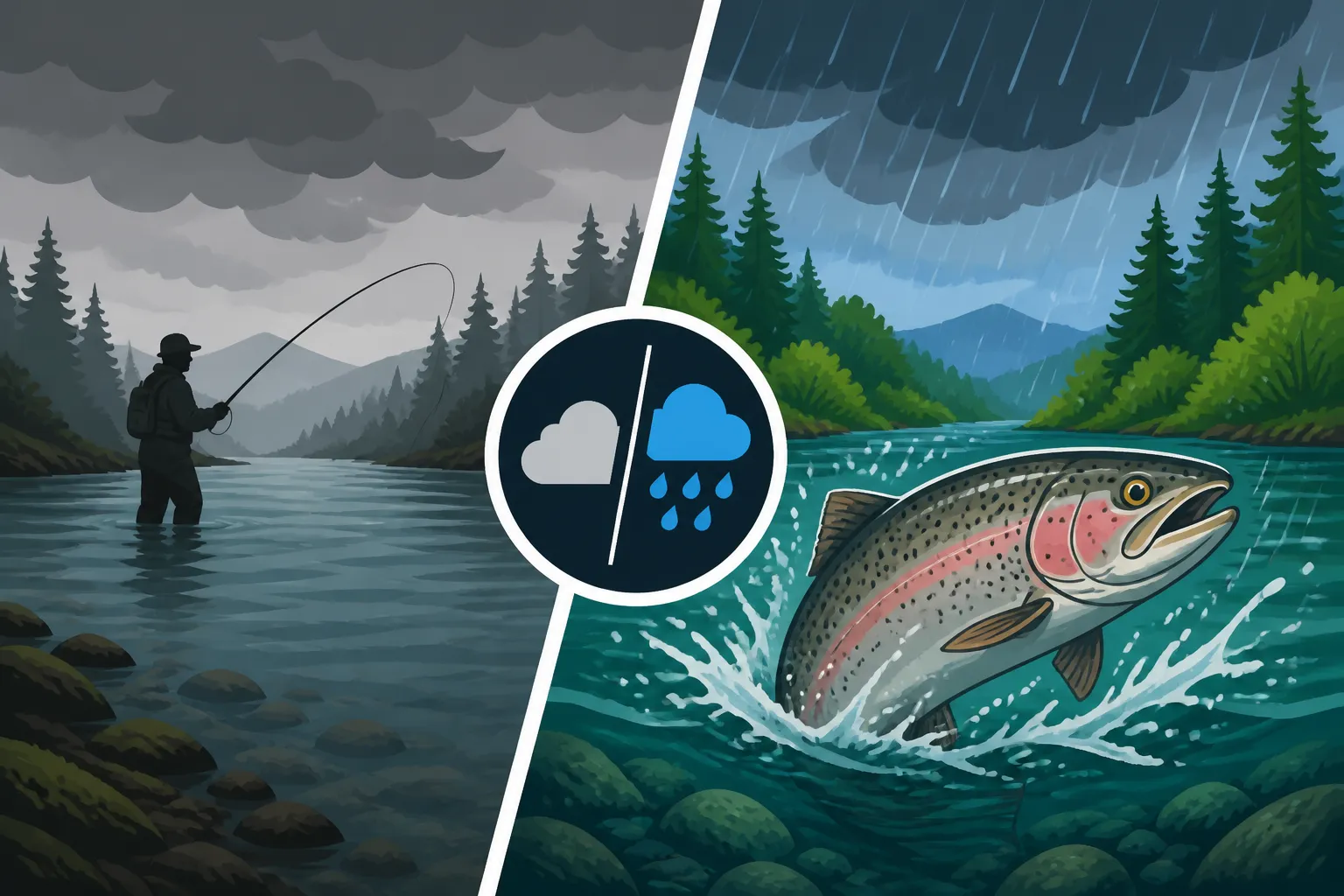
First, let's talk about water clarity, or what we often call turbidity. A light, steady rain can sometimes be a gift, just enough to put a slight stain in the water, breaking up the clear, glassy conditions that make steelhead so skittish. This slight cloudiness acts like a comforting blanket for these typically wary fish, making them feel more secure and, often, more willing to bite. They're less able to spot predators (including us anglers!) and might become bolder, moving into areas they'd typically avoid in bright, clear conditions. However, turn that light rain into a downpour, and you're looking at a different story entirely. Heavy rain quickly washes sediment from the banks and surrounding landscape into the river, transforming that subtle stain into thick, soupy brown water where visibility drops to zero. When the water gets too milky, steelhead find it hard to see their prey or your offering, and it can also interfere with their migratory instincts, causing them to hold tight in deeper, slower water.
Next up are flow rates and river levels. Even a gentle rain can contribute to a slight rise in river levels, which can be fantastic for steelhead. A rising river often means fresh fish are pushing in from the ocean, taking advantage of the increased water to navigate rapids, falls, and shallower sections more easily. These fresh-run fish are often aggressive and eager to take a swung fly or a well-drifted bait. A modest increase in flow also dislodges food sources like worms, insects, and small crustaceans from the riverbanks, creating an "all-you-can-eat" buffet that can stimulate feeding activity. On the flip side, sustained heavy rain can lead to an explosive increase in flow. Rivers can rise several feet in a matter of hours, turning once-fishable runs into raging torrents. This kind of "blown out" condition makes it incredibly difficult for steelhead to hold in prime lies, and it certainly makes it nearly impossible for anglers to effectively present a lure or bait. Think of rivers like the Cowlitz or the Olympic Peninsula's Sol Duc River – they can go from prime conditions to completely unfishable very quickly after a major storm.
Finally, water temperature also plays a role, albeit a more subtle one with rain. Generally, rain tends to cool river temperatures, especially if it's coming down cold. Steelhead are cold-blooded, and their metabolism is directly influenced by water temperature. A slight drop from warm temperatures can invigorate them, making them more active. However, an extreme temperature drop, or water that's already very cold (say, near freezing), coupled with cold rain, can actually make them sluggish. The ideal temperature range for active steelhead usually hovers between 38 and 50 degrees Fahrenheit. If a cold rain pushes the water below that, you might find fish less inclined to chase.
Steelhead's Instinctive Responses to Changing River Dynamics
Steelhead aren't just passively affected by rain; they actively respond to these environmental cues, leveraging the changes to their advantage, which, in turn, influences our fishing strategies.
One of the most significant instinctive responses is tied to migration. When a river starts to rise from rain, it's like a green light for steelhead holding in the lower river or estuary to push upstream. The increased flow provides a safer, faster passage over obstacles and through shallow areas that might have been impassable during lower flows. This is particularly true for Winter vs Summer Steelhead Runs in Washington, Explained, with winter-run fish often showing a strong affinity for these freshets (small floods or surges of freshwater). These fresh-run fish, having just left the ocean, are often chrome bright, full of vigor, and incredibly aggressive. They're not yet settled into their holding lies and are more likely to strike out of instinct or territoriality rather than pure hunger. This is why targeting the "leading edge" of a rain event can be so productive – you're often intercepting these actively migrating, hot fish.
Another key response is related to cover and reduced visibility. As mentioned, a little color in the water provides steelhead with a sense of security. They become less wary of overhead shadows, bankside movement, and even the splash of a lead weight or fly line. This allows them to move into shallower holding lies or to feed more openly. In clear water, steelhead often hug the bottom or structure, constantly on alert. In slightly discolored water, they might spread out more, occupying different parts of the water column or moving into less conventional holding spots. This makes them potentially more accessible to anglers, especially those Bank Fishing Techniques for Washington Salmon. However, when the water becomes excessively murky (like chocolate milk), their visibility drops significantly, and they might hunker down in the slowest, deepest water available, effectively shutting down their active search for food.
Finally, feeding patterns shift. In a slightly rising, colored river, the dislodged food sources mentioned earlier can trigger an opportunistic feeding response. While steelhead are often thought of as not feeding heavily once they enter freshwater, they will absolutely key in on an easy meal, especially fresh-run fish. The current delivers these morsels right to them, making it less energetically costly to feed. Conversely, in a raging, blown-out river, the sheer force of the water and the lack of visibility makes active feeding almost impossible. Their primary concern shifts from feeding to simply holding their position and conserving energy.
Navigating Different Rain Scenarios for Steelhead Success
The trick to successful steelhead fishing in the rain isn't just knowing if rain helps, but when and how much. Each type of rain event calls for a different approach.
Fishing During and Immediately After a Light Rain
This is often the golden window that steelhead anglers dream of. A light, steady drizzle or rain that's just stopped, leading to a slight rise in river levels and a subtle stain in the water, creates near-perfect conditions.
Think of it like this: the river starts to bump up just a few inches, gaining a hint of green or tea-colored tint. The surface chop from the rain breaks up the reflection, making it harder for fish to see you. The increased flow provides that vital migratory trigger for fresh fish, and the slightly reduced visibility makes them feel safer. This is when steelhead will often become most active and aggressive. You'll find them pushing into holding lies they might avoid in bright sun, and they'll often be eager to strike.
For these conditions, your presentation should capitalize on the fish's increased confidence and reduced visibility. Larger, more visual offerings can be very effective. Consider using brightly colored drift bobbers with Corkies or yarn balls that provide a strong profile and vibrant color contrast in the slightly murky water. For those Drift Fishing for Steelhead in Washington Rivers, increasing the size of your bait or adding a little more scent can make a big difference, as fish will be relying more on lateral line and olfactory senses. Eggs, prawn, or heavily scented artificial baits can create a potent scent trail in the moving water, drawing steelhead in from a distance. Don't be afraid to experiment with brighter, more aggressive fly patterns if you're swinging flies; a chartreuse or hot pink Intrude might just be the ticket.
Dealing with Heavy Rain and Blown-Out Rivers
This is where the frustration really sets in for many anglers. When the rain comes down in sheets, and the river swells into a muddy, raging torrent, it's easy to pack it in and head home. And sometimes, that's absolutely the right call, especially for safety reasons.
What does "blown out" mean? Essentially, it means the river has risen to a point where the flow is too strong, the water is too turbid (think chocolate milk), and debris is washing down the river, making it virtually unfishable and potentially dangerous. Navigating What Changes When a Washington River Is Blown Out requires a realistic assessment of conditions. You won't see fish holding in their usual runs; they'll be seeking refuge from the main current. Trying to cast a line into a river that's full of logs, branches, and mud is not only unproductive but can also be unsafe and damaging to your gear.
However, "blown out" doesn't always mean "no fishing." It means you need to get creative and look for refuges.
- Seek out smaller tributaries: Often, smaller creeks or side channels don't blow out as severely or clear up much faster than the main stem. Steelhead might push into these smaller systems seeking clearer water and refuge.
- Fish the extreme edges: The main current will be too strong, but the very edges of the river, especially behind large rocks, downed trees, or inside bends, will have significantly reduced current. Steelhead will tuck into these calmer seams and eddies, conserving energy. You might be fishing water that's only a few feet from the bank, but that's where the fish will be.
- Look for back channels and sloughs: Some larger rivers have natural back channels or sloughs that are somewhat buffered from the full force of the main current. These can become temporary holding areas for fish.
- Target specific holding lies with less current: Deep, slow pools or the tails of large eddies might still hold fish, even in high water. You'll need heavier weights to get your offering down to them, and your presentation will need to be very slow and methodical.
Always prioritize safety. Check river gauges online (like the USGS water data website) before you go. If the river is rising rapidly or is at flood stage, it's best to stay home. Slippery banks, strong currents, and floating debris are serious hazards.
The Importance of Post-Rain River Drops and Clearing
After a significant rain event, the period when the river starts to drop and slowly clear can be one of the most productive times to target steelhead. This stage is often overlooked by anglers who assume the river is still "blown out."
Once the heavy rain stops, the river begins to recede. The flow stabilizes, and the suspended sediment starts to settle, gradually improving water clarity. This clearing process often happens from the banks inwards, meaning the edges of the river might become fishable before the main current. As the river drops, steelhead that hunkered down during the high-water event start to resume their migration or become more active. They've had a break from the constant battle against the current and are ready to move or feed.
This "dropping and clearing" phase can last anywhere from a few hours to several days, depending on the size of the river and the intensity of the rain. Rivers like the Skykomish, for instance, can drop and clear surprisingly fast after a fresh, while larger systems like the Columbia might take longer. As the water comes down, fish that pushed in during the high water will be settling into new holding lies. You'll want to focus on classic steelhead holding water: current seams, tailouts of pools, and behind structure.
During this time, consider refining your presentation. While the water still has some color, you might still want slightly brighter offerings, but as it clears, you can transition back to more natural colors or smaller profiles. This is an excellent time to use a variety of techniques, from Back-Bouncing Roe for Steelhead in Washington in deeper holes to Drift Fishing With Yarn and Beads for Washington Steelhead in riffles and runs. Keep a close eye on the water clarity. If it's still quite muddy, stick to larger, more visible baits or lures. As it clears, more subtle presentations might become effective.
Essential Gear and Tactics for Rainy Day Steelheading
Rainy weather isn't just about fish behavior; it also demands specific considerations for your gear and comfort. Being prepared can make all the difference in turning a potentially miserable day into a memorable one.
Adapting Your Presentation to Rain-Influenced Water
When rain influences water conditions, your presentation needs to evolve to remain effective. Steelhead rely heavily on their senses, and when one (like sight in murky water) is impaired, others become more critical.
- Lure and Bait Choices:
- Visibility: In off-color or murky water, steelhead often react better to lures and baits that offer a strong visual presence. Think about using brighter, more contrasting colors. Hot pink, chartreuse, orange, and even black can be excellent choices. These colors stand out better against a cloudy backdrop. Larger profile lures like a bigger Spin-N-Glo, a larger jig with a bulky marabou tail, or a bigger spoon can also be more easily detected. On Amazon, you'll find a huge selection of vibrant lures from brands like Brad's Killer Fishing Gear or Worden's Lures that are perfect for these conditions.
- Scent: When visibility is low, scent becomes paramount. Natural baits like cured salmon roe, prawns, or sand shrimp emit powerful scent trails that can attract steelhead from a distance. If using artificials, make sure they are heavily scented or can be impregnated with scent gels or sprays. Brands like Pro-Cure offer a variety of scents that can make your artificial presentation irresistible.
- Vibration: Lures that create a lot of vibration can be highly effective in turbulent or murky water, as steelhead can detect these movements with their lateral line. Spinner blades, wobbling plugs, or even jigs with soft plastics that move enticingly can trigger strikes.
- Line Choices: While mainline strength is usually consistent, paying attention to your leader material and strength can be critical. In very clear water, a light fluorocarbon leader (e.g., 8-10 lb test) might be necessary for stealth. However, in off-color water, you can often get away with a heavier leader (12-15 lb test) without spooking fish, which can be advantageous when fishing in snaggy conditions or battling a powerful steelhead.
- Techniques:
- Slower Presentations: In higher, colder, or murkier water, steelhead are often less willing to chase. A slower presentation allows them more time to detect your offering and react. Techniques like float fishing (using a bobber and jig or bait), drift fishing with heavier weights that barely tick the bottom, or slowly back-trolling plugs can be highly effective.
- Getting Deep: The increased flow from rain can push steelhead down into deeper, slower holding water. You'll need to use enough weight to get your offering to the fish quickly and keep it in the strike zone. This might mean sizing up your lead or adding more weight to your Sinker Weight for Drift Fishing.
- Covering Water: Even in challenging conditions, covering a lot of water methodically can increase your chances. Don't spend too long in one spot if you're not getting bites. Move downstream, fish different angles, and experiment with different speeds.
Staying Comfortable and Safe in Wet Conditions
Nobody likes being cold and wet, and for serious steelhead anglers, staying dry and warm isn't just about comfort—it's about endurance and safety.
- Rain Gear is Non-Negotiable: This isn't the time for your old canvas jacket. Invest in high-quality, breathable waterproof gear. A good Gore-Tex or similar technology wading jacket and pants (or quality waders) are essential. Look for features like adjustable cuffs, a good hood that allows for peripheral vision, and waterproof pockets for essentials. You can find excellent options on Amazon from brands like Simms Fishing Products or Frogg Toggs.
- Layering is Key: It might be raining, but the temperature can still fluctuate. Wear layers that you can add or remove as needed. A good base layer (merino wool or synthetic, never cotton!) to wick moisture, a mid-layer for insulation (fleece or puff jacket), and your waterproof outer shell will keep you warm and dry.
- Footwear: If you're wading, reliable waders are a must. Make sure your wading boots offer excellent traction on slippery rocks. Felt soles or studded boots are often preferred for their grip in Washington's rocky rivers. Check your waders for leaks before you go; there’s nothing worse than starting your day with wet feet.
- Hand and Head Protection: Waterproof gloves can keep your hands from freezing, especially when handling cold, wet lines and fish. A waterproof hat with a brim will keep rain out of your eyes and off your face, improving visibility and comfort.
- Safety Considerations:
- Check River Levels: Always check real-time river gauges before heading out, especially if significant rain is forecast or has already fallen. Know your river and its typical behavior during high water.
- Wade Safely: High water means stronger currents and less visibility of the river bottom. Always wade with extreme caution. Use a wading staff for stability and never wade alone if conditions are challenging.
- Know Your Limits: Don't push yourself into dangerous situations. A fish isn't worth risking your life. If the river looks too high, too fast, or too murky, choose another day or find safer, fishable water. Knowing How to Fish for Steelhead in High Water also includes knowing when not to.
- Emergency Preparedness: Carry a small first-aid kit, a fully charged phone, and know how to call for help if needed. Tell someone where you're going and when you expect to return.
By understanding how rain affects steelhead and coming prepared with the right gear and tactics, you can turn those dreary, rainy forecasts into opportunities for incredible Washington steelhead adventures.
Rain's Impact on Steelhead Fishing Conditions and Tactics
| Rain Intensity & River Condition | Steelhead Behavior | Recommended Tactics | Gear Considerations |
|---|---|---|---|
| Light Rain (Slight Rise/Stain) | Increased migration, bolder, active feeding/striking. | Larger, brighter lures/baits; strong scent; float/drift fishing. | Waterproof outerwear, layered clothing, standard wading gear. |
| Moderate Rain (Rising/Murky) | Pushing upstream, seeking softer water; less wary. | Heavily scented baits/jigs; bright colors; heavier weights to get deep. | Full rain gear, extra layers, focus on traction for wading. |
| Heavy Rain (High, Blown-Out) | Hunkering down in slow, deep refuges; minimal movement/feeding. | Target river edges, tributaries, deep pools; very slow, heavy presentation. | Extreme waterproof gear, wading staff, focus on safety, consider staying home. |
| Post-Rain (Dropping/Clearing) | Resuming migration, moving into new lies; increased activity. | Varied presentations; adjust colors/sizes as water clears; cover water. | Remain prepared for wet conditions, comfortable footwear. |
Disclaimer
Fishing regulations can change frequently. Always consult the official Washington Department of Fish and Wildlife (WDFW) regulations pamphlet or their website for the most current rules and emergency closures before heading out. This guide is for informational purposes only and does not supersede official regulations.