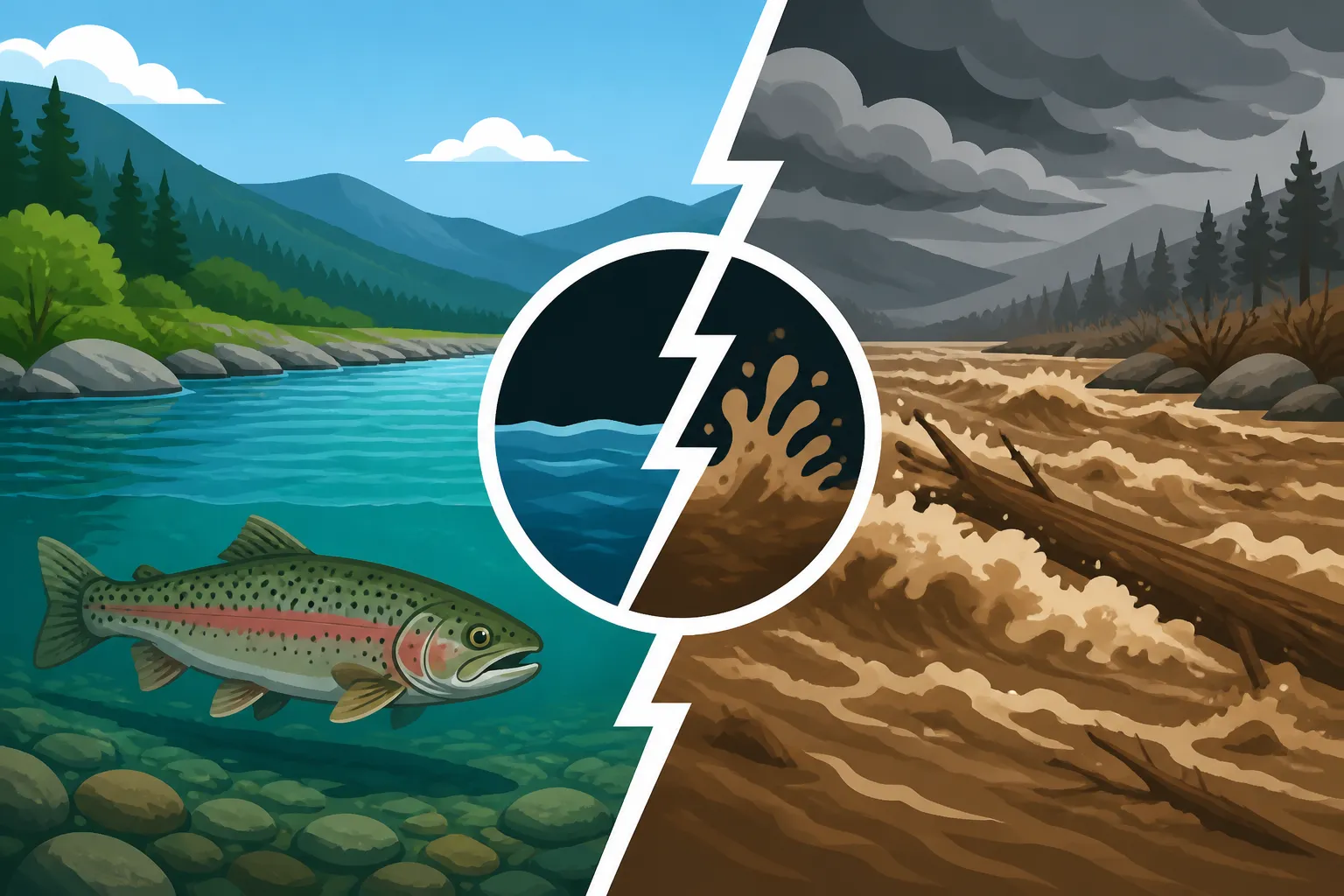
What Changes When a Washington River Is Blown Out
There’s nothing quite as soul-crushing for a Washington angler as waking up, checking the river gauge, and seeing that your favorite fishing spot has completely blown out. You’ve had the trip planned for weeks, you’ve tied your perfect leaders, and now the river looks like chocolate milk and sounds like a freight train. It’s frustrating, disheartening, and often leads to cancelling plans or, worse, making a dangerous and unproductive trip. But a "blown out" river doesn't always mean your fishing dreams are dead in the water; it just means everything changes, and knowing how to adapt can sometimes salvage the day, or at least keep you safe. This guide will walk you through exactly what happens when a Washington river blows out, why it happens, and how to approach these challenging conditions safely and, perhaps, successfully.
What Exactly "Blown Out" Means for a Washington River
When we talk about a river being "blown out" in Washington, we’re not just talking about a little high water or some cloudiness. We're talking about a significant, often dramatic, transformation of the waterway. It's a state where the river is swollen, discolored, and often raging, making it incredibly difficult to fish effectively and potentially unsafe.
Visibility: The Primary Indicator of a Blown-Out River
The most obvious and immediate change when a river blows out is its color and clarity. That clear, emerald green or subtle tannin stain you’re used to seeing disappears, replaced by a thick, opaque brown or chocolate milk hue. This isn't just aesthetic; it's a fundamental change that affects everything from how fish see your presentation to how you navigate the river. The water is often so turbid that you can't see more than a few inches, making it impossible to spot submerged obstacles or even the bottom of your boots if you're wading. This lack of visibility means fish are relying almost entirely on scent and vibration, completely altering the game plan for anglers.
Water Level and Current: From Flow to Torrent
Beyond the color, a blown-out river means a drastically increased water level and current speed. What might have been a gentle riffle is now a roaring torrent, and a tranquil eddy could be a swirling vortex. The river often spills over its normal banks, inundating floodplains and low-lying areas. This surge in water volume generates immense power, capable of moving large debris and reshaping riverbeds. The increased current makes it incredibly challenging to effectively present baits or lures, as your gear is swept downstream at an accelerated rate, and maintaining control becomes a constant battle. It also means previously safe wading spots are now treacherous, if not impossible, to navigate.
Temperature and Debris: Additional Factors
A blown-out river isn't just about high, muddy water; it often comes with other significant environmental changes. Water temperature can fluctuate dramatically, especially if the high water is caused by rapid snowmelt or a sudden cold rain. These temperature shifts can impact fish metabolism and activity levels, making them less willing to bite. Furthermore, the sheer force of the water picks up and carries an incredible amount of debris. We're talking about everything from leaves and small branches to entire logs and even sections of eroded riverbank. This floating and submerged debris can foul your lines, damage your gear, and pose a serious safety hazard to anyone on or near the water. Imagine trying to cast a line when every few minutes a massive log jam floats by, or worse, trying to wade when unseen branches are tumbling along the bottom.
Why Rivers Blow Out: The Science Behind the Mud
Understanding why a river blows out isn't just for curiosity; it helps you predict when it might happen and, sometimes, offers clues on where to find fish when it does. It’s usually a direct response to a massive influx of water into the watershed.
Heavy Rain Events: The Primary Culprit
The most common reason for a Washington river to blow out is significant, prolonged rainfall. Our coastal and mountain regions are famous for their generous precipitation, and when a strong atmospheric river or a series of intense storms move through, rivers swell quickly. The ground becomes saturated, and all that excess water has nowhere to go but into the nearest stream and, eventually, the main river system. This runoff picks up sediment, soil, and organic matter from the banks and surrounding landscape, turning the water brown and opaque. This is particularly true for rivers with extensive drainage basins or those flowing through areas with loose soil or recent logging activity, where erosion is more prevalent. It’s why checking weather forecasts for upstream areas is just as important as checking the forecast for your fishing spot.
Snowmelt and Runoff: A Springtime Phenomenon
While heavy rain is a year-round threat, rapid snowmelt is a major cause of blown-out rivers, particularly in spring or early summer in our mountain-fed rivers. When temperatures suddenly rise after a significant snowfall, or if there's a warm rain on top of a heavy snowpack, the melting snow releases enormous volumes of water. This snowmelt often carries fine glacial flour or sediment, giving the water a milky, opaque appearance, sometimes a grey or light tan instead of the classic "chocolate milk." Rivers like the Wenatchee or Methow, fed by cascades snowpack, are especially prone to this. While the water may not be as muddy as a rain-driven blow-out, the sheer volume and cold temperature can still make fishing extremely challenging.
Dam Releases and Tributary Inflows: Other Influences
Less frequently, but still significant, are factors like dam releases and major inflows from tributaries. Some rivers in Washington have dams that regulate flow. While regulated, unforeseen operational needs or emergency releases after heavy precipitation can dramatically increase downstream river levels. Additionally, a smaller, clear river might be pristine, but if a large, muddy tributary dumps into it upstream, the entire mainstem downstream can quickly become unfishable. Imagine fishing a beautiful stretch of the Skagit River, only for a rain-swollen tributary like the Sauk to suddenly dump a torrent of muddy water into it, changing the conditions drastically downstream. Always consider the entire watershed, not just your immediate fishing hole.
Fishing Strategies When a River is Blown Out
Alright, so the river's a mess. Does that mean you pack up and go home? Not necessarily! While it’s certainly more challenging, a blown-out river isn’t always a complete write-off. It just requires a complete shift in strategy, gear, and mindset.
Finding Holding Water: Where Fish Seek Refuge
When the main current is raging, fish aren’t going to expend precious energy fighting it. Instead, they'll seek refuge in areas of slower water where they can escape the main flow and conserve energy. These "holding lies" become paramount. Think about deep eddies behind large rocks, submerged logs, or pronounced river bends. Look for seams where faster water meets slower water, creating a current break. Back channels, side sloughs, and areas directly below major log jams can also provide crucial sanctuary. Fish often stack up in these spots, sometimes in surprisingly shallow water near the bank, where the current is weakest. This is where your chances of success are highest, so focus your efforts on identifying and targeting these calmer pockets. You'll often find fish tucked right up against the bank in minimal current, so don't overlook those often-ignored shallow areas.
Gear and Bait Adjustments: Making Your Presence Known
With low visibility, fish can’t see your presentation, so you need to appeal to their other senses: scent and vibration. This means making some serious changes to your tackle box.
First, heavier weights are essential. The increased current will sweep lighter weights downstream too quickly, preventing your bait from getting to the strike zone. You'll need enough weight to keep your offering near the bottom, even if it means bumping up a few sizes from what you’d typically use. If you're drift fishing, don't be afraid to experiment with significantly heavier sinkers than usual to get your presentation down and keep it there. You can find a wide range of heavier lead-free sinkers on Amazon that can make a big difference.
Second, brighter colors and larger profiles for lures or beads can help. While fish might not see the detail, a flash of chartreuse, hot pink, or fluorescent orange can still catch their eye in turbid water. Larger profiles also create more vibration in the water, which fish can detect with their lateral line. Imagine a big, brightly colored spinner or a larger bead under a float; it creates more disturbance, signaling its presence.
Third, and perhaps most importantly, scent is king. In muddy water, fish rely heavily on their sense of smell. Load up your baits with strong scents, use roe bags liberally, or add scent gels and sprays to your lures. Products like Anise oil, garlic, or proprietary fish attractants can make your offering irresistible, even when invisible. Brands widely available on Amazon offer a variety of highly concentrated scents designed for these very conditions. Consider using larger, fresh roe bags, heavily scented worms, or even cured prawns. This approach can be particularly effective when fishing for species like salmon or steelhead, which have an incredibly keen sense of smell. For those exploring Washington's Columbia River Salmon and Steelhead Endorsement, Explained, understanding how to present bait effectively in various conditions is key.
Technique Modifications: Slow and Deliberate
Fishing a blown-out river isn't about covering a lot of water quickly; it's about making deliberate, slow presentations in the right places. Whether you're drift fishing or plunking, slow your retrieve down considerably. Give the fish ample time to home in on the scent or vibration.
If you're drift fishing, focus on getting a perfect, natural drift through those slower holding lies. You'll likely need to use a float that can handle heavier weight if you're float fishing, or adjust your lead setup to keep your bait bouncing along the bottom without getting hung up. For those using conventional gear, think about back-bouncing or back-trolling, which allows you to keep your bait in the strike zone longer. When the water is roaring, your presentation has to be painstaking, almost painstakingly slow. Remember, fish aren't actively chasing as much; they're waiting for an easy meal to come to them. This is often where anglers practicing Drift Fishing for Steelhead in Washington Rivers really shine, as their techniques are already geared towards precise, controlled presentations.
For bank anglers, sometimes the simplest method is best: plunking. Find a good current break, cast out a heavy weight with a highly scented bait, and let it sit. The scent will disperse in the current, drawing fish to your offering. This can be a surprisingly effective method when other techniques are impossible due to the sheer force of the water.
Species Considerations: Who Still Bites?
Not all fish react the same way to a blown-out river. Some species, like certain trout, might completely shut down, making them incredibly difficult to catch. However, others, especially anadromous fish like salmon and steelhead, can still be caught. These fish are driven by powerful migratory instincts and often continue their journey upstream even in high, muddy water. In fact, sometimes a rise in water can even trigger a fresh push of fish into the river, especially if the previous conditions were low and clear.
Winter steelhead, in particular, are known for biting in high, dirty water, relying heavily on scent and vibration. Chinook and Coho salmon can also be caught in these conditions, especially if they are actively migrating. Bottom feeders, like sturgeon, may also become more active as the churned-up bottom releases food. Knowing your target species and their typical behavior in varied river conditions can significantly inform your strategy when the river looks like a mocha latte. Consider what Does Rain Improve Steelhead Fishing on Washington's Coastal Rivers? might mean for your next trip.
Safety First: Navigating Blown-Out River Conditions
It can't be stressed enough: a blown-out river is not just a fishing challenge; it's a significant safety hazard. While the urge to fish might be strong, your well-being must always come first.
Wading Hazards: Unseen Dangers Beneath the Surface
The biggest danger for bank anglers is wading. What might be a safe, familiar wading lane in normal conditions becomes a death trap in high, fast, and turbid water. The current can be deceptively powerful, capable of sweeping even strong adults off their feet. The bottom, usually visible, is now completely obscured, hiding potholes, submerged logs, and unstable footing. You literally cannot see what you're stepping on.
Never wade into a blown-out river alone, and even with a partner, exercise extreme caution. If you absolutely must wade a short distance, use a wading staff, take small, shuffling steps, and always face upstream to brace against the current. Stay close to the bank where the current is weakest, and never push your limits. Even a minor fall in frigid, fast-moving water can quickly become life-threatening. Remember, no fish is worth risking your life over.
Debris and Obstructions: Floating and Submerged Threats
The sheer volume of debris carried by a blown-out river poses another serious risk. Floating logs, entire trees, and large chunks of detritus can come downstream with surprising speed and force. If you're in a boat, these can cause severe damage or even capsize your vessel. For bank anglers, a large log could pin you against the bank or sweep you into the main current if you're too close to the water's edge.
Beyond the visible, there are unseen hazards. Submerged logs, rebar, or other structures can create powerful undertows or snag your line and gear, or worse, your body if you wade into them. Always be aware of your surroundings and understand that the riverbed you knew might have been completely rearranged by the force of the high water. This is why Rain Gear You Need for Winter Steelheading is important for comfort, but safety gear like a life vest is non-negotiable in these conditions.
Bank Erosion and Unstable Footing
The increased water levels and powerful currents of a blown-out river often lead to significant bank erosion. What might look like solid ground could be undermined and unstable, ready to collapse without warning. When accessing fishing spots, pay close attention to the bank conditions. Avoid standing too close to the edge, especially on steep or undercut banks. Look for signs of recent erosion, like fresh mudslides or exposed tree roots. Your usual path to the river might be washed out or simply too dangerous to traverse. Always choose a path that offers stable, elevated ground to fish from.
Checking Conditions Before You Go: Your Essential Prep
The most critical safety measure is to check river conditions before you ever leave the house. Rely on resources like the USGS streamflow gauges, which provide real-time data on water levels and flow rates for many Washington rivers. The Washington Department of Fish and Wildlife (WDFW) website also offers current regulations and sometimes river conditions or emergency closures. Remember to check not just your immediate fishing spot, but upstream areas and tributaries, as they can heavily influence your chosen location. This is crucial knowledge, as detailed in our guide on Where to Find Current Washington Fishing Rules.
Look for significant spikes in flow or depth readings. Pay attention to trends: is the river rising rapidly or slowly receding? Even if it's dropping, the water might still be very high and muddy for days after the peak. Always consider recent weather, especially heavy rains or warm temperatures affecting snowpack. Don't rely on memory or assumptions; current conditions can change hour by hour. This due diligence is your first line of defense against both unproductive fishing and potential danger.
By understanding what changes when a Washington river is blown out, and by prioritizing safety above all else, you can make informed decisions that keep you safe and, just maybe, lead to a memorable catch despite challenging conditions.
Disclaimer
This article is for general informational purposes only and does not constitute professional advice. Laws, prices and regulations vary by location and change over time. Consult a qualified professional for guidance on your specific situation.