How to Target Sturgeon on the Columbia
There's something incredibly primal about hooking into a giant sturgeon on the mighty Columbia River, but if you've ever tried, you know it's not as simple as dropping a line. These ancient fish are powerful, cunning, and have a knack for finding every snag and escaping every attempt. This guide is going to walk you through how to successfully target sturgeon on the Columbia, covering everything from the right gear and bait to where and when to find these magnificent creatures, all while staying within Washington's critical conservation rules.
Understanding Columbia River Sturgeon
When you think of fishing in Washington, salmon and steelhead often come to mind first. But lurking in the depths of the Columbia River are true giants: the white sturgeon. These fish are prehistoric, magnificent, and offer an angling experience unlike any other. However, targeting them successfully requires a deep understanding of their behavior and the specific regulations designed to protect them.
The Allure of the White Sturgeon
Imagine reeling in a fish that's older than you are, a living relic from a time before dinosaurs roamed the earth. That's the white sturgeon for you. These incredible fish can grow to astounding sizes, some exceeding ten feet in length and living for over a century. Their sheer power and resilience make for an unforgettable battle once hooked. Anglers are drawn to the Columbia River not just for the challenge, but for the chance to connect with such an ancient and majestic creature. It's a real test of skill and patience, and the reward is often a tale you'll tell for years. Many people are amazed to learn about the incredible life history of the White Sturgeon on Washington's Columbia River, a species that commands respect and awe.
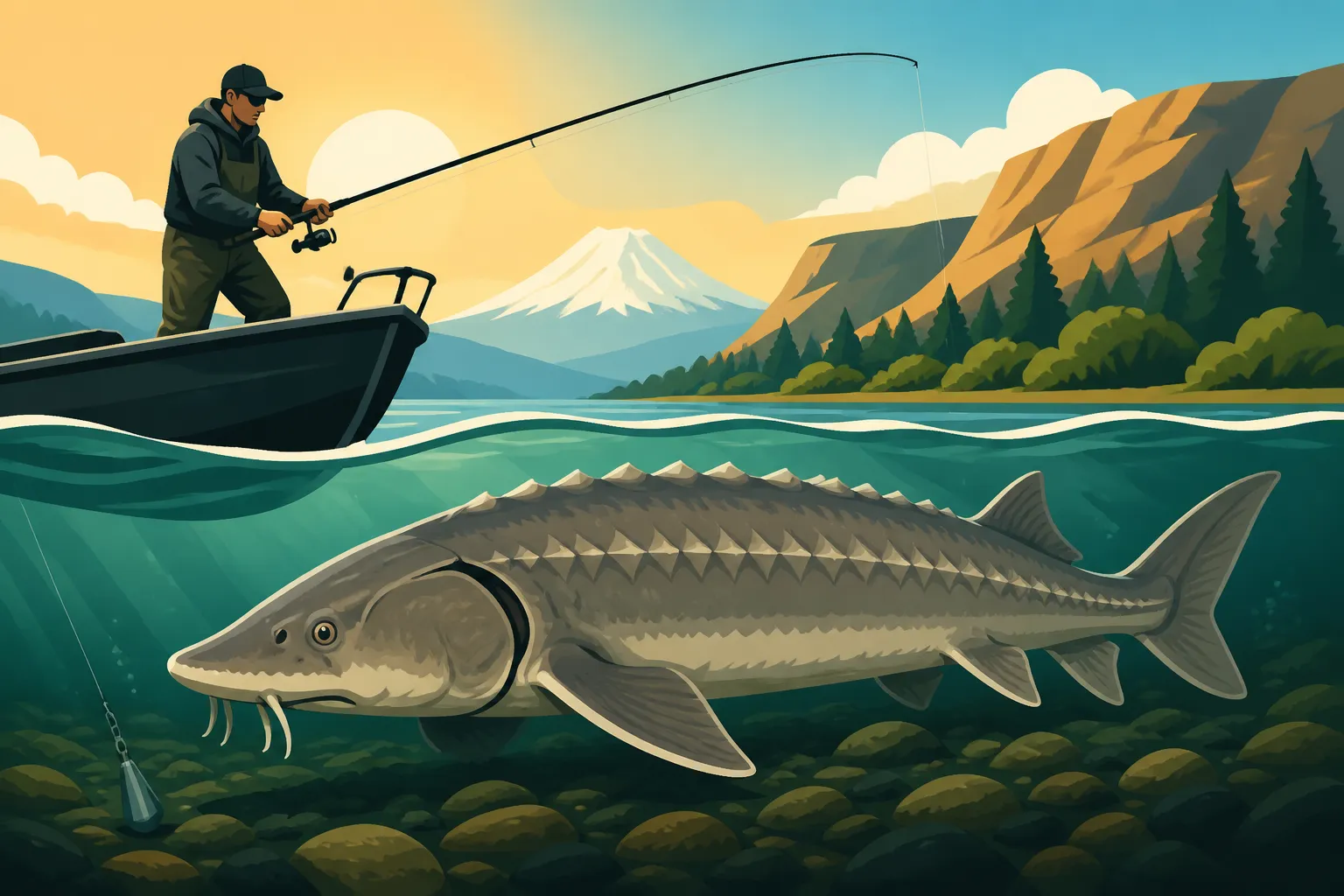
Picture this: you're out on the river, the sun is just starting to warm your face, and your rod suddenly doubles over. It's not a small tug; it's a deep, sustained pull that makes your drag scream. You fight, you reel, you gain a little line, then it's gone again, peeling off yards as the sturgeon dives deep or swims upstream with surprising speed. The fight can last for what feels like an eternity, testing every fiber of your being and every component of your tackle. It's exhilarating, exhausting, and ultimately, deeply satisfying, even if you never bring the fish to the boat. The sheer anticipation of that next big bite is what keeps many of us coming back.
Why Conservation is Key for Sturgeon
As incredible as sturgeon fishing is, it comes with immense responsibility. White sturgeon populations have faced significant challenges over the years, leading to strict regulations to ensure their survival. In Washington, most sturgeon fishing on the Columbia River is strictly catch-and-release, with very specific exceptions for harvest that change frequently and are highly localized. This means that while you can experience the thrill of the catch, the primary goal is always to return these fish to the water unharmed. It’s a conservation ethic that every angler must embrace wholeheartedly.
Understanding Why Is Sturgeon Fishing Catch-and-Release in Washington? is paramount to participating ethically in this fishery. The rules are in place for a reason, and respecting them helps sustain these incredible fish for future generations. This often includes specific Slot Limit for Columbia River Sturgeon, which dictate a narrow size range for any fish that might be legally kept, though these opportunities are rare and usually come with strict guidelines and limited seasons. It's not just about knowing the rules, but understanding the spirit behind them – protecting a vulnerable, long-lived species. Always check the current Washington Fishing Regulations Every Angler Should Know before heading out, as they can change even mid-season.
Gearing Up for the Battle
When you're chasing fish that can weigh hundreds of pounds and exert incredible force, your gear isn't just a suggestion – it's an absolute necessity. Trying to land a large sturgeon with inadequate tackle is a recipe for broken hearts, broken rods, and potentially harming the fish. Investing in the right equipment is crucial for both success and responsible angling.
Rods, Reels, and Line: Heavy-Duty Essentials
For sturgeon, we're talking about heavy-duty, robust equipment. This isn't your trout fishing setup! You'll need a stout rod, typically a heavy or extra-heavy action rod between 7 and 10 feet long, designed to handle lines in the 50-100 pound test range. These rods have the backbone to set a big hook in a tough mouth and the power to bring a large fish to the surface. Look for models with strong guides and a comfortable, durable handle, as you’ll be holding onto it for a while. You can find a great selection of heavy-duty sturgeon rods on Amazon or at local tackle shops.
Matching that rod, you'll need a heavy-duty conventional reel. Think baitcasting reels designed for big game, with a strong drag system that can withstand prolonged runs and a high line capacity. Many sturgeon anglers prefer reels like the Penn Squall or Shimano Tekota due to their reliability and robust construction. Fill that reel with at least 80-100 pound braided line, known for its incredible strength and minimal stretch, which helps with feeling subtle bites and setting the hook effectively. A top shot of 80-100 lb monofilament or fluorocarbon leader is typically added for abrasion resistance and knot tying to your terminal tackle. Remember, the fish aren't the only thing that's big; the currents in the Columbia are too, so you need line that can hold up.
Essential Terminal Tackle: Holding Power and Scent
Your terminal tackle is where the rubber meets the road, or more accurately, where the hook meets the fish. For sturgeon, everything needs to be exceptionally strong. We're talking about large circle hooks, generally sizes 8/0 to 12/0, which are excellent for jaw hooking fish and minimizing gut hooking, making catch and release much safer. The strength of the hook is paramount; a cheap hook will straighten out or break under the strain of a large sturgeon.
Next, you'll need heavy lead sinkers to hold your bait on the bottom against the Columbia's strong currents. Weights commonly range from 8 ounces up to 24 ounces, sometimes even more depending on the depth and current speed. A pyramid or cannonball sinker works well to anchor your bait. Your leader material should be abrasion-resistant monofilament or fluorocarbon, again in the 80-100 pound test range, to withstand the sturgeon's rough skin and powerful jaws. Many anglers create a sliding sinker rig, allowing the sturgeon to pick up the bait without feeling the weight of the sinker, which is often attached via a slider on the main line. Stocking up on terminal tackle is easy on Amazon, ensuring you have enough for multiple rigging setups. Also, consider specialized leader material that resists teeth and sharp edges.
The All-Important Bait: Scent and Freshness
Sturgeon are primarily scavengers with an incredible sense of smell, so your bait needs to be smelly and fresh. The best baits are typically oily fish, such as herring, shad, smelt, or anchovies. Squid is another popular choice, as it's tough and stays on the hook well, even through powerful casts or smaller fish nibbles. Many anglers will "cure" their bait with scents or brines to make it even more enticing and durable. The fresher the bait, the better, but strong-smelling, slightly "ripe" bait can also be incredibly effective.
How you present your bait also matters. Often, chunks of fish or whole squid are threaded onto the hook, ensuring that the hook point is exposed for a solid hookset. Some anglers like to create "bait bombs" by wrapping several pieces of bait in a mesh material, further concentrating the scent. It's important to make sure your bait is securely attached; a strong cast or a curious smaller fish shouldn't be able to easily strip it off. Remember, checking Is Bait Allowed on the Columbia River? is crucial, as specific bait regulations can vary by zone and time of year. Many anglers even order specialized sturgeon baits through Amazon to get a jump start on their trip.
Where and When to Find Them
Sturgeon are migratory, but they also have favorite hangouts within the vast expanse of the Columbia River. Knowing where and when to focus your efforts can drastically increase your chances of success.
Prime Columbia River Locations
The Columbia River is immense, and pinpointing sturgeon requires understanding their habitat preferences. They tend to congregate in deeper holes, channels, and scour zones where the current slows down slightly, offering them a place to rest and ambush passing food. Confluence areas, where tributaries like the Cowlitz River meet the main stem of the Columbia, are often hotspots because these areas bring in fresh nutrients and prey, creating rich feeding grounds. Downstream of dams or major constrictions can also be productive, as these areas often create deep pools and eddies.
For bank anglers, look for accessible areas with deeper water close to shore, or jetties and docks that extend into the main channel. Some popular areas include specific stretches around Longview, Cathlamet, and parts of the lower river near the estuary. For those with boats, using a fish finder to locate deep holes, submerged structure, and even signs of fish on the bottom is invaluable. Familiarizing yourself with a Columbia River Fishing Map can help pinpoint these promising spots. You can also gain valuable insights by exploring resources on Fishing the Columbia River in Washington: A Complete Overview or looking for specific information on Best Bank Fishing Spots on the Columbia River.
Seasonal Considerations for Sturgeon
While sturgeon can be targeted year-round, certain seasons offer better opportunities. Spring and fall are often considered prime times. In the spring, as water temperatures begin to rise and runoff brings nutrients into the river, sturgeon become more active and start feeding aggressively. This can coincide with spring salmon runs, providing an additional food source for the sturgeon.
Fall is another excellent season, especially as salmon begin to spawn and die off. The abundance of salmon carcasses provides an easy, high-calorie meal for sturgeon, drawing them to areas where salmon runs are strong. Winter can also produce good fishing, particularly in the lower river, but the colder weather and often higher, murkier water can make it more challenging. Summer fishing can be good too, but fish may be spread out, and increased recreational boat traffic can sometimes make finding quiet spots harder. Always remember that river conditions, like water flow and clarity, play a huge role in sturgeon activity.
Mastering the Techniques
Knowing where and when to fish is only half the battle. Successfully hooking and landing a sturgeon requires specific techniques that maximize your chances while minimizing harm to these protected fish.
Anchoring and Bait Presentation
Whether you're fishing from a boat or the bank, proper bait presentation is key. The goal is to get your bait directly on the bottom where sturgeon are feeding, and keep it there. If fishing from a boat, anchoring securely is crucial. You want to drop your anchor well upstream of your desired fishing spot, letting out enough rode (rope/chain) to settle directly above or slightly upstream of the hole you're targeting. This allows your lines to be cast downstream and settle into the prime feeding zone.
Once anchored, cast your baited rig directly upstream and allow the heavy sinker to carry it to the bottom, letting the current stretch out your leader. The slack line will tighten as the sinker settles. Keep your reel in gear or engage the clicker, and watch your rod tip closely. When fishing from the bank, casting directly out into deeper channels or holes is the strategy. Ensure your bait is securely on the hook, and that your circle hook is exposed. A common mistake is burying the hook, which prevents a proper hookset. Remember that anglers fishing with multiple rods need to be aware of How Many Rods You Can Fish at Once in Washington as regulations often limit this.
The Bite, the Set, and the Fight
Sturgeon bites can range from a subtle tap to a massive, rod-doubling pull. Sometimes, it feels like your line is just getting heavy, or you might see a slight twitch in the rod tip. Other times, the rod will simply get pulled down hard and stay there. With circle hooks, the technique is different than traditional J-hooks. Instead of a hard, sweeping hookset, you simply let the fish take the bait, and as it turns away, the circle hook will naturally find the corner of its mouth. When you feel a definite take, slowly lift the rod tip until you feel the weight of the fish, and then apply steady pressure by reeling.
The fight itself is legendary. Sturgeon are powerful. They make long, sustained runs, often head-shaking and sometimes even jumping, which is an incredible sight for such a large fish. Keep steady pressure on the fish, using your drag system to tire it out. Pump the rod up and reel down, gaining line whenever possible. Be patient. A big sturgeon can take a significant amount of time to bring to the boat or shore. Maintain control, avoid excessive pressure that could break your line or gear, and be ready for those last-minute dives when the fish sees the boat. It's a true test of endurance!
Handling Sturgeon Responsibly
For catch-and-release sturgeon fishing, responsible handling is not just good practice, it's mandatory. Once you've brought the fish alongside the boat or to the shallow water near the bank, minimize its time out of the water. Avoid dragging large sturgeon onto rocky or abrasive surfaces. If you want a photo, be quick, support the fish horizontally with both hands (one under the head, one under the tail), and ensure its gills are not compromised. Larger fish may require two people to safely lift and support.
Always use appropriate tools for hook removal, like long-nosed pliers or a hook remover, and if the hook is deeply embedded, cut the line as close to the hook as possible rather than tearing tissue. Circle hooks greatly reduce the chance of deep hooking, which is why they are often required or highly recommended for sturgeon. Release the fish gently, holding it upright in the water until it regains its strength and swims away on its own. Your careful handling ensures these incredible fish can continue to thrive in the Columbia River for many years to come.
| Bait Type | Effectiveness | Best Season | Notes |
|---|---|---|---|
| Shad (Cut) | Very High | Spring/Early Summer | Oily, strong scent, good texture |
| Herring (Cut) | High | Spring/Fall | Oily, popular, can be fragile |
| Smelt (Whole) | High | Year-round | Good size for larger hooks, oily |
| Squid (Whole/Cut) | High | Year-round | Tough, stays on hook, good scent profile |
| Lamprey Eel (Cut) | Very High | Spring/Fall | Extremely oily, potent scent, regulated |
| Anchovy (Cut) | Medium-High | Spring/Fall | Oily, but can be soft and come off easily |
Disclaimer
This article is for general informational purposes only and does not constitute professional advice. Laws, prices and regulations vary by location and change over time. Consult a qualified professional for guidance on your specific situation.