Do You Need a Two-Pole Endorsement on Lakes?
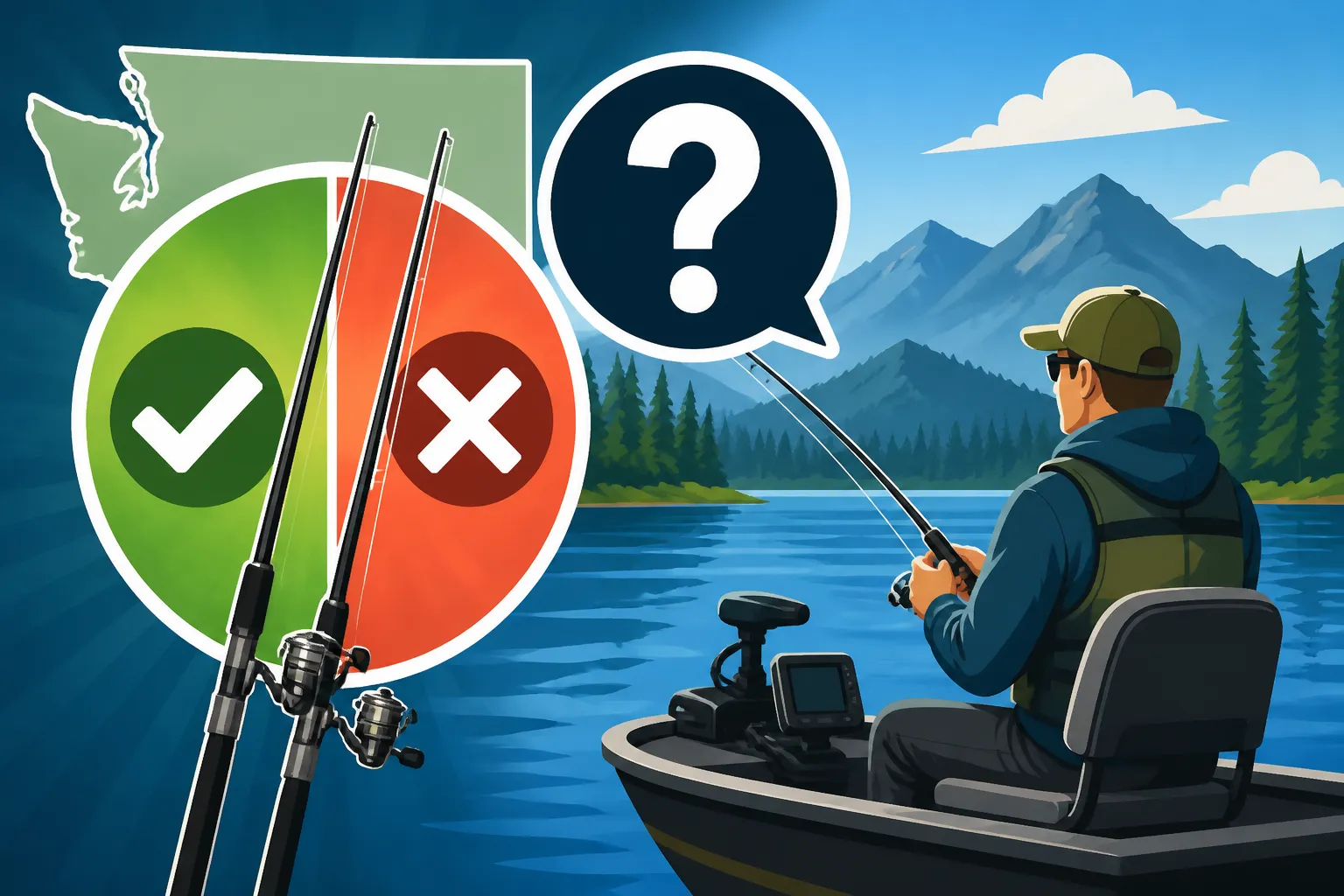
It's a question that trips up a lot of anglers heading out to Washington's beautiful lakes: can you use two fishing poles at once, or do you need a special endorsement? The rules around multi-rod fishing can feel like a tangled mess, especially when you're just trying to enjoy a peaceful day on the water. This comprehensive guide will untangle the specifics of Washington's two-pole endorsement, clarifying exactly when and where you can double your chances of a catch in the state's diverse lakes.
Understanding Washington's Two-Pole Endorsement
Let's cut right to the chase: Washington State operates under a fundamental rule that each licensed angler is allowed to fish with only one line at a time. This is the baseline, the default, and it's a rule designed to manage fishing pressure and ensure fairness across the board. However, the Washington Department of Fish and Wildlife (WDFW) also understands that sometimes, having an extra line in the water can enhance the fishing experience, whether you're trying different baits, targeting various species, or simply increasing your odds. That's where the Two-Pole Endorsement comes into play.
This endorsement isn't a standalone license; it's an add-on to your existing annual or short-term Washington fishing license. Think of it as an upgrade that grants you the privilege to legally fish with two separate fishing rods simultaneously. It’s a pretty popular option, especially for those who spend a lot of time on stocked lakes or in certain marine areas. The revenue generated from these endorsements also goes back into funding WDFW's conservation efforts, habitat restoration, and stocking programs, so it's a win-win for anglers and fish alike.
The Core Principle of One Rod Per Angler
Before we dive deeper into the two-pole specifics, it's crucial to firmly grasp the default. When you purchase a basic fishing license in Washington, whether it's a Washington Freshwater License Cost or a combination package, it inherently authorizes you to operate one single fishing line. This means one rod, one reel, one line in the water, under your direct control. This principle is deeply embedded in fishing regulations across the state and is often the first thing a WDFW enforcement officer will look for if they observe multiple lines.
Imagine a typical family outing at a popular lowland lake near Spokane. Everyone has their license, and the kids are excitedly casting their lines. If Dad decides to rig up a second rod, perhaps trying for a different species or just wanting to "set and forget" one bait while actively casting another, he's immediately in violation if he doesn't possess that specific endorsement. It's a common mistake, often made out of enthusiasm rather than malicious intent, but ignorance of the law is rarely an excuse in the eyes of enforcement. This single-rod rule is primarily about ensuring fair access to the resource and preventing excessive harvest, maintaining the delicate balance of fish populations in Washington's waters.
What the Endorsement Grants You
When you secure the Two-Pole Endorsement, you're essentially buying the right to double your active lines in designated waters. This isn't about letting your buddy use your extra rod, nor is it about having three rods on the boat and taking turns. It specifically means you, the individual angler who holds the endorsement, can have two distinct fishing lines deployed and actively fishing at the same moment. Each line must be rigged with its own hook and bait or lure, and both must be under your immediate control.
This privilege opens up some fantastic opportunities. You could be Jigging for Kokanee in Washington Lakes with one rod while trolling a wedding ring for trout with the other. Or, on a calm morning, you might have a still-fishing setup with PowerBait on the bottom while actively casting and retrieving spinners or spoons with your second rod. The ability to experiment with different techniques or target multiple species simultaneously can dramatically improve your success rate and overall enjoyment, turning a slow day into a productive one. It maximizes your efficiency and lets you learn faster what the fish are biting on that particular day.
Does the Two-Pole Endorsement Apply to Lakes?
This is where the rubber meets the road, and the answer, perhaps surprisingly to some, is yes, the Two-Pole Endorsement absolutely applies to many lakes in Washington, but with a critical caveat: it's not a universal rule for all lakes. The endorsement is only valid in waters that the Washington Department of Fish and Wildlife (WDFW) has specifically designated as "Two-Pole Endorsed Waters." This distinction is incredibly important and often overlooked, leading to potential violations.
Unlike some other states where a multi-pole endorsement might apply broadly across all freshwater bodies, Washington's approach is more granular. WDFW sets these designations based on various factors, including fish populations, stocking levels, angler pressure, and conservation goals for specific water bodies. Generally, you'll find that many of the state's lowland lakes, especially those that receive heavy stocking of rainbow trout or kokanee, are open to two-pole fishing. However, more sensitive waters, certain high-mountain lakes, or rivers known for wild salmon and steelhead runs, often restrict anglers to a single pole to minimize impact. It's never a safe bet to assume; you must check the current regulations for the specific lake you intend to fish.
Navigating the Washington Sport Fishing Regulations Pamphlet
So, how do you figure out if your favorite lake is a "two-pole endorsed water"? The authoritative source for all Washington fishing rules is the annual Reading the Washington Sport Fishing Regulations Pamphlet, published by WDFW. This document is your bible on the water, and it's available both as a physical booklet at license vendors and sporting goods stores (like some larger Amazon retailers that sell fishing gear) and as a free, downloadable PDF on the WDFW website. Trust me, having a copy (digital or physical) is non-negotiable for any serious angler in this state.
When you open the pamphlet, you'll want to navigate to the "Statewide Freshwater Rules" section, and then look for the specific regional sections that cover your intended fishing area. Within each lake's individual entry, WDFW clearly lists any special rules or exceptions. This is where you'll find the explicit statement regarding whether two-pole fishing is permitted. For example, an entry for a popular lake might say something like, "Two-pole fishing is allowed for all species except salmon and steelhead," or simply, "Two-pole fishing allowed." If it doesn't mention it, assume the default single-pole rule applies. Always check the "General Rules" section first, and then look for any specific exceptions for the body of water you're targeting.
Specific Lake Examples for Two-Pole Fishing
Let's look at some real-world examples to make this clearer. Many of Washington's most popular trout and kokanee lakes throughout the state, particularly in the lower elevations and regions accessible by road, do permit two-pole fishing. These are often the same lakes that are heavily stocked by WDFW, creating abundant opportunities for anglers. For instance, you'll typically find two-pole fishing allowed on places like Lake Sammamish (near Seattle), Lake Chelan (known for its deep-water Mackinaw and Kokanee), Lake Roosevelt (a massive reservoir in Eastern Washington), and many of the smaller, well-managed lowland lakes across King, Snohomish, and Pierce counties, particularly during their prime trout stocking seasons. This allows anglers to maximize their chances, especially when bait fishing or still fishing for these resident species.
However, there are equally important exceptions. Many rivers, especially those with sensitive wild salmon and steelhead populations, explicitly prohibit two-pole fishing. While the question here is about lakes, it's a good reminder that the rules shift dramatically between water types. Additionally, certain smaller, ecologically sensitive lakes, particularly in wilderness areas or those managed for specific rare species, might also restrict fishing to a single pole. These restrictions are vital for the long-term health of the ecosystem and the fish populations within them. The best practice is always to verify the rules for the specific lake on the day you plan to fish, as regulations can sometimes change due to emergency rule modifications or seasonal adjustments. For a broader understanding, it's always good to review Washington Fishing Regulations Every Angler Should Know before your trip.
Practical Considerations for Two-Pole Lake Fishing
Having the two-pole endorsement is one thing; effectively utilizing it on a lake is another. While the idea of doubling your lines sounds simple, managing two rods simultaneously, especially from a boat or a busy bank, requires a bit of strategy and awareness. It’s not just about having the gear; it's about using it efficiently and responsibly. Many anglers find that with two lines in the water, their ability to experiment with different depths, baits, or lure presentations dramatically increases, leading to more productive outings.
For instance, if you're targeting trout in a lake, you might have one rod rigged with a bottom-fishing setup (like a sliding sinker with a worm or PowerBait), while your second rod is set up for trolling a small spoon or wedding ring, or maybe suspended under a bobber with a different bait type. This allows you to explore multiple fishing zones and tactics at once, quickly identifying what the fish are keying in on that day. However, this flexibility also comes with the responsibility of ensuring both lines are always under your immediate control and that you're not interfering with other anglers.
Optimizing Your Setup for Dual Rods
When you're fishing with two poles, having the right setup for each can make a world of difference. You don't necessarily need two identical rigs; in fact, having slightly different setups can be an advantage. Consider using rods with varying lengths or actions – perhaps a longer, softer rod for bait fishing where bites might be subtle, and a shorter, faster-action rod for active casting and retrieving lures. For instance, if you’re fishing for trout, one rod might be a light action spinning rod with 4-pound test for delicate presentations, while the other could be a medium-light rod with 6-pound test for a heavier lure or a stronger fish.
Rod holders are almost essential for managing two lines effectively, especially if you're fishing from a boat or even from the bank. There are countless options available, from simple bank-stick holders that you push into the ground, to elaborate clamp-on or flush-mount rod holders for boats. You can easily find a wide variety of these on Amazon, ranging from basic and affordable to more advanced, adjustable models. These allow you to keep your second rod securely in place, often with the bail open or clicker engaged, ready for a bite, while you actively work your primary line. This prevents tangles, keeps your gear organized, and ensures both lines are always fishing effectively.
Staying Legal and Responsible
Even with a two-pole endorsement, you are still obligated to keep both lines under your "immediate control." This isn't just a suggestion; it's a rule that WDFW wardens take seriously. "Immediate control" generally means that you must be within sight and easy access of both rods, able to respond quickly if a fish bites. You can't, for example, set one rod on a bank holder and then wander off for a picnic 50 yards away while the other is in a rod holder on your boat. Both lines need to be tended by you. If a WDFW officer observes a situation where one rod is clearly unattended, even if you have the endorsement, you could still face a citation.
The penalties for violating fishing regulations in Washington, even seemingly minor ones, can range from significant fines to the potential suspension or revocation of your fishing privileges. It's not a slap on the wrist; they are designed to deter illegal activity and protect the resource. You can learn more about this in our guide on Fines and Penalties for Common Fishing Violations. Beyond the legal aspects, there's also an ethical dimension. Using two poles means being extra mindful of other anglers, especially in crowded areas. Always be courteous, ensure your lines aren't crossing into others' fishing spaces, and be ready to reel in quickly if another boat or angler approaches. Responsible angling means respecting both the rules and your fellow fishing enthusiasts.
Here’s a quick overview of what the Two-Pole Endorsement entails:
| Feature | Description |
|---|---|
| Purpose | Permits a single angler to fish with two lines concurrently. |
| Requirement | Valid Washington fishing license + Two-Pole Endorsement add-on. |
| Applicability | Only in waters specifically designated as "Two-Pole Endorsed Waters" by WDFW. |
| Lakes | Many lowland lakes & reservoirs may be endorsed, but always confirm with current regulations. |
| Rivers | Generally not allowed in rivers for salmon/steelhead, but check specific rules for other species. |
| Control | Both lines must be under the angler's "immediate control" at all times. |
| Cost | An inexpensive annual add-on (check WDFW for current pricing). |
| Acquisition | Can be purchased with your initial license or added later via MyWDFW or a vendor. |
Final Thoughts on Two-Pole Fishing
The Washington Two-Pole Endorsement can be a fantastic way to enhance your lake fishing experience, offering increased opportunities to catch fish and experiment with different techniques. However, the key takeaway is that it's not a blanket permission slip for all waters. You must possess the endorsement, and more importantly, you must verify that the specific lake you're fishing is designated as a "Two-Pole Endorsed Water" in the current WDFW regulations. Failing to do so can turn a relaxing day into a costly encounter with a game warden.
Before you head out, whether you're a resident with a Resident vs Nonresident Fishing Licenses in Washington or a visitor looking to try Washington's waters, always consult the most up-to-date Washington Sport Fishing Seasons and Emergency Closures information from WDFW. Regulations, especially those pertaining to specific water bodies, can and do change. You can usually purchase this endorsement when you buy your annual license, or you can add it on later through the MyWDFW website or authorized license vendors. Understanding and adhering to these rules not only keeps you legal but also contributes to the sustainable management of Washington's incredible fisheries for everyone to enjoy for years to come.
Disclaimer
Please note that fishing regulations in Washington State can change frequently. While this guide aims to provide accurate and up-to-date information, it is essential to always consult the official Washington Department of Fish and Wildlife (WDFW) regulations pamphlet or their website for the most current rules and emergency closures before heading out to fish. The author and publisher are not responsible for any violations or consequences that may arise from misinterpretation of regulations.