Euro Nymphing and Whether It Works in Washington
For many fly anglers in Washington, especially those used to traditional indicator nymphing or dry fly fishing, the thought of trying something new can feel daunting. You've probably found yourself in situations where trout or steelhead are present, but your usual methods just aren't getting bites, leaving you frustrated and wondering if there's a more effective way to present your flies. This guide dives deep into Euro nymphing, a highly effective technique, to explore how it works, why it's gaining traction, and if it's the right approach for tackling the diverse and often challenging waters here in Washington State.
What Exactly is Euro Nymphing?
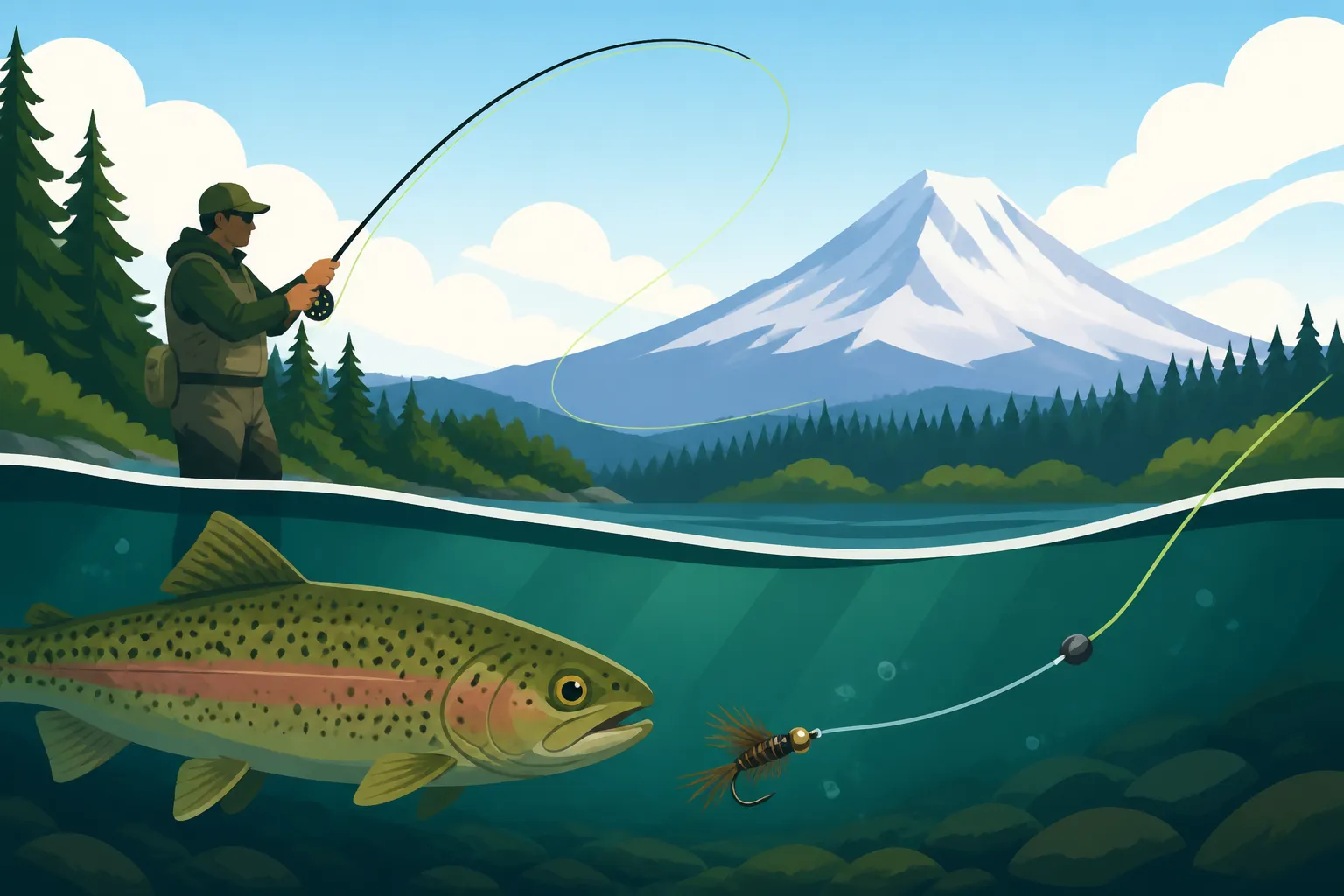
Euro nymphing, often referred to as European nymphing, tight-line nymphing, or contact nymphing, is a specialized fly fishing technique designed to achieve maximum contact with your flies and detect the most subtle takes. Unlike traditional indicator nymphing, where a floating strike indicator signals a bite, Euro nymphing relies on a highly sensitive leader system and the angler's direct feel and visual cues to detect strikes. It’s less about watching a bobber and more about feeling the direct connection to your flies as they drift through the water column.
The core principle behind Euro nymphing is to maintain a direct line of sight and tension from your rod tip down to your flies. This is typically achieved by using a long, light rod, a specialized leader (often called a sighter or bi-color line) that helps with visual strike detection, and weighted nymphs designed to sink quickly. You hold your rod high, keeping as much line off the water as possible, allowing your flies to drift naturally without drag, while feeling for any tick, stop, or hesitation in your line. It's an active, engaging style of fishing that many find incredibly rewarding, especially when fish are holding deep or are particularly finicky. This direct connection dramatically improves your ability to feel even the softest takes, which often go unnoticed with traditional methods, particularly in faster, turbulent waters common in many of Washington's rivers.
Why Euro Nymphing Excels in Washington's Diverse Waters
Washington State boasts an incredible variety of waters, from the freestone rivers of the Olympic Peninsula to the technical tailwaters of the Yakima River, and even small, brush-lined creeks. This diversity, while beautiful, often presents significant challenges for anglers. Here's where Euro nymphing really shines, proving its worth for many Washington anglers.
One of the biggest advantages is its ability to effectively fish deep and fast runs without using heavy split shot or oversized indicators. Traditional indicator setups can struggle in these conditions, often getting hung up on the bottom or suffering from excessive drag due to the current pulling on the indicator. With Euro nymphing, your weighted flies sink quickly to the fish's depth, and by keeping your line off the water, you eliminate most surface drag, allowing for a perfectly natural, dead drift. This is particularly effective on rivers like the Yakima River for Fly Fishing, where trout might be holding in swift, deep pockets, or even when pursuing Winter Steelhead Runs in Washington in powerful currents. You can effectively probe various depths and currents without constantly re-rigging, making it incredibly efficient.
Another huge benefit is the enhanced strike detection. The specialized sighter leader, often a brightly colored monofilament, acts as your visual indicator, showing even the slightest twitch or pause that might signal a fish mouthing your fly. But more importantly, the direct connection through your rod allows you to feel takes that you'd never see. Imagine fishing a slightly off-color river after a rain shower – visibility is low, but the fish are still feeding. A Euro nymphing setup allows you to feel that subtle "tick" even when you can't see the visual cue. This sensitivity is a game-changer when targeting wary trout in clear, low water conditions, which can frequently occur during late summer on many of our smaller streams, or when trying to entice a hesitant steelhead in precise holding water. It truly helps you capitalize on opportunities you might otherwise miss.
Furthermore, Euro nymphing is incredibly versatile for different water types and species. While it's often associated with trout, it can be adapted for species like whitefish or even smaller salmon in certain river conditions. Whether you’re working a slow, deep pool, picking apart a turbulent riffle, or systematically covering a long, even run, the technique allows for precise fly placement and presentation. It’s also excellent for navigating tight, brushy banks where casting a full fly line is difficult. The short casting strokes and direct presentation make it possible to effectively fish spots that are practically inaccessible with other methods. This makes it a great choice for exploring some of Washington's lesser-known, more intimate waters, or for picking apart complex river features where fish might be hiding. Many anglers who have adopted this technique for Fly Fishing Washington's Rivers and Lakes report a significant increase in their catch rates, especially on challenging days.
Challenges and Considerations for Euro Nymphing in Washington
While Euro nymphing offers many advantages, it's not without its challenges, especially when adapting to Washington's unique fishing environments. Understanding these can help you better prepare and decide if this technique is right for a particular fishing scenario.
One of the primary challenges is simply getting used to the technique itself. It requires a different set of skills and a shift in mindset compared to traditional fly casting. The "casting" in Euro nymphing is more of a lob or a roll cast, focusing on gently placing the flies upstream and letting them drift, rather than executing long, elegant casts. This can feel unnatural at first, especially for anglers accustomed to precise overhead casts with dry flies. Mastering the delicate balance of line tension, fly placement, and strike detection takes practice. You'll need to develop a keen sense of feel in your rod hand, and your eyes will constantly be scanning the sighter for any movement. It's a highly engaging and active way to fish, meaning you're always "on" and paying attention, which some anglers find tiring after a long day on the water. However, with dedication, the rewards can be substantial, as this technique is phenomenal for dissecting complex river systems and targeting reluctant fish.
Another consideration is the specific gear required. While you can certainly start with a standard 9-foot 5-weight rod, a dedicated Euro nymphing rod (often 10 to 11 feet long with a lighter line weight, like a 2 or 3-weight) significantly enhances performance. These longer rods help keep more line off the water, improve reach, and offer superior leverage for fighting fish on light tippet. The specialized leaders, with their bright sighters, are also crucial. While you can tie your own, purchasing pre-made Euro nymph leaders from brands like Rio or Scientific Anglers can save you time. Additionally, you'll want a collection of purpose-built Euro nymphs—slim, heavily weighted patterns like Perdigons, Frenchies, and squirmy worms. Building a diverse fly box specifically for different water conditions and forage is key. Luckily, most of this specialized gear is readily available online through retailers like Amazon, making it accessible to Washington anglers looking to dive in.
Finally, while Euro nymphing excels at fishing depths and currents, it can sometimes be less effective in very shallow, broad flats or when fish are actively rising to dries. In these situations, a traditional dry fly presentation or a lightly weighted nymph under a small indicator might still be the superior choice. It's important to recognize that no single technique is a silver bullet for all fishing scenarios. Knowing when to switch gears and apply the right method is part of becoming a well-rounded angler in Washington. For instance, if you're fishing a broad, slow section of the Spokane River for trout that are sipping emergers, a delicate dry fly approach as discussed in Dry Fly Fishing Washington's Rivers might be more effective than a heavy Euro nymph rig. However, for targeting deep-holding fish in the Olympic Peninsula's many rivers, especially when fishing How to Fish for Steelhead in Low, Clear Water, Euro nymphing often proves itself invaluable.
Getting Started: Essential Gear for Euro Nymphing in Washington
Ready to give Euro nymphing a try in Washington? You don't necessarily need to break the bank to get started, but investing in a few key pieces of equipment will definitely enhance your experience and effectiveness. The right setup minimizes frustration and maximizes your ability to feel those subtle takes.
First up, let's talk about the rod. While some anglers start with a standard 9-foot 5-weight, a longer, lighter rod is truly the heart of a good Euro nymphing setup. An ideal rod for most Washington trout and steelhead applications would be 10 to 11 feet long, rated for a 2 or 3-weight line. The extra length provides better reach, allows you to keep more fly line off the water, and improves leverage for fighting fish on light tippets. Brands like Orvis, Echo, and Redington offer excellent entry-level Euro nymphing rods that won't empty your wallet. If you're serious about this technique, consider something like an Orvis Recon or an Echo Carbon XL Euro Nymph rod, which you can often find on Amazon. These rods are designed to be sensitive in the tip for strike detection yet have enough backbone to handle larger fish.
Next, the reel. For Euro nymphing, the reel is primarily a line holder and counterbalance for your long rod. You don't need a super-expensive, large arbor reel with a fancy drag system. A simple, lightweight reel that balances your rod well is perfectly sufficient. Look for something that matches the aesthetics of your rod and can hold your fly line and backing comfortably. A good option might be a Lamson Liquid or a Redington Zero, both known for being reliable and affordable. Your fly line choice is crucial: instead of a traditional weight-forward fly line, you’ll want a specialized Euro nymphing line. These lines are typically very thin and light, often just a level monofilament core with a thin coating, designed to minimize sag and maximize direct contact. Some popular choices include the Scientific Anglers Amplitude Smooth Euro Nymph line or the Rio FIPS Euro Nymph line.
| Component | Recommendation | Key Benefit |
|---|---|---|
| Rod | 10-11 ft, 2-3 wt (e.g., Orvis Recon, Echo Carbon XL) | Increased reach, better line control, sensitive tip for strike detection. |
| Reel | Lightweight, simple drag (e.g., Lamson Liquid, Redington Zero) | Balances rod, holds line; drag less critical than direct contact. |
| Fly Line | Dedicated Euro Nymph line (e.g., SA Euro Nymph, Rio FIPS Euro Nymph) | Very thin diameter for minimal sag and maximum contact. |
| Leader | Tapered Euro Nymph leader with sighter (e.g., Rio Euro Nymph Leader) | Direct connection, visual strike detection, helps turn over flies. |
| Tippet | 4x to 6x fluorocarbon (e.g., Seaguar Invizx, Rio Fluoroflex Plus) | Low visibility, abrasion resistance, strong knot strength. |
| Flies | Weighted nymphs (Perdigons, Frenchies, Squirmies, Jig Nymphs) | Sink quickly, imitate diverse aquatic insects. |
| Accessories | Forceps, nippers, desiccant, floatant, net | Essential tools for on-the-water adjustments and fish handling. |
Finally, the leader system is where Euro nymphing truly differentiates itself. You'll typically use a long, specialized leader, often 10 to 20 feet in length, that tapers down to a section of brightly colored monofilament called a "sighter." This sighter, usually two-tone (like pink and chartreuse), is what you watch for subtle takes. Below the sighter, you'll attach your tippet, typically 4x to 6x fluorocarbon, which is nearly invisible underwater and highly abrasion-resistant. Many Washington anglers prefer fluorocarbon tippet because of its fast sinking properties and low stretch, which enhances sensitivity. Brands like Seaguar and Rio offer excellent fluorocarbon options that are popular and reliable. Understanding Leader Length for Clear Water Steelhead in Washington is crucial here, as too heavy or too short a leader can spook fish. You can buy pre-made Euro nymph leaders, or you can construct your own if you're comfortable with leader formulas. For your flies, focus on heavily weighted jig-style nymphs that get down quickly. Popular patterns for Washington include various Perdigon nymphs, Frenchie nymphs, Walt's Worms, and squirmy worms. Having a selection of these in different sizes and bead colors will set you up for success across various conditions.
Remember, the goal is direct contact. Every component in a Euro nymphing setup works together to achieve this, from the long rod to the thin line and specialized leader. While it might seem like a lot to learn, the payoff in terms of increased hook-ups and a deeper understanding of subsurface dynamics can transform your fly fishing experience in Washington.
Disclaimer
The information provided in this guide is for general informational purposes only and is not intended as legal advice regarding fishing regulations. Washington State fishing regulations are complex and subject to frequent change. Always consult the most current Washington Department of Fish and Wildlife (WDFW) fishing regulations pamphlet or the WDFW website before planning any fishing trip. Emergency rule changes can occur mid-season, so it's critical to verify current regulations. Adherence to all local, state, and federal fishing laws is the sole responsibility of the angler.