Do You Need a Sinker for Bank Fishing the Columbia?
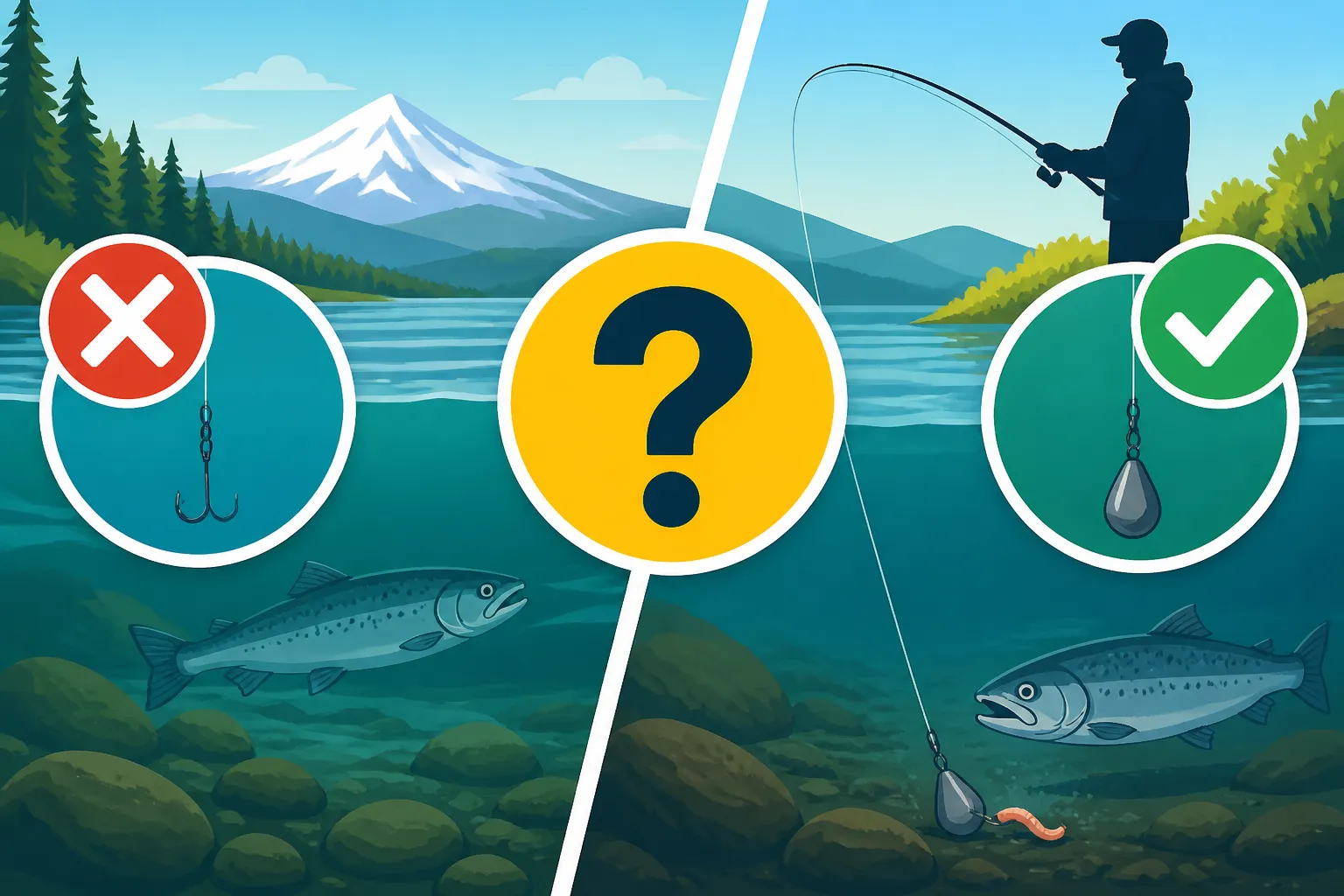
There’s nothing quite like the feeling of standing on the banks of the mighty Columbia River, casting your line out into that immense, powerful flow. But if you’ve ever tried it, you quickly realize one thing: that river has a mind of its own, and if you don't prepare properly, your carefully tied rig will be swept away faster than a forgotten lunch. Many anglers, especially those new to this magnificent waterway, often wonder if a sinker is truly necessary for bank fishing here. The short answer is an emphatic "yes," and understanding why and how to use one correctly is absolutely crucial for success.
The Indispensable Role of a Sinker for Columbia River Bank Anglers
The sheer scale and power of the Columbia River are unlike many other fishing destinations. This isn't your average placid lake or gentle stream. It's a massive, constantly moving body of water, and if you want your bait or lure to stay in the strike zone, a sinker isn't just an accessory—it's a non-negotiable part of your setup. Ignoring this fundamental piece of gear is a surefire way to spend your day frustrated, constantly recasting, and wondering why you're not getting any bites.
Why the Columbia's Power Demands a Sinker
Imagine casting a feather into a strong wind; that's essentially what happens to an unweighted fishing line on the Columbia. The river's currents, especially in the main channel and even in many of the larger eddies, are incredibly strong and relentless. Without sufficient weight, your bait or lure will be picked up and carried downstream almost immediately, never reaching the depths or the specific holding water where fish like salmon, steelhead, sturgeon, or walleye are actually lurking. It's not just about getting to the bottom; it's about staying there, or at least presenting your offering in a controlled, natural way that mimics real prey.
The river's depth also plays a significant role. The Columbia River is incredibly deep in many sections, sometimes exceeding hundreds of feet. While bank fishing often targets shallower shelves or confluence areas, even these can be quite deep with strong subsurface currents. A sinker helps your presentation cut through these layers of moving water, reaching the fish precisely where they're feeding or resting. It's the difference between hoping a fish sees your bait as it rockets by, and confidently placing it right in front of their nose.
The Core Functions a Sinker Serves
Beyond simply getting your bait down, a sinker performs several vital tasks that contribute to a successful bank fishing experience on the Columbia.
First, anchoring your bait is paramount, especially when targeting bottom feeders like sturgeon or when trying to hold a salmon presentation in a specific current seam. A heavy sinker allows your rig to settle on the riverbed or in a defined section of the water column, preventing it from being swept away. This stability is key for fish that are hunkered down, waiting for food to drift past, or for those moments when you want to let your bait soak in a productive spot for an extended period.
Second, a sinker dramatically improves your casting distance and accuracy. Trying to cast a light bait or lure into a headwind, or across a wide expanse of river from the bank, is almost impossible without weight. The sinker provides the momentum needed to launch your rig a significant distance, reaching those deeper channels or far-off current breaks that are otherwise inaccessible. It also makes your cast more precise, allowing you to hit those crucial spots near structure or seams with greater consistency.
Finally, depth control is essential for presenting your offering at the right level. Different species and different times of year mean fish will hold at various depths. A sinker allows you to rapidly descend to the desired depth, whether you're trying to fish a deep hole for sturgeon, bounce a lure along the bottom for walleye, or keep a salmon presentation within a few feet of the riverbed. Without this control, you're largely fishing blind, hoping your bait accidentally intersects with a fish's feeding zone.
Navigating the World of Sinkers: Types Best Suited for the Columbia
Given the Columbia's varied conditions, there's no single "best" sinker for every situation. Successful bank anglers carry a selection, ready to adapt to different currents, bottom compositions, and target species. Understanding the strengths of each type will make a huge difference in your effectiveness.
Pyramid, Flat, and Sputnik Sinkers: Holding Power is Key
When the current is ripping on the Columbia, your primary goal is often to stay put. This is where sinkers designed for maximum holding power shine.
Pyramid sinkers are a classic choice and for good reason. Their distinct four-sided shape helps them dig into soft bottoms like sand or gravel, resisting the current's pull. They're a good all-around option for moderate to strong currents and are widely available. You'll see many anglers using them for general bottom fishing or when trying to keep bait stationary for salmon or steelhead.
Flat or disc sinkers, sometimes called "coin" sinkers, offer a different advantage. Their flat profile can make them less prone to rolling in moderate currents compared to rounder weights, providing a stable platform for your bait. They might not dig in like a pyramid, but they can be surprisingly effective on somewhat softer bottoms or where a more subtle presentation that doesn't embed itself too deeply is desired.
For truly extreme currents, or when you absolutely, positively need your bait to stay put, sputnik or spider sinkers are the ultimate weapon. These feature retractable wire legs that deploy upon contact with the bottom, digging in like anchors. Once set, they hold incredibly well, making them ideal for fishing strong tidal flows or the powerful main current of the Columbia when targeting large sturgeon or king salmon in specific, high-current areas. If you're struggling to keep your bait down, especially from a public pier or a busy bank access point, look for these. You can often find them at local tackle shops or online retailers like Amazon.
Barrel and Pencil Sinkers: For Drifting and Sensitive Bites
While holding power is often paramount, there are times on the Columbia when you want your weight to move, or you need a rig that offers minimal resistance to a biting fish.
Barrel sinkers, often used in sliding rigs, are excellent for this purpose. Their smooth, cylindrical shape allows them to slide freely on your main line, above a swivel and leader. This means that when a fish picks up your bait, it feels very little resistance from the sinker itself. This increased sensitivity is crucial for species like steelhead or finicky salmon, which might drop a bait if they feel too much drag. They're also less prone to snagging than some other shapes if they roll over a small obstruction. When you're trying to achieve a natural drift with your bait, a barrel sinker in a sliding setup is often the way to go. You can learn more about specific techniques in our guide on "Drift Fishing for Steelhead in Washington Rivers".
Pencil or slinky sinkers are ingeniously designed for fishing snaggy, rocky bottoms – a common feature in many parts of the Columbia. These aren't solid lead but rather lead shot encased in a piece of durable cord or flexible tubing. Their narrow, flexible profile allows them to snake through cracks and crevices where traditional lead sinkers would instantly get wedged. If you're losing a lot of gear to snags, switching to a slinky sinker can save you a ton of money and frustration. They also provide a good natural drift, making them excellent for "Back-Bouncing Roe for Steelhead, Explained" or for presenting bait to salmon in rougher terrain.
Choosing the Right Weight: It's All About the Current
The biggest variable in sinker selection on the Columbia is the speed of the current. There's no magic number; you have to adapt.
Start by observing the water. Is it a slow-moving back eddy? A moderate current along a rip rap bank? Or the main, powerful flow? For calmer sections or when targeting smaller species, a 1-2 ounce sinker might suffice. However, as you move into the main current, you'll quickly find yourself needing 3, 4, 6, or even 8 ounces or more just to hold bottom. Many bank anglers fishing the Columbia carry an assortment of weights ranging from 2 ounces up to 10 ounces or more, particularly if they are targeting sturgeon, which often require significant weight to keep their scent trail stationary.
It's a dynamic choice. If your line is constantly bowing downstream, and you're struggling to feel the bottom, you need more weight. If you're feeling every little rock and getting snagged constantly, you might be using too much, or you might need to adjust your rig to a pencil sinker. The goal is always to use the minimum amount of weight necessary to effectively present your bait while still holding your desired position.
Essential Rigging Strategies for Sinkers on the Columbia River
Knowing which sinker to use is only half the battle; how you rig it can be just as crucial. Different setups offer distinct advantages, optimizing your presentation for the Columbia's various inhabitants and conditions.
The Sliding Sinker Rig: Sensitivity for Fussy Eaters
The sliding sinker rig is a cornerstone for many bank anglers on the Columbia, especially when targeting salmon and steelhead. Its primary advantage is sensitivity. Here's a common setup: you thread your main line through a barrel or egg sinker (or even a large bead with a slinky sinker attached). Below the sinker, you add a small bead to protect your knot, followed by a swivel. To the other end of the swivel, you tie a leader (often fluorocarbon for its invisibility) and then your hook with bait (e.g., cured eggs, shrimp, or a prawn).
The beauty of this rig is that when a fish takes the bait, your main line can slide freely through the sinker. This means the fish feels minimal resistance, allowing it to mouth or run with the bait more naturally before detecting any unnatural weight. This can lead to more solid hookups, particularly with finicky biters. It’s perfect for letting your bait drift naturally along the bottom or in a specific current seam, mimicking a free-floating meal. For anglers focused on elusive fish, mastering the sliding sinker rig is a must. It's an excellent technique for "Coho Salmon Fishing in Washington" or when pursuing migrating "Steelhead: Washington's Ocean-Run Rainbow Trout".
The Three-Way Swivel Rig: Versatility for Varying Depths
When you need to keep your bait suspended just off the bottom, or when fishing over a highly snaggy area where a sliding sinker might get stuck, the three-way swivel rig becomes invaluable. This setup uses a three-way swivel (a swivel with three attachment points) as its central component.
One eye of the swivel attaches to your main line coming from your rod. A second eye is used for a dropper line, typically a lighter monofilament, which is then tied to your sinker. This dropper line should be short (6-18 inches) and of a lighter breaking strength than your main line, so if your sinker snags, you only lose the weight, not your entire rig. The third eye of the swivel is for your leader, which connects to your hook and bait.
The advantage here is versatility. You can easily change sinker weights without re-tying your main line. More importantly, it keeps your bait elevated above the river bottom, preventing it from getting lost in mud or snags, while the sinker maintains contact with the riverbed. This rig is particularly effective for species like walleye, which often feed slightly off the bottom, or for presenting bait to salmon and steelhead when you want it to hover enticingly in the current.
Fixed Sinker Rigs: When You Need to Stay Put
Sometimes, you don't want any sliding or drifting; you need your bait to be absolutely locked in place. This is where fixed sinker rigs come in. While less common for sensitive biters like salmon and steelhead, they are the go-to for situations demanding ultimate stability, particularly when "Targeting Sturgeon on the Columbia".
In a fixed rig, the sinker is tied directly onto the main line or to a strong leader connected to the main line, so it doesn't move. You might use a heavy pyramid or sputnik sinker attached with a strong snap swivel to your main line. A shorter leader (perhaps 12-24 inches) then extends from the sinker to your hook.
The primary use for a fixed rig on the Columbia is for sturgeon fishing, where large, often smelly baits are left on the bottom for extended periods in strong currents. The goal is to create a stationary scent trail that attracts the sturgeon. For this, you need maximum anchoring power. This setup is also employed in certain heavy current situations for other species when an angler wants a very specific, immobile presentation. Just remember, with a fixed rig, a fish will feel the full weight of the sinker almost immediately upon biting, which can deter cautious feeders.
Mastering Sinker Selection: Factors Beyond the Basic Current
While current speed is undeniably the biggest factor, a truly effective Columbia River bank angler considers several other elements when choosing the perfect sinker and rig. It's about adapting your strategy to the specific conditions of your chosen spot and your target.
Understanding the Columbia's Diverse Bottom Structure
The bottom of the Columbia River isn't uniform. From sandy flats to treacherous rocky ledges and clean gravel bars, what lies beneath the surface greatly influences what sinker will work best and avoid snags.
When you're fishing over sandy or silty flats, particularly in slower-moving sections or large eddies, pyramid or flat sinkers tend to perform well. Their design allows them to settle and grip the softer substrate, preventing them from being easily rolled by the current. If you're targeting walleye or certain bottom-feeding species in these areas, these sinkers will help you maintain consistent contact with the bottom.
Gravel bars are often prime holding areas for salmon and steelhead. Here, pyramid sinkers can still be effective, as they can wedge between the stones. However, if the gravel is mixed with larger rocks, you might start experiencing snags. This is where a pencil or slinky sinker truly shines. Their flexible, narrow profile allows them to snake over and around obstructions, significantly reducing hang-ups. Anglers often fish these areas using a sliding slinky rig to present roe or other baits, allowing for a natural drift with minimal snagging. Understanding the subtle nuances of these bottom types is crucial for making the right choice, which often comes with experience on different sections of the river. If you're not sure, start with a rig that minimizes snag potential.
For rocky ledges and boulder fields, which are common in many stretches of the Columbia, conventional lead sinkers are a nightmare. They will get hopelessly wedged, leading to constant re-tying and lost gear. In these challenging environments, the flexible pencil or slinky sinker is your best friend. Even if it gets temporarily caught, a gentle tug can often free it. If you find yourself in extremely rocky areas and must hold bottom, a three-way rig with a sacrificial lighter line for your slinky sinker is a smart move, ensuring you only lose the weight, not your expensive leader and bait. You can discover more about these types of areas when researching "Fishing the Columbia River in Washington: A Complete Overview".
Target Species and Their Feeding Habits
The fish you're trying to catch should always be a key consideration in your sinker selection, as their feeding habits dictate the most effective presentation.
For salmon (Chinook, Coho, Sockeye) and steelhead, a natural, free-drifting presentation is often highly effective. These anadromous fish are often on the move or holding in specific current seams, and they prefer a bait or lure that moves enticingly, mimicking natural food. For this reason, sliding sinker rigs (like a barrel or slinky sinker on your main line) are usually preferred. This allows your bait to tumble or waft along naturally, with the fish feeling minimal resistance when they take it. Think about the subtle presentation you'd want for a wary "Chinook Salmon: Washington's King of Fish" or a powerful "Steelhead: Washington's Ocean-Run Rainbow Trout".
Sturgeon, on the other hand, are classic bottom feeders. They cruise the riverbed, using their sensitive barbels to find stationary food items like dead baitfish or shellfish. For sturgeon, your bait needs to be anchored firmly on the bottom, creating a consistent scent trail. This calls for heavy, fixed sinker rigs, often using pyramid or even sputnik sinkers in the 6-16 ounce range, depending on the current. The goal isn't a natural drift, but rather unwavering stability.
Walleye, while also bottom-oriented, often prefer a presentation that's slowly dragged or bounced along the bottom. For this, a lighter sliding sinker (like an egg or barrel sinker) that allows for some movement but still maintains bottom contact can be effective. Three-way rigs can also work well, keeping your bait or lure slightly off the bottom while the sinker maintains contact. Understanding the nuances of their feeding behavior, from opportunistic ambushes to subtle bottom-grubbing, helps tailor your approach.
Reading the River: Adapting to Conditions
The Columbia River is a living, breathing entity, and its conditions are constantly changing. Successful bank anglers are always "reading the river" and adapting their sinker choice accordingly.
Water levels and current speeds can fluctuate dramatically due to dam operations, rainfall, and tidal influences in the lower river. A spot that required 4 ounces yesterday might need 6 ounces today if the current has picked up, or only 2 ounces if it's slowed down. Always start with a moderate weight and adjust. If your line is sweeping too quickly downstream, go heavier. If you're constantly feeling snags or your bait isn't moving quite right, try a lighter option or a different sinker style.
Water clarity also plays a role, albeit indirectly. In murky water, fish might rely more on scent, so a stationary, heavy-scented bait might be preferred, necessitating a heavier sinker to hold it. In clear water, a more natural, subtle drift with a lighter, less obtrusive sinker might be more effective.
The key takeaway is that sinker selection is not a one-time decision for your trip. It's an ongoing assessment throughout your fishing session. Be prepared to change weights and even rig styles as conditions demand. It’s also wise to check current regulations before you head out, as emergency rule changes can sometimes impact gear, and you can always find up-to-date information on "Where to Find Current Washington Fishing Rules" on the WDFW website. Having an assortment of sinkers in your tackle box, easily accessible, will make you a much more adaptable and ultimately successful bank angler on the magnificent Columbia. You can readily stock up on a variety of sinker types and weights from retailers like Amazon or your local tackle shop to be prepared for anything the river throws your way.
Here's a quick reference table for choosing your Columbia River bank fishing sinkers:
| Sinker Type | Shape/Description | Best Use Cases on Columbia River | Ideal Current Conditions | Bottom Type |
|---|---|---|---|---|
| Pyramid Sinker | Four-sided, pointed end | General bottom fishing, anchoring bait for salmon/steelhead | Moderate to Strong | Sand, Gravel |
| Flat/Disc Sinker | Flat, circular | More subtle anchoring, less prone to rolling in moderate current | Light to Moderate | Sand, Smooth Gravel |
| Sputnik/Spider Sinker | Round body with retractable wire legs | Extreme anchoring for very strong currents, sturgeon fishing | Very Strong / Extreme | Sand, Gravel |
| Barrel Sinker | Smooth, cylindrical | Sliding rigs for sensitive bites, natural drift for salmon/steelhead | Light to Moderate | Varied, less snaggy |
| Pencil/Slinky Sinker | Lead shot in tubing, flexible | Snaggy, rocky bottoms; natural drift for salmon/steelhead | Light to Strong | Rocky, Snaggy |
Disclaimer
Always consult the latest Washington Department of Fish and Wildlife (WDFW) regulations before heading out. Fishing rules can change frequently due to conservation efforts or emergency closures. This guide is for informational purposes only and does not supersede official regulations.