Rockfish Species That Must Be Released in Washington
It's incredibly frustrating when you're out on the water, having a fantastic day, and suddenly you catch something beautiful but aren't entirely sure if you're allowed to keep it. The regulations around rockfish in Washington can feel like a minefield, making many anglers anxious about inadvertently breaking the law or, worse, harming a vulnerable fish population. This guide aims to clear up that confusion by detailing the specific rockfish species you absolutely must release in Washington waters, empowering you to fish responsibly and with total confidence.
The Critical Need for Rockfish Conservation in Washington
Let's be honest, rockfish are amazing. They're vibrant, feisty, and a real joy to catch. But their very nature also makes them incredibly vulnerable, and that's why we have such strict rules in place, especially here in Washington. It's not about making fishing harder; it's about ensuring these incredible species are around for generations to come.
Why Some Rockfish Populations Are Struggling
Imagine living to be 100 years old, or even older, only to mature slowly and reproduce infrequently. That's the reality for many rockfish species. Unlike salmon or trout that might have shorter, more intense life cycles, some rockfish are true centenarians, growing incredibly slowly and taking a long time to reach reproductive age. This means that if too many are taken out of the system, it takes an incredibly long time for the population to bounce back. Combine that with the fact that many of these species hang out in deeper waters, and you introduce another major challenge: barotrauma.
Barotrauma is a fancy word for what happens when a fish is brought up too quickly from deep water. Their swim bladder, which helps them control buoyancy, expands rapidly due to the pressure change. You've probably seen it – the fish comes up looking bloated, with bulging eyes or its stomach protruding from its mouth. It's not a pretty sight, and often, it's a death sentence if the fish isn't properly recompressed or descended. Many of the rockfish species we'll discuss are particularly susceptible to this, adding another layer of fragility to their existence. Their populations simply can't sustain heavy fishing pressure when they grow slowly and are easily impacted by deep-water capture.
The Role of Release Requirements in Recovery
So, what's a responsible angler to do? The Washington Department of Fish and Wildlife (WDFW) has implemented mandatory release requirements for certain species precisely because they are in the most trouble. These rules aren't just suggestions; they are critical measures designed to give these slow-growing, long-lived fish a fighting chance to rebuild their numbers. Think of it as a forced timeout for specific species, allowing them to spawn, grow, and contribute to future generations without being removed from the ecosystem.
By requiring the immediate release of these specific rockfish, we're actively participating in their recovery efforts. It's a clear signal that these fish are too precious to keep, and every single one that gets back to the depths safely is a victory for conservation. It means that while we might be targeting other bottomfish like lingcod or greenling, we need to be vigilant about what we reel in. This collective effort, from every angler, is what truly makes a difference in preventing further declines and, hopefully, seeing these populations thrive again. If you're looking to understand more broadly how these rules are set, check out Washington Fishing Regulations Every Angler Should Know.
Identifying Washington's Protected Rockfish Species
This is where the rubber meets the road. Knowing which rockfish you need to release is paramount. While some rockfish species, like Black Rockfish and Copper Rockfish, often have harvest opportunities (though even these have specific size and bag limits), others are strictly off-limits, no exceptions. Getting your identification skills sharpened is a crucial part of being a good angler in Washington.
"Yelloweye" Rockfish: The Most Recognizable Protected Species
If there's one rockfish you absolutely, positively must know, it's the Yelloweye rockfish. These fish are easily identified once you know what to look for, and they are universally protected across Washington.
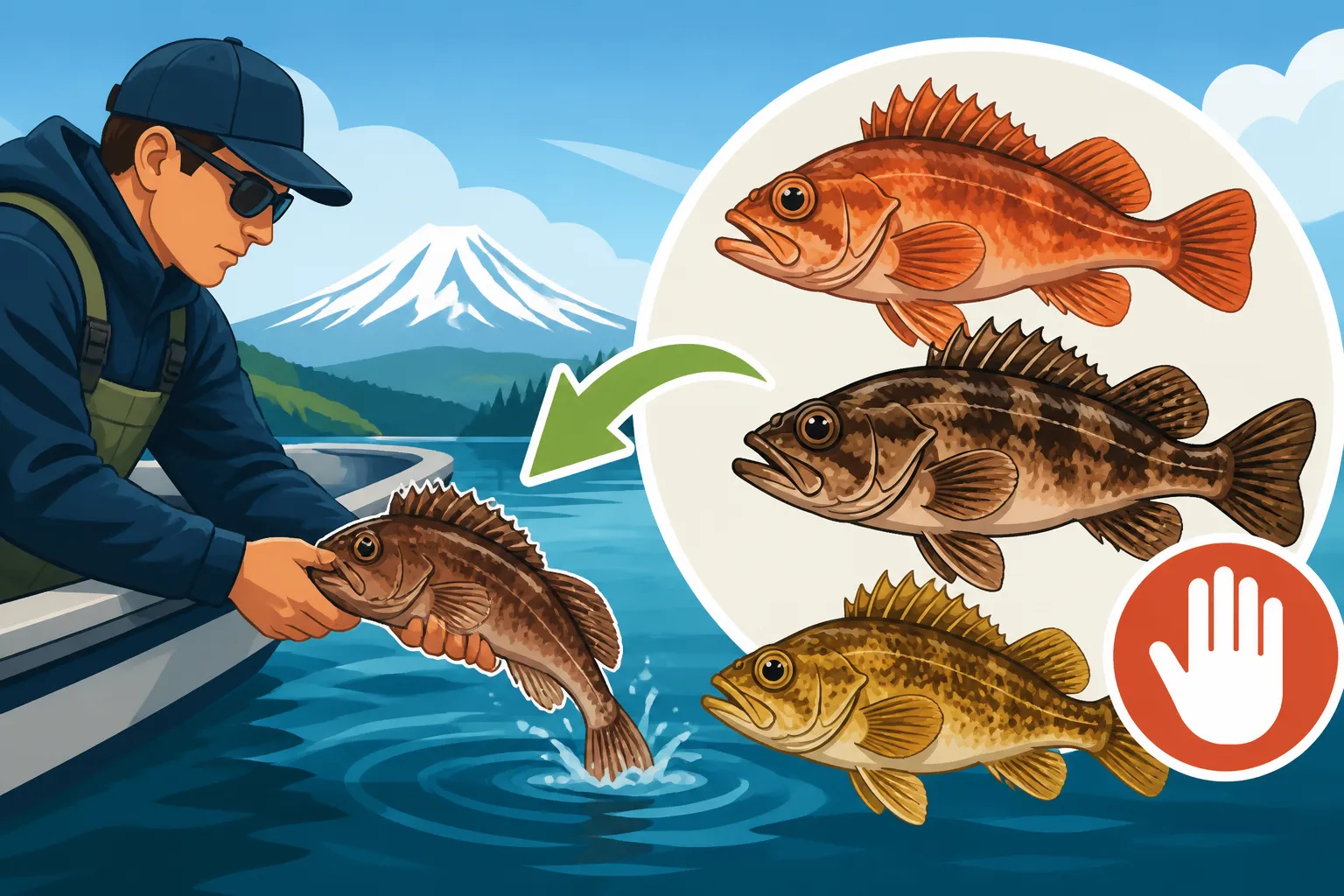
- Appearance: Yelloweye rockfish are often a striking reddish-orange color, sometimes with hints of yellow or white mottling, especially on younger fish. As they age, they can become a deeper, almost brick-red. The most defining feature, and the one that gives them their name, are their bright, often piercing, yellow eyes. Seriously, they glow. They also have prominent ridges on their heads and often have rougher scales compared to some other rockfish. Their fins can sometimes have black edges.
- Size: They can grow quite large, sometimes exceeding 30 pounds and reaching lengths of over three feet, though many you encounter will be smaller.
- Habitat: Yelloweye prefer rocky, complex habitats, often found in deeper waters, typically from 100 to 600 feet, but sometimes shallower. They love structure – reefs, pinnacles, wrecks, and steep drop-offs.
- Why They're Protected: Their extreme longevity (they can live over 100 years!), slow growth rate, and late maturity make them incredibly vulnerable to overfishing. A single Yelloweye removed from the population represents decades of growth and reproductive potential lost.
Hypothetical Scenario: You're out bottom fishing off the coast of Westport, dropping your jig down to a rocky reef. You feel a heavy thump, reel up, and there it is: a beautiful, deep orange fish with glowing yellow eyes. Your heart might do a little flutter of excitement, but then the recognition hits. Yelloweye. Your immediate action must be to get it back into the water as quickly and safely as possible. Even if it looks distressed from barotrauma, release is mandatory. You should have a descending device ready, which we'll discuss shortly. This is a fish that absolutely cannot come into your boat for pictures or closer inspection; its protection is paramount.
Canary and Bocaccio Rockfish: Often Confused, Always Released
These two species often get lumped together because, like the Yelloweye, they are under strict release rules, but they have distinct features. They are also highly susceptible to barotrauma due to their typical deep-water habitats.
Canary Rockfish:
- Appearance: Canary rockfish are typically a bright orange to reddish-orange color, often with three distinct, diffuse orange stripes radiating backward from their eyes and operculum (gill plate). They have pale or white bellies. Their fins are usually orange, sometimes with a yellowish tinge. Unlike Yelloweye, their eyes aren't as strikingly yellow, and their head ridges are less pronounced.
- Size: They can grow up to 30 inches long, often weighing 5-10 pounds, but larger specimens are caught.
- Habitat: Similar to Yelloweye, Canaries prefer rocky reefs and pinnacles, often found in depths from 50 to 800 feet.
Bocaccio Rockfish:
- Appearance: Bocaccio are generally a duller, more uniform reddish-brown or olive-brown color on their backs, fading to a lighter belly. Their most distinguishing feature is their incredibly large mouth and jaw that extends well behind their eye, earning them the nickname "salmon grouper" from some anglers. They have a more streamlined, torpedo-shaped body compared to the bulkier Yelloweye or Canary. Their eyes are not yellow.
- Size: They can grow quite large, often up to three feet long and weighing 10-20 pounds.
- Habitat: Bocaccio are often found in deeper waters over rocky bottoms, sometimes associated with submarine canyons or areas with strong currents, ranging from 150 to over 1,000 feet.
Why They're Protected: Both Canary and Bocaccio rockfish populations faced significant declines due to historical overfishing, and like Yelloweye, they are relatively long-lived and slow to mature. Their recovery has been slow, necessitating continued protective measures to ensure their populations can rebuild. Accurately telling them apart from other legal rockfish is a skill every angler needs to develop. When you're fishing for bottom species, you need to know your Rockfish Species Along the Washington Coast.
Other Species Under Strict Protection
While Yelloweye, Canary, and Bocaccio are the big three to focus on for mandatory release, it's worth noting that all "Puget Sound rockfish" species are also fully protected and must be released immediately if caught in Puget Sound. This includes species like Quillback, Copper (if caught in certain areas of Puget Sound), and China rockfish. The WDFW fishing regulations pamphlet is your ultimate guide, and specific rules for certain marine areas can change, so always check Where to Find Current Washington Fishing Rules before you head out. These localized protections are crucial for smaller, more isolated populations.
Here's a quick comparison table to help you distinguish these key species:
| Feature | Yelloweye Rockfish | Canary Rockfish | Bocaccio Rockfish |
|---|---|---|---|
| Color | Reddish-orange, sometimes mottled, brick-red with age | Bright orange to reddish-orange | Reddish-brown to olive-brown |
| Eyes | Bright, glowing yellow | Orange/yellow, not as prominent | Dark, not distinctly yellow |
| Mouth/Jaw | Medium size, extends to middle of eye | Medium size, extends to middle of eye | Very large, extends well past eye |
| Head Ridges | Prominent, rough feel | Less pronounced | Relatively smooth |
| Body Shape | Robust, somewhat chunky | Streamlined, less chunky | Torpedo-shaped, sleek |
| Habitat | Deep, rocky reefs (100-600 ft) | Deep, rocky reefs (50-800 ft) | Deeper, rocky bottoms (150-1000 ft) |
| Release Status | Mandatory Release | Mandatory Release | Mandatory Release |
Best Practices for Releasing Protected Rockfish
Catching a protected rockfish doesn't have to be a death sentence for the fish, nor a stressful situation for you. With the right tools and techniques, you can significantly increase their chances of survival. This is where being a truly responsible angler shines.
Minimizing Barotrauma: Descending Devices are Your Friend
We talked about barotrauma – that awful expansion of the swim bladder. For rockfish caught in deeper waters (say, anything over 30-40 feet, but especially deeper than 60 feet), a descending device is not just a good idea; it's often critical for their survival. These devices allow you to quickly and safely return the fish to the depth from which it was caught, recompressing its swim bladder and reversing the effects of barotrauma. There are various types, but they all work on the same principle: getting the fish back down. You can find a good selection of these on platforms like Amazon or at your local tackle shop.
- How They Work: A descending device typically consists of a weighted clip or clamp that attaches to the fish's jaw or lip, or a cage that holds the fish. You then lower the fish back down on a dedicated line, or even your fishing rod, to the appropriate depth (often the bottom, or at least 100 feet). Once at depth, a mechanism releases the fish, allowing it to swim away.
- Why They're Crucial: Studies have shown that using descending devices dramatically increases the survival rate of rockfish suffering from barotrauma, often from single digits to over 80-90%. Without it, a fish with an expanded swim bladder cannot swim back down on its own and will float on the surface, becoming easy prey for birds or marine mammals, or simply succumbing to stress and exposure. If you want to dive deeper into this, check out Descending Devices for Rockfish and How to Use One.
- Using Your Device: When you reel in a protected rockfish, immediately assess if it shows signs of barotrauma (bulging eyes, distended stomach, inability to swim down). If it does, swiftly attach your descending device, ensure the fish is secure but not harmed, and lower it down. The quicker you act, the better.
Gentle Handling and Quick Release Techniques
Even if a rockfish doesn't show extreme signs of barotrauma (perhaps it was caught in shallower water), proper handling is still paramount. Remember, these are delicate creatures, and rough treatment can easily injure them, reducing their chances of survival.
- Wet Hands: Always, always wet your hands before touching a fish. Dry hands can remove the fish's protective slime coat, making it susceptible to disease and infection.
- Support the Body: If you must handle the fish, support its entire body, especially if it's a larger specimen. Avoid holding it by the jaw or gills, which can cause internal damage. A two-handed approach, supporting the belly and the tail, is ideal.
- Minimize Air Exposure: Every second a fish is out of water is stressful and potentially damaging. Get hooks out quickly and get the fish back in the water.
- Hook Removal: Use needle-nose pliers or a de-hooker to remove the hook as gently and quickly as possible. If the hook is deeply swallowed and you can't remove it without causing major trauma, it's often best to cut the line as close to the hook as possible. Hooks will often rust out or pass through naturally over time.
- Revival: For fish that seem lethargic upon release, gently hold them in the water, facing into the current, allowing water to flow over their gills. Don't "pump" them back and forth, as this can force water the wrong way through their gills. When they feel strong enough to swim away on their own, release them.
What to Do If a Protected Rockfish Appears Unrecoverable
This is a tough one, emotionally. You've caught a protected species, tried your best with the descending device, but it still seems to float, or it's clearly not going to make it. The regulations are clear: you still cannot keep it. Even if a fish appears dead or beyond recovery, it must be released. It's a hard pill to swallow, especially if you feel like you've wasted a life, but the law is the law. Taking it would be a violation, regardless of its condition. The goal is to discourage any angler from deciding for the fish that it's "not going to make it" and therefore keeping it, which would undermine the conservation efforts. This is a common frustration, but it's important to stick to the rules for the greater good of the species.
Understanding the Regulations and Staying Updated
Fishing in Washington, especially for bottomfish, is a dynamic activity, and the rules are subject to change. It's not a "set it and forget it" kind of deal. Being a proactive and informed angler is just as important as having the right gear.
How to Find Current Washington Fishing Rules
The single most important tool in your tackle box, besides your rod and reel, is the current Washington Sport Fishing Regulations Pamphlet. This document, available both online on the WDFW website and in print at tackle shops and licensing dealers, contains all the rules, bag limits, and specific regulations for every marine area and freshwater body in the state.
- Online Resources: The WDFW website is your best friend. Not only can you download the full pamphlet, but they also have pages dedicated to Emergency Rule Changes: Why Washington's Rules Shift Mid-Season. These emergency rules are often enacted to protect specific runs or species, and they can change daily during certain seasons. Always check for updates before you head out, especially if you haven't fished in a particular area recently.
- Know Your Marine Area: Washington's saltwater is divided into numerous "Marine Areas" (e.g., Marine Area 9, Marine Area 6). Rules, especially for rockfish, often vary significantly from one marine area to another. Know which area you're fishing in and check the specific regulations for that area.
- Ask Local Experts: Don't be shy! Talk to experienced anglers at the boat launch, or employees at local tackle shops. They often have real-time insights into recent rule changes or specific conditions that might affect fishing.
The key takeaway here is due diligence. Never assume the rules are the same as last year, or even last month. A quick check of the WDFW site can save you a lot of grief and ensure you're always fishing legally and ethically. For a complete guide on navigating these rules, read Reading the Washington Sport Fishing Regulations Pamphlet.
The Consequences of Violating Release Rules
Ignorance of the law is not an excuse, especially when it comes to protected species. WDFW enforcement officers (game wardens) are out on the water, checking catches and licenses, and they take violations very seriously. The consequences for keeping a protected rockfish can be steep and far-reaching.
- Fines and Penalties: You could face substantial monetary fines. These aren't just a slap on the wrist; they can be hundreds or even thousands of dollars, depending on the severity and frequency of the offense.
- Seizure of Gear: Your fishing gear, including your rod, reel, and even your boat, could be seized. This is a common penalty for serious violations.
- Loss of Fishing Privileges: You could lose your fishing license for a period of time, or even permanently. For passionate anglers, this is often the most painful consequence.
- Criminal Charges: In egregious cases, particularly those involving commercial poaching or repeat offenses, criminal charges can be filed.
- Reputational Damage: Beyond the legal penalties, there's the damage to your reputation within the fishing community. Responsible anglers have little patience for those who knowingly or carelessly disregard conservation laws.
Beyond the legal ramifications, there's the ethical consideration. Every protected rockfish kept illegally is a step backward for the conservation efforts that we all rely on to maintain healthy fisheries. It impacts not only the specific fish but the entire population's ability to recover. So, take the extra moment to identify your catch, and if in doubt, always err on the side of caution and release it gently. Understanding these consequences should reinforce the importance of meticulous adherence to the rules. You can learn more about general penalties in Fines and Penalties for Common Fishing Violations.
Disclaimer
This article is for general informational purposes only and does not constitute professional advice. Laws, prices and regulations vary by location and change over time. Consult a qualified professional for guidance on your specific situation.