Why Do Some Rockfish Need a Descending Device?
It's incredibly frustrating when you're out on the water, trying to do everything right, and you suddenly catch a fish that you know needs to go back, but it just won't swim down. That helpless feeling, watching a rockfish float away after release, can really weigh on an angler's conscience. This guide is here to shed light on exactly why some rockfish require a descending device in Washington waters and how these clever tools help ensure these vital species have the best chance of survival after being caught.
The Unique Physiology of Rockfish and the Challenge of Depth
When you're reeling in a fish, especially from deep water, there's a lot going on beneath the surface that we don't always see or understand at first glance. Rockfish, with their striking colors and often spiny fins, are particularly susceptible to an issue that isn't always obvious to the casual angler: barotrauma. This phenomenon is directly tied to their unique anatomy and how they cope with pressure changes in their environment.
Understanding the Rockfish Swim Bladder
Most fish have a swim bladder, an internal gas-filled organ that helps them maintain buoyancy in the water column. Think of it like a built-in life vest. However, there are two main types of swim bladders: physostomous (open) and physoclistous (closed). Rockfish, along with many other marine bottomfish, have a physoclistous swim bladder, meaning it's a closed sac without a direct connection to the esophagus. This design is fantastic for deep-water living, allowing them to regulate their buoyancy precisely at specific depths by absorbing or releasing gases into the bloodstream over time.
The problem arises when a rockfish is brought up rapidly from significant depths. As the fish ascends, the ambient water pressure decreases dramatically. According to Boyle's Law, as pressure drops, gas expands. Since a rockfish's swim bladder is closed, the gases inside have nowhere to go. This rapid expansion causes the swim bladder to inflate like a balloon, often to several times its normal size. This isn't just a minor inconvenience for the fish; it's a critical, often fatal, internal injury.
Why Surface Release Often Fails for Deep-Caught Rockfish
When a rockfish comes to the surface from deep water with an overinflated swim bladder, several visible signs of barotrauma usually appear. Their eyes might bulge out, their stomach may protrude from their mouth, and most critically, they'll often be unable to swim back down on their own. This is because the buoyant force of their expanded swim bladder is too great for them to overcome. They can't dive; they just float helplessly on the surface, making them easy prey for seabirds or other predators, or leaving them vulnerable to sun exposure and stress.
It's a disheartening sight for any angler who genuinely cares about conservation. You've followed the rules, brought the fish up, perhaps even gently removed the hook, and tried to release it, only to watch it drift away, belly-up. Many anglers have shared this frustration, feeling like their efforts to be responsible were ultimately in vain because the fish couldn't survive. This is precisely why regulations and tools like descending devices have become so crucial, especially for species like Rockfish Species Along the Washington Coast, many of which are slow-growing and long-lived.
The Immediate Dangers of Barotrauma
Barotrauma isn't just about a fish floating away; it encompasses a range of severe physiological injuries that occur when a fish is rapidly depressurized. Understanding these dangers helps underscore why taking proactive measures like using a descending device is so vital for the health of Washington's rockfish populations.
Internal and External Symptoms
The most recognizable external symptoms of barotrauma include:
- Exophthalmia: Commonly known as "pop-eye," where one or both eyes bulge significantly from their sockets. This is caused by gas expanding behind the eyes.
- Eversion of the Stomach: The stomach, sometimes even a portion of the esophagus, can be pushed out of the fish's mouth due to the extreme pressure from the expanding swim bladder.
- Distended Abdomen: The belly of the fish will often appear bloated and firm, again, from the expanded swim bladder pushing against internal organs.
- Inability to Submerge: As discussed, the fish simply can't swim down. It might try, but the overwhelming buoyancy keeps it at the surface.
Internally, the damage can be even more severe. The expanding swim bladder can rupture, damage internal organs like the kidneys, liver, and intestines, or even cause blood vessels to burst. These internal injuries are not immediately visible but can lead to a slow and painful death for the fish, even if it manages to temporarily swim away. When anglers see a rockfish exhibit these symptoms, it's a clear signal that the fish is in distress and needs assistance to return to its deep-water habitat.
The Ecological Impact of High Mortality Rates
Rockfish populations in Washington, particularly in Puget Sound, have faced significant conservation challenges over the years. Many species are incredibly long-lived, some living for decades, even over a century. They mature slowly and don't reproduce until they're quite old, making them extremely vulnerable to overfishing and high mortality rates from catch-and-release practices that don't account for barotrauma.
If a significant number of released rockfish die from barotrauma, even if they aren't kept, it effectively functions as mortality, negatively impacting the population. This isn't just about a few individual fish; it's about the long-term health and sustainability of entire species. Rockfish Species That Must Be Released in Washington often include some of these more vulnerable populations, and ensuring their survival post-release is a critical component of responsible angling. This is why Washington's Department of Fish and Wildlife (WDFW) has implemented specific rules and encouraged the use of descending devices, recognizing the cumulative impact of barotrauma on these sensitive fish. Without these efforts, conservation goals for these valuable bottom dwellers would be incredibly difficult to achieve.
Descending Devices: A Lifeline for Rockfish
So, what exactly is a descending device, and how does it turn a helpless, floating fish into one that can swim away successfully? These tools are elegantly simple in their concept but incredibly effective in practice, providing a crucial intervention for rockfish suffering from barotrauma.
How Descending Devices Work
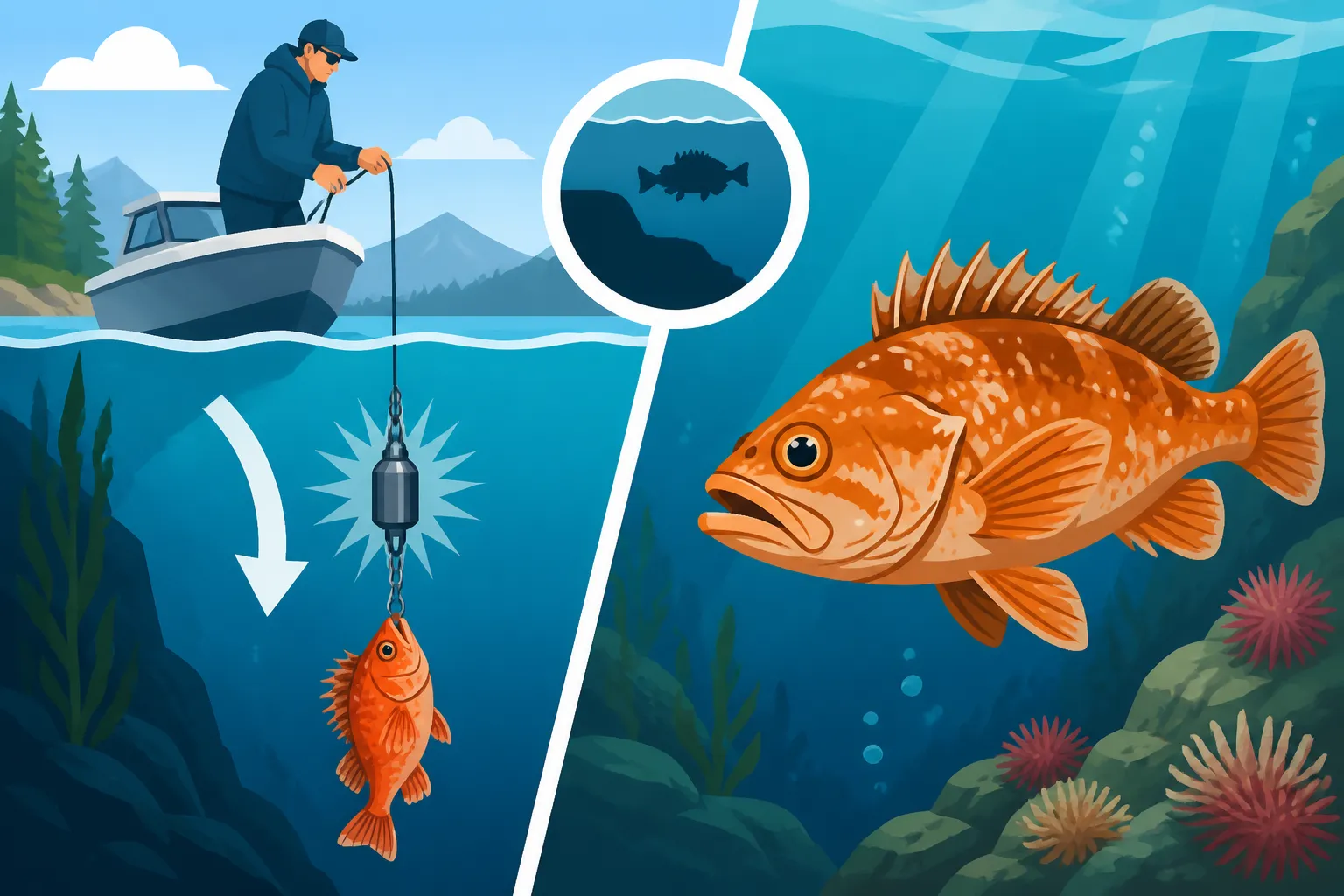
A descending device, at its core, is a weighted tool designed to rapidly transport a fish back down to a depth where the pressure equalizes, allowing its swim bladder to recompress. The principle is straightforward: get the fish back down to its comfortable pressure zone as quickly and safely as possible. Once the fish is at depth, the device is disengaged, and the fish, with its recompressed swim bladder, can swim away under its own power.
The effectiveness lies in the speed of descent. The longer a fish floats at the surface, the more damage it sustains from exposure, stress, and predators. A good descending device minimizes this surface time, giving the fish a fighting chance. Think of it like taking a human diver suffering from "the bends" and getting them back into a hyperbaric chamber immediately; it's all about rapid recompression.
Types of Descending Devices
There are a few primary designs for descending devices, each with its own advantages, but all serving the same fundamental purpose:
- Lip Clamp Devices: These are perhaps the most common and easiest to use. They feature a clamp that gently but securely grips the fish's lower jaw or lip. The clamp is attached to a weighted line, and once the fish is at the desired depth (usually 50-100 feet or more, depending on where it was caught), a sharp tug on the line releases the clamp, freeing the fish. These are straightforward and often quite affordable.
- Inverted Hook Devices: Similar to lip clamps, these devices use a large, barbless, inverted hook that slips into the corner of the fish's mouth. The weight pulls the fish down, and a quick jerk on the line releases it. These can be effective, but care must be taken to ensure the hook doesn't cause additional injury.
- Weighted Cradles or Baskets: These are less common for individual anglers but are highly effective, especially for larger fish or when multiple fish need to be returned. The fish is placed into a small, weighted cradle or net, lowered to depth, and then released. They minimize physical contact and potential for external injury.
Many anglers find various models on Amazon or at local tackle shops, offering different weights and deployment methods. Regardless of the specific type, the key is to have one on board if you're fishing for rockfish in Washington, particularly in areas where deep drops are common for species like lingcod and other bottomfish.
| Device Type | How it Works | Pros | Cons |
|---|---|---|---|
| Lip Clamp | Clamps onto fish's lower jaw, weighted line lowers fish | Easy to use, secure hold, quick release | Can stress jaw if not used carefully |
| Inverted Hook | Barbless hook slides into mouth, weighted line lowers fish | Simple design, effective for many species | Risk of mouth injury if not used properly, not for all fish |
| Weighted Cradle | Fish placed in basket/net, lowered with weights | Minimal fish handling, good for larger fish | Can be bulky, more complex to deploy and retrieve |
Washington's Approach to Rockfish Conservation
Washington State takes its marine conservation seriously, and rockfish are a prime example of a species requiring specific management strategies. The regulations around rockfish, including the use of descending devices, are a direct reflection of WDFW's commitment to ensuring sustainable fisheries.
The Role of Regulations and WDFW Guidelines
The Washington Department of Fish and Wildlife (WDFW) has implemented various measures to protect rockfish, especially those caught in deeper waters. These measures often include species-specific bag limits, closed seasons for certain rockfish species, and gear restrictions. Importantly, for many species of rockfish, particularly those in Puget Sound, WDFW strongly encourages, and sometimes mandates, the use of descending devices when releasing fish caught from depths exceeding certain thresholds.
The WDFW website and the annual Reading the Washington Sport Fishing Regulations Pamphlet are your best friends here. They provide explicit guidelines on when and where descending devices are recommended or required. These regulations are not arbitrary; they are based on scientific understanding of fish biology and the observed mortality rates of released fish. Ignoring these guidelines isn't just about potentially breaking a rule; it's about directly undermining the health of a vulnerable fishery. Anglers who take the time to learn these rules and equip themselves with the right tools are directly contributing to the long-term viability of rockfish populations.
Beyond the Device: Best Practices for Catch-and-Release
While a descending device is a powerful tool, it's just one part of a broader strategy for responsible catch-and-release fishing, especially for rockfish. Pairing the device with other best practices significantly increases a fish's chances of survival.
First and foremost, minimize fight time and handling time. The longer a fish struggles on the line or is out of the water, the more stressed it becomes, reducing its recovery potential. Use appropriate tackle that can bring the fish in relatively quickly without exhausting it completely. Once the fish is alongside the boat, handle it gently with wet hands or a rubberized landing net to protect its slime coat, which is a crucial defense against infection. Avoid squeezing the fish or putting fingers in its gills.
When it comes to hook removal, use barbless hooks whenever possible. Barbless hooks greatly reduce tissue damage and make unhooking much quicker, especially when releasing a fish at the boat. If the fish is deeply hooked, especially in the gills or esophagus, it might be better to cut the line as close to the hook as possible rather than attempting to rip the hook out, which can cause more trauma. Many of these recommendations apply universally to Bottom Fishing for Lingcod and Rockfish off Washington to ensure all released bottomfish have the best chance.
Finally, always have your descending device rigged and ready before you even start fishing in deeper waters. Don't wait until you've caught a fish displaying symptoms of barotrauma to start fumbling with weights and lines. Being prepared means a faster, more effective release, and a higher chance of survival for the fish. Responsible anglers understand that conservation is an ongoing effort, and every action on the water contributes to the bigger picture. You can easily find descending devices on Amazon or at your local sporting goods store. Familiarize yourself with its operation on land so that when the time comes, you can deploy it with confidence.
Equipping Yourself for Responsible Rockfish Angling
Getting set up with the right gear for rockfish conservation is straightforward and an essential part of being a responsible angler in Washington State. It’s not just about having a license and knowing the limits; it’s about having the tools to ensure every released fish has the best possible chance to thrive.
Purchasing and Preparing Your Descending Device
Acquiring a descending device is easy. Most major fishing tackle retailers, both online and brick-and-mortar, carry various options. You'll find a wide selection on platforms like Amazon, as well as at local Washington sporting goods stores that cater to saltwater anglers. When choosing one, consider the depths you typically fish, the size of rockfish you might encounter, and your personal preference for ease of use. A simple lip clamp style is often a great starting point for many anglers.
Once you have your device, it's crucial to prepare it for use before your trip. This means attaching an appropriate weight (usually 2-5 pounds, depending on current and device design) and having it ready to deploy on a dedicated line. Many anglers keep their descending device pre-rigged on a spare rod and reel or a handline, coiled neatly so it can be grabbed and used within seconds of a fish coming to the surface. Time is of the essence when dealing with barotrauma, so preparedness is key. Double-check that all connections are secure and that the release mechanism functions smoothly. A quick practice run at the dock can save valuable time and a fish's life when you're out on the water.
Understanding the Regulatory Landscape for Rockfish
Washington's fishing regulations are designed to protect various fish species, and rockfish are often subject to specific rules due to their vulnerability. It’s essential to be aware of which rockfish species are open for retention and which are strictly catch-and-release. The WDFW regulations pamphlet explicitly lists these distinctions, often highlighting species that are a particular concern for conservation. For instance, some rockfish, like Yelloweye Rockfish, are often entirely protected and must be released immediately if caught. This is where a descending device becomes not just a helpful tool, but a critical one.
Remember that regulations can change, sometimes even mid-season, so always consult the most current WDFW rules, which can be found on their website or via the Fish Washington App. Information on Washington Sport Fishing Seasons and Emergency Closures is constantly updated, especially for sensitive species. Being informed about current bag limits, size restrictions, and species-specific rules for rockfish—including whether a descending device is mandatory or strongly recommended for certain depths or areas—is a fundamental responsibility of every angler. By understanding and adhering to these guidelines, you're doing your part to ensure that Washington's diverse and valuable rockfish populations remain healthy for generations to come.
Disclaimer
This article is for general informational purposes only and does not constitute professional advice. Laws, prices and regulations vary by location and change over time. Consult a qualified professional for guidance on your specific situation.