Washington State Record Chinook Salmon
Many anglers in Washington dream of hooking into a truly monumental fish, a salmon so big it becomes the stuff of local legend. We often hear whispers about massive Chinook salmon, the "kings" of the Pacific, that push the scales far beyond what most of us consider a good day's catch. But what about the absolute biggest? This guide is going to take you deep into the fascinating story of the Washington State Record Chinook Salmon, unraveling the facts behind this magnificent catch and what it means for every angler who dares to dream of their own giant.
The King of Kings: Unveiling Washington's Record Chinook Salmon
Every state has its fishing lore, its tales of the one that didn't get away, and in Washington, the Chinook salmon stands at the pinnacle of these stories. The sheer power and size of these fish are legendary, making them a top target for anglers across the state. But when we talk about the state record, we're talking about a fish that transcended all expectations, a true king among kings that etched its place in Washington's angling history.
The Legend of the Record-Setting Fish
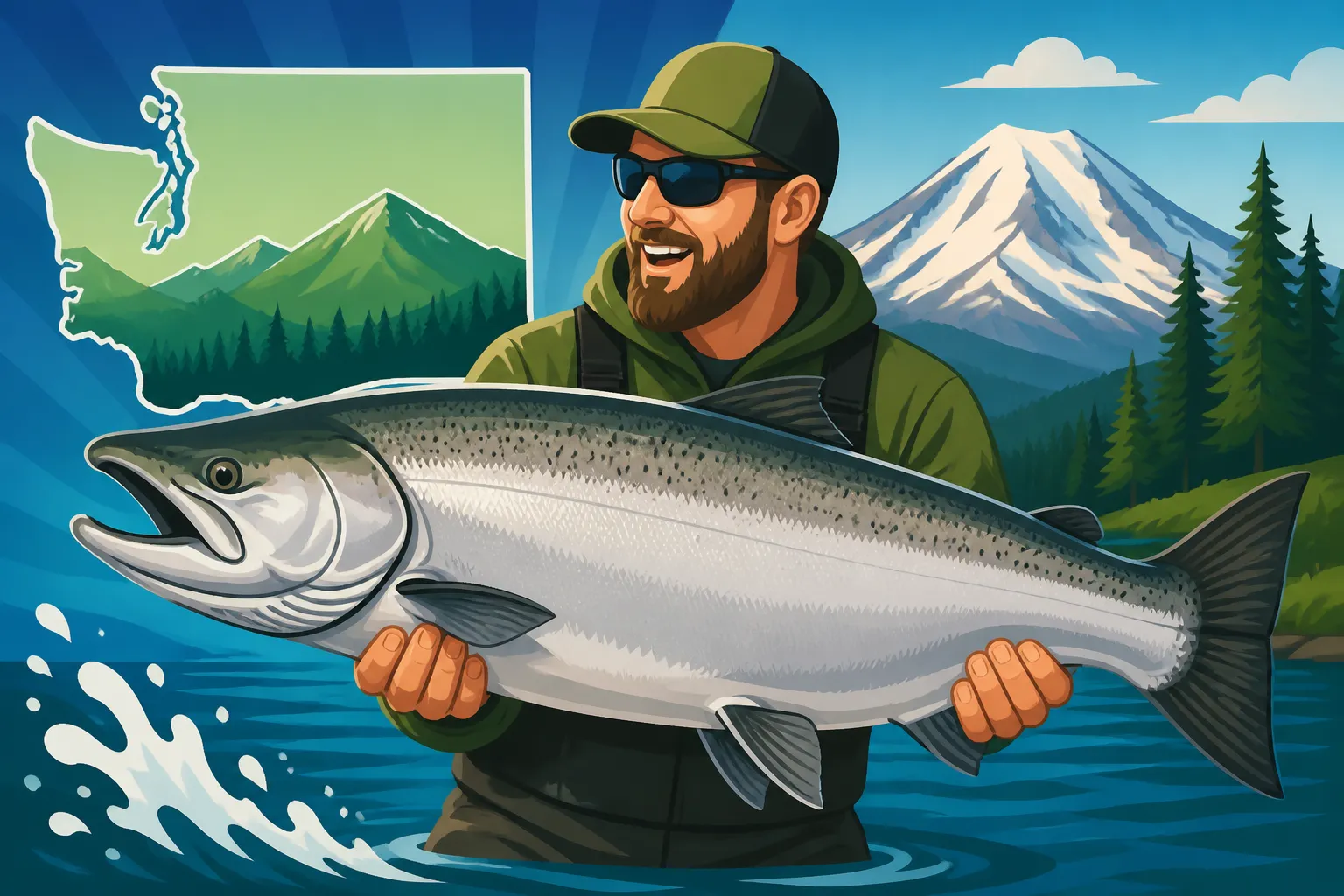
The official Washington State record for Chinook salmon is an awe-inspiring fish, tipping the scales at a staggering 70 pounds. Caught by angling legend Mike Boswell way back in 1954, this colossal Chinook was landed near the Barview jetty on the mighty Columbia River. Imagine the fight! Landing a fish of that magnitude, especially with the gear available in the mid-20th century, was an incredible feat of strength, skill, and sheer determination. This wasn't just a big salmon; it was a testament to the incredible potential of Washington's waters and the tenacity of its anglers.
This particular record has stood for decades, a benchmark that few have even come close to touching. It speaks to a bygone era when these magnificent fish were perhaps even more abundant and given the chance to grow to truly colossal sizes. While we still catch fantastic Chinook in Washington today, seeing one reach this epic proportion is exceedingly rare. This fish wasn't just a number; it became a symbol of what's possible, a quiet challenge whispered among generations of salmon fishermen.
Details of the Colossal Catch: Weight, Location, and Angler
To truly appreciate the Washington State Record Chinook Salmon, it's worth diving into the specifics. Mike Boswell's 70-pound Chinook was a beast by any measure, especially considering the average size of most adult Chinook, which typically range from 10 to 30 pounds. This fish was more than double that average. The location, the Barview jetty on the Columbia River, is also significant. The Columbia River is a known superhighway for migratory salmon, with vast runs moving through its waters, offering abundant food sources and prime conditions for growth. The confluence of the Columbia with the Pacific Ocean provides an incredibly rich environment where salmon can pack on pounds before their spawning journey.
The gear used by Boswell, while not as sophisticated as modern setups, was undoubtedly robust. Anglers back then relied on heavy-duty rods, stout lines, and a deep understanding of the river's currents and the salmon's habits. Landing a fish of this size would have been a grueling battle, testing both man and tackle to their limits. This record highlights not just the fish, but the angler's skill in bringing such a powerful creature to hand without the aid of modern electronics or highly specialized boats. It truly underscores the profound connection between the angler, the environment, and the incredible fish that swim in our waters. You can learn more about these incredible fish in our detailed guide on Chinook Salmon: Washington's King of Fish.
Why This Record Stands Out
The 70-pound Chinook isn't just a record; it's an anomaly that continues to fascinate. Why has it stood for so long? A multitude of factors contribute to the rarity of such a catch today. Habitat changes, fishing pressure, environmental shifts, and even the genetics of current salmon runs all play a role. While Washington still boasts incredible Chinook fishing, particularly in areas like Puget Sound and the coastal rivers, most "trophy" Chinook today fall into the 30-to-50-pound range, which are still magnificent fish in their own right. This 70-pound leviathan represents a pinnacle, a historical high-water mark that continues to inspire hope and determination in every angler casting a line in Washington's abundant waters. It's a reminder of the wildness and sheer potential that still exists, even if these giants are increasingly rare.
The Anatomy of a Record Breaker: What Makes a Giant Chinook
What does it take for a Chinook salmon to grow to such colossal proportions? It's not just about luck; it's a complex interplay of genetics, environment, and opportunity. Understanding these factors can give us insight into what makes a true record breaker.
Biological Factors Contributing to Massive Chinook Size
At its core, a fish's potential for growth is encoded in its DNA. Certain salmon strains simply have the genetic predisposition to grow larger and live longer than others. Combine this with an abundance of high-quality food sources – like herring, squid, and smaller baitfish – in their ocean foraging grounds, and you have the recipe for rapid growth. Chinook salmon spend several years in the ocean, typically three to five, before returning to their natal rivers to spawn. The longer they stay in the nutrient-rich ocean environment, and the more successfully they feed, the larger they can become. Some truly giant Chinook might even be "super spawners" that delay their return for an extra year, packing on even more weight.
It's a fascinating biological marvel. Think about a regular salmon returning from the ocean – it's already a marvel of nature. But then consider one that just keeps growing, defying the odds, avoiding predators, and constantly finding food. These fish are survivors, honed by years in the wild, which makes catching one even more special. The pursuit of understanding How Big Washington Chinook Salmon Get often leads us back to these fundamental biological principles.
Environmental Conditions That Foster Trophy Fish
The health of Washington's marine and freshwater ecosystems is paramount to producing trophy-sized Chinook. A healthy ocean environment provides the necessary forage base, free from pollution and with stable temperatures. Rivers, estuaries, and nearshore areas must offer safe passage for smolts heading out to sea and provide crucial habitat for them to grow before reaching the deeper ocean feeding grounds. The Columbia River, where the record fish was caught, is a massive system that drains a significant portion of the Pacific Northwest, offering a rich and diverse environment for salmon at various life stages.
Factors like ample freshwater flows, clean spawning gravels, and healthy riparian zones along rivers are also critical. While these giant Chinook spend most of their lives in the ocean, the conditions of their birthplace and early rearing grounds can influence their survival rates and overall health, setting them up for a successful ocean migration and growth spurt. When all these environmental puzzle pieces fit together perfectly, you get the conditions ripe for a truly exceptional fish.
Comparing Washington Chinook to Those from Other Regions
While Washington's 70-pound record is formidable, it's interesting to note that even larger Chinook have been caught elsewhere, particularly in Alaska and British Columbia, where some fish have exceeded 90 pounds. These regions often have even more pristine wilderness, vast untouched ocean feeding grounds, and historically lower fishing pressure, allowing more fish to reach maximum size and age. However, for a state with significant human population centers and industrial development along its waterways, Washington's 70-pound record stands as a testament to the enduring productivity and conservation efforts in place. It's a source of pride for Washington anglers, showing that even with challenges, our waters can still produce world-class salmon. While the numbers might vary, the spirit of pursuing these majestic fish remains the same across the Pacific Northwest.
The Pursuit of a Lifetime: Strategies for Targeting Trophy Chinook
Landing a record-breaking Chinook salmon isn't just about luck; it's about skill, persistence, and knowing where and how to fish. If you dream of tangling with a true monster, here's what you need to consider.
Key Fishing Locations Known for Large Chinook
When it comes to big Chinook, certain areas in Washington stand out. The lower Columbia River, particularly during the late summer and early fall runs, is consistently a hotspot for larger fish, echoing the location of the state record. Places like Astoria and Buoy 10, though technically just across the border, are intrinsically linked to the Columbia's Washington side and are famous for their strong runs of ocean-bright kings. Further north, areas within Puget Sound, like Marine Area 10 (Seattle area) and Marine Area 9 (Port Angeles/Admiralty Inlet), can produce substantial Chinook, especially during the "blackmouth" season when resident feeder Chinook are gorging themselves. The coastal waters off Westport and Ilwaco also offer opportunities for hefty ocean-run kings before they enter the river systems.
Understanding Washington's Puget Sound Fishing Spots for Salmon and Bottomfish is key, as is recognizing when these fish are present. Often, the bigger fish are mixed in with the general runs, but certain times of year, like late summer for river-bound kings, tend to produce a higher percentage of larger individuals.
Effective Techniques and Gear for Trophy Salmon
Targeting trophy Chinook requires a strategic approach. Trolling with large baitfish imitations, like plug-cut herring or anchovies behind a flasher, is a perennial favorite in Puget Sound and coastal waters. For these large fish, consider using larger bait sizes than you might for smaller Coho. Deep-water trolling with downriggers is essential to present your offering at the depths where these large, often solitary, fish cruise. On rivers, techniques like plunking, back-bouncing, or drift fishing with substantial roe setups or large lures can entice these giants. Always ensure your gear is up to the task: heavy-action rods, robust reels with smooth drags, and strong line are non-negotiable. You don't want to lose the fish of a lifetime because of inadequate tackle. A good quality deep-diving plug for trolling, for example, can be found on retailers like Amazon, ensuring you have reliable gear for challenging conditions. Our guide on Trolling for Salmon in Washington's Puget Sound offers more specific tips.
Table: Common Chinook Salmon Weights by Fishing Location (Washington)
| Location Type | Typical Weight Range (lbs) | Potential Trophy Weight (lbs) | Primary Technique Examples |
|---|---|---|---|
| Lower Columbia River Estuary | 15-40 | 40-60+ | Trolling, Plunking |
| Puget Sound (Resident) | 8-20 | 20-30+ | Trolling (mooching sometimes) |
| Puget Sound (Migratory) | 15-35 | 35-50+ | Trolling, Mooching |
| Coastal Ocean (Westport/Ilwaco) | 20-45 | 45-65+ | Trolling, Downrigging |
| Major Spawning Rivers | 15-35 | 35-55+ | Drift Fishing, Back-Bouncing, Casting Spinners |
Note: "Potential Trophy Weight" refers to unusually large fish for that area, not necessarily breaking the state record.
The Patience and Preparation Required
Chasing a state record, or even just a personal best, demands immense patience. You might spend countless hours on the water, enduring changing weather and slow bites, for just one opportunity. But when that rod buckles, and the drag starts screaming, all that waiting pays off. Preparation extends beyond just gear. It means studying the tides, currents, and Washington Sport Fishing Seasons and Emergency Closures. It means being physically ready for a prolonged fight. Many experienced anglers meticulously maintain their tackle, sharpen hooks, and prepare their bait with extreme care, knowing that one small detail can make the difference between landing and losing a monster. Don't forget essentials like a reliable rain suit and a good cooler for your catch; you can easily find highly-rated options for these on Amazon.
Moreover, understanding the specific runs and timing is crucial. Our Washington Fishing Seasons: A Month-by-Month Guide provides an excellent overview to help plan your pursuit of these magnificent fish.
Protecting the Legacy: Conservation and Responsible Angling
While the thrill of chasing a record-breaking Chinook is undeniable, it's balanced by the critical responsibility we have as anglers to protect these incredible fish and their habitats. Ensuring future generations can experience the same excitement means practicing thoughtful conservation.
The Importance of Healthy Ecosystems for Large Fish
The fact that a 70-pound Chinook was caught in 1954 speaks volumes about the health of the Columbia River and its associated ocean environments at that time. Today, while we still have robust runs, salmon face more challenges than ever before, from habitat degradation to changing ocean conditions. Healthy ecosystems provide the clean, cold water, abundant food, and safe passage that salmon need to thrive and grow to impressive sizes. This includes intact riparian zones along rivers, free-flowing tributaries, and a pristine marine environment. Every effort to restore and protect these habitats directly benefits the potential for future trophy fish. As anglers, supporting conservation organizations and advocating for responsible land and water management is part of our duty.
Catch and Release Practices for Big Fish
Many anglers today, particularly those targeting wild or exceptionally large fish, practice catch and release. While the state record was a kept fish, ethical catch and release can contribute to the sustainability of the fishery, especially for those highly prized larger specimens that often represent prime breeding stock. If you do plan to release a large Chinook, ensure you have the proper tools: a large, knotless net, de-hooking tools, and a plan to minimize the fish's time out of water. Support the fish in the water until it swims away strongly. This is particularly important for wild fish, which can be identified by their intact adipose fin (though some hatchery fish may also retain it). Learn more about What a Clipped Adipose Fin Means to help you make informed decisions on the water.
Responsible angling means knowing Washington Fishing Regulations Every Angler Should Know and adhering to them strictly. These rules are in place to manage fish populations and ensure healthy fisheries for everyone.
Conservation Efforts in Washington
Washington State, through agencies like the Washington Department of Fish and Wildlife (WDFW), along with numerous tribal nations and non-profit organizations, is constantly working on conservation efforts to protect and restore salmon populations. This includes habitat restoration projects, careful management of fisheries, hatchery programs to supplement wild runs, and ongoing research. As anglers, we play a crucial role by purchasing fishing licenses and endorsements (which fund these efforts), reporting our catches, and abiding by all regulations. Even small actions, like properly disposing of trash or minimizing our footprint on sensitive riverbanks, contribute to the larger goal of preserving these majestic fish for future generations. For a broader look at available fishing opportunities and how regulations shape them, consider exploring The Best Places to Fish in Washington State.
Disclaimer
This article is for general informational purposes only and does not constitute professional advice. Laws, prices and regulations vary by location and change over time. Consult a qualified professional for guidance on your specific situation.