How to Tell a Coho From a Chum
One of the trickiest parts of fishing in Washington, especially during the bustling fall salmon runs, is knowing exactly what you've got on the end of your line. With multiple salmon species returning to our rivers and saltwater, it's easy to mistake one for another. This guide will walk you through the distinct characteristics of Coho (silver) salmon and Chum (dog) salmon, helping you confidently identify your catch and stay within the ever-changing regulations.
Why Accurate Salmon Identification is Crucial for Washington Anglers
Mistaking a Coho for a Chum, or vice-versa, isn't just a minor oversight; it can have serious consequences. Washington's fisheries are managed with incredible precision, often with different rules for each salmon species due to varying run sizes, conservation concerns, and population goals. Knowing what you're targeting and what you've caught is fundamental to responsible angling and avoiding accidental violations.
Different Rules, Different Seasons
Imagine you're out on the Skagit River in the fall. You hook into a strong fish, and your heart races. If you think it's a Coho, but it's actually a Chum, and the Chum season is closed or has a different bag limit, you could be in serious trouble. Washington's fishing regulations are incredibly specific, often dictating open seasons, daily bag limits, and even legal gear by species and location. For example, some areas might be open for Coho with a generous limit, while Chum are strictly catch-and-release or entirely off-limits. You really need to consult the current Washington Sport Fishing Seasons and Emergency Closures and Understanding Washington's Daily Bag Limits by Species before every trip.
Moreover, the nuances extend to your catch record card. When you keep a salmon, you're usually required to record it immediately. If you misidentify a fish and record it incorrectly, or worse, keep a fish from a species that's currently closed, you're not just potentially harming a conservation effort; you're also putting yourself at risk of fines. This isn't about being overly bureaucratic; it's about protecting these precious natural resources for future generations of anglers.
Identifying for Conservation and Compliance
Beyond the immediate legal implications, accurate identification plays a vital role in conservation. Fisheries managers rely on catch data to assess population health and adjust regulations in real-time. If anglers are consistently misidentifying fish, that data becomes less reliable, potentially leading to incorrect management decisions that could jeopardize fragile runs. By learning to distinguish species, you become a more responsible and informed participant in the ongoing effort to sustain Washington's incredible salmon resources.
Think of it as your part in a much larger puzzle. Every fish you catch, identify, and either release or retain, contributes to the overall health of the ecosystem. It's a connection to the science, the management, and the future of fishing. Plus, knowing exactly what you’ve caught makes you a more knowledgeable angler, something every fishing enthusiast strives for.
Spotting a Coho Salmon: Key Identifiers
Coho salmon, affectionately known as "silvers," are a favorite among Washington anglers for their aggressive bites and acrobatic fights. While they share some general salmonid characteristics, they have several distinct features that set them apart from other species, especially the Chum.
Physical Traits of a Coho
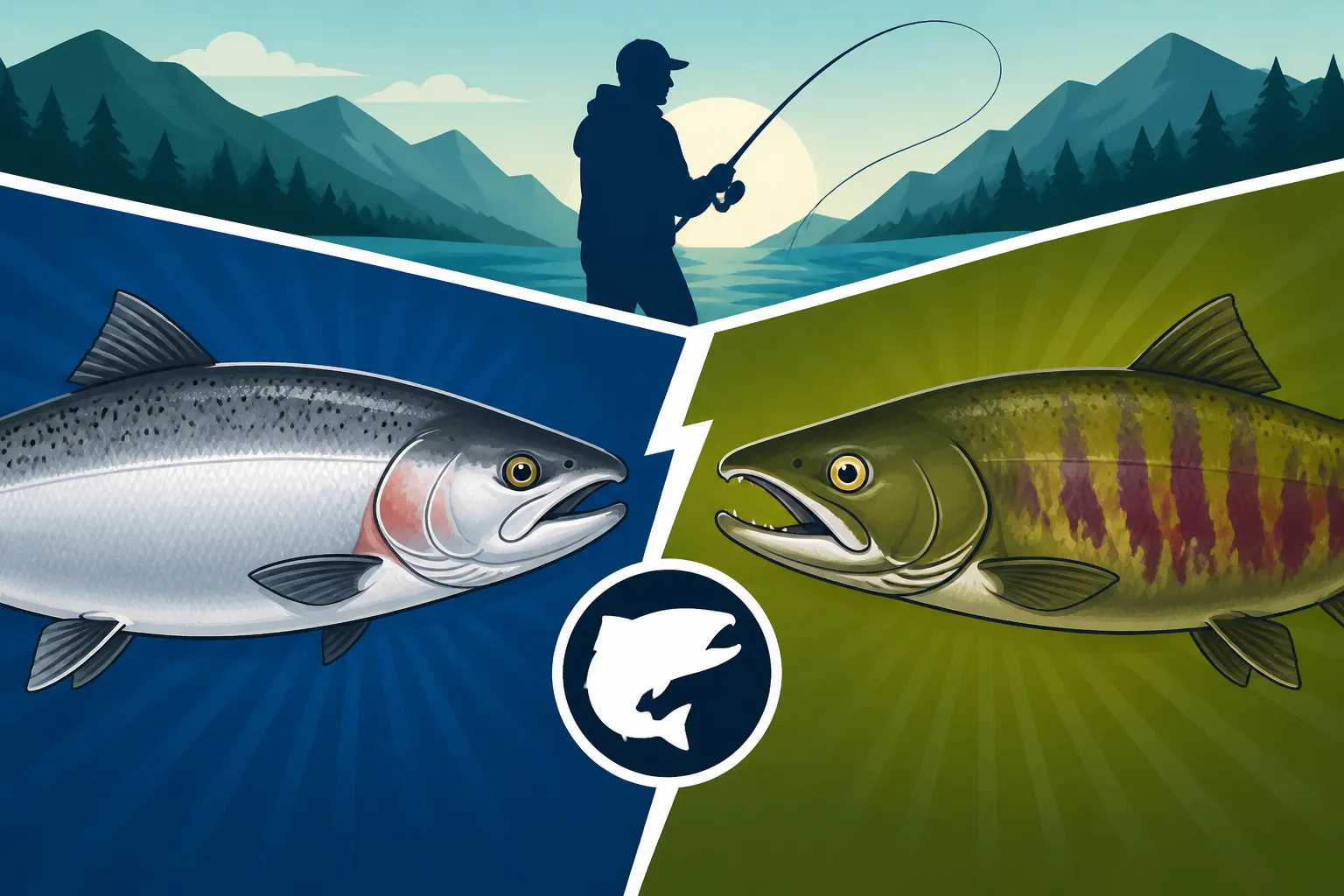
When you pull a fresh Coho from the water, the first thing you'll often notice is its striking silver flanks. They tend to be more torpedo-shaped and streamlined than the robust, blocky appearance of a spawning Chum. Their dorsal fin and the upper lobe of their caudal (tail) fin often have distinct, small black spots. Critically, these spots are typically only on the upper lobe of the tail, not spread across the entire fin or absent altogether.
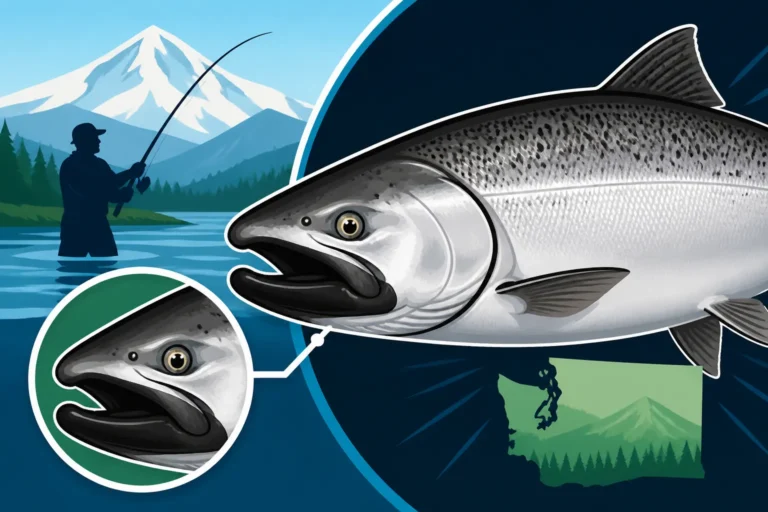
Another key identifier is their mouth and gum line. If you lift the gill plate or carefully open the mouth, you'll generally see a white gum line along the base of the teeth, with only small, needle-like teeth that don't protrude excessively. This white gum line is a crucial distinguishing feature. Their tail fin also tends to be slightly forked or squared off, rather than deeply forked or broadly rounded. If you're struggling to see these details on a fresh catch, a good, waterproof field guide (many are available on Amazon) can be invaluable.
When and Where to Find Coho
Coho salmon typically begin their freshwater migrations later in the summer and continue through the fall, often peaking in September and October in many Puget Sound and coastal rivers. You'll find them in a wide array of Washington's waterways, from the major river systems like the Skagit, Snohomish, and Green rivers, to smaller coastal streams. In saltwater, they're common throughout Puget Sound, often found in nearshore areas and around bait schools during the summer and early fall.
Their "run" timing can overlap with other salmon species, particularly Chinook and Chum, which is precisely why identification skills are so important. Understanding the specific Best Time to Fish for Coho in Washington in your chosen fishing spot will give you a better idea of what species to expect. This seasonal knowledge, combined with visual identification, forms a powerful angler's toolkit, ensuring you're fishing legally and with purpose.
Recognizing a Chum Salmon: What to Look For
Chum salmon, often called "dog salmon" due to the large, canine-like teeth that develop in spawning males, are a species unto themselves. They might not always get the same fanfare as Chinook or Coho, but they offer an exciting fight and have a unique beauty, especially during their spawning phase.
Distinctive Features of a Chum
Chum salmon in freshwater, especially during their spawning migration, are truly unmistakable. Their most famous characteristic is the vivid green-and-purple, or reddish-brown, vertical bars that appear on their flanks, earning them the nickname "calico" salmon. When fresh from the ocean, they are typically greenish-silver, but this striking barred pattern develops quickly as they approach their spawning grounds. Unlike Coho, Chum salmon generally lack any distinct spots on their tail fin. If there are any markings, they're usually faint speckles on the back, not defined spots on the tail.
Their mouth is also quite telling. Spawning male Chums develop pronounced, hooked snouts (kypes) and those distinctive, large canine-like teeth, which can be quite intimidating. Even non-spawning Chums will have a noticeably thicker, more robust body shape compared to the sleeker Coho. Take a moment to really look at the tail wrist – the narrow part before the tail fin. Chum often have a thicker, more powerful tail wrist than Coho, indicating their sheer power. Carrying a small, collapsible ruler (easily found on Amazon) can help you note these subtle differences in fin size or body proportion if you're really in doubt.
When and Where Chum Salmon Run
Chum salmon typically enter Washington's rivers later in the fall than Coho, with their runs often peaking in October and November, sometimes even extending into December in certain systems. They are particularly abundant in many Puget Sound rivers and coastal streams. Rivers like the Skagit, Hood Canal tributaries, and numerous smaller streams on the Olympic Peninsula can see massive Chum returns.
While Coho can be found in some of the same systems, the prime timing often differs slightly. Knowing When the Chum Salmon Run Peaks in Washington in your area is key. Their robust nature means they often tolerate colder water temperatures as they complete their spawning journey. Being aware of these timing differences, along with the visual cues, will greatly improve your ability to identify them accurately when they're present in the fishing grounds.
Side-by-Side Comparison: Coho vs. Chum
Putting the specific characteristics side-by-side really highlights the differences between Coho and Chum salmon. While individual fish can always show variations, these general rules will serve you well. It's not just about one feature; it's about looking at the whole picture.
Visual Cues at a Glance
Let's break down the most immediate visual distinctions. When you've got a fish in hand, or even if you're trying to identify one caught by a buddy on the boat, focus on these key areas. The presence or absence of tail spots, the color of the gum line, and the overall body shape are your primary clues. A good fishing app like the Fish Washington app can often help with identification right on the spot, showing pictures and descriptions. For those still learning, sometimes even a waterproof guide that shows detailed diagrams of How to Tell a Coho From a Chum can be a great resource to keep in your tackle box, maybe one you picked up at a local tackle shop or through Amazon.
| Feature | Coho Salmon (Silver Salmon) | Chum Salmon (Dog Salmon) |
|---|---|---|
| Tail Spots | Distinct, small black spots usually on the upper lobe of the tail. | No distinct spots on the tail; may have faint speckles on the back. |
| Gum Line | White gum line along the base of the teeth. | Usually black or dark gum line, sometimes with white tips on teeth. |
| Body Shape | More streamlined, slender, torpedo-shaped. | Robust, thicker body, often with a pronounced hump on males when spawning. |
| Coloration | Bright silver when fresh, turning reddish/maroon during spawning. | Greenish-silver when fresh, developing vivid green/purple vertical bars when spawning. |
| Teeth | Small, needle-like teeth. | Larger, more pronounced canine-like teeth in spawning adults. |
| Caudal Fin | Slightly forked to squared off. | More broadly rounded, sometimes almost straight. |
Beyond Looks: Behavioral Differences
While visual identification is your primary tool, understanding some behavioral differences can also give you clues, especially if you're observing fish in a river or just how they fight. Coho salmon are known for their aggressive take of lures and bait, and their tendency to jump and make powerful runs when hooked. They are often found in faster-moving water or holding in seams where they can ambush prey. Many anglers consider them one of the most exciting salmon to catch due to their spirited fight.
Chum salmon, on the other hand, are often described as "soft biters" or can be harder to entice with traditional lures as they get closer to spawning. They are frequently targeted by snagging (which is illegal in Washington) or by specific fly-fishing and drift fishing techniques designed to "floss" them. While they don't jump as frequently as Coho, they are incredibly powerful fish and can put up a sustained, bulldogging fight, especially in heavy current. Their sheer size and bulk contribute to this power. These subtle differences in fighting style, combined with run timing, can give you a hint about what species you've engaged with before you even get a visual.
Practical Tips for Anglers
Even with a good understanding of the differences, sometimes a fish just doesn't read the manual. Low light, murky water, or simply a fish that hasn't fully developed its spawning colors can make identification tricky. What do you do when you're unsure?
What to Do if You're Unsure
When in doubt, it's always best to err on the side of caution. If you cannot definitively identify a salmon as a legal-to-retain species within current regulations, the safest and most responsible action is to release it immediately and unharmed. This prevents any potential violations and ensures the fish has a chance to spawn. Remember, conservation officers have a keen eye and know the subtle differences better than anyone. They're looking for compliance, and "I wasn't sure" isn't a valid defense.
It's also a good idea to carry a copy of the current Washington Sport Fishing Regulations pamphlet, either a physical copy or through the MyWDFW App. This pamphlet often includes diagrams or photos that can aid in identification. Taking a clear, well-lit photo of the fish before release can also be helpful for later identification or if you need to consult with a more experienced angler. Knowing how to fill out a How to Fill Out a Washington Catch Record Card correctly means knowing your species.
Gear That Helps with Identification
Certain tools can make identification easier in the field. A good pair of polarized sunglasses will cut glare off the water, helping you see the fish more clearly before you even net it. A strong, waterproof headlamp can be invaluable for examining fish caught in low light conditions, allowing you to clearly see gum lines and fin spots. Many anglers also find a small magnifying glass or even the zoom function on their phone camera can help with examining fin rays or subtle spots.
Beyond that, having the right landing net that's rubberized or knotless helps protect the fish's slime coat and fins, ensuring that if you do need to release it due to misidentification or regulation, it swims away healthy. Remember, handling fish with care, regardless of whether you keep them, is a mark of a respectful angler. The health of the resource depends on all of us doing our part.
Disclaimer
This article is for general informational purposes only and does not constitute professional advice. Laws, prices and regulations vary by location and change over time. Consult a qualified professional for guidance on your specific situation.