Jack Salmon in Washington, Explained
There's a term in Washington fishing that often leaves newcomers scratching their heads: "jack salmon." You're out on the water, you hook into a fish that looks like a salmon but feels a little… small, and then someone calls it a "jack." What gives? Is it a different species? Does it count toward your limit? This guide will cut through the confusion and explain exactly what a jack salmon is, why they're part of our Washington fisheries, and what it means for your fishing trip.
What Exactly Is a Jack Salmon?
Let's clear the air right away: a "jack salmon" isn't a separate species of fish. It's actually a precocious male salmon – typically a Chinook (King) or Coho (Silver) salmon – that matures and returns to its spawning grounds a year or more earlier than the majority of its counterparts from the same brood year. Think of them as the eager, younger brothers of the salmon world, ready to fulfill their biological destiny a little ahead of schedule.
For instance, a typical Chinook salmon might spend three to five years in the ocean before returning to spawn. A "jack Chinook," however, might return after just two years in saltwater. Similarly, Coho salmon usually spend two years in the ocean, but a "jack Coho" will return after only one year. They are sexually mature, full-fledged adult salmon, but because of their early return, they are significantly smaller in size compared to the older, more dominant males and females they'll be spawning alongside. This size difference is often what makes them stand out and why anglers give them a special designation.
This phenomenon is a natural part of salmon biology, though it can sometimes be influenced by hatchery practices and genetics. These smaller, early-returning males still play a vital role in the ecosystem, contributing to the genetic diversity of the run. Understanding that a "jack" is just a smaller, younger adult male of a known salmon species is the first step to making sense of Washington's salmon fisheries.
Why Do These Younger Males Return Early?
The early return of jack salmon is a fascinating biological strategy, and it’s not just a random quirk. It’s primarily driven by genetics and offers a unique evolutionary advantage.
Genetic Predisposition and Reproductive Strategy
At its heart, the tendency for some male salmon to return as jacks is a genetic trait. Some males are simply predisposed to mature at an earlier age. From an evolutionary standpoint, this early return is a gamble with potential payoffs. While a jack salmon is much smaller and less likely to successfully compete with larger, more dominant males for access to spawning females, there's a chance they might still reproduce. Imagine a river filled with massive, aggressive males. A smaller jack might sneak in and fertilize some eggs on the periphery of a redd (spawning bed) while the bigger fish are locked in battle. It's a "quantity over quality" approach, ensuring some genetic material is passed on, even if the odds are stacked against them. This "sneaker male" strategy is quite common in the animal kingdom, and salmon are no exception.
The Role of Hatcheries
Hatchery practices can also play a significant role in the prevalence of jack salmon. For decades, hatchery managers have observed that certain broodstocks (the parent fish used for breeding) tend to produce a higher percentage of jacks. This can be influenced by selective breeding, where traits that encourage early maturity might be unintentionally amplified. Sometimes, hatcheries might even prioritize traits that lead to earlier returns to increase the likelihood of fish returning when staff are available for collection. However, the Washington Department of Fish and Wildlife (WDFW) continuously monitors these trends. They strive to manage hatchery stocks to balance wild genetics and ensure sustainable returns, trying to minimize any unintended consequences, such as an overabundance of jacks that might compete with wild, larger salmon. It’s a delicate dance between supporting fisheries and preserving natural processes.
Environmental Factors and Resource Availability
While genetics are the primary driver, environmental factors can also influence the proportion of jacks in a given year. Conditions in the ocean, such as food availability and water temperatures, might subtly affect growth rates and maturation timing for some fish. If conditions are particularly favorable, allowing rapid growth, some males might reach the threshold for sexual maturity earlier. Conversely, harsh conditions might delay maturation. However, these environmental influences are generally considered secondary to the strong genetic component that dictates whether a male salmon will be a jack or a full-sized adult. It’s a complex interplay of nature and nurture, culminating in these smaller, but no less determined, early returners gracing our Washington rivers.
Identifying a Jack Salmon in the Hand
Distinguishing a jack salmon from a smaller, immature salmon, or even a smaller adult female, can sometimes be a bit tricky, but there are key indicators that can help you confirm if you've landed a true "jack."
Size vs. Maturity
The most obvious characteristic of a jack salmon is its size relative to its maturity. Jacks are adults – they are sexually mature and ready to spawn – but they are noticeably smaller than their older counterparts returning in the same run. For Chinook salmon, a jack might be anywhere from 16 to 26 inches long and weigh 3 to 10 pounds, whereas a mature Chinook often exceeds 20 pounds. Coho jacks typically range from 12 to 20 inches, while full-sized Coho can be 6-15 pounds.
When you hold a jack, you'll often notice that despite its smaller frame, it displays the robust, developed features of an adult male. Its body will be firm, its fins well-formed, and it won't have the slender, juvenile appearance of a smolt or sub-legal immature salmon still growing in the ocean or river. It's truly a "mini-adult."
Physical Characteristics and Features
Beyond size, look for these tell-tale signs:
- Developed Kype (Hooked Jaw): While not as pronounced as in a large, older male, a jack Chinook or Coho will often show the beginnings of a kype – the distinctive hooked jaw that develops in male salmon as they prepare for spawning. This is a strong indicator of sexual maturity. An immature salmon, even if it's the same size, won't have this.
- Coloration: Jacks, especially as they get closer to fresh water, may begin to exhibit spawning coloration. This can include darker backs, reddish flanks (especially for Coho), or a general darkening compared to their bright, chrome-like ocean phase. Again, an immature salmon of the same size typically retains its silvery ocean color.
- Gonad Development: If you're processing the fish, the internal organs will confirm maturity. A jack male will have fully developed testes, whereas an immature salmon will have very small, undeveloped gonads. Of course, this isn't something you check riverside!
- Adipose Fin: Many hatchery-raised salmon in Washington have their adipose fin clipped (a small, fleshy fin between the dorsal and tail fin) to distinguish them from wild fish. If a smaller salmon has an adipose clip, it's often a good indicator that it's a hatchery-origin jack. However, wild jacks also exist and will have an intact adipose fin. Knowing the difference is critical, as some fisheries may have different rules for wild versus hatchery-origin fish. Always check the current regulations with your Washington Fishing Regulations Every Angler Should Know pamphlet or the WDFW website.
A Quick Comparison Table: Jack vs. Mature Salmon
To help you visualize the differences, here's a quick table focusing on Chinook and Coho salmon, which are the most common species to produce jacks in Washington waters:
| Feature | Jack Salmon (Chinook/Coho) | Mature Salmon (Chinook/Coho) | Immature Salmon (same species) |
|---|---|---|---|
| Size | Significantly smaller than typical adults (e.g., 16-26" Chinook) | Full-sized adults (e.g., 20+ lbs Chinook; 6-15 lbs Coho) | Varies, but generally smaller; slender, growing body |
| Sexual Maturity | Fully mature, ready to spawn | Fully mature, ready to spawn | Not sexually mature; gonads undeveloped |
| Kype (Hooked Jaw) | Often present, but less pronounced than older males | Highly pronounced in older males, especially Chinook | Absent |
| Body Shape | Robust for its size, "mini-adult" build | Large, powerful, deep-bodied | Slender, often streamlined, more juvenile appearance |
| Coloration | May show early spawning colors (darker back, reddish hues) | Pronounced spawning colors (dark, red, green) when in fresh water | Silvery, "chrome" appearance if ocean-reared, or Parr marks if river-reared |
| Adipose Fin | Can be clipped (hatchery) or intact (wild) | Can be clipped (hatchery) or intact (wild) | Can be clipped (hatchery) or intact (wild) |
| Return Timing | Returns 1+ years earlier than main run | Returns as scheduled adult (3-5 yrs Chinook, 2 yrs Coho) | Not returning to spawn; still growing |
Remember, the critical distinction is maturity at a smaller size. If you're ever in doubt, the best policy is always to refer to the official WDFW regulations or err on the side of caution to ensure you're compliant with all fishing rules.
Fishing for Jack Salmon in Washington
Fishing for jack salmon can be a fantastic way to enjoy a day on the water, especially when the runs of larger, mature fish are still weeks away or when you're simply looking for some action. They put up a spirited fight for their size and provide a good opportunity to practice your skills.
Seasons and Locations
Since jack salmon are simply early-returning males of Chinook and Coho, their presence largely coincides with the broader salmon runs, albeit often appearing on the earlier side.
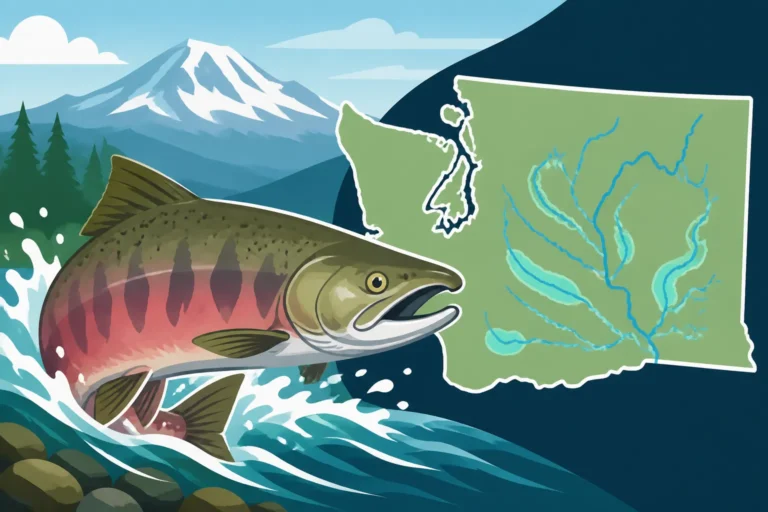
- Chinook Jacks: You might encounter jack Chinook in Puget Sound, the Columbia River, and its tributaries during the summer months, often a bit before the main body of the larger adult Chinook arrive. For example, during the When Chinook Salmon Run in Washington's Puget Sound, you might see jacks kicking off the season.
- Coho Jacks: Coho jacks are often present in Puget Sound and coastal rivers, sometimes showing up as early as July or August, preceding the main Coho runs which typically peak in September and October. This gives anglers a head start on the When Coho Salmon Run in Washington season.
Always check the specific regulations for the marine area or river you plan to fish. Seasons for salmon, including jacks, are highly managed and can change rapidly due to emergency rule adjustments based on run forecasts and actual returns. The Washington Sport Fishing Seasons and Emergency Closures is your go-to resource.
Gear and Techniques
You don't typically need specialized gear just for jacks; the same setups you'd use for regular salmon fishing will work perfectly.
- Light to Medium Salmon Rods: A 9-10.5 foot medium-action rod paired with a baitcasting or spinning reel spooled with 15-25 lb monofilament or braid is ideal. You can find excellent options for various budgets on platforms like Amazon, whether you're looking for a full rod and reel combo or individual components to build your preferred setup.
- Bait Fishing: Jacks respond well to baits like cured salmon roe (especially in rivers), herring, or anchovies. How to Fish Roe Bags for Salmon describes a highly effective technique. In saltwater, trolling with cut-plug herring or anchovies is often productive.
- Lures and Spinners: Small to medium-sized spoons, spinners, and plugs can also be effective. Flashy presentations mimicking baitfish often grab their attention. Look for reputable brands and read reviews on sites like Amazon to see what other Washington anglers are having success with.
- Drift Fishing: In rivers, drift fishing with a lead weight and a baited hook or an artificial presentation like a Corky and yarn can be very successful. Since jacks are smaller, they often hold in areas with slightly less current, making them accessible.
Bag and Possession Limits
This is where understanding "jack salmon" is absolutely critical. In Washington, unless specifically stated otherwise in the regulations, jack salmon count towards your daily bag limit for that species. They are considered mature adult salmon for regulatory purposes.
For example, if the daily limit for Chinook salmon is one fish, and you catch a jack Chinook, that's your one fish. You cannot keep a jack and then later keep a larger adult Chinook, unless the regulations explicitly differentiate between jacks and adults (which is rare, but always possible, so read the pamphlet). The "size limit" is often implicit: if it's a legal salmon, it counts. Always consult Understanding Washington's Daily Bag Limits by Species and the specific regulations for the water you are fishing. These details are often found in tables for Daily Limit for Chinook in Puget Sound or Daily Limit for Coho in Puget Sound.
A common scenario might be that you're fishing a river with a one-Chinook limit, and you catch a 24-inch jack. That's your fish. Knowing this distinction prevents accidental over-limits and ensures you're fishing legally. Never assume a smaller fish doesn't count.
The Thrill of the Fight
While jacks might not have the sheer power of a 30-pound Chinook, they are incredibly feisty for their size. Their smaller stature often translates to acrobatic jumps and spirited runs, especially on lighter tackle. They can provide consistent action when larger fish are scarce, making them a welcome sight for many anglers. They are also excellent eating fish, often having firm, bright orange meat, much like their larger relatives.
Fishing for jack salmon is a unique aspect of the Washington angling experience. By understanding what they are, why they return early, and how they fit into the regulations, you'll be well-prepared to target them and appreciate these spirited early-returning fish when they show up in your local waters. Just remember to grab your fishing license, check the rules, and perhaps pick up a new tackle box or some fresh line from Amazon before heading out!
Disclaimer
This article is for general informational purposes only and does not constitute professional advice. Laws, prices and regulations vary by location and change over time. Consult a qualified professional for guidance on your specific situation.