How to Drift Fish With Beads for Steelhead
There’s a unique thrill that comes with chasing steelhead in Washington’s pristine rivers. These powerful, elusive fish are a true test of an angler's skill and patience. But let’s be honest, sometimes it feels like they’re playing hide-and-seek, and we’re always "it." If you've found yourself frustrated by finicky steelhead, especially in clear water conditions where they seem to see every imperfection, you’re not alone. This comprehensive guide is dedicated to unlocking the mystery of bead fishing for steelhead, a technique that often proves to be the secret weapon when other methods fall short, giving you a distinct advantage on the water.
Understanding the Allure of Beads for Steelhead
Steelhead, being anadromous rainbow trout, spend a significant portion of their lives in the ocean before returning to freshwater to spawn. When they enter the river systems, their primary focus shifts, but they remain opportunistic feeders. This is where the magic of bead fishing truly comes into its own.
Why Beads Mimic Natural Steelhead Food Sources
Picture this: you're standing on the banks of a Washington river, perhaps the storied Cowlitz or the scenic Kalama, and the water is crystal clear. You know there are steelhead around, but they’re not aggressively chasing hardware or flies. What are they looking for? Often, it's sustenance in the form of eggs. Salmon and even other steelhead are constantly spawning, releasing countless eggs into the river system. These eggs drift naturally, becoming an easy, calorie-rich meal for hungry or even just curious steelhead.
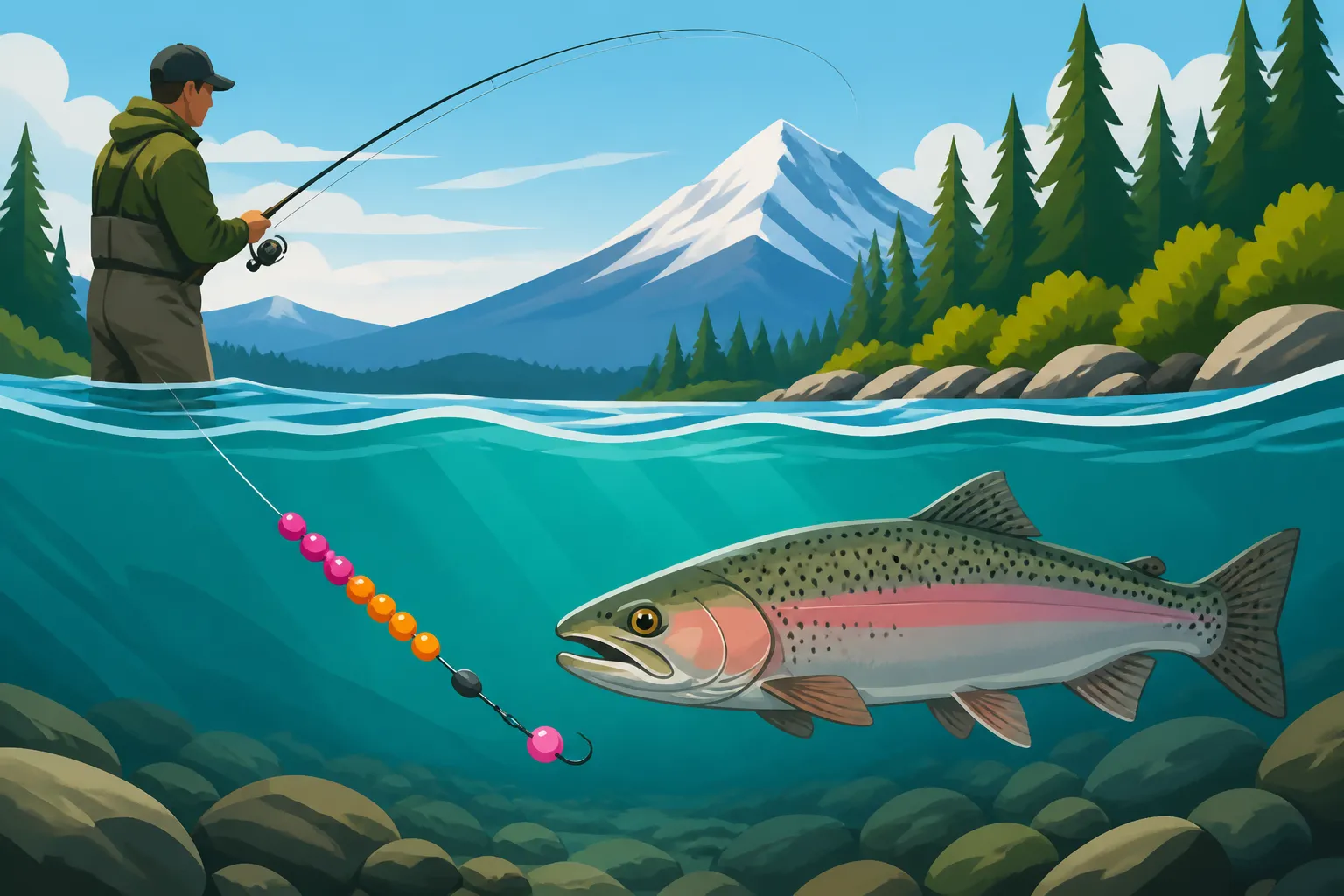
Beads, in their simplest form, are incredibly realistic imitations of these natural eggs. They come in a dazzling array of colors and sizes, designed to perfectly mimic the various stages and species of fish eggs. From the vibrant orange of fresh salmon roe to the pale, almost translucent look of a "dead" egg, there's a bead to match nearly every scenario. The buoyancy, subtle movement in the current, and often life-like translucency of beads make them incredibly convincing. When a steelhead sees a solitary bead drifting past, it often triggers an instinctive feeding response, or at the very least, enough curiosity for them to mouth it. This natural presentation is precisely what makes beads such a deadly effective choice, especially when fish are wary or the water is exceptionally clear.
When and Where Beads Shine Brightest
Bead fishing isn't just another technique to throw into the mix; it truly shines under specific conditions where other presentations often falter. Imagine a bright, sunny day on a low, clear river. The steelhead are hugging the bottom, spooky and unwilling to move far for a meal. This is prime bead territory. The subtle, natural drift of a bead doesn't alarm them, allowing for a precise presentation right into their strike zone.
Conversely, beads can also be effective in slightly off-color water. While visibility might be reduced, the natural profile and the way the bead bounces along the bottom, mimicking dislodged eggs, can still draw strikes. However, their true power is unleashed in those tough, clear-water scenarios that can humble even the most experienced angler. They are particularly effective in runs, pools, and tail-outs downstream of known spawning grounds, where real eggs would naturally drift. Rivers with strong hatchery programs or significant wild salmon runs often create a constant supply of eggs, making beads a go-to choice throughout the steelhead season. Before heading out, it’s always a good idea to check the current Washington Sport Fishing Seasons and Emergency Closures to ensure your target river is open and to be aware of any specific regulations, like those found in Wild Steelhead Release Rules on Washington's Olympic Peninsula Rivers, that might affect your gear or technique.
Essential Gear for Bead Fishing Success
Just like any specialized fishing technique, success with beads for steelhead hinges on having the right tools for the job. You're aiming for a delicate presentation, subtle strike detection, and enough power to land a hard-fighting steelhead.
Rod, Reel, and Line Selection for Sensitivity
The cornerstone of effective bead fishing is sensitivity. You need to feel every bump, every subtle tick, and definitely every gentle "take" from a steelhead. This means careful consideration of your rod, reel, and line.
- Rod: Look for a longer, lighter-action rod, typically in the 8'6" to 10'6" range. Many anglers prefer a medium-light or medium power rod with a moderate-fast action. The length helps you manage line on the drift, mend effectively, and keep your line off the water for a drag-free presentation. A sensitive tip is paramount for detecting those subtle strikes, while enough backbone ensures you can control a powerful fish. Graphite rods are often preferred for their lightweight feel and superior sensitivity.
- Reel: A smooth-operating spinning reel in the 2500-4000 series is ideal. It should balance well with your chosen rod. The key here is a reliable drag system that can handle sudden, powerful runs from a steelhead.
- Line: Your mainline can be 8-12 lb monofilament or braided line. Many anglers prefer braided line (like 15-20 lb test) for its incredible sensitivity and minimal stretch, which significantly enhances strike detection. If using braid, you’ll definitely want to use a fluorocarbon leader for stealth and abrasion resistance. A 6-10 lb test fluorocarbon leader is typically perfect for bead fishing, offering near invisibility in clear water. The no-stretch property of braid, when paired with a supple fluorocarbon leader, creates an almost telepathic connection to your bead. Remember that even when using a mobile app to display your license, Carrying Your Washington Fishing License: Paper, Phone or the MyWDFW App is essential, as is understanding all relevant Washington Fishing Regulations Every Angler Should Know.
Selecting the Right Beads and Components
This is where the artistry and nuance of bead fishing really come alive. The sheer variety of beads available can be overwhelming, but understanding the basics will set you up for success.
- Beads: Beads typically range from 6mm to 12mm in diameter. The "sweet spot" for steelhead is often 8mm to 10mm, mimicking the size of natural salmon or trout eggs. Colors are crucial and can vary wildly in effectiveness depending on water clarity, light conditions, and even the specific river you're fishing.
- Roe: Natural egg colors like peach, orange, and chartreuse are perennial favorites.
- Cerise: A brighter, almost pinkish-red, excellent for aggressive fish or slightly off-color water.
- Natural/Clear: More subtle colors, sometimes with a translucent quality, can be deadly in ultra-clear, low-light conditions, or for pressured fish.
- UV: Beads with UV properties can glow subtly underwater, making them more visible in deeper or darker water.
It's wise to carry a selection of sizes and colors, as what works one day might not work the next. Many anglers find excellent assortments of beads and rigging components on platforms like Amazon, making it easy to build a diverse tackle box.
- Bead Pegs/Stoppers: These tiny, often rubber or plastic, inserts are critical. They are used to secure the bead a short distance (typically 1-2 inches) above the hook, allowing the hook to swing freely beneath the bead. This free-swinging hook ensures a better hookup ratio and allows the bead to drift naturally without being hindered by the hook’s weight or position. Small toothpicks can also work in a pinch.
- Weights: The type and amount of weight depend on current speed and depth.
- Pencil Lead: Thin, malleable lead that can be cut to length. It's often rigged on a dropper line, allowing it to snag less on the bottom.
- Slinkies: A non-toxic alternative to pencil lead, these are usually fabric tubes filled with small lead shot. They are incredibly snag-resistant and drift very naturally.
- Split Shot: Small, round weights clamped directly onto the line. While effective, they can sometimes damage your line or get hung up more easily than other options.
The goal is just enough weight to get your bead ticking along the bottom without dragging excessively.
- Hooks: A sharp, strong, single barbless hook is essential, especially given Washington’s regulations requiring barbless hooks on many steelhead rivers. Sizes 1, 2, or 4 are common. Brands like Owner, Gamakatsu, and Mustad offer excellent quality. The Barbless Hook Requirements on Washington Rivers is a critical piece of information to be aware of before you even tie your first knot.
| Bead Size (mm) | Recommended Colors | Water Conditions | General Application |
|---|---|---|---|
| 6-8mm | Pale Orange, Clear, Light Pink | Low, Clear, Shallow | Finicky fish, low light, very clear water, smaller streams |
| 8-10mm | Chartreuse, Mottled Orange, Cerise | Moderate Clarity, Varied Depths | Standard conditions, good all-rounder, most common egg size |
| 10-12mm | Bright Orange, Dark Red, UV Pink | Off-color, Deeper, Faster | Aggressive fish, high water, deep pools, greater visibility |
Mastering the Drift Fishing Technique with Beads
Drift fishing with beads for steelhead is all about finesse, precision, and understanding how water moves. It's a method that truly connects you to the river.
Rigging Your Bead Setup Step-by-Step
Let's get down to the brass tacks of setting up your bead rig. A proper setup ensures a natural drift and maximizes your chances of a hookup.
- Mainline to Leader Connection: If you're using braided mainline, you'll need to attach a fluorocarbon leader. A double uni-knot or an FG knot are excellent choices for a strong, low-profile connection. Make this leader fairly long, anywhere from 4 to 8 feet, to allow for some separation from your main line and improve the natural drift.
- Adding the Weight (Slinky or Pencil Lead): This is usually attached to a dropper loop on your leader, or a small swivel below your mainline knot, creating a sacrificial point that can break away if snagged, saving your main rig. The dropper length is typically 6-12 inches.
- Attaching the Bead: Slide your chosen bead onto the leader above where your hook will be tied.
- Securing the Bead: This is a crucial step. Use a small bead peg or a piece of toothpick to wedge into the bead's hole, securing it about 1 to 2 inches above the hook. The goal is to keep the bead from sliding down onto the hook eye, allowing the hook to swing freely. This small gap is essential for maximizing the natural presentation and ensuring a good hookset.
- Tying on the Hook: Tie your barbless hook (size 1, 2, or 4) to the end of your leader using a strong knot like a snell knot or an improved clinch knot. Ensure the knot is secure and trimmed cleanly.
The entire rig should be designed to drift naturally. When fishing, you’ll typically be using techniques similar to traditional Drift Fishing for Steelhead in Washington Rivers, but with the added finesse that bead fishing demands.
Reading the Water and Executing the Perfect Drift
Identifying where steelhead hold is key, but executing a perfect, drag-free drift with your bead is what truly seals the deal.
- Reading the Water: Steelhead will hold in various river features:
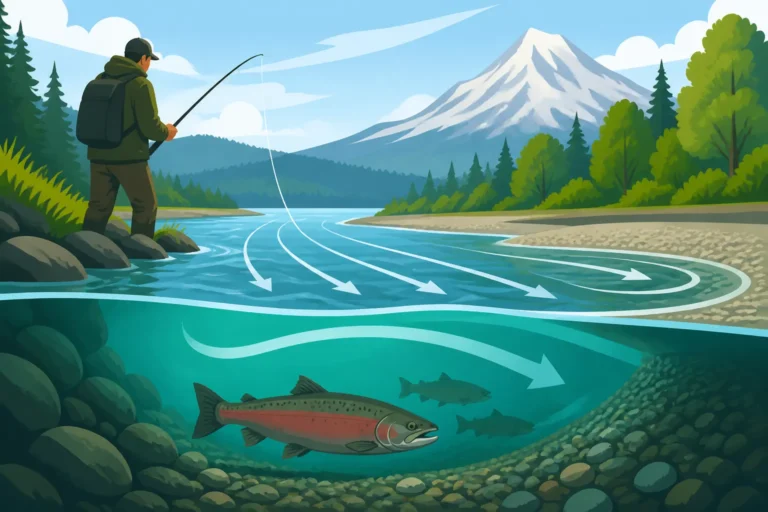
- Runs: Moderately deep, consistent current areas. Look for seams where faster water meets slower water.
- Pools: Deeper, slower-moving sections, often with structure like submerged logs or rocks. Fish will often hold in the head or tail-outs of pools.
- Tail-outs: The shallower, faster water at the end of a pool, often a prime travel lane and holding area.
- Current Seams: The lines where two different currents meet. Steelhead often sit just inside the slower water, waiting for food to drift by in the faster current. Learning to Read Water for Bank-Fishing Salmon can be a highly transferable skill for steelhead.
- Casting and Mending: Cast slightly upstream and across the current, aiming to land your bead in the desired seam or run. As your line hits the water and begins to drift, immediately begin mending your line. Mending involves lifting your rod tip and flipping a loop of line upstream to counteract the drag of the current on your mainline. This allows your bead to sink and drift at the same speed as the natural current, presenting it as genuinely as possible. The goal is a truly "free" drift, where your mainline isn't pulling your bead faster or slower than the water around it. You want the bead to be tumbling naturally along the bottom, just like a real egg.
Detecting Bites and Setting the Hook
This is often the most challenging, yet exhilarating, part of bead fishing. Steelhead bites on a bead are notoriously subtle. Unlike an aggressive salmon strike, a steelhead often simply "mouths" the bead or gently sucks it in.
- Detecting the Bite: Because the bites are so subtle, constant vigilance is required. You're looking for:
- A slight twitch or hesitation in your line.
- A sudden, unnatural stop in the drift.
- A feeling of weight, however slight, on your line that isn't a rock.
- Sometimes, your line might simply sag or move in an unexpected direction.
Your sensitive rod and low-stretch line become invaluable here. Keep your eyes on your line where it enters the water and also feel for any anomalies through your rod. If you're fishing with a float, watch for any subtle dips or stops that aren't consistent with the current.
- Setting the Hook: The moment you suspect a bite, even if it's just a gut feeling, set the hook! Don't hesitate. A swift, upward sweep of the rod, typically at a 45-degree angle, is usually sufficient. Because the takes are so soft, a quick, firm hookset is necessary to embed that barbless hook. Remember, you're often fishing for a powerful fish that has made an incredible journey, like the iconic Steelhead: Washington's Ocean-Run Rainbow Trout. These fish are fighters, and a solid hookset is the first step to landing one. It’s also important to understand the difference between these incredible fish and their resident cousins, which is why resources like Steelhead vs Rainbow Trout: What's the Difference? can be very informative.
Tips for Maximizing Your Steelhead Bead Fishing Success
Beyond the fundamental techniques, a few extra considerations can significantly boost your success rate and ensure you're a responsible angler.
Experimentation with Size, Color, and Depth
Steelhead, like all fish, can be incredibly fickle. What worked yesterday might not work today, and what works in one run might not work in the next. This is why experimentation is not just an option—it's a necessity.
- Size Matters: Carry a range of bead sizes. On a bright, clear day, a smaller 6mm or 8mm bead might be the ticket. If the water has a bit more color or flow, bumping up to a 10mm or even 12mm bead might provide the visibility needed to entice a strike.
- Color Palette: Don't be afraid to cycle through different colors. Start with natural roe colors, but if you're not getting bites, try something brighter like cerise or chartreuse. Conversely, if conditions are ultra-clear and sunny, a translucent or "ghost" bead might be more effective. The goal is to match the hatch, but also to provoke a reaction. Sometimes, a completely unnatural color is just what they haven't seen before. Many anglers swear by particular brands of beads that can be found on Amazon, often touting specific "secret" colors for their local waters.
- Depth Control: Your weight needs to be dialed in perfectly to ensure your bead is drifting right along the bottom without constantly snagging. Too little weight, and your bead drifts too high; too much, and you're getting hung up every other cast. Adjust your weight incrementally based on the current speed and depth of the water you're fishing. Having a selection of slinkies or pencil lead of varying weights is crucial. The ability to quickly change your weight setup can be the difference between a productive day and a frustrating one. Remember, a Washington Fishing License Guide for Nonresidents is a good read if you're visiting, and it covers some of the foundational knowledge for all anglers.
Ethical Considerations and Conservation
As anglers, we have a responsibility to protect the resources we cherish. Steelhead are particularly vulnerable, especially wild populations.
- Barbless Hooks: Always ensure you are using barbless hooks. In many Washington rivers, this is not just a recommendation but a strict regulation, especially when targeting Wild Steelhead vs Hatchery Steelhead in Washington. Check the specific rules for the river you're fishing before heading out.
- Catch and Release: Many steelhead fisheries, especially for wild fish, are strictly catch-and-release. If you hook a wild steelhead, minimize handling. Keep the fish in the water as much as possible, use wet hands if you must touch it, and revive it gently before release. These are powerful fish, and a strong, healthy release ensures they can continue their spawning journey. Learning to identify these magnificent fish is also part of being a responsible angler; checking out resources like How to Tell Wild Steelhead From Hatchery Steelhead can be incredibly helpful.
- Respecting Regulations: Always be aware of and follow all Washington Department of Fish and Wildlife (WDFW) regulations. These rules are in place to protect fish populations and ensure sustainable fishing for future generations. This includes understanding How Bag and Possession Limits Work in Washington and species-specific rules for fish like Salmon Possession Limit in Washington. You can easily check regulations through the Fish Washington App or the WDFW website. Being well-informed is a critical part of being an ethical angler. For those interested in where to find these magnificent fish, The Best Steelhead Rivers in Washington is a great starting point for planning your next trip.
Disclaimer
Fishing conditions and regulations in Washington State can change frequently and without prior notice due to emergency rule changes, in-season adjustments, and annual regulation updates. While we strive to provide accurate and up-to-date information, it is the angler's sole responsibility to consult the official Washington Department of Fish and Wildlife (WDFW) regulations before engaging in any fishing activity. Always check the latest WDFW Fishing Regulations pamphlet, emergency rule changes, and specific area rules for your chosen fishing location and species. Reliance on the information provided in this guide is at your own risk.