Dry Flies That Work on Washington’s Rivers
There’s nothing quite like the thrill of seeing a trout rise to a perfectly presented dry fly on a pristine Washington river. But let’s be honest, figuring out which dry flies actually work in our diverse waters, from the high mountain streams to the bigger lowland rivers, can feel like a guessing game sometimes. Many anglers get frustrated trying to match the hatch only to find their efforts futile. This comprehensive guide is here to cut through the confusion and equip you with the knowledge of the most effective dry flies for Washington’s rivers, helping you connect with more fish.
Understanding the Hatch: Key to Dry Fly Success on Washington Rivers
Before we dive into specific patterns, it's crucial to understand that dry fly fishing is fundamentally about imitation. You're trying to mimic an insect that the fish are actively feeding on at the surface. Washington's rivers, with their varied ecosystems and microclimates, host a wide array of aquatic insects, and knowing the basics of what's hatching (or might be hatching) is your first step to success. This isn't always about being a entomologist, but rather observing the water and having a few reliable patterns ready.
When you arrive at a river, take a moment. Are there bugs flying around? Are fish rising? If so, try to get a visual on the size, color, and silhouette of the natural insects. Sometimes it’s obvious—a flurry of caddis, or large mayflies drifting. Other times, it’s subtle, and you might just see a few small midges. Even if nothing seems to be hatching, fish still eat "attractor" patterns, which we'll cover, that don't imitate a specific bug but still look appealing. Remember, what works on a clear, gentle spring creek might be entirely different from what gets attention on a fast-flowing, slightly off-color river after a rain.
Seasonal Insect Activity and River Conditions
The seasons play a massive role in what insects are active and thus, which dry flies will be effective. Spring sees a surge of larger mayflies and caddis, especially once water temperatures start to climb above 45-50°F. Think of the excitement of a Grannom Caddis hatch on a river like the Yakima. As summer progresses, hatches become more diverse, with smaller mayflies, various caddis, and terrestrials like grasshoppers and ants becoming prevalent. This is often the prime time for Dry Fly Fishing Washington's Rivers in many areas.
Fall brings cooler water, which can trigger late-season caddis and mayfly hatches, but also sees the importance of egg-laying adults near salmon spawning grounds. Winter dry fly fishing is certainly tougher, but not impossible. Midge hatches can be surprisingly prolific on mild, sunny winter days, and savvy anglers who focus on these tiny insects can find success even when the air is crisp. Factors like water clarity, flow rates, and even barometric pressure all influence insect activity and how aggressively fish will feed on the surface. For instance, How Water Clarity Affects Steelhead Fishing can also apply to trout, as clearer water often means more selective fish on dry flies.
Reading the Rise: Clues from the Fish
Not all rises are created equal, and observing how a fish takes your fly can tell you a lot. A slow, deliberate sip usually indicates a fish leisurely taking an insect from the film, suggesting they might be feeding on emergers or spent adults. A splashy, aggressive rise often means they're chasing caddis or even terrestrials that have fallen into the water. If you see a fish jumping completely out of the water, they might be targeting caddis in flight, or simply feeding very aggressively.
Understanding these cues helps you not only choose the right fly, but also the right presentation. If they're sipping, you want a gentle, drag-free drift. If they're aggressive, a slight twitch or skate with a caddis pattern might be just the ticket. Sometimes, fish are rising but not taking your fly. This could mean your fly isn't the right size, color, or shape, or perhaps it's not drifting naturally enough. Don't be afraid to change your fly, adjust your leader, or alter your casting angle until you crack the code.
Essential Dry Fly Patterns for Washington Trout
When it comes to dry fly fishing for trout in Washington, there are a handful of patterns that consistently produce, regardless of the specific river. These aren't just pretty flies; they're designed to imitate common insects or simply trigger an aggressive response. Having a selection of these in various sizes and colors is a solid foundation for any angler hoping to fool a wary Rainbow Trout Fishing in Washington or a picky cutthroat.
Always carry a variety of sizes for each pattern. A size 16 mayfly might work perfectly one day, but the next, the fish could be locked onto tiny size 20s. Similarly, subtle variations in color can make all the difference. Many of these reliable patterns can be purchased at your local fly shop or easily ordered online from retailers like Amazon.
Mayfly Imitations
Mayflies are a cornerstone of a trout's diet, and their presence often brings fish to the surface. Effective mayfly patterns are generally tied to imitate the adult (dun) stage as it drifts downstream after hatching, or the spinner stage, which are spent adults that fall back to the water's surface after mating.
-
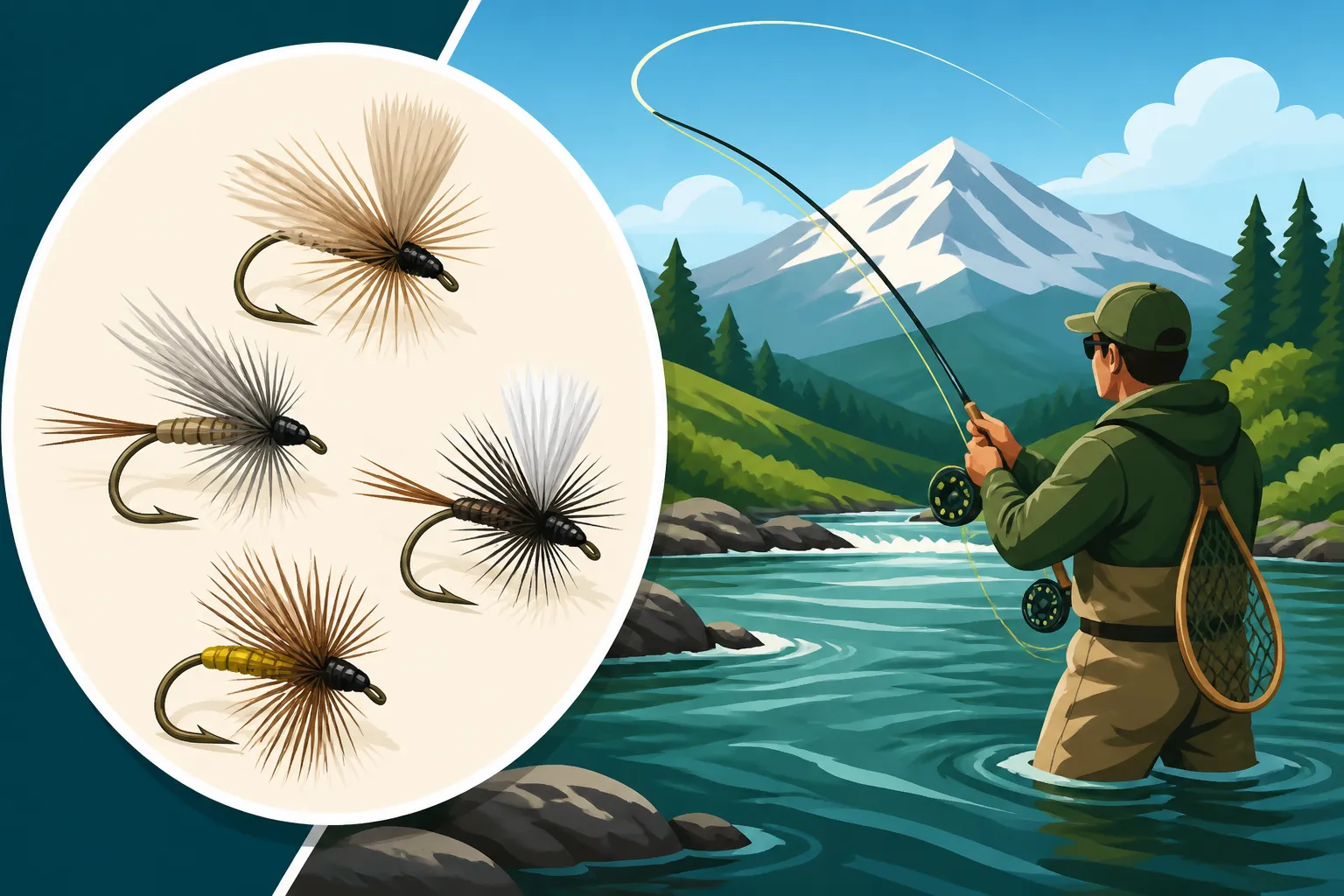
Parachute Adams: If you could only have one dry fly for Washington trout, the Parachute Adams would be a strong contender. Its sparse hackle and white parachute post make it incredibly versatile, mimicking a wide range of mayflies and even some small caddis. The parachute post also makes it highly visible on the water, a huge benefit for aging eyes or in tricky light. This fly works almost year-round on rivers like the Yakima and the Methow, particularly in sizes 12-18. It’s a great search pattern when you don't know what's hatching. You can often find a multi-pack of Parachute Adams in different sizes on Amazon, ensuring you're ready for varying conditions.
-
Blue-Winged Olive (BWO) Parachute: BWOs are small, dark olive mayflies that hatch prolifically, especially on overcast days or during cooler periods in spring and fall. They are one of the most important hatches on the Yakima River Fly Fishing for Wild Trout in Washington and many other systems. A BWO Parachute in sizes 16-22 is a must-have. When you see tiny, dark-bodied insects drifting and fish subtly rising, this is often the go-to. Their small size means you might need lighter tippet, like 6x or 7x, for a natural presentation.
-
Pale Morning Dun (PMD) Parachute: PMDs are another critical mayfly, typically a pale yellow or cream color, that hatch from late spring through summer. They are a staple on many Western rivers, including those in Washington. When trout are keying in on these, a PMD Parachute in sizes 14-18 can be deadly. Look for them on warmer, sunny days, often in the late morning or early afternoon. Their distinctive yellow bodies are a clear signal that it's time to tie one on.
Caddis Imitations
Caddisflies are often a more chaotic hatch than mayflies. They tend to emerge quickly, sometimes running or flying across the water's surface, and their egg-laying females will skitter and dive. This active behavior often triggers an aggressive response from trout.
-
Elk Hair Caddis: This is probably the most famous caddis imitation, and for good reason. Its buoyant elk hair wing and hackled body make it float well, even in riffles and faster currents. It's incredibly versatile, imitating a wide range of caddis species. The Elk Hair Caddis in various colors (tan, olive, black) and sizes (10-18) is essential. Try skating it slightly after the drift to imitate a natural caddis's frantic movements, especially if fish are making splashy rises. This tactic can often entice strikes from larger Cutthroat Trout in Washington's Rivers and Lakes that might otherwise ignore a dead-drifted fly.
-
Goddard Caddis: Similar in profile to the Elk Hair Caddis but tied with deer hair, the Goddard Caddis is incredibly buoyant and durable. It's a fantastic choice for faster water or when you need a fly that will stay afloat through multiple drifts. While not as common as the Elk Hair, it’s a reliable alternative, particularly in sizes 12-16. Its robust construction makes it a good option if you’re fishing a river with a lot of debris that might snag a less sturdy fly.
Terrestrial and Attractor Patterns
Sometimes, there's no visible hatch, or fish are just looking for a bigger, more appealing meal that accidentally fell into the water. This is where terrestrials (land-based insects) and attractor patterns shine. They often work best in summer and early fall when insects like grasshoppers, ants, and beetles are abundant.
-
Chubby Chernobyl: This big, bushy foam fly is a pure attractor. It can imitate a large grasshopper, beetle, or even a stonefly adult. Its large profile and buoyant foam make it excellent for prospecting wide stretches of river or as the lead fly in a dry-dropper rig. In Washington, particularly on Eastern rivers like the Yakima or when fishing the upper reaches of systems like the Wenatchee, a Chubby Chernobyl in sizes 6-12 can be incredibly effective during summer, especially along grassy banks. You can pick up a variety of colors and sizes of this versatile pattern from online shops like Amazon.
-
Stimulator: A classic Western attractor, the Stimulator can imitate a stonefly, caddis, or even a large adult mayfly. Its bushy hackle and deer hair wing give it excellent buoyancy and visibility. Available in various colors (yellow, orange, olive) and sizes (8-16), it’s a great pattern for high-stick nymphing in faster water or simply searching for aggressive trout. It's especially good on faster, rockier rivers where larger insects are common.
-
Ants and Beetles: Don't underestimate the power of small terrestrials. Foam ants and beetles in black or cinnamon, sizes 14-18, can be absolute killers on calm sections of river, especially during mid-day lulls in summer. Trout often key in on these tiny, high-protein snacks. A tiny black foam beetle drifting naturally through a slow pool can sometimes bring up the biggest fish when nothing else will.
| Dry Fly Pattern | Primary Imitation | Best Conditions/Time of Year | Common Sizes (US) | Notes |
|---|---|---|---|---|
| Parachute Adams | General Mayfly | Year-round, versatile | 12-20 | Great search pattern, visible post |
| BWO Parachute | Blue-Winged Olive | Spring/Fall, overcast days | 16-22 | Crucial for picky fish on tiny bugs |
| PMD Parachute | Pale Morning Dun | Late Spring/Summer, sunny days | 14-18 | Distinctive yellow body is key |
| Elk Hair Caddis | General Caddis | Spring/Summer/Fall, all conditions | 10-18 | Excellent for active fish, can be skated |
| Chubby Chernobyl | Hopper/Stonefly | Summer/Early Fall, attractor | 6-12 | High buoyancy, good for dry-dropper, big meal |
| Stimulator | Stonefly/Caddis | Summer/Fall, faster water | 8-16 | Durable, highly visible, multi-species |
| Foam Ant/Beetle | Terrestrial Insects | Summer, calm water, mid-day | 14-18 | Small but effective for selective trout |
Mastering the Presentation: Making Your Dry Fly Irresistible
Having the right fly is only half the battle; knowing how to present it naturally to a fish is equally, if not more, important. A perfectly tied fly presented poorly will rarely get a strike, whereas a slightly "off" pattern presented flawlessly can often seal the deal. This is where technique, patience, and observation truly come into play on Washington's diverse river systems.
Think about the trout's perspective: it's looking up, often through a rippled surface, at a tiny insect drifting directly into its feeding lane. Any unnatural drag on your line, any splashy cast, or any deviation from a natural drift will likely put the fish down. This is why developing a soft touch and an understanding of river currents is paramount when Fly Fishing Washington's Rivers and Lakes.
The Art of the Drag-Free Drift
A drag-free drift is the holy grail of dry fly fishing. It means your fly is floating at the same speed as the natural current, without being pulled or pushed unnaturally by your fly line or leader. Achieving this often requires strategic casting, mending, and an understanding of the multiple current seams in a river.
-
Upstream Casts: When possible, cast slightly upstream and across from your target. This gives your fly time to settle and allows you to "mend" your line (repositioning your fly line without moving the fly) to counteract conflicting currents. For example, if you're fishing a relatively calm eddy next to a faster current, you'll want to mend your line upstream into the faster current so that it doesn't drag your fly out of the eddy too quickly.
-
Reach Casts: A reach cast involves extending your rod arm upstream or downstream after the forward cast to position your line for a longer drag-free drift. This creates slack in the line between the fly and the rod tip, allowing the fly to float naturally. This is incredibly useful on tricky currents found in many of Washington's freestone rivers.
-
Stack Mends: For very complex currents, a stack mend involves throwing a bit of extra slack line right on top of the fly during the cast. This creates a small pile of line that slowly straightens out, extending the drag-free drift even further. This is a more advanced technique but invaluable for educated fish.
Leaders, Tippet, and Floatant: The Unsung Heroes
Your leader and tippet selection are crucial for a good dry fly presentation. Generally, you want a longer leader (9-12 feet) with a long, thin tippet section. This helps dissipate the energy of the cast, making your fly land softly, and keeps your fly line further away from the fish, which can spook them. The tippet size (e.g., 5x, 6x, 7x) should be matched to the size of your fly and the pickiness of the fish. Smaller flies and more wary fish require finer tippet.
Floatant is your best friend. Even the most buoyant dry fly will eventually get waterlogged, especially after catching a fish. Carry a quality liquid floatant or a "shake-and-bake" powder/gel combo. Apply it generously to your fly before casting and reapply as needed to ensure your fly rides high and proud on the water. A good floatant can be easily acquired from any fly shop or online from retailers like Amazon. Don't forget to dry your fly off between applications for best results.
When Dry Flies Might Not Be the Best Option
While dry fly fishing is incredibly rewarding, there are times when other techniques might be more effective. Being a versatile angler means knowing when to switch gears. For example, if you're out there and there are no fish rising, and no visible insects on the surface, or if the water is high and off-color after a significant rain, trout are far more likely to be feeding subsurface.
-
Subsurface Feeding: In cooler water temperatures (below 45-50°F), trout typically feed almost exclusively on nymphs, pupae, and larvae clinging to the riverbed. During these times, even if there's a sporadic hatch, fish might prefer to stay deep where the most food is. Techniques like Nymphing for Trout on Washington's Yakima River or even swinging streamers become much more productive.
-
Water Conditions: High, turbid water after heavy rains makes it difficult for fish to see small surface insects. In these conditions, fish will often move to the slower, calmer water near the banks and feed opportunistically on larger, more visible subsurface offerings. Conversely, extremely low and clear water, common during late summer, can make fish incredibly spooky. While dry flies can work, the fish are often so wary that your presentation needs to be absolutely perfect, making it a challenging endeavor. Knowing What to Check Before Every Washington Fishing Trip regarding water levels and clarity is key.
-
Target Species: While this guide focuses on trout, some species are simply not regular dry fly eaters. Steelhead, for example, are primarily anadromous rainbow trout that return to freshwater to spawn and generally don't feed actively in the river, although they can be enticed by swung flies or drifted eggs. Targeting them with dry flies is extremely rare, though a very aggressive How to Fish for Steelhead in Low, Clear Water might occasionally glance at a big skater pattern. For other species like bass or pike in lakes, dry flies can be effective, but those are different techniques altogether.
Disclaimer
Fishing regulations, seasons, and openings can change frequently in Washington State due to conservation efforts and unexpected events like emergency closures. Always consult the latest WDFW regulations pamphlet or their official website before heading out. This guide provides general information and best practices, but it is your responsibility to know and follow all current rules.