Flies That Work for Sea-Run Cutthroat in Puget Sound
For many fly anglers in Washington, the quest for sea-run cutthroat trout in the sprawling, ever-changing waters of Puget Sound can feel like chasing a ghost. These beautiful, enigmatic fish often leave even seasoned anglers scratching their heads, wondering which fly might finally unlock their secrets. It’s a challenge born from their migratory habits and diverse diet, but don’t despair – this guide is here to unravel the mystery, focusing on the flies that consistently prove effective for these incredible sport fish.
Understanding the Elusive Sea-Run Cutthroat in Puget Sound
Targeting sea-run cutthroat with a fly rod is a unique pursuit, quite different from chasing resident trout in a mountain lake or even salmon in a river. These fish are opportunists, constantly on the move, and their diet can shift dramatically based on season, tide, and location within the vast Puget Sound ecosystem. You can't just throw any old fly and hope for the best; understanding their behavior is the first step to choosing the right imitation.
Why Sea-Run Cutthroat Are Different
Unlike their resident cousins who spend their entire lives in freshwater, sea-run cutthroat embark on an incredible journey. They hatch in freshwater rivers and streams, spend their juvenile years there, and then migrate to the saltwater of Puget Sound to feed and grow. This brackish existence means they're exposed to a huge array of food sources, from tiny baitfish like anchovies and herring to various crustaceans, and even terrestrial insects that fall into the water near shorelines. This versatility in diet is what makes them so challenging, but also so rewarding, to target on the fly. They're wild, opportunistic predators, always on the lookout for an easy meal, whether it's an escaping minnow or a drifting shrimp.
Their sensitivity to light, water clarity, and tidal currents also plays a huge role. They tend to be more active feeders during low light conditions or when cloud cover provides a bit of overhead protection. Understanding these nuances, much like knowing what to look for when Reading Water for Bank-Fishing Salmon, is crucial for success with sea-run cutthroat.
Seasonal Movements and Forage
The "what they eat" question is intrinsically linked to "where they are" and "when." Puget Sound sea-runs don't stick to one menu item all year long, and a fly that crushed it in May might sit untouched in September.
- Spring (March-May): As temperatures begin to warm, cutthroat start moving more actively along the beaches and into estuaries. They're often targeting small baitfish that are themselves migrating or emerging, as well as an abundance of shrimp and amphipods that become more active. This is a prime time for baitfish imitations and smaller crustacean patterns.
- Summer (June-August): During the peak of summer, especially on bright days, cutthroat can become shyer and push into deeper water or seek refuge in the shade of docks and structures. However, early mornings and late evenings can be fantastic, and they'll often key in on juvenile salmon fry, small herring, and sand lance. This is also when some larger insect hatches might occur in estuaries, or terrestrials might fall from overhanging vegetation.
- Fall (September-November): This is often considered the prime season for dedicated sea-run cutthroat anglers. As salmon begin to return to rivers, cutthroat follow them into the estuaries, eager to feed on loose salmon eggs or the small baitfish that are also congregating. The cooler water also invigorates them, making them more aggressive. Baitfish patterns and egg imitations can be deadly.
- Winter (December-February): While tougher, winter fishing can still yield results, especially in estuaries and deeper pockets. They'll often feed on sculpins, residual baitfish, and various crustaceans. Larger, darker flies can sometimes be effective. Understanding these seasonal shifts helps you refine your fly box. If you're wondering what other fish are active, our guide on Washington Fishing Seasons: A Month-by-Month Guide can provide a broader context for the Puget Sound region.
Essential Fly Patterns for Puget Sound Sea-Run Cutthroat
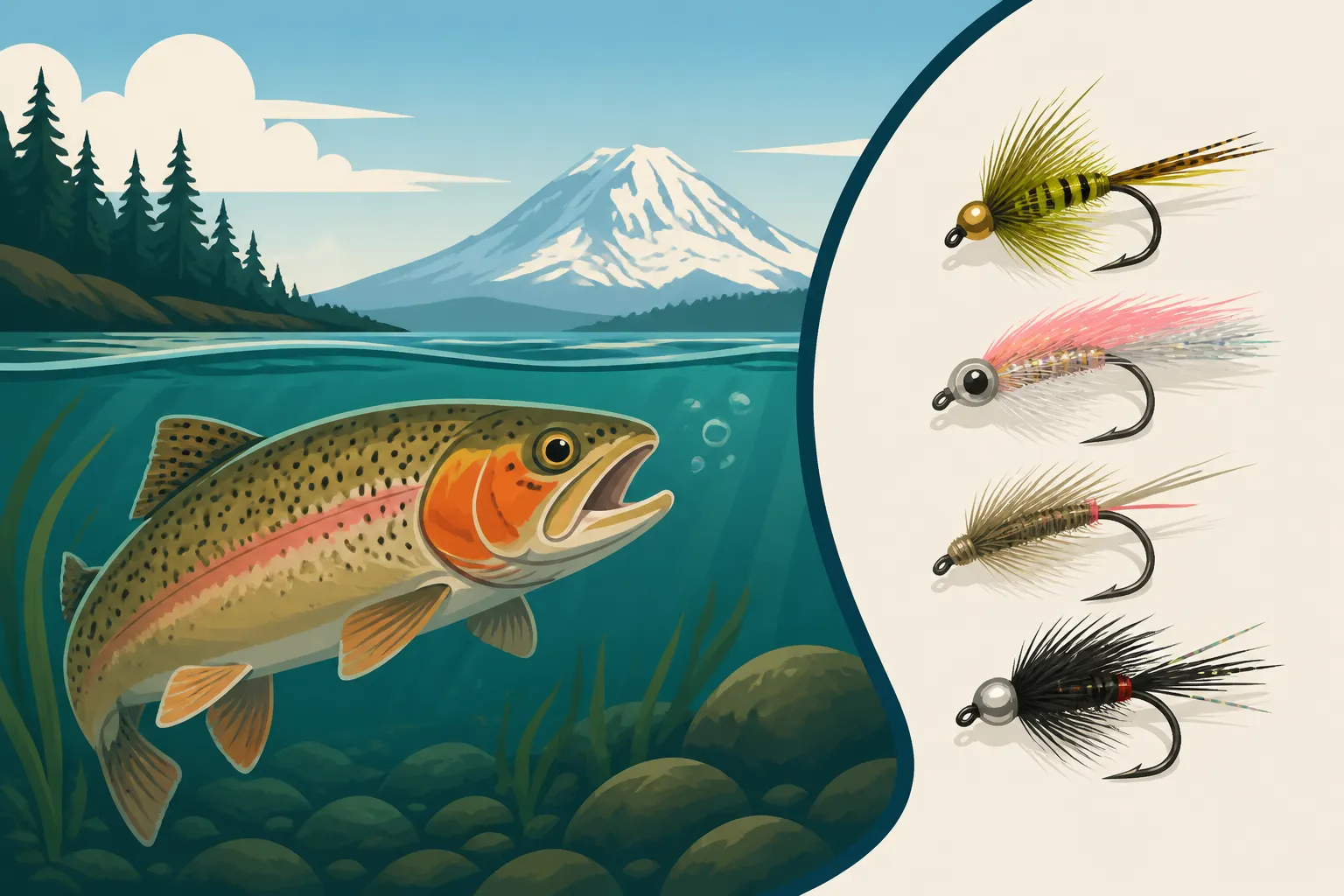
Now, let's talk about the flies themselves. Over the years, a few key categories have emerged as consistent producers for Puget Sound sea-run cutthroat. The beauty of these patterns lies in their versatility and their ability to mimic the various food sources these trout encounter. Many of these patterns, or the materials to tie them, can be found readily on platforms like Amazon, offering convenience for anglers looking to stock up.
Baitfish Imitations: The Go-To Patterns
When you think about sea-run cutthroat, often the first thing that comes to mind is them chasing down schools of baitfish. These are predatory fish, and small, silvery baitfish make up a significant portion of their diet. Hence, flies that effectively imitate these little morsels are absolute must-haves in your fly box.
- Clouser Minnow: If there's one fly pattern that has truly earned its stripes for sea-run cutthroat, it's the Clouser Minnow. Designed by Bob Clouser, this weighted pattern sinks quickly and has an irresistible jigging action when stripped. The key to its success is its ability to imitate almost any small baitfish—like herring, anchovies, or even sand lance—depending on the colors and size.
- Why it works: Its weighted eyes give it a "jigging" motion in the water, mimicking an injured or darting baitfish, which predatory cutthroat can't resist. The sparse dressing also creates a realistic silhouette without holding too much water, making it easy to cast.
- Colors and Sizes: For Puget Sound, stick to natural baitfish colors. Chartreuse and white, olive and white, blue and white, and gray and white are perennial favorites. Don't be afraid of all white or all black in low light. Sizes typically range from a size 4 down to a 1/0, with size 2 and 4 being very common. If you're on Amazon looking for tying materials, don't forget to grab some lead eyes or bead chain eyes in various weights to get that perfect sink rate.
- Presentation: A fast, erratic strip-pause retrieve often triggers strikes. Vary your retrieve until you find what the fish want on a given day.
- Lefty's Deceiver: Another saltwater classic, the Deceiver, created by Lefty Kreh, is famous for its profile and movement without being overly bulky. It excels at imitating larger baitfish or those that are slightly more elongated.
- Why it works: The long, flowing saddle hackle tails give it incredible action in the water, creating the illusion of a lively fish. It's less weighted than a Clouser, making it great for shallower water or when you want a slower, more deliberate retrieve.
- Colors and Sizes: Similar to the Clouser, natural baitfish colors are best: blue, green, grey, and olive over white. Sizes usually range from a 4 to a 2/0. Many local fly shops, and even Amazon, carry excellent Puget Sound variations of Lefty's Deceivers, often with some added flash.
- Presentation: A medium-paced strip, often with longer pulls than a Clouser, works well. It's a fantastic pattern for covering water along beach fronts.
- Surf Candy: This pattern, often tied with epoxy or UV resin, creates a very realistic, translucent baitfish profile. It’s particularly effective when cutthroat are feeding on tiny, almost clear baitfish like bay anchovies.
- Why it works: The epoxy body gives it a lifelike, slender profile and a hard finish that holds up to sharp cutthroat teeth. The translucency is key in clear water conditions.
- Colors and Sizes: Clear, light olive, or light blue are common. Sizes are typically smaller, from 6 to 2.
- Presentation: A short, quick strip often mimics the darting action of these small baitfish perfectly.
Crustacean and Insect Patterns for Specific Situations
While baitfish are often the main course, sea-run cutthroat are also opportunistic feeders on a variety of invertebrates. Ignoring these patterns can mean missing out on significant opportunities, especially in specific habitats or seasons.
- Shrimp Patterns (e.g., Veverka's Spawning Shrimp): Puget Sound is teeming with various shrimp species, and cutthroat readily feed on them, especially in estuaries and deeper pockets.
- Why it works: These flies imitate the many species of small shrimp that inhabit the tidelands and subtidal zones. Their vulnerable, scuttling motion can be irresistible.
- Colors and Sizes: Pink, orange, tan, and olive are productive colors. Keep sizes smaller, from 8 to 4, as you're often imitating smaller, bottom-dwelling shrimp.
- Presentation: A slow, erratic strip with pauses, often allowing the fly to sink near the bottom, will imitate a swimming or fleeing shrimp. This is often key for fishing around eelgrass beds or rocky structures.
- Small Crab Imitations: While less commonly used than shrimp or baitfish patterns, tiny crab patterns can be excellent in areas with significant crab populations, especially near rocky shorelines or during specific tidal cycles.
- Why it works: Small juvenile crabs are easy targets for larger cutthroat. A well-presented crab imitation can be deadly when cutthroat are cruising rocky bottoms.
- Colors and Sizes: Olive, tan, and brown in sizes 8 to 4 are good starting points.
- Presentation: A very slow crawl or hop along the bottom, mimicking a crab trying to hide, can draw strikes.
- Aquatic and Terrestrial Insect Patterns: Don't forget that sea-run cutthroat spend a significant portion of their lives in freshwater and often return to river mouths and estuaries. This means they are sometimes susceptible to insect patterns, particularly during hatches or when terrestrials are abundant.
- Why it works: In estuaries or near creek mouths, cutthroat will opportunistically feed on aquatic insects emerging from the freshwater, or terrestrial insects (like grasshoppers, ants, or beetles) that fall from overhanging vegetation.
- Patterns: Small Woolly Buggers (black or olive, size 8-6) can imitate anything from a leeches to larger nymphs. Sometimes, even a well-presented Elk Hair Caddis or stimulator pattern near a freshwater inflow can draw a strike if cutthroat are keying on surface insects.
- Presentation: For Woolly Buggers, a slow, jigging retrieve. For surface patterns, a dead drift or subtle twitch.
Attractor Patterns: When the Fish Are Finicky
Sometimes, cutthroat aren't actively keying in on a specific food source, or perhaps the water clarity isn't ideal, or they're just in a less aggressive mood. This is where attractor patterns come into play. These flies don't necessarily imitate one specific thing but instead rely on flash, movement, or contrasting colors to grab a fish's attention.
- Flash Flies/Flashy Streamers: These patterns are built around maximizing flash and movement, often incorporating a lot of Mylar, Krystal Flash, or other reflective materials.
- Why it works: The flash and movement catch the eye of curious or opportunistic cutthroat from a distance, even if they aren't actively feeding. They can often induce a "reaction strike."
- Patterns: Sparse, flashy patterns like a simple Flashabou streamer, typically in silver, pearl, chartreuse, or even a mix of colors. Sizes 6 to 2.
- Presentation: Often fished with a fast, erratic retrieve to maximize the flash and darting action.
- Bulky Streamers (e.g., Marabou patterns): While a Woolly Bugger could fit here too, larger marabou streamers offer a different profile and action, especially when you need a bit more bulk or a slower sink rate.
- Why it works: The marabou material offers incredible undulation and movement in the water, even with minimal retrieve, creating the illusion of a larger, struggling organism.
- Colors and Sizes: Black, olive, brown, or combinations. Sizes 6 to 2.
- Presentation: Slower strips with longer pauses, allowing the marabou to "breathe" in the water. This can be effective in off-color water or when fish are less aggressive.
Matching the Hatch (or Lack Thereof) in Puget Sound
The concept of "matching the hatch" in saltwater is a bit different from a trout stream. You're rarely seeing dense, predictable insect hatches that dictate fly choice. Instead, it's about observing the environment and making educated guesses about the predominant forage. This can be challenging, but a rewarding aspect of targeting Sea-Run Cutthroat in Washington's Puget Sound.
Reading the Water and Observing Forage
The best fly choice often comes from careful observation. Before you even make a cast, take a few minutes to watch the water.
- Look for visible baitfish: Are there schools of small baitfish dimpling the surface? Are they being chased? If so, match your fly's size and color to what you're seeing.
- Check the tide line: Look for signs of small crabs, shrimp, or even terrestrial insects washing up. This can give you clues as to what might be in the water column.
- Consider the habitat: If you're fishing a sandy beach with eelgrass, shrimp and sand lance are likely prevalent. If you're near a rocky point, sculpins and small crabs might be more common. Near a river mouth, juvenile salmon, salmon eggs, or even freshwater insects could be on the menu.
- Water clarity: In clear water, more realistic and subtle patterns like Surf Candies or sparsely tied Clousers might excel. In murkier or churned-up water, patterns with more flash or a bolder silhouette (like a chartreuse Clouser) can be more effective. Our article on How Water Clarity Affects Steelhead Fishing offers insights that are quite transferable here.
Gear and Presentation Considerations for Flies
Having the right flies is only half the battle; presenting them effectively is crucial.
- Rod and Line: A 6-weight or 7-weight fly rod is generally ideal for Puget Sound sea-run cutthroat. It offers enough backbone to cast weighted flies and handle the wind, yet is sensitive enough for these spirited fish. A fast-action rod helps with line speed. For line, a weight-forward floating line with an intermediate sink tip, or a full intermediate sink line, is often preferred. This allows your fly to get down a few feet, where cutthroat often cruise. For a deeper dive into gear, check out Rod and Reel You Need for Washington Puget Sound Salmon, as much of the advice on rod selection applies here.
- Leader Setup: A standard 9-foot tapered leader ending in 8-10 lb fluorocarbon tippet is a great starting point. Fluorocarbon is less visible in saltwater and more abrasion-resistant.
- Retrieval Techniques: This is key! Don't just cast and strip. Vary your retrieve. Short, quick strips mimic fleeing baitfish. Longer, slower strips with pauses imitate a cruising shrimp. Erratic strips with sudden stops can simulate an injured minnow. Experiment until you find what triggers a strike. Sometimes, even just letting the fly swing with the current can be effective, much like certain Fly Fishing Techniques for Winter Steelhead in Washington.
Practical Tips for Success with Cutthroat Flies
Beyond the flies themselves, there are several practical elements that significantly increase your chances of finding success with sea-run cutthroat in Puget Sound. These fish are creatures of habit and opportunity, and understanding their environment will lead to more hook-ups.
Tidal Influences and Best Fishing Times
Tides are everything when it comes to Puget Sound fishing, especially for species that cruise the shorelines like sea-run cutthroat. They dictate where the fish are, what they’re eating, and how accessible certain areas become.
- Incoming Tide: As the tide floods in, it brings fresh water, new food sources, and can push baitfish closer to shore. This is often a fantastic time to fish, especially the last half of the incoming tide leading up to the high slack. The rising water allows cutthroat to move into shallower areas to forage.
- High Slack Tide: This brief period of minimal current right at the peak of high tide can be excellent, particularly in areas with structure like rocks, docks, or kelp beds. Fish might be cruising slowly, looking for easy meals.
- Outgoing Tide: As the tide recedes, it can concentrate baitfish and other forage in bottlenecks or channels, making them easy targets for predatory fish. The first half of the outgoing tide can be very productive as fish are pushed out of shallow feeding grounds.
- Low Slack Tide: Similar to high slack, but often means fish are concentrated in deeper channels or farther offshore. This can be a challenging time for fly anglers on foot, but it’s a great time to observe the bottom structure that will be covered by water during the higher tides.
Generally, the periods around tide changes (incoming and outgoing) tend to be the most active, creating current that stirs up food and moves bait. Early mornings and late evenings, or overcast days, usually offer the best fishing, regardless of the tide. This aligns with principles for many predatory fish, as explored in our guide on the Best Time of Day to Fish for Salmon in Washington.
Where to Find Sea-Run Cutthroat with Flies
Knowing where to cast your carefully selected fly is just as important as the fly itself. Puget Sound offers a diverse range of habitats that sea-run cutthroat frequent.
- Beachfronts and Estuaries: These are classic cutthroat haunts. Look for sandy or gravel beaches that have a good mix of structure, like scattered rocks, eelgrass beds, or small feeder creeks. Estuaries, where freshwater rivers meet the saltwater, are magnets for cutthroat, particularly during salmon runs when they feed on eggs and juvenile fish.
- Tide Rips and Current Seams: Anywhere that current creates a distinct seam or rip, baitfish are often concentrated, and cutthroat won't be far behind. Points of land, islands, and areas where strong currents funnel through narrow passages are prime.
- Structure: Docks, pilings, submerged logs, and rock outcroppings all offer ambush points and cover for cutthroat. These areas also tend to hold baitfish and other forage. Cast parallel to these structures or work your fly close to them.
- Feeder Creek Mouths: During periods of freshwater runoff, especially in fall and winter, cutthroat will congregate at the mouths of small creeks and rivers that flow into the Sound. They’re often looking for salmon eggs or emerging insects.
- Eelgrass Beds: These underwater meadows are vital nurseries for baitfish and shrimp, making them excellent hunting grounds for cutthroat. Fan cast over and around the edges of eelgrass beds.
Remember, a Washington Fishing License Guide for Nonresidents and a Washington Freshwater License Cost or a Washington Saltwater License Cost are essential for fishing in these areas. You can often purchase these online or through the MyWDFW app, making it easy to carry your Carrying Your Washington Fishing License: Paper, Phone or the MyWDFW App on your phone.
A Quick Reference for Puget Sound Cutthroat Flies
Here's a handy table summarizing some of the top fly patterns and when to consider them for Puget Sound sea-run cutthroat:
| Fly Category | Common Patterns (Puget Sound Focus) | Primary Imitation | Ideal Conditions/Situations | Key Colors | Typical Sizes |
|---|---|---|---|---|---|
| Baitfish Patterns | Clouser Minnow, Lefty's Deceiver, Surf Candy | Herring, Anchovy, Sand Lance, Juvenile Salmon | All seasons, especially when baitfish are active; varied water depths. | Olive, Blue, Grey, Chartreuse (over white/silver) | #6 – 1/0 |
| Crustacean Patterns | Veverka's Spawning Shrimp, Puget Sound Crab Imitations | Shrimp, Amphipods, Small Crabs | Estuaries, eelgrass beds, rocky shorelines, slower currents. | Pink, Orange, Tan, Olive | #8 – #4 |
| Attractor Patterns | Flash Flies, Woolly Bugger, Marabou Streamers | General baitfish, leeches, "something that looks good to eat" | Low light, off-color water, when fish are sluggish or non-committal. | Black, Olive, Chartreuse, Silver, Pearl | #8 – #2 |
| Insect Patterns | Elk Hair Caddis, Stimulator, Ant Patterns | Caddis, Stoneflies, Ants, Beetles | Near freshwater creek mouths or rivers, calm surface. | Natural (Brown, Grey, Black) | #14 – #8 |
Remember, while this guide provides a solid foundation, the best way to become proficient at fly fishing for sea-run cutthroat is to get out there, experiment, and pay close attention to what the fish tell you. Good luck, and tight lines!
Disclaimer
Fishing regulations can change frequently. Always check the latest Washington Department of Fish and Wildlife (WDFW) regulations before heading out. This guide is for informational purposes only and does not supersede official WDFW rules.