How Far Offshore to Troll for Washington Albacore Tuna
One of the biggest questions for any angler dreaming of Washington's incredible albacore tuna fishery is, "Just how far out do I need to go?" It's a valid concern, often leading to wasted fuel and frustration if you're not in the right zone. This guide aims to clear up the mystery, helping you understand the typical offshore distances, what makes them change, and how to maximize your chances of finding these hard-fighting fish.
Chasing the Horizon: Why Albacore Tuna Are So Far Offshore in Washington
Let's be real, driving offshore for tuna isn't like heading to your local lake. You're committing to a journey, often leaving the sight of land far behind. There's a good reason for this, and it all comes down to the unique biology and feeding habits of albacore tuna. They aren't just out there for the scenery; they're following very specific environmental cues that define their habitat.
The Warm Water Connection
Albacore are often called "longfins" for their distinctively long pectoral fins, but they could just as easily be called "warm water seekers." These fish thrive in temperate waters, typically preferring sea surface temperatures ranging from the mid-50s to the low 70s Fahrenheit. The problem for us Washington anglers is that our nearshore waters, influenced by the cold upwelling of the Pacific Ocean, often don't meet these requirements, especially early in the season or during cooler years.
So, what happens? The tuna push further offshore, seeking the thermal breaks where warmer, open-ocean water meets the cooler, nutrient-rich coastal currents. These temperature "edges" are like highways for tuna, concentrating them along specific bands. If you're not out in that warmer water, you're simply not in the game. It's a cruel truth that many first-time tuna hopefuls learn the hard way: if your temperature gauge isn't reading what the albacore want, you might as well be trolling for unicorns.
Following the Food Chain
Another major driver for how far offshore albacore tuna roam is their relentless pursuit of food. These are apex predators with massive appetites, and they're constantly on the move, chasing baitfish schools like anchovies, sardines, squid, and even small mackerel. These baitfish, in turn, are concentrated in areas where nutrient-rich waters create plankton blooms, forming the base of the marine food web.
Often, these productive feeding grounds are found offshore, where oceanic currents interact with underwater topography, seamounts, and continental shelf breaks. These areas create upwellings and eddies that bring nutrients to the surface, attracting baitfish in massive numbers. When you see a flurry of bird activity or bait on your sonar screen miles offshore, it's a strong signal that you're in a productive zone, and the tuna are likely nearby, gorging themselves. It’s a complex dance of oceanography and predation, and to catch albacore, you've got to be willing to join that dance.
Pinpointing the "How Far Offshore" Sweet Spot for Washington Albacore
Alright, let's get down to brass tacks: how far out are we really talking here? The answer, as with most things in fishing, is "it depends." However, there are general ranges and crucial factors that will narrow down your search and save you a lot of fuel and frustration.
General Offshore Distances to Expect
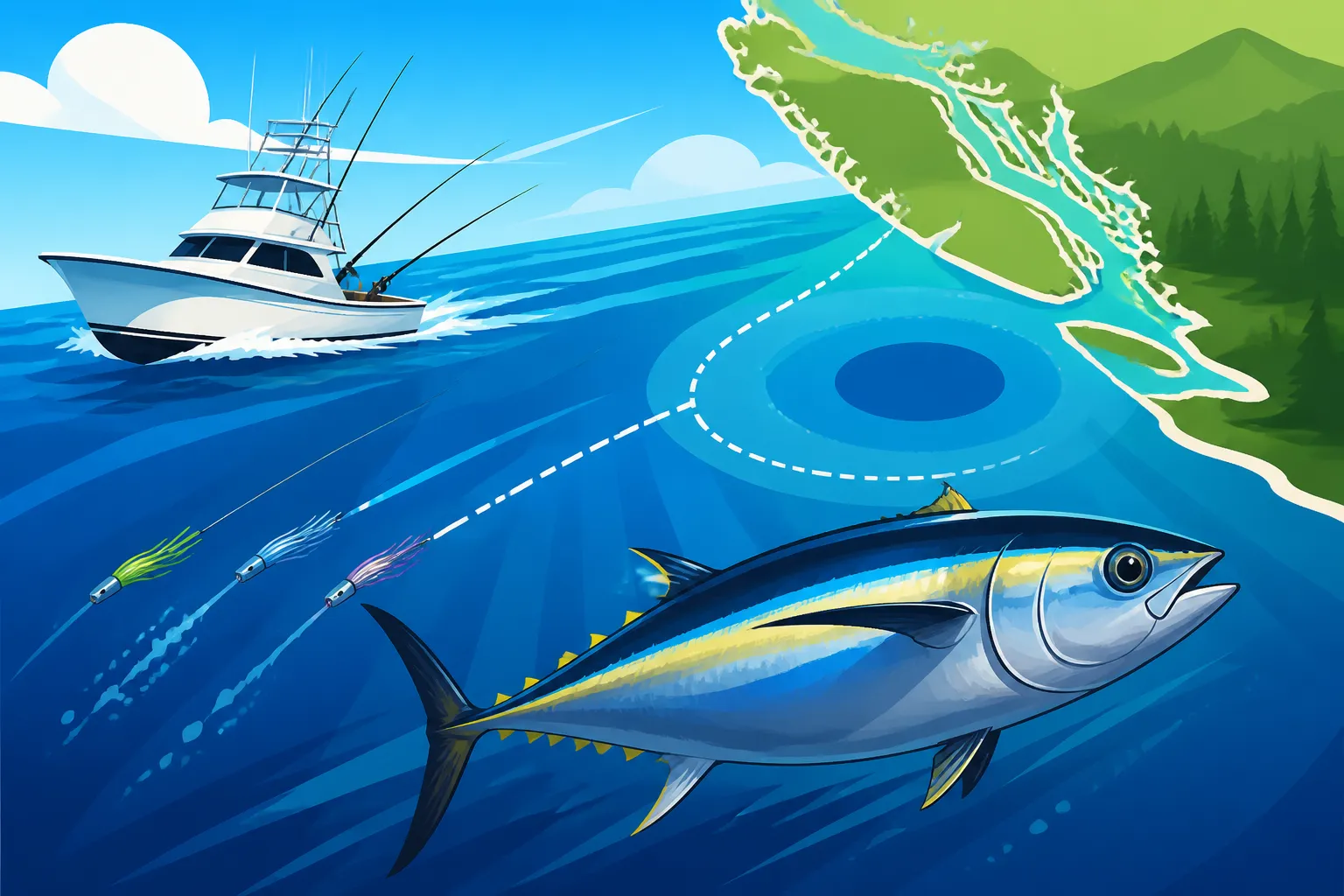
For Washington's albacore fishery, you're generally looking at making a significant run offshore. A typical day trip from ports like Westport, Ilwaco, or Neah Bay often involves runs of 25 to 60 nautical miles from the bar. Yes, you read that right – that's often one way. In some years, particularly when the warm water pushes closer to shore, you might find fish as "close" as 15-20 miles out. But those are the exception, not the rule. Conversely, during colder seasons or late in the summer, you could be running 70, 80, or even 100+ miles offshore to find the prime fishing grounds.
This is why offshore tuna fishing isn't for the faint of heart, or for boats not properly equipped for long runs and potentially rougher seas. Planning your fuel consumption is paramount, and having reliable marine electronics is non-negotiable. It’s not just about getting there; it's about getting there, fishing all day, and getting back safely.
The Influence of Washington's Dynamic Waters
Our stretch of the Pacific Coast is incredibly dynamic, with ocean conditions changing rapidly. Unlike some other fisheries that are fairly consistent year after year, Washington's albacore grounds can shift dramatically. A cold water eddy can pop up nearshore one week, pushing fish far out, only for a warm water filament to push in the next week, bringing them closer. This constant flux means that the "sweet spot" is rarely in the exact same place twice.
Factors like prevailing winds, major ocean currents like the California Current, and even distant weather patterns can influence how warm water masses move and where bait congregates. This means relying on real-time data and reports is crucial. You might be planning a trip to a spot 40 miles out, only to find out the fish have moved to a new zone 60 miles offshore due to a recent oceanographic shift. Staying informed through online resources, fishing forums, and talking to local tackle shops or charters is key to success. You wouldn't want to miss the opportunity to learn about Washington Fishing Seasons: A Month-by-Month Guide if you're planning your trips far in advance.
Key Indicators That Dictate Tuna's Offshore Location
Finding albacore isn't just about guessing a distance. It's about playing detective, using scientific data and keen observation to narrow down the vastness of the Pacific. These indicators are what experienced captains look for to decide their run for the day.
Water Temperature Breaks: Your Primary Clue
As mentioned, temperature is king for albacore. You're looking for significant temperature changes—often referred to as "breaks"—where the water transitions from cooler (say, 55°F) to warmer (60°F or more) over a relatively short distance. These breaks concentrate bait and, by extension, the tuna. Modern satellite imagery is an invaluable tool for identifying these thermal boundaries. Services that provide sea surface temperature (SST) charts, often showing chlorophyll and current data as well, are worth their weight in gold for serious tuna anglers.
Imagine looking at a chart showing a distinct line of 60-degree water pushing in from the southwest, meeting 56-degree water from the north. That's a highway for tuna. Your strategy often involves running out to that temperature break and then trolling along it, or just inside the warmer water, searching for signs of life. Sometimes, these breaks are visible as distinct color changes in the water, but often, your boat's temperature gauge is your best friend. Always keep an eye on it.
Finding the "Green Water" and Chlorophyll Lines
Beyond temperature, water clarity and nutrient content play a huge role. "Green water" typically indicates more nutrient-rich, often cooler, coastal water, which can be less appealing to albacore themselves but crucial for the bait they feed on. Offshore, you're usually looking for cleaner, bluer, warmer water. However, the edges where these different water types meet are often highly productive.
Chlorophyll charts, also available from satellite imagery, show concentrations of phytoplankton, the microscopic plants that form the base of the marine food web. High chlorophyll readings often correlate with areas where baitfish are abundant. Tuna will frequently be found near "chlorophyll breaks" – zones where high chlorophyll (green water) meets low chlorophyll (blue water). This convergence creates a feeding frenzy opportunity. Think of it as finding the grocery store in the middle of the ocean for the bait, and the tuna are right behind them.
Currents, Eddies, and Upwellings
The ocean isn't a static pond; it's a constantly moving system of currents, eddies, and upwellings. These hydrodynamic features are crucial for concentrating both bait and tuna.
- Currents: Major ocean currents, like the California Current that influences our coast, transport water masses with specific temperature and nutrient characteristics. Tuna will ride these currents.
- Eddies: These are swirling masses of water, like giant ocean whirlpools, which can be warm or cold. Warm water eddies can draw baitfish and tuna into their rotating embrace, creating a self-contained fishing ground. Cold water eddies can push fish away.
- Upwellings: Occur when deeper, cold, nutrient-rich water rises to the surface. While the upwelled water itself is too cold for tuna, the surge of nutrients fuels plankton blooms, which in turn attract baitfish. The edges of these upwelling zones, where the water warms up, can be highly productive.
Understanding these dynamic features is advanced tuna fishing, but even a basic awareness can dramatically improve your success. Fishing around areas where currents converge or where eddies are forming can significantly increase your odds. For more on how to interpret these dynamic ocean conditions, you might want to delve into resources on Reading the Washington Sport Fishing Regulations Pamphlet to understand how these dynamics can even influence regulation changes.
Bird Activity and Baitfish Schools
Once you're out in the general vicinity of the fish, your eyes become your most important tool. Look for working birds – diving shearwaters, gulls, and especially storm petrels – feeding on baitfish pushed to the surface by predatory tuna. A flock of birds actively diving is often a dead giveaway that tuna are below. These birds aren't just flying around; they're dining, and you should too!
Keep a close watch on your sonar (fishfinder) for dense schools of baitfish, often appearing as large, dense clouds or "balls" on your screen. If you find bait and the water temperature is right, you're very likely in the right place. Sometimes, you'll even see the tuna themselves breaking the surface, chasing bait, creating what's called a "boil." When that happens, get a jig in there, and hold on! Remember, patience and constant observation are key when scanning the vastness for these signs.
| Indicator | What to Look For | Why it Matters for Albacore | Typical Offshore Significance |
|---|---|---|---|
| Water Temperature | 58-68°F, sharp changes (thermal breaks) | Albacore prefer specific warm water ranges for comfort & feeding | Often 25-60+ miles offshore |
| Chlorophyll Levels | Edges where high chlorophyll (green) meets low (blue) | High chlorophyll indicates plankton/baitfish concentrations | Correlates with temperature breaks |
| Currents/Eddies | Visible current lines, swirling water, upwellings | Concentrate baitfish, create feeding zones | Can shift fish location significantly |
| Bird Activity | Diving birds (shearwaters, gulls, petrels) | Birds feeding on bait pushed up by tuna | Indicator you're in an active area |
| Baitfish on Sonar | Dense schools, "bait balls" | Tuna are actively feeding on these concentrations | Confirms active feeding grounds |
Essential Gear and Safety for Washington Offshore Tuna Trolling
Before you even think about how far offshore you're going, you need to ensure your boat, gear, and crew are ready for the challenge. Offshore tuna fishing in Washington is not a casual outing; it's a serious endeavor that demands preparation and respect for the ocean. For beginners, it might be worth considering a charter; understanding How to Book a Fishing Charter in Washington could be a great first step.
Setting Up Your Trolling Spread
Trolling is the name of the game for albacore. You'll want to deploy a "spread" of multiple lines, typically 6 to 8 rods, at various distances and depths behind the boat. This creates a wide swath of lures, mimicking a school of baitfish and increasing your chances of finding the fish.
- Rods and Reels: Heavy-duty conventional rods and reels (e.g., 30-50 lb class) spooled with braided line and a monofilament or fluorocarbon top shot are standard. You'll be fighting fish that can peel line rapidly. Many anglers prefer a medium-heavy rod that can handle the violent strikes and the relentless pulling power of an albacore.
- Lures: A variety of jigs, cedar plugs, and trolling feathers in various colors (typically green, blue, pink, purple, black) are effective. Some anglers swear by dark-colored jigs on overcast days and brighter ones on sunny days. Having a good selection of various sizes and weights, too, is key to matching the prevalent bait profile. You can find a huge array of options on
Amazonto stock your tackle box. - Trolling Speed: Generally, 6-9 knots is the sweet spot, but always experiment. Sometimes a slower speed can entice a bite, other times, a faster pull is what they want.
- Outriggers and Planers: These tools help spread your lines wide, preventing tangles and allowing you to cover more water. Downriggers are also useful for getting lures down to specific depths. If you're interested in more advanced techniques, reading about Trolling for Salmon in Washington's Puget Sound might give you some ideas, as some principles carry over.
Navigational Tools for Offshore Safety
Safety is paramount when venturing many miles offshore. Beyond knowing how far you're going, you need to be able to get there and back, and know what to do if things go sideways.
- GPS and Chartplotter: Absolutely essential for navigation, marking hot spots, and recording your trolling tracks. Redundancy is smart here—a primary unit and a backup handheld GPS is a good idea.
- VHF Radio: For communicating with other boats and, critically, for distress calls. A powerful fixed-mount VHF is preferable to a handheld, but a handheld is a great backup. Monitoring channel 16 is vital.
- Satellite Phone or InReach Device: Cell service drops out quickly once you're a few miles offshore. A satellite communication device for emergencies or even just checking in with loved ones is a wise investment for deep offshore trips.
- EPIRB/PLB: An Emergency Position Indicating Radio Beacon (EPIRB) or Personal Locator Beacon (PLB) could save your life if your boat sinks or you're separated from it. This is not optional for offshore fishing.
- Radar: Can be very useful for navigating in fog (which is common on the Washington coast) and for spotting other vessels, especially when running at night or in low visibility.
- First Aid Kit, Flares, Life Raft: Standard offshore safety gear that must be onboard and accessible. Ensure all your safety equipment is up to date and in working order.
Taking a trip for albacore tuna is an adventure, but a successful one relies heavily on preparation. While the "how far offshore" question sets the stage, understanding the why and being equipped for the journey are what truly make the difference between a frustrating search and a cooler full of fresh tuna. Many of these items, from first aid kits to advanced navigation devices, can be found readily on Amazon to help prepare for your offshore adventure.
Disclaimer
This article is for general informational purposes only and does not constitute professional advice. Laws, prices and regulations vary by location and change over time. Consult a qualified professional for guidance on your specific situation.