Anchoring and Drifting for Halibut
Few fishing endeavors in Washington offer the same blend of challenge, anticipation, and pure adrenaline as chasing Pacific halibut. These massive flatfish are legendary for their stubborn fights and delectable table fare, but pinning them down in the vastness of the Pacific Ocean can feel like finding a needle in a haystack. This guide is here to walk you through the two primary, tried-and-true methods for putting halibut in your boat: anchoring and drifting, helping you understand when and how to deploy each tactic for maximum success.
Washington's Halibut Hunting Grounds
Before you even think about dropping anchor or letting the current take you, you need to have a solid understanding of where these impressive fish like to hang out. Washington's Pacific coast and the Strait of Juan de Fuca offer prime halibut habitat, but success often comes down to knowing the specific spots and what makes them attractive to these powerful bottom-dwellers.
Key Marine Areas for Halibut
When it comes to targeting halibut in Washington, certain marine areas consistently produce. On the outer coast, Westport, Ilwaco (at the mouth of the Columbia River), and Neah Bay are absolute hotspots. These ports offer relatively quick access to the deep, productive waters where halibut thrive. For instance, out of Westport, you're looking at offshore banks and areas like the "Rock Pile" or specific deep-water contours that hold baitfish and, consequently, halibut. Similarly, Neah Bay provides direct access to the rich grounds of the Olympic Coast, where the continental shelf drops away dramatically. Further north, parts of the Strait of Juan de Fuca, particularly the deeper channels and ledges around areas like Port Angeles and Sekiu, can also yield excellent halibut, though these spots are often less consistent than the open ocean. Remember that regulations, including seasons and bag limits, can vary significantly between these areas, so always check the latest Washington Fishing Regulations Every Angler Should Know before heading out.
Understanding Halibut Habitat
Halibut are ambush predators, meaning they spend a lot of their time lying in wait on the bottom, often partially buried in the sand or mud, ready to pounce on unsuspecting prey. This tells us a lot about where to find them. They favor flat, sandy, or muddy bottoms, but they particularly like these features when they are adjacent to or interspersed with some kind of structure. Think ledges, underwater canyons, rock piles, or even artificial reefs. These structures create current breaks and provide hiding spots for smaller fish, which are exactly what halibut are looking for. Depths can vary, but generally, you'll be targeting them anywhere from 150 to 800 feet, sometimes even deeper, depending on the specific location and time of year. Understanding the bathymetry of your chosen area is crucial, and a good chart plotter or fish finder will be your best friend in locating these prime hunting grounds.
Reading Tides and Currents
Tides and currents play an enormous role in halibut fishing success, often more so than any other factor. Halibut, like many predatory fish, use currents to their advantage, positioning themselves to conserve energy while waiting for food to be delivered to them. Generally, the best halibut fishing occurs during periods of slower current, often around slack tide – either high or low. Strong currents can make it incredibly difficult to keep your bait on the bottom, where the halibut are, and can also make precise boat positioning a nightmare. During a strong current, your line might angle out so far that you can't feel a bite, and your bait will be far from the target zone. Savvy anglers meticulously plan their trips around these slack tide windows, ensuring they have ample time to fish effectively. Knowing when the Best Time of Year to Fish Westport for Halibut aligns with favorable tides is a secret many seasoned captains guard closely.
The Art of Anchoring for Halibut
Anchoring is a classic technique for targeting bottomfish, and for halibut, it allows for incredible precision, especially when you've pinpointed a specific, high-percentage spot. It's not for the faint of heart or the unprepared, but when conditions are right, it can be incredibly effective.
When to Drop Anchor
Anchoring is your go-to strategy when you've done your homework or have a proven "honey hole" in mind. Maybe you've marked a cluster of baitfish on your fishfinder near a specific drop-off, or perhaps last week's trip yielded a consistent bite on a small piece of structure. These are the times to drop anchor. It's particularly useful when you're fishing a relatively small, well-defined area that you believe holds fish, or when currents are a bit too strong for an effective drift but manageable enough to hold position. It also allows multiple anglers on board to fish simultaneously without worrying about lines tangling as much, each focusing their bait on that prime target. If you're looking to consistently hit a productive spot, especially if it's a very specific bump or ledge, anchoring gives you the pinpoint accuracy you need.
Anchoring Techniques and Rigging
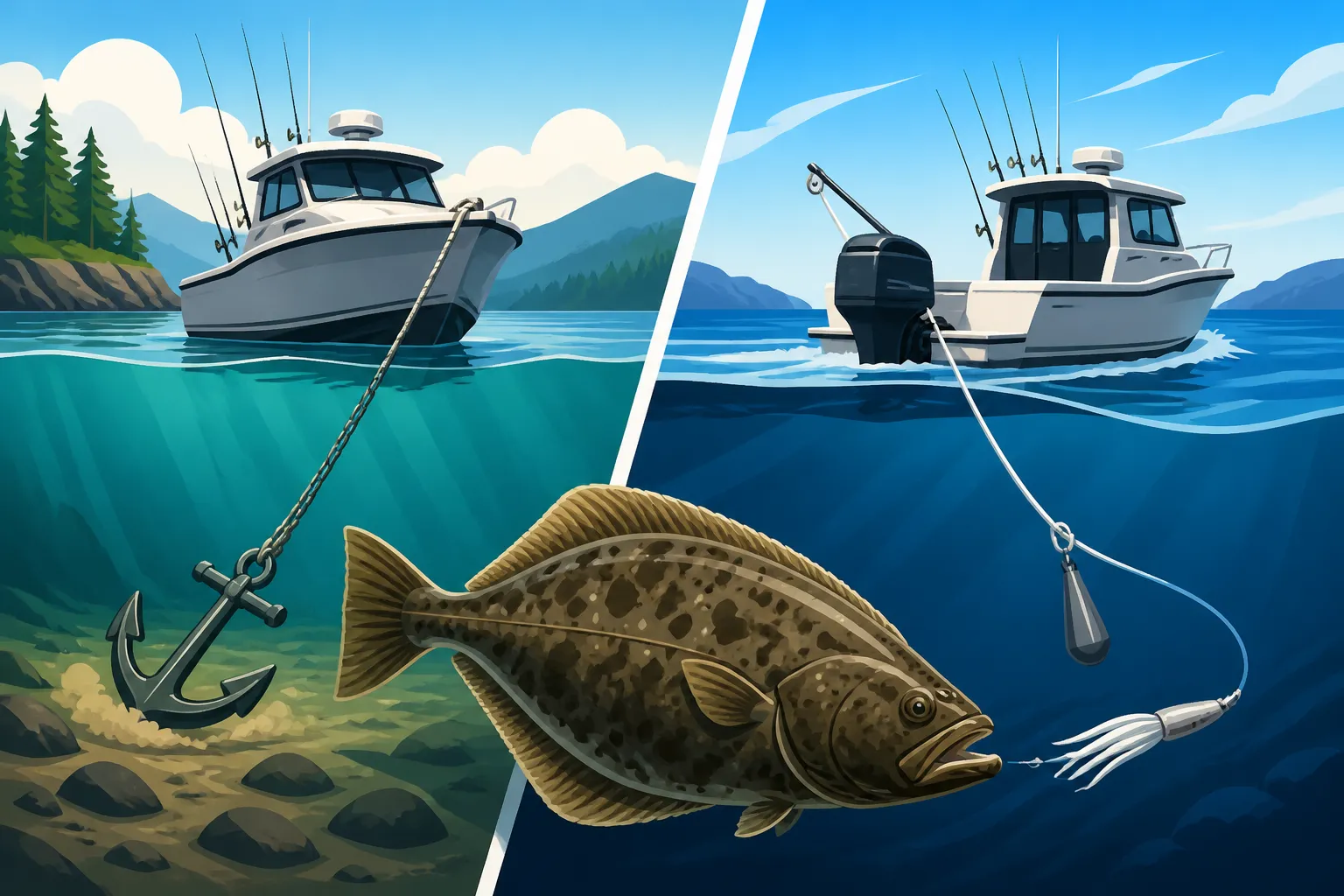
Successfully anchoring in deep water for halibut is a whole process in itself. First, you need sufficient anchor rode (rope or chain) – a general rule of thumb is a 7:1 scope, meaning for every 100 feet of depth, you need 700 feet of rode out. This helps the anchor dig in and hold. A heavy chain section is crucial between your anchor and rope to ensure the anchor sets properly on the bottom. Types of anchors like a Danforth or Claw (Bruce) are commonly used. Once you've located your spot, you'll want to motor past it, drop your anchor up-current, and then slowly drift back over your target, letting out rode as you go. This requires precision and teamwork if you're not solo.
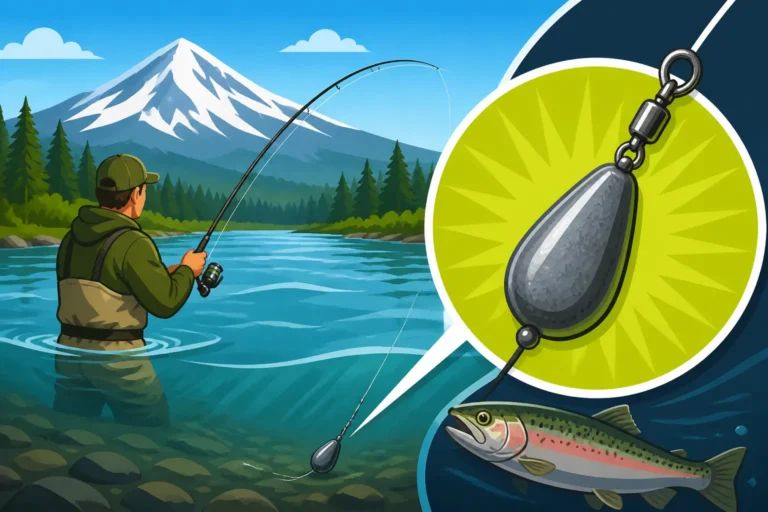
For rigging, halibut require heavy-duty tackle. We're talking stout rods, big reels spooled with 80-150 lb braided line, and robust terminal tackle. Many anglers opt for a spreader bar rig to keep their bait separate from their weight, or a simple sliding sinker rig. Your leader should be at least 150-200 lb mono or fluorocarbon to withstand the halibut's abrasive mouth and powerful runs. Hooks should be large, strong circle hooks – size 16/0 to 20/0 are common – and it's vital to know the Hook Limit for Washington Halibut Fishing to stay compliant. Bait is king: whole or cut herring, salmon heads, octopus, or even large artificial swimbaits work well. You can find robust pre-tied halibut rigs and heavy lead weights up to 48 ounces on Amazon, which can save you a lot of time rigging on the boat.
Pros and Cons of Anchoring
Anchoring certainly has its advantages, but it comes with challenges too.
Pros:
- Precision: You can repeatedly target a specific, productive spot. If you know exactly where a halibut is likely to be, anchoring puts your bait right in their face.
- Soak Time: Your bait stays in the strike zone longer, increasing the chances of a halibut finding and taking it, especially if they are less active.
- Multiple Rods: It's generally easier to manage several rods on a fixed position boat, reducing tangles and allowing for different bait presentations at varying depths from the same location.
- Comfort: If the water is calm enough, being anchored can be more stable than drifting, especially for those prone to seasickness.
Cons:
- Labor Intensive: Deploying and retrieving a heavy anchor in deep water is hard work. A good anchor winch helps, but even then, it's a chore. Many anglers use a buoyed anchor retrieval system, where you attach a buoy and float to your anchor line, motor past the anchor, and the boat's momentum pulls the anchor free.
- Limited Coverage: You're stuck in one spot. If the fish move, or if your spot isn't as hot as you thought, you have to go through the whole retrieval and redeployment process, which eats up valuable fishing time.
- Current Dependence: Strong currents can still pull your boat off the anchor or make it difficult to keep your bait vertical, even with immense weights. This is especially true in areas like the Columbia River Mouth.
- Risk of Fouling: Anchoring near rocky structure or wrecks increases the risk of getting your anchor permanently stuck, which is a costly and frustrating experience.
Mastering the Drift for Halibut
Drifting is often favored for its ability to cover broad swaths of water, actively searching for scattered fish or trying to find new productive areas. It's a more dynamic approach that lets the ocean do some of the work, but still requires significant boat control.
When to Let the Current Lead
Drifting is an excellent tactic when you're exploring a new area, trying to locate concentrations of halibut, or when the fish are scattered across a larger bottom contour rather than holding tightly to a specific piece of structure. It's also often the preferred method when currents are light to moderate, allowing for a controlled drift speed. If you've got a general idea of a productive depth range or a large flat, but haven't pinpointed a "sweet spot," drifting allows you to present your bait across a wide area, increasing your chances of encountering a fish. This can be particularly effective early in the season When Washington's Halibut Season Opens as halibut might be moving into different feeding grounds. Drifting also works well if you only have a few hours to fish and want to maximize your chances of crossing paths with a fish rather than committing to one spot.
Drifting Techniques and Rigging
Effective drifting for halibut involves more than just throwing out a line and letting the boat go. Controlling your drift speed and direction is paramount. Many anglers use a sea anchor or drogue – essentially a large parachute that deploys in the water – to slow down the boat's drift. This is crucial for keeping your lines vertical and allowing your bait to present naturally to the fish. A slower drift also gives halibut more time to react to your offering.
For rigging during a drift, the setup is similar to anchoring in terms of heavy gear, but presentation can vary. Many anglers use large leadhead jigs, often tipped with bait like herring or a strip of octopus, allowing them to actively jig the bait as the boat drifts. Spreader bars with heavy weights are also popular, keeping multiple baits or a single large bait close to the bottom. Some experienced anglers might even try various depths to see where the fish are holding in the water column. The general goal is to keep your bait within a few feet of the bottom, periodically letting out line to ensure you're still in the strike zone. Learning different Halibut Fishing Techniques for the Washington Coast will show you just how varied approaches can be when drifting. Remember to consult the latest regulations on How Many Halibut Fishing Days Washington Gets in 2026 as drift fishing often makes the most of limited opportunities.
Pros and Cons of Drifting
Just like anchoring, drifting has its own set of advantages and disadvantages that influence when and where it's best applied.
Pros:
- Coverage: Drifting allows you to cover a much larger area of the seabed, which is ideal for searching for scattered fish or exploring new, unproven grounds. This can increase your overall chances of encountering a halibut.
- Active Search: It's a more proactive way to fish. Instead of waiting for the fish to come to you, you're actively moving your bait through potential feeding zones.
- Natural Presentation: A properly controlled drift can make your bait or lure appear more natural, mimicking a wounded baitfish or a piece of food moving with the current.
- Less Labor: Generally, drifting requires less physical labor than repeatedly deploying and retrieving a heavy anchor.
Cons:
- Less Precision: While you cover more ground, you sacrifice pinpoint accuracy. If fish are holding on a very specific, small piece of structure, a drift might pass by it too quickly or too far off to get a bite.
- Boat Control Required: Maintaining a consistent drift speed and direction can be challenging, especially in varying winds and currents. This requires constant attention to your boat's position and the use of tools like a sea anchor or engine thrust.
- Tangle Potential: With multiple lines out, especially if the drift isn't perfectly controlled or if different anglers are using different weights, lines can easily tangle, leading to lost fishing time and frustration.
- Weather Dependent: Strong winds can make a controlled drift almost impossible, blowing your boat too fast or in an undesired direction, making it hard to keep your bait on the bottom.
Choosing Your Halibut Strategy
Deciding between anchoring and drifting isn't always clear-cut. Often, the most successful trips involve a thoughtful combination of both strategies, adapting to the conditions and the fish's behavior on any given day.
Factors Influencing Your Choice
Your decision to anchor or drift for halibut should be based on several critical factors you observe or predict before and during your trip.
Current Strength and Direction: This is perhaps the most significant factor. If the current is ripping, anchoring might be the only way to stay on a small, productive spot, assuming your anchor holds. If it's too strong for effective anchoring, or if you can't get enough scope, you might have to shift to drifting or even consider postponing your trip. Conversely, light, consistent currents are perfect for a controlled drift.
Bottom Structure: Is your target a distinct, small rock pile, or a large, flat sandy expanse? Precision anchoring is better for small structures, while drifting excels over large, featureless areas.
Fish Activity: Are you marking a dense school of bait and what appear to be halibut on your fish finder in one concentrated area? Anchor up! Are they scattered across a wide depth band? Start drifting.
Number of Anglers: More anglers on board often means anchoring is safer to prevent line tangles, especially for those less experienced. For a solo angler or a small group of experienced fishers, drifting can be highly productive.
Weather Conditions: Wind and swell can make both techniques difficult, but particularly affect drifting. High winds can make controlling your drift nearly impossible, and heavy swells can make anchoring uncomfortable and even dangerous if the boat is being tossed around. Always consult marine forecasts and remember to pack What to Bring on a Westport Halibut Trip, including proper foul-weather gear.
Known Spots vs. Exploration: If you're on a proven "honey hole," anchoring is usually the way to go. If you're trying to find new grounds or haven't had luck in your usual spots, drifting is your exploration tool.
Combining Approaches for Success
The most effective halibut anglers are often masters of adaptability. They don't stick rigidly to one technique. Instead, they let the conditions and the fish tell them what to do. A common and highly effective strategy is to start with a drift. This allows you to cover a lot of ground quickly, using your fish finder to mark any signs of life – bait balls, halibut marks, or promising structure. If you start getting consistent bites during your drift, or if you mark a significant concentration of fish, that's your cue to switch to anchoring. Pinpoint that spot, drop the anchor, and work it thoroughly.
Another smart combination is a "controlled drift" which can mimic some advantages of anchoring. By using a sea anchor or even intermittent engine thrust to slow your drift to a crawl, you can fish a smaller, more precise area for a longer duration, almost like a very slow anchor. This hybrid approach offers flexibility and can be deadly effective when fish are somewhat scattered but still prefer a slower presentation. The best way to learn these nuances is through experience, often gained by hiring a local guide or going on a charter out of a port like Westport or Neah Bay – they live and breathe these waters and can teach you invaluable lessons firsthand. For those planning a trip, considering a Best Port for a Halibut Charter often comes down to accessibility and historical success rates.
Here's a quick comparison of the two techniques:
| Feature | Anchoring for Halibut | Drifting for Halibut |
|---|---|---|
| Coverage | Limited, precise spot | Wide area, searching |
| Precision | High, targets specific structure | Low, covers general area |
| Currents | Best for strong currents (if anchor holds) | Best for light to moderate currents |
| Fish Behavior | Concentrated, holding on structure | Scattered, actively foraging |
| Effort | High (anchor deployment/retrieval) | Moderate (boat control, drogue management) |
| Tangle Risk | Lower with proper spacing | Higher, especially with multiple lines/anglers |
| Adaptability | Less, requires moving to change spots | More, constantly exploring new water |
| Application | Known "honey holes," distinct structure | Exploring new areas, finding scattered fish |
Essential Gear and Safety Considerations
Regardless of whether you choose to anchor or drift, being properly equipped and prioritizing safety are non-negotiable when targeting halibut in Washington's often challenging offshore waters. Pacific Halibut Fishing on the Washington Coast is a serious endeavor that demands respect for the ocean and its powerful inhabitants.
Must-Have Gear for Halibut Fishing
Halibut are big, strong fish, so your gear needs to be up to the task. Skimping on tackle is a surefire way to end up with a broken heart and an empty cooler.
- Rods and Reels: Think heavy-duty. Rods should be rated for 80-150 lb line, with a strong backbone to lift heavy weights and muscle big fish. Popular brands like Penn, Shimano, and Daiwa offer excellent conventional reels with high line capacity and powerful drags, often spooled with 80-100 lb braided line. Braided line is crucial for its sensitivity and lack of stretch in deep water.
- Terminal Tackle: You'll need an arsenal of heavy lead weights, ranging from 1 to 4 pounds, sometimes more in strong currents. Strong, large circle hooks (16/0 to 20/0) are essential for good hooksets and minimizing gut-hooking. Pre-tied halibut rigs, often incorporating spreader bars, glow beads, and hoochies, are widely available. Make sure to have plenty of heavy leader material (150-200 lb monofilament or fluorocarbon). A wide selection of these items can be found readily on Amazon, allowing you to stock up before your trip.
- Bait: Fresh is best! Whole herring, salmon heads, octopus, large squid, or even substantial chunks of rockfish make excellent halibut bait. Scent can also be a game-changer; various commercial halibut scents are available, and many anglers have their favorites, some of which are sold on Amazon.
- Fish Handling Tools: Once you hook a big halibut, the real work begins. A stout, long-handled gaff is a minimum. For truly large fish, a flying gaff or a harpoon can be vital for securing the fish alongside the boat. Don't forget a tail rope – once gaffed, a rope through the tail will help you control the fish as you bring it into the boat. A large cooler packed with plenty of ice is also critical for preserving your prized catch, ensuring it's in prime condition when you get it home to meet the Halibut Possession Limit in Washington.
Prioritizing Safety on the Open Ocean
Fishing offshore in Washington means dealing with potentially unpredictable weather, strong currents, and the inherent dangers of the ocean. Your safety, and the safety of everyone on board, must be your top priority.
- VHF Radio and GPS: A reliable VHF radio is essential for communication with other boats and the Coast Guard in an emergency. GPS and chartplotter are vital for navigation, marking your spots, and safely returning to port, especially if fog rolls in.
- Emergency Gear: Ensure you have enough PFDs (personal flotation devices) for everyone on board, flares, a first-aid kit, and a ditch bag with essential survival items. Consider an EPIRB (Emergency Position Indicating Radio Beacon) or PLB (Personal Locator Beacon) for added safety.
- Weather Monitoring: Always check the marine forecast before and during your trip. Conditions can change rapidly, and what starts as a calm morning can quickly turn into a rough, dangerous day. If in doubt, stay in port.
- Boat Maintenance: Your vessel needs to be in top condition. Check your fuel levels, battery, engine, and all safety equipment before every trip.
- Halibut Handling: Bringing a large, powerful halibut into the boat can be dangerous. They thrash violently, and a direct hit from a tail or head can cause serious injury. Always be prepared: have your gaff and tail rope ready, clear the deck of any tripping hazards, and have a plan for securing the fish quickly and safely. Many anglers opt to shoot larger halibut in the head with a powerful bang stick or handgun (where legal and safe) to dispatch them before bringing them onboard, reducing the risk of injury or damage to the boat. This ensures the fish is secured and handled efficiently.
Disclaimer
Fishing regulations, seasons, and limits in Washington are subject to change by the Washington Department of Fish and Wildlife (WDFW) throughout the year, sometimes with very little notice due to Emergency Rule Changes: Why Washington's Rules Shift Mid-Season. While we strive to provide the most accurate information, it is the angler's responsibility to check the latest WDFW regulations before heading out. Always carry your current fishing license and endorsements.