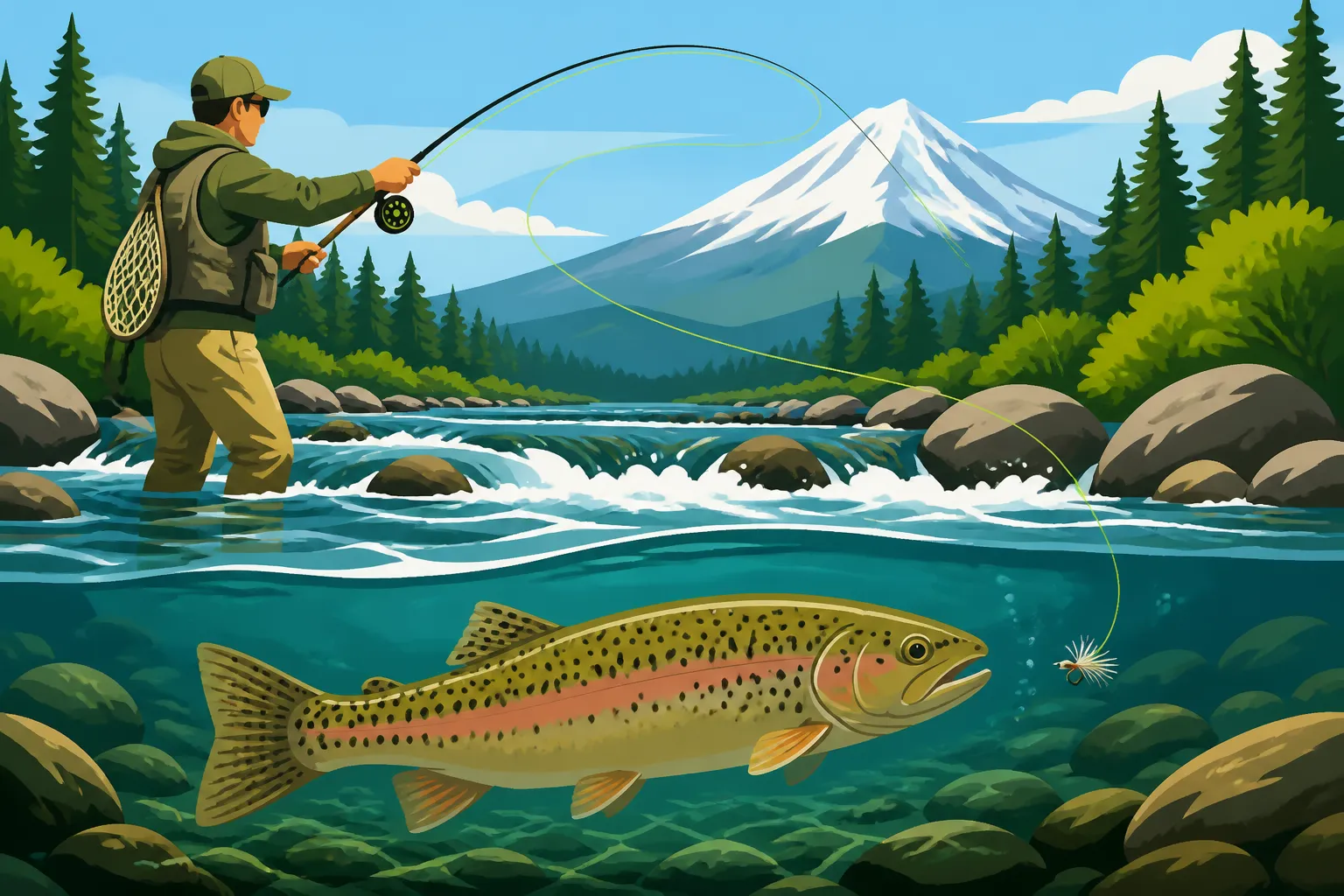
How to Fish a Riffle for Trout
There's nothing quite like the sound of a bubbling riffle on a Washington river or stream – it's the heartbeat of a trout stream, yet so many anglers just walk right past them, thinking they're too shallow or too fast. If you've ever felt intimidated by that broken water, or wondered if you're missing out on prime trout opportunities, this guide is for you. We're going to break down how to effectively fish a riffle for trout, turning that confusing churn into your new favorite fishing spot.
Understanding the Riffle: Why Trout Love Them
Before we even talk about casting, let's get a feel for what a riffle is and why it's such a magnet for trout. Think of it less like a chaotic mess and more like a bustling buffet and a protective hideout rolled into one. When you understand the science and the appeal, you'll naturally know how to approach it.
What Exactly is a Riffle?
In simple terms, a riffle is a shallow, often rocky section of a river or stream where the water flows faster and breaks over obstacles, creating that characteristic bubbling, oxygenated surface. It's the opposite of a slow, deep pool, and the contrast is key. The bed of a riffle is usually coarser, with gravel, pebbles, and small boulders, rather than fine silt. This uneven bottom and increased flow create pockets, seams, and eddies – subtle changes in current speed and depth that are invisible from afar but crucial to a trout. The increased surface disturbance also acts like a natural camouflage, breaking up shadows and making it harder for airborne predators to spot fish from above. It's a busy, active part of the river, teeming with life both visible and hidden.
Why Trout Hold in Riffles
Trout, particularly rainbow and cutthroat trout common in Washington, are opportunistic feeders and clever strategists. Riffles provide them with a trifecta of essentials: food, oxygen, and relative safety. Firstly, the fast, aerated water of a riffle is an insect factory. It's where aquatic insects, the primary diet of many trout, live, hatch, and are dislodged from the bottom. This means a constant conveyor belt of nymphs, larvae, and adult insects drifting downstream, making it an ideal feeding lane. Trout will often position themselves just out of the fastest current, in a softer seam or behind a rock, expending minimal energy while waiting for food to be delivered right to them.
Secondly, the turbulence of a riffle infuses the water with a high concentration of dissolved oxygen, which is vital for cold-water fish like trout, especially during warmer months when oxygen levels can drop in slower pools. This makes riffles attractive refuge areas. Lastly, the broken surface and shallow, rocky bottom offer natural cover. While the water might seem exposed to us, the disturbance on the surface makes it incredibly difficult for predatory birds like ospreys or even larger fish to pinpoint a trout. Plus, the numerous rocks and current breaks offer immediate places for a trout to dart into if danger approaches. So, when you look at a riffle, don't just see fast water; see a grocery store, an oxygen bar, and a fortified castle for a hungry trout.
Essential Gear for Riffle Fishing
You don't need a massive amount of specialized gear to fish riffles, but having the right tools for the job will make a huge difference in your success and enjoyment. We're talking about gear that allows for subtle presentations and confident wading. For anything you might need, whether it's a new pair of waders or a fresh spool of line, I often browse online at places like Amazon for competitive pricing and quick delivery.
Rod and Reel Setup
For trout fishing in Washington riffles, especially on smaller to medium-sized rivers and streams, lighter tackle is generally your best bet. You want a setup that offers sensitivity and control without being overkill.
- Spinning Setup: A light to medium-light action spinning rod, typically 6 to 7.5 feet in length, is ideal. This length provides good casting control in tight quarters often found near riffles and enough backbone to handle a spirited trout. A sensitive rod tip is crucial for detecting subtle bites in turbulent water. Pair this with a small, lightweight spinning reel (size 1000 or 2000) spooled with 4 to 6-pound test monofilament or fluorocarbon line. Monofilament offers a bit of stretch for shock absorption, while fluorocarbon is nearly invisible underwater and has less stretch for better bite detection. For scenarios where you're specifically targeting resident trout, a light setup allows for delicate presentations that won't spook fish.
- Fly Fishing Setup: If you're a fly angler, a 3-weight to 5-weight fly rod, 7.5 to 9 feet long, is perfect. A weight-forward floating line will be your go-to, allowing for easy casting and mending. A longer leader (9-12 feet) with a light tippet (3x-6x) is essential for stealth. For techniques like nymphing for trout on Washington's Yakima River or any of our other fantastic trout streams, a good fly rod makes all the difference.
Lures and Baits of Choice
The turbulent nature of riffles often favors baits and lures that can get down quickly and maintain a natural presentation.
- Spinning Lures: Small inline spinners (like Panther Martins or Mepps, sizes 0-2) are incredibly effective because their blades flash and vibrate, attracting trout even in aerated water. Small spoons (like Kastmasters or Little Cleos, 1/8 to 1/4 oz) also work well, mimicking small baitfish. Soft plastics, especially small grubs or worms rigged on a light jig head, can be deadly when bounced along the bottom.
- Natural Baits: Live worms, salmon eggs, or even a small piece of PowerBait drifted naturally through the current can be irresistible. Use just enough weight to get your bait to tumble along the bottom without snagging excessively. Often, a single split shot or two is all you need.
- Flies: For fly fishing, nymphs are king in riffles. Patterns like Hare's Ear, Pheasant Tail, Prince Nymph, and Caddis Larva are staples. Dead-drifting these under an indicator is a highly effective technique. During hatches, dry flies like Elk Hair Caddis or Parachute Adams can be excellent. Consider trying a dropper rig for trout to present multiple flies at different depths.
Wading Gear and Safety
Wading in riffles can be exhilarating, but safety should always come first.
- Waders and Boots: A good pair of breathable chest waders is a must, even in warmer weather, to protect you from cold water and allow you to cover more ground. Pair them with sturdy wading boots that have felt soles or studded rubber soles for maximum grip on slippery, algae-covered rocks. Don't cheap out here; a fall in fast water can be dangerous.
- Wading Staff: This is often overlooked but can be a lifesaver. A collapsible wading staff provides a crucial third point of contact with the bottom, helping you maintain balance and test water depth and footing before taking a step. Always be aware of the current's strength; if the water is pushing hard against your knees, it's often too dangerous to wade further. Remember, even seemingly benign rivers can have strong currents. Before venturing out, always check local conditions and understand Washington Fishing Regulations Every Angler Should Know.
Techniques for Successfully Fishing a Riffle
Now that you're geared up, let's talk about the actual fishing. This is where understanding the subtle nuances of water movement and trout behavior comes into play. Fishing a riffle isn't just about casting into the white water; it's about precision and presentation.
Reading the Water: Where to Cast
The most crucial skill for fishing riffles, and frankly, any river fishing, is learning to read the water. Just because the surface is broken doesn't mean it's all uniform. Trout will conserve energy, so they aren't usually sitting in the fastest, most turbulent part of the riffle. Instead, look for:
- Seams and Current Breaks: These are gold. A seam is where fast water meets slow water, creating a distinct line on the surface. Trout will often hold in the slower water, just off the seam, waiting for food to drift by in the faster current. Rocks, submerged logs, or even small changes in the bottom contour can create these current breaks.
- Pocket Water: These are small, calmer spots behind or next to larger rocks within the riffle. A single trout can comfortably hold in a pocket, darting out to grab food. These spots are prime targets.
- Head and Tail of the Riffle: The very top of the riffle, where the water first breaks, and the bottom, where the water slows down into a pool or run, are often fantastic spots. Trout will stage at the head of the riffle to intercept fresh food entering, and at the tail, they'll pick off insects that have been swept through.
- Depth Changes: Even subtle depressions or deeper channels within a shallow riffle can hold fish. Look for darker patches in the water, which often indicate deeper water. Reading Water for Bank-Fishing Salmon has some excellent principles that apply directly to finding trout in rivers, too.
Upstream vs. Downstream Approaches
How you approach the riffle, whether from upstream or downstream, largely dictates your presentation and success. Both have their merits depending on the situation.
-
Fishing Upstream (or Upstream-Angle): This is often considered the most effective method for trout in riffles, especially with baits and nymphs. The idea is to cast your lure or bait upstream of where you think the fish are holding, allowing it to drift naturally back towards you, mimicking a free-floating insect or baitfish. This approach offers a few key advantages:
- Stealth: Trout typically face upstream to intercept food. Approaching and casting from downstream or an upstream angle means your line and body are less likely to be seen by the fish. Your lure approaches from "behind" them, which is a natural presentation.
- Natural Drift: The current helps carry your offering naturally downstream. This is particularly crucial for fly fishing with nymphs and dry flies, where a "dead drift" (where the fly moves at the same speed as the current, with no drag) is paramount.
- Bite Detection: As your lure or bait drifts back towards you, any hesitation or abnormal movement of your line (or indicator, if fly fishing) can signal a bite. You're effectively working with the current to present your offering. When drift fishing with yarn and beads for Washington steelhead, anglers often use similar upstream presentations, and the principles translate perfectly to trout.
-
Fishing Downstream (or Downstream-Angle): While less common for drifting baits, fishing downstream can be effective with certain lures, especially spinners or spoons.
- Lure Control: Casting downstream and retrieving against the current allows your spinner blade to turn or your spoon to wobble enticingly as you work it back upstream. This can be great for covering water and triggering reactionary strikes.
- Swinging: For fly anglers, casting a wet fly or streamer downstream and allowing it to swing across the current can be very effective, mimicking a swimming baitfish or a struggling insect.
- Challenging Stealth: The main drawback is that you're casting "at" the fish, and your line can spook them, especially in clearer water. You need to be extra cautious with your approach and presentation. This method is often employed when covering large sections of water where actively searching for fish, rather than precise targeting, is the goal.
Presenting Your Lure or Bait
Once you've chosen your approach, how you present your offering is everything. Even the best lure won't work if it doesn't look natural.
-
Drifting (Baits & Nymphs): The goal here is a natural, drag-free drift. For bait, cast upstream and just a bit across the current. Allow your bait to tumble naturally along the bottom. Keep a slight bow in your line to absorb bumps and signal bites, but not so much that it creates drag and pulls your bait unnaturally. For nymphs, cast upstream, mend your line to remove slack, and let the fly drift with the current under an indicator. The indicator should move at the same speed as the foam on the surface. If you see it hesitate, dip, or suddenly accelerate, set the hook! The rod and reel you need for Washington Puget Sound salmon may be too heavy for delicate trout fishing, so make sure your gear is appropriately sized for the species and water.
-
Swinging (Spinners & Wet Flies): For spinners, cast slightly upstream and across, letting the spinner sink for a moment before beginning a slow, steady retrieve. Let the current impart most of the action to the blade. For wet flies or streamers, cast across or slightly downstream and let the fly swing naturally on a taut line, often creating a "V" wake. Strikes on the swing can be aggressive.
-
Retrieving (Spoons & Small Jigs): Cast upstream and retrieve at a speed that allows the lure to wobble and flash without riding too high in the water or dragging excessively. For jigs, a lift-and-drop retrieve, bouncing it along the bottom, can imitate a struggling insect or small baitfish. Maintain contact with your lure so you can feel the subtle "tick" of a bite. Remember, the goal is always to make your offering appear as natural and irresistible as possible to a hungry trout.
Common Mistakes and How to Avoid Them
Even experienced anglers can make mistakes in riffles. Being aware of these pitfalls can significantly improve your catch rate and overall experience. Fishing riffles effectively is a nuanced art, but thankfully, many common errors are easily corrected.
Rushing Through or Ignoring the Water
One of the biggest mistakes anglers make is treating riffles as "dead water" or simply rushing through them to get to a deeper pool. This often stems from a misconception that fish only hold in slow, deep areas. In reality, as we discussed, riffles are prime feeding zones.
- The Overlooked Opportunity: Many anglers will power through a riffle, casting only once or twice, or worse, not at all. This means they're literally walking over actively feeding trout. Even small, seemingly insignificant riffles can hold surprisingly large fish, especially if there's a good current seam or a larger rock providing a hidden pocket.
- Slow Down and Dissect: Instead, approach a riffle with the same methodical thought process you'd apply to a classic pool. Break it down into sections. Fish the head, then the pockets behind individual rocks, then the seams, and finally the tail out. Take your time, making multiple casts into promising areas from different angles. Sometimes, a trout needs to see your offering several times before deciding to strike. Consider what you might do when fishing from boats vs banks in different river sections; riffles often demand a bank-fishing mentality, even if you're wading.
Using Overly Heavy Tackle
While you might be targeting robust salmon or steelhead in other parts of Washington, using heavy gear for trout in riffles is often counterproductive.
- Spooking Fish: Heavy lines, large lures, and oversized split shot can create an unnatural disturbance in the water, easily spooking wary trout, especially in shallower, clearer riffles. The splash of a heavy weight or the flash of thick line can send fish scurrying.
- Unnatural Presentation: Thick line can also create excessive drag in the current, pulling your bait or fly unnaturally and making it look suspicious to a trout. A heavy lure might sink too fast and get snagged, or it won't drift at the same speed as the natural food items.
- The Right Balance: Stick to lighter lines (4-6 lb test mono/fluoro for spinning, 3x-6x tippet for fly fishing) and small, finesse-oriented lures or baits. Use just enough weight to get your offering down to the fish without hindering its natural drift. A small split shot or two is often plenty. A leader length for clear water steelhead in Washington, for example, might be 9-12 feet – applying that same principle of long, light leaders to trout fishing in clear riffles can greatly improve your success.
Forgetting Safety Precautions
Wading in moving water, especially over uneven, slick terrain, carries inherent risks that can be easy to forget when you're focused on the fish.
- Slippery Rocks: River rocks are notoriously slick due to algae growth. A misplaced step can lead to a fall, and in fast-moving water, this can quickly become dangerous. You could be swept downstream, hit your head, or damage your gear.
- Strong Currents: Riffles, by definition, have faster currents. Even shallow water can exert significant force, making it hard to maintain balance or regain your footing once you lose it. The current can be much stronger than it appears, particularly after heavy rains.
- Be Prepared: Always wear sturdy wading boots with good traction, and seriously consider carrying a wading staff for added stability. Move slowly and deliberately, testing each step before committing your weight. Avoid wading alone, especially in unfamiliar waters or during high flows. Know your limits – if the current feels too strong, or the footing too uncertain, it's always safer to find a different approach or fish from the bank. What to Pack for a Washington Fishing Road Trip should always include essential safety gear, no matter how short the trip.
By understanding what makes riffles so appealing to trout, using appropriate gear, mastering a few key techniques, and staying safe, you'll soon find yourself looking forward to that broken water, knowing it holds some of the best trout fishing opportunities Washington has to offer.
Disclaimer
This article is for general informational purposes only and does not constitute professional advice. Laws, prices and regulations vary by location and change over time. Consult a qualified professional for guidance on your specific situation.