Best Jig Color in Off-Color Water
Few things are more disheartening for an angler than arriving at your favorite Washington river or saltwater spot, only to find the water a muddy, turbid mess. That beautiful, clear flow you pictured is now a murky, off-color nightmare, leaving you wondering if your meticulously chosen lures are even visible. It's a common frustration, making you question every cast and every retrieve. But don't despair! This comprehensive guide will delve into the science and practical application of selecting the best jig colors to maximize your chances when facing those challenging, off-color water conditions in Washington.
Understanding Off-Color Water and Its Challenges
Before we dive into color theory, it’s crucial to understand what "off-color" water actually means and why it’s such a hurdle for us anglers, and more importantly, for the fish we're trying to catch. It’s not just about the water looking a bit cloudy; it fundamentally changes the underwater environment.
What Makes Water "Off-Color"?
"Off-color" is a pretty broad term, encompassing anything from a slight tea stain to an opaque chocolate milk consistency. In Washington, we see several common culprits that turn our waters murky:
- Heavy Rain and Runoff: This is probably the most frequent cause. Torrential downpours wash dirt, silt, and organic matter from the banks and surrounding landscape into rivers and lakes. Think of a major rain event on the Cowlitz River or the Skykomish River; the water can go from a beautiful green to a soupy brown almost overnight.
- Glacial Melt: Many of Washington's iconic rivers, particularly those originating from the Cascades or Olympics, are fed by glaciers. During warmer months, increased glacial melt can introduce a fine, milky sediment into the water, giving it a distinctive turquoise or light grey hue. This "glacial flour" significantly reduces visibility, even if it doesn't look as "dirty" as rain runoff. The Skagit and Sauk rivers are prime examples of this phenomenon.
- Algae Blooms: In lakes and sometimes slower-moving river sections, algae can proliferate, especially in warmer temperatures with nutrient runoff. This gives the water a greenish, pea-soup appearance, again, drastically cutting down on visibility.
- Tidal Stirring and Sediment: In saltwater environments like Puget Sound, strong tides and currents can stir up bottom sediments, especially in shallower bays or areas with soft mud and sand. This can make the water milky or brown, particularly after a strong blow or king tide.
Each of these conditions reduces light penetration and scattering, directly impacting how fish see, or don't see, your lure.
Why Visibility Matters for Fish
Just like us, most fish are highly visual predators, especially species like salmon, steelhead, and trout that hunt by sight. They use their eyes to spot prey, avoid predators, and navigate their environment. When the water turns murky, their primary sense for hunting is severely hampered.
Imagine trying to find a specific object in a dark, foggy room. It's difficult, right? Fish face a similar challenge. They can't see the subtle movements or colors of a natural baitfish, let alone your artificial lure, from a distance. This means they rely more on other senses – vibration, scent, and lateral line detection – to locate food. Our job as anglers, then, is to choose jigs that compensate for this reduced visibility and appeal to these other senses, or at least create enough of a visual signature to be noticed in the murk.
The Frustration of Fishing in Murky Conditions
It's completely understandable to feel a pang of frustration when the water's clarity drops. You've prepped your gear, checked the tides, and mentally rehearsed your perfect cast, only to be met with a river that looks like chocolate milk. You start to doubt your tackle, your spot, even your very presence on the water. Will anything even see my jig down there? Is it worth staying? This feeling is universal, but it doesn't have to mean a wasted trip. With the right approach and the right jig colors, you can still turn a challenging day into a productive one. It's all about making your presentation as irresistible as possible, even when Mother Nature throws a curveball.
The Science Behind Jig Color Selection in Murky Water
Choosing a jig isn't just about picking a color you like; there's some interesting science at play, especially when the water is off-color. Understanding how light behaves underwater and how fish perceive it can give you a real edge.
Light Penetration and the Disappearing Act of Colors
The biggest challenge in murky water is light penetration. When water is full of suspended particles—silt, algae, organic matter—it absorbs and scatters light much more effectively than clear water. This means less light reaches deeper depths, and the light that does penetrate gets distorted.
Different colors on the visible spectrum behave differently in water. Reds are the first to disappear, followed by oranges, yellows, greens, and then blues and violets. In turbid water, this effect is greatly accelerated. What looks like a vibrant red jig in your hand might appear dark brown or even black just a few feet underwater in heavily stained conditions. This "disappearing act" is why traditional wisdom often suggests bright or dark colors for murky water. It's not necessarily that fish prefer these colors, but rather that these colors are the ones that either maintain some level of visibility or create a strong enough contrast to be seen.
Vibration and Scent: Beyond Visual Appeal
While this guide focuses on color, it's crucial to remember that in off-color water, color is only one piece of the puzzle. When fish can't see well, they rely heavily on their other senses.
- Vibration: Fish possess a highly developed lateral line system, a series of sensory pores along their flanks, which allows them to detect subtle pressure changes and vibrations in the water. This is how they sense the movement of prey or predators, even in total darkness. A jig's action, its size, and the materials it's made from all contribute to the vibrations it emits. A larger jig, or one with a more erratic or pronounced action, will displace more water and create a stronger vibration signature, making it easier for fish to detect in murky conditions.
- Scent: The olfactory system of fish is incredibly keen. Many species, particularly salmon and steelhead, can detect minute concentrations of chemicals in the water. Adding a natural or artificial scent to your jig can make a profound difference when visibility is low. This provides an additional, non-visual attractant that can draw fish in from a greater distance. Think of Pro-Cure or Mike's scents – they're a common addition to jigs and baits in Washington. For more information on what's allowed, you might want to check out What a Bait Ban Actually Restricts in Washington.
Combining a good color choice with strong vibration and an enticing scent profile creates a multi-sensory attack that significantly increases your chances of a strike in challenging conditions.
How Fish Perceive Color in Low Light
It's a common misconception that fish are colorblind or see the world in black and white. Most fish species have some form of color vision, though it varies widely. Many predatory fish, including salmon and steelhead, have both rods (for low light vision) and cones (for color vision) in their eyes, much like humans. Some species even have cones sensitive to ultraviolet (UV) light, which can penetrate water differently than visible light.
In low light or turbid water, the cones—our color detectors—become less effective. However, the rods—our low-light receptors—take over, enhancing sensitivity to movement and contrast. This is why colors that provide high contrast against the murky background or are especially vibrant in the remaining light spectrum tend to perform better. UV-enhanced lures can also be effective because UV light, though invisible to us, can still be perceived by some fish species in conditions where visible light is greatly reduced. It’s like giving your lure a secret glow that only the fish can see!
Go-To Jig Colors for Challenging Washington Waters
When the river's running high and silty, or Puget Sound looks more like coffee than ocean, selecting the right jig color can feel like a shot in the dark. But trust me, there are certain hues that consistently outperform others in off-color water. It's about making your presentation impossible to ignore.
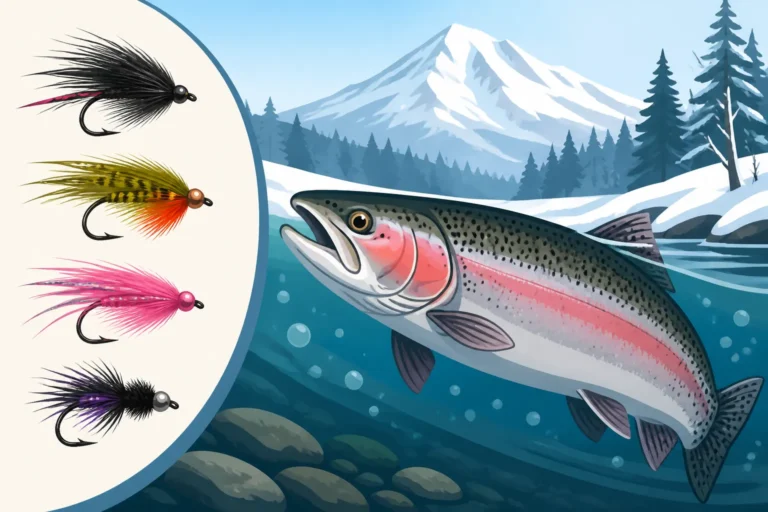
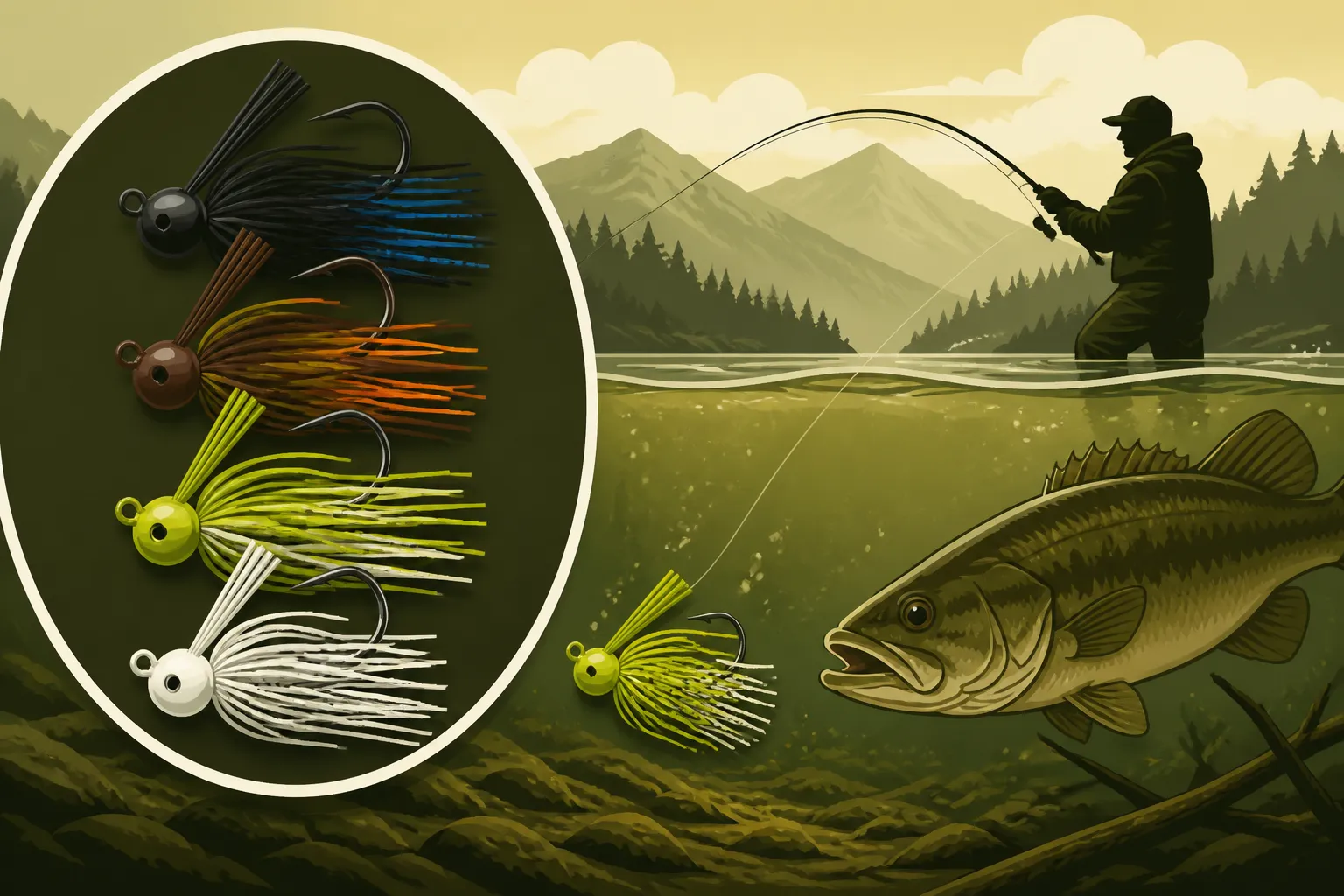
High-Visibility & Fluorescent Heroes: Chartreuse, Orange, Pink, Fire Tiger
These are your absolute heavy-hitters when visibility is measured in inches, not feet. Think of them as neon signs underwater.
- Why They Work: These colors aren't just bright; they often incorporate fluorescent pigments that absorb ambient light (including UV light that penetrates deeper) and re-emit it as a vibrant glow. This makes them pop and stand out dramatically against a dark, murky background. The high contrast they provide is key, making them visible even when light levels are incredibly low. They essentially 'glow' in the water, catching what little light is available and converting it into something more visible to the fish.
- Washington Examples:
- Steelhead in High, Turbid Rivers: If you're chasing winter steelhead on a blown-out river like the Cowlitz, Skykomish, or the Forks-area rivers after a heavy rain, a chartreuse or "Oregon grape" (dark purple with chartreuse accents) jig is often deadly. The contrast helps the fish key in on the lure in that turbulent, dirty water. When the Cowlitz is running high and dirty, anglers regularly swear by these colors. You might also consider using a bobber and jig setup, which is often paired with these vibrant colors. Learning How to Fish a Bobber and Jig for Steelhead can significantly improve your success in these conditions.
- Fall Salmon in Stained Water: For coho and even Chinook salmon pushing into rivers like the Puyallup or the lower Skagit when they're running high and off-color, bright pink or "fire tiger" (a mix of chartreuse, orange, and black stripes) jigs can be incredibly effective. The aggressive nature of these colors seems to trigger strikes even from fish that aren't actively feeding.
- Where to Find Them: These vibrant jigs are staples in most tackle shops around Washington. You can also find an extensive selection on larger online retailers like Amazon, offering a huge variety of brands, weights, and skirt styles to match any condition or target species.
Dark & Silhouetted Stealth Masters: Black, Purple, Dark Blue
It might seem counterintuitive to use dark colors in dark water, but this approach hinges entirely on contrast and creating a strong silhouette.
- Why They Work: Instead of trying to be seen with brightness, these colors aim to create a stark, defined shape against any lighter background. Imagine a dark object silhouetted against a slightly lighter sky or even the diffuse glow of the water surface above. Fish looking up will see a clear, distinct shape, mimicking a natural baitfish. In very deep, dark water where brighter colors have long since faded, black and dark purple retain their visual integrity as a solid form. They absorb almost all light, presenting a strong, consistent profile.
- Washington Examples:
- Deeper Water Salmon: For Chinook salmon holding in deep holes in the Columbia River or lower reaches of other major rivers, especially on overcast days or during twilight, a black or dark purple jig can be surprisingly effective. These fish often look up, and the dark silhouette presents a clear target.
- Lingcod in Rocky Puget Sound Structure: Lingcod are ambush predators that rely on camouflage but also respond to a strong profile. In the depths around rocky structure in Puget Sound, especially on cloudy days, a large black or dark purple jig can provide that distinct, meaty silhouette they're looking for, often resembling a sculpin or rockfish.
- Considerations: These colors are particularly effective when there's some ambient light filtering down from above, creating a slightly brighter backdrop for the dark jig to stand out against. If the water is completely opaque, vibration and scent become even more critical.
Flash & UV Boosters: Metallic Gold/Silver, Jigs with UV Additives
Sometimes, a little glimmer is all it takes to catch a fish's eye, even in murky conditions.
- Why They Work:
- Metallic Jigs: Gold and silver jigs work by reflecting what little ambient light is available, creating subtle flashes as they move through the water. This "flash" can mimic the scales of a struggling baitfish, triggering a predatory response. Gold often performs well in water that has a brownish or greenish tint, while silver is generally better in murkier, greyish water.
- UV Additives: Many modern jigs are designed with UV-reactive paints or materials. As mentioned earlier, UV light penetrates water differently than visible light and can be seen by many fish species. A jig with UV properties will "glow" under UV light, making it more visible to fish even when the water looks dark to us. This is a subtle but powerful advantage in off-color scenarios.
- Washington Examples:
- Puget Sound Coho and Winter Chinook: On those classic gray, cloudy days in Puget Sound, where the water might be a bit churned up from a breeze, a metallic silver or jig with a strong UV component can be very effective for both coho and blackmouth (resident Chinook). The flash catches their attention as they cruise through the murky water.
- Bottomfish in Murky Estuaries: For species like rockfish or even flounder in bays with slightly murky conditions, a jig with a subtle metallic flash or UV accents can be the ticket. They're often relying on glimpses of prey moving past.
- Tip: When shopping for jigs, especially online through sites like Amazon, look for descriptions that specifically mention "UV enhanced" or "holographic finish" if you want to maximize this advantage in dirty water.
Here’s a quick overview to help you decide:
| Jig Color Family | Primary Benefit in Murky Water | Best Conditions/Species in Washington | Notes/Tips |
|---|---|---|---|
| Fluorescent/Bright | High visibility, UV reactive | Steelhead (Cowlitz, Skykomish), Salmon (Puyallup, Skagit) | Use in heavy stain, cloudy days; great for aggressive fish. |
| Dark/Silhouetted | Strong contrast, natural profile | Deeper water Salmon (Columbia), Lingcod (Puget Sound) | Overcast, low light, deep holes; best when viewed from below. |
| Metallic/Flash | Reflects ambient light, subtle | Coho (Puget Sound), Bottomfish, Winter Chinook | Good in slight stain; choose gold for brown water, silver for grey/green water. |
| UV Enhanced | "Glows" under UV light, invisible | All species, especially in very deep or very murky water | Look for specific UV paint or material; often combined with other colors for added pop. |
Optimizing Your Approach When the Water is Dirty
Choosing the right jig color is a fantastic starting point, but it's just one piece of the puzzle when you're fishing in off-color water. Your overall approach—from the size of your lure to how you retrieve it—needs to adapt to these challenging conditions. It's about combining color with other factors to maximize your chances.
Size, Shape, and Action: Beyond Color
When visibility is poor, fish aren't just relying on what they can see; they're also sensing the movement and displacement of water. This is where the physical characteristics of your jig become incredibly important.
- Bigger Profile for Better Detection: A larger jig creates more water displacement, generating stronger vibrations that fish can detect with their lateral line system. This means that a slightly larger jig than you might typically use in clear water can be an advantage in murky conditions. Don't be afraid to bump up a size or two, especially for salmon and steelhead.
- Exaggerated Action: Jigs with a pronounced, erratic, or "thumpier" action will send out more powerful vibrations. Think about jigs designed to flutter, wobble, or dart erratically rather than just dropping straight down. These movements translate into a stronger signal for fish struggling to see.
- Slower Fall Rate: A jig that falls slower allows more time for fish to locate it by scent and vibration. It also keeps the lure in the strike zone longer. This can be achieved with lighter jigs, or by using jigs with a broader profile or larger soft plastic tails that create more drag.
Comparing this to clear water, where you might focus on realistic spoon patterns, Best Spoon Size for Washington Steelhead often means a smaller profile, but in dirty water, a larger jig profile is often better.
Enhancing Attraction with Scent and Noise
We've already touched on it, but the importance of scent and sound cannot be overstated in off-color water.
- The Power of Scent: Think of adding a strong attractant as giving your jig a potent "smell-me" signal. Commercial scents like Pro-Cure, Pautzke's Krill, or even simple anise oil can be applied directly to soft plastic jigs or to scent pads on your hard jigs. For many Washington species, especially salmon and steelhead, an appealing scent can draw them in from a greater distance, allowing them to home in on your lure even before they can see it clearly. This can make the difference between a pass and a strike. Just be mindful of any local What a Bait Ban Actually Restricts in Washington rules.
- Adding Noise (Rattles): Some jigs come with built-in rattles, or you can insert small glass or metal rattles into soft plastic bodies. The clicking or buzzing sound these create can further aid fish in locating your jig in murky water, providing an auditory cue in addition to vibration and scent.
Adapting Your Presentation
Your retrieve and how you work the jig also need to change when the water is dirty.
- Slower Retrieves: Give the fish more time to find your lure. A slower, more deliberate retrieve allows the scent and vibration to disperse effectively and gives fish more opportunity to home in on the jig. Fast retrieves can blow past fish before they even register your lure's presence.
- Longer Pauses: Incorporate pauses into your retrieve. This allows the jig to flutter or drop, creating a different vibration signature and often triggering a strike from a curious fish that's been tracking the lure. During a pause, the jig can also emit more scent, as it's not moving as rapidly through the water.
- Stay in the Strike Zone: Since visibility is limited, fish won't move far to chase a lure. Focus on keeping your jig in the prime strike zone for as long as possible. This often means fishing deeper, or positioning your boat or casting from shore to hit specific holding lies or current breaks.
Locating Fish in Challenging Conditions
Finding fish is always the first challenge, but it's compounded in off-color water. You can't rely on visual cues like jumping fish or subtle boils.
- Focus on Structure and Current Breaks: In dirty water, fish often hug structure more tightly. Look for changes in depth, submerged logs, rock piles, or eddy lines where the current slows down. These spots provide fish with cover, a break from strong currents, and often funnel food past them. For river anglers, understanding Reading Water for Bank-Fishing Salmon becomes even more critical when visibility is low.
- Utilize Your Electronics: If you're on a boat, your fish finder is your best friend. Look for bait balls or arches indicating fish activity. While you might not be able to identify species, knowing there are fish present gives you a starting point.
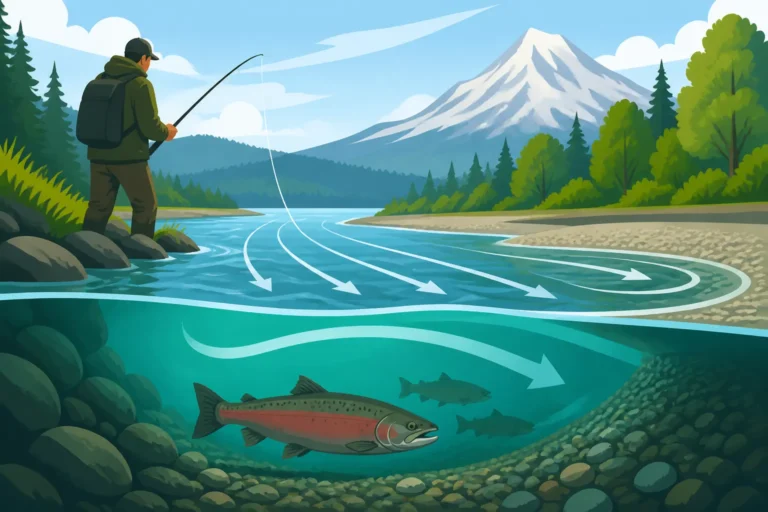
- Fish the Seams: The line where clear water meets dirty water, or where fast current meets slower water (a seam), can be a highly productive area. Fish will often hold in the clearer, slower water, darting out into the murk to ambush prey.
- Embrace the High Water: Sometimes, off-color water comes with high water, which can actually be a good thing. It encourages fish to move upstream and provides them with cover. Don't be discouraged; instead, learn How to Fish for Steelhead in High Water and apply those techniques, often involving these bright or dark jigs.
- Timing: While not strictly about color, the best time of day to fish for salmon in off-color water can often be during periods of changing light, like dawn or dusk, or on heavily overcast days. This is when fish are generally more active and less wary. For more on this, you can check out Best Time of Day to Fish for Salmon in Washington.
By combining the right jig colors with an adapted presentation and strategic focus on fish location, you'll be much better equipped to turn those challenging, off-color days into memorable fishing adventures in Washington.
Disclaimer
Fishing conditions can change rapidly. Always consult the latest regulations and emergency rule changes from the Washington Department of Fish and Wildlife (WDFW) before heading out. The advice provided here is for informational purposes only and does not guarantee fishing success.