Skills a Beginner Should Learn First in Washington
Starting a new hobby like fishing in Washington can feel incredibly overwhelming, right? You see all the experienced anglers with their fancy gear and hear them talking about "coho runs" and "barbless hooks," and it's easy to think you need to be an expert before you even cast a line. The truth is, everyone starts somewhere, and the most important thing is to get out there and learn the basics without getting bogged down. This guide is here to break down the fundamental skills and knowledge every beginner should focus on first, helping you navigate the exciting world of Washington fishing with confidence and less confusion.
Understanding the Fundamental Rules and Regulations
Before you even think about what bait to use or where to cast, the absolute first step in Washington fishing is to understand the rules. Trust me, ignoring this step can lead to a lot of frustration, and even fines, down the road. Washington has some of the most diverse and complex fishing regulations in the country, covering everything from salmon to shellfish, and they change frequently. It's not about being a legal eagle, but about being a responsible angler and protecting our precious resources.
Securing Your Washington Fishing License
The very first legal requirement for almost anyone over the age of 15 is a fishing license. It's like your passport to the waters. Many newcomers often wonder, "Do Kids Need a Fishing License in Washington?" or "Do Seniors Need a License to Fish in Washington?". Generally, those under 15 don't need a license for most species, and there are specific provisions for seniors and disabled veterans, so it’s always worth checking. For everyone else, you’ll need to make sure you have the right one.
You have options here, from annual licenses that cover a full year to short-term licenses like a one-day or three-day pass, perfect if you're just trying it out or visiting for a quick trip. Understanding the difference between a Freshwater vs Saltwater vs Combination Licenses in Washington is critical, as they dictate where you can fish and what species you can target. For instance, if you plan to hit the rivers for trout and also try for salmon in Puget Sound, a combination license is often the most cost-effective and convenient choice. You can usually pick these up at local sporting goods stores, bait shops, or even online through the WDFW website. For more detailed information, I highly recommend checking out Where and How to Buy a Washington Fishing License before your first outing.
Deciphering the Washington Sport Fishing Regulations Pamphlet
Once you have your license, your next best friend is the official Washington Sport Fishing Regulations Pamphlet. I know, I know, it looks like a phone book, and it's easy to get intimidated by the sheer volume of information. But don't despair! You don't need to memorize every single page on day one. Your goal as a beginner is to learn how to navigate it and find the information relevant to your specific fishing trip.
The pamphlet details things like daily bag limits, possession limits, open seasons, and any special gear restrictions for different bodies of water and species. For example, if you're targeting trout in a local lake, you'll need to know the Washington Lake Trout Limit and if there are any special rules for that particular lake. If you're heading to a river for salmon, you'll need to know about Barbless Hook Requirements on Washington Rivers and whether bait is allowed. The pamphlet is organized by region and then by specific body of water, which makes finding local rules much easier once you get the hang of it. Many seasoned anglers still reference it constantly, especially with how often Emergency Rule Changes: Why Washington's Rules Shift Mid-Season happen. Make it a habit to check the current rules right before you head out, as things can change without much notice.
Assembling Your First Basic Fishing Kit
One of the biggest hurdles for new anglers is figuring out what gear to buy. The fishing aisle at any tackle shop or online retailer like Amazon can be a dizzying array of rods, reels, lures, and gadgets. The good news is, you don't need to break the bank or buy everything under the sun to get started. A simple, versatile setup is all you need for your first few adventures. Think of it as building your essential toolkit for exploration.
Choosing Your First Rod, Reel, and Line Combo
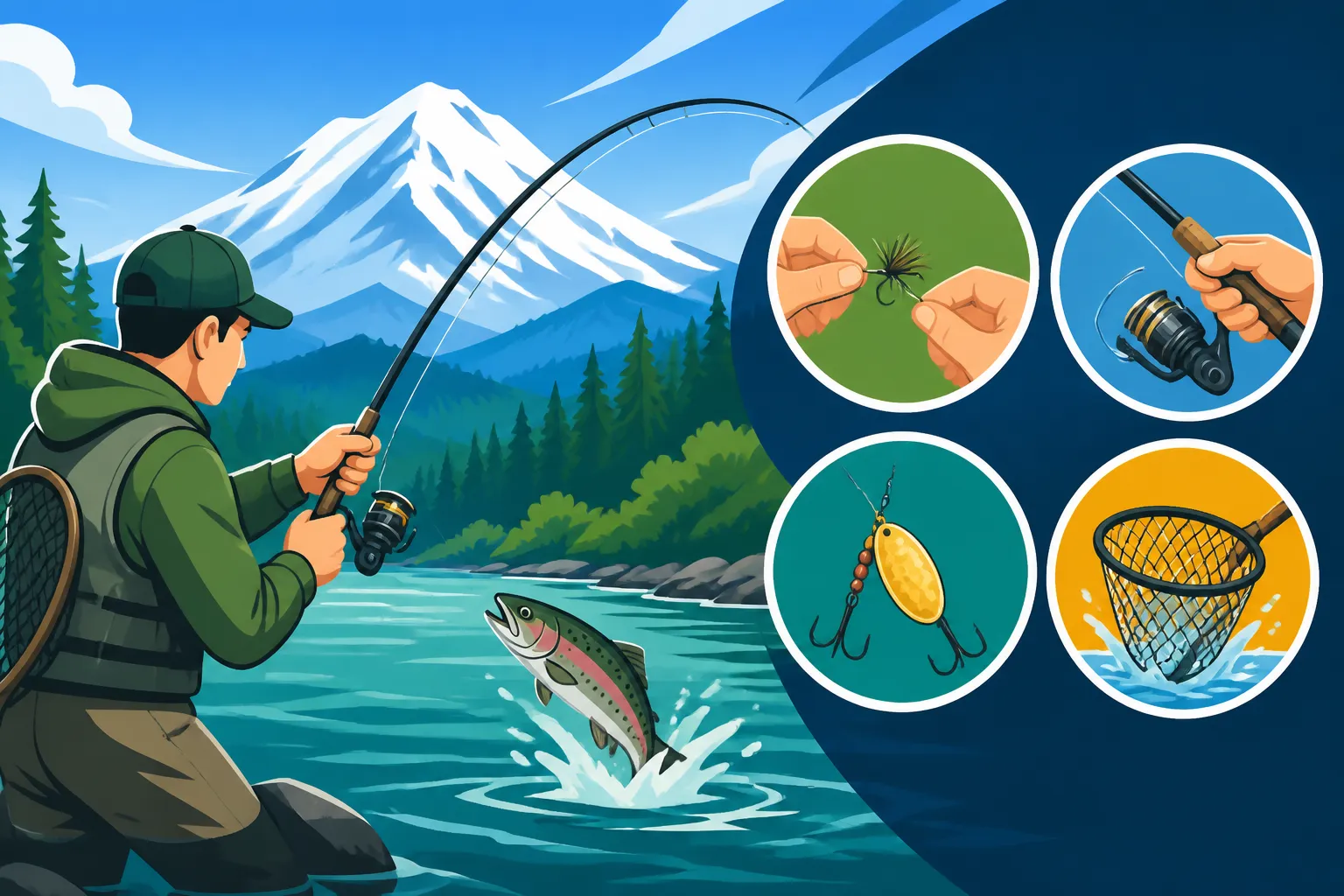
For a beginner in Washington, a medium-action spinning rod between 6 to 7 feet long is a fantastic starting point. This length is versatile enough for casting from the bank or a dock, and the medium action provides a good balance between sensitivity for detecting bites and backbone for fighting fish. A matching spinning reel, spooled with 8 to 10-pound monofilament or braided line, completes the package. Monofilament is often preferred by beginners due to its stretch and ease of handling, while braid offers more sensitivity and strength.
Many sporting goods stores and online platforms like Amazon offer excellent rod and reel combos specifically designed for beginners. These kits often include a rod, a pre-spooled reel, and sometimes even a small tackle box with basic lures and weights. Don't worry about getting the most expensive gear right now; reliability and ease of use are your top priorities. A simple, well-balanced combo will make learning to cast and retrieve much more enjoyable.
Stocking Your Tackle Box with Essential Terminal Tackle
"Terminal tackle" refers to all the bits and pieces you attach to the end of your fishing line. Again, simplicity is key here. You don't need a huge, overflowing tackle box to start. Focus on items that are versatile and effective for the most common species you'll encounter as a beginner in Washington, like trout, bass, or panfish in lakes and ponds.
Here’s a basic list:
- Hooks: A variety of sizes (e.g., #6 to #10 for trout and panfish, #2 to 1/0 for larger fish). Consider both bait holder hooks (which have barbs on the shank to hold bait) and circle hooks (great for preventing gut hooking).
- Sinkers/Weights: Split shot weights (small, pinch-on weights) and perhaps a few small egg sinkers or sliding weights for different presentations.
- Bobbers/Floats: Small, simple clip-on bobbers are excellent for suspending your bait at a certain depth, especially for trout or panfish.
- Swivels: Small barrel swivels help prevent line twist, especially when using spinning lures.
- Lures: A few versatile lures can make a big difference. Think about some small spinning lures (like Mepps or Rooster Tail), a few soft plastic baits (grubs or worms), and maybe a small spoon. These are widely available on Amazon and at any local tackle shop.
- Bait: For absolute beginners, live bait (worms, powerbait, corn) is often the easiest and most effective way to start catching fish.
| Item Type | Purpose | Recommended Beginner Choices | Where to Find It (Examples) |
|---|---|---|---|
| Rod & Reel Combo | Casting, reeling, fighting fish | 6-7 ft Medium Action Spinning Rod w/ matched reel | Sporting Goods Stores, Amazon |
| Fishing Line | Connects rod to fish | 8-10 lb Monofilament (pre-spooled on many reels) | Tackle Shops, Amazon |
| Hooks | Attaching bait/lures | Sizes #6 to 1/0, Bait Holders, Circle Hooks | Tackle Shops, Amazon |
| Weights/Sinkers | Getting bait/lures to depth | Split Shot, Small Egg Sinkers | Tackle Shops, Amazon |
| Bobbers | Suspending bait, bite detection | Clip-on Plastic Bobbers | Tackle Shops, Amazon |
| Swivels | Preventing line twist | Small Barrel Swivels | Tackle Shops, Amazon |
| Lures | Attracting fish with artificial presentation | Small Spinners (Mepps, Rooster Tail), Spoons | Tackle Shops, Amazon |
| Bait (Live/Scented) | Natural attraction for various species | Worms, PowerBait, Corn | Bait Shops, Local Retailers |
| Tools | Essential for safety and efficiency | Pliers/Forceps, Line Clippers | Tackle Shops, Amazon |
Mastering Fundamental Fishing Techniques
With your license in hand and a basic kit ready, it's time to learn how to actually fish. Don't worry about fancy casting techniques or complex retrieves just yet. Focus on the core skills that will allow you to present your bait or lure effectively and, hopefully, catch a fish!
The Art of the Basic Cast and Retrieve
Learning to cast smoothly and accurately is one of the most satisfying beginner accomplishments. For spinning gear, the most common and easiest to learn is the overhead cast.
- Grip: Hold the rod with your dominant hand, placing your index finger above the reel stem.
- Open Bail: With your non-dominant hand, open the bail on your spinning reel.
- Hold Line: Use your index finger (from your dominant hand) to gently hold the line against the rod handle, preventing it from unreeling.
- Position: Let your lure or weight dangle about 6-12 inches from the rod tip.
- Backward Swing: Bring the rod back over your shoulder in a smooth, controlled motion. As the rod bends, it stores energy.
- Forward Snap: In one fluid motion, bring the rod forward, releasing your index finger just as the rod tip points towards your target. This releases the line, sending your lure flying.
- Close Bail & Retrieve: As your lure hits the water, manually close the bail or crank the handle once to engage it. Then, begin a slow, steady retrieve, watching your line for any signs of a bite.
Practice this in an open area like a park (without hooks, of course!) until you feel comfortable. You'll be surprised how quickly you get the hang of it. Varying your retrieve speed is also a key skill. Sometimes fish want a fast-moving lure; other times, a slow, deliberate retrieve is the ticket. Pay attention to what works!
Setting the Hook and Fighting Your First Fish
Feeling that first tug on your line is an incredible rush, but what do you do next? "Setting the hook" is the action of sharply lifting your rod to embed the hook firmly in the fish's mouth.
When you feel a bite – which can be anything from a gentle tap to a solid yank – reel up any slack in your line, and then quickly and firmly lift the rod tip straight up or to the side. It's not a huge, violent jerk, but a solid, quick motion. If you miss, don't worry, it happens to everyone! Just try again.
Once the hook is set, the "fight" begins. Keep your rod tip up, maintaining a steady bend in the rod. This bend acts like a shock absorber, preventing the line from snapping. Reel in when the fish isn't pulling line, and stop reeling when it is, letting the drag on your reel do its job. Don't pump the rod too hard; gentle, consistent pressure is often more effective. This is where a balanced rod and reel combo really shines. Remember, enjoy the process! It's a dance between you and the fish, and every fight is a unique experience.
Responsible Fish Handling: Release and Retention
One of the most important skills for any angler, especially in a state like Washington with its emphasis on conservation, is responsible fish handling. Whether you plan to keep your catch or release it, knowing how to handle a fish minimizes stress and injury.
For fish you plan to release, wet your hands before touching the fish to protect its slime coat, which is vital for its health. Try to keep the fish in the water as much as possible, or out for only a few seconds. Remove the hook gently, preferably with pliers or forceps, which are invaluable tools that you can find on Amazon or at any tackle shop. If the hook is deeply swallowed, it’s often best to cut the line as close to the hook as possible rather than trying to rip it out. This gives the fish a better chance of survival. Always support the fish horizontally, especially larger ones, rather than holding them vertically by the jaw or gills, which can cause internal damage. Learning how to properly Catch-and-Release Rules During Wild Steelhead Closures or other sensitive fisheries is critical for conservation.
If you plan to keep your fish (and it meets all legal size and bag limits), dispatch it quickly and humanely. A swift blow to the head is often recommended. Then, place it immediately on ice to preserve its freshness. This is not only ethical but also ensures you'll have the best-tasting fish possible. Understanding How Bag and Possession Limits Work in Washington is crucial to ensure you're harvesting legally.
Finding Your First Beginner-Friendly Fishing Spots
Washington is a huge state with an incredible variety of fishing opportunities, but for a beginner, it's best to start with accessible, well-stocked, and relatively low-pressure spots. Don't aim for the wildest, most challenging river for your first trip. Success early on builds confidence and keeps the passion burning.
Exploring Local Stocked Lakes and Ponds
Many urban and suburban areas across Washington have small lakes and ponds that are regularly stocked with rainbow trout by the Washington Department of Fish and Wildlife (WDFW). These "put-and-take" fisheries are absolutely perfect for beginners. The fish are often eager to bite, and access is usually easy with parking, docks, and bank access.
Look for WDFW's stocking reports on their website, which often detail which lakes have recently received fish. Lakes like Green Lake in Seattle, Lake Tye in Snohomish, or Newman Lake near Spokane are prime examples of places where you can easily catch a few trout. Simple bait setups with a bobber and PowerBait or a worm are incredibly effective. You don't need a boat; many of these lakes offer great shore fishing opportunities. These spots are fantastic for practicing your casting, getting used to the feel of a fish on the line, and enjoying a relaxing day outdoors. For ideas on where to start, you might look into Best Washington Lakes for Trout Fishing for some beginner-friendly suggestions.
Accessible River Banks for Trout and Panfish
While many of Washington's salmon and steelhead rivers can be challenging for beginners, there are plenty of smaller rivers and stream sections that offer easier access for trout and panfish. These often have less current and fewer snags, making them less intimidating for learning to drift bait or cast small lures.
Look for rivers that flow through parks or public lands, which often provide designated access points. You might find areas where you can target smaller resident trout or even some warm water species like bass or panfish in slower moving sections. A simple worm or small spinner can be very effective in these waters. Always check the regulations for the specific river you're visiting, as rules can vary greatly. For instance, some river sections may have specific gear or bait restrictions, like the need for single-point barbless hooks. If you're looking for general information on river fishing, Drift Fishing for Steelhead in Washington Rivers or Fly Fishing Washington's Rivers and Lakes might offer inspiration for future trips, but stick to simpler methods and more accessible spots for your very first outings.
Disclaimer
This article is for general informational purposes only and does not constitute professional advice. Laws, prices and regulations vary by location and change over time. Consult a qualified professional for guidance on your specific situation.