Best Washington Bay for Crabbing From Shore
If you've ever dreamt of pulling up a trap overflowing with delicious Dungeness crab right from the shore in Washington, you know the frustration of figuring out where to even start. It feels like everyone talks about crabbing from a boat, leaving us shore-bound anglers wondering if it's even possible to get a good haul without one. This comprehensive guide is here to shed light on Washington's best bay for crabbing from shore, arming you with the knowledge, spots, and techniques to make that dream a reality.
The Unbeatable Crabbing Opportunity of Hood Canal from Shore
When it comes to shore crabbing in Washington, there's one location that consistently rises above the rest, offering exceptional opportunities for anglers without a boat: Hood Canal. This unique, narrow fjord, stretching deep into the Olympic Peninsula, creates an environment perfectly suited for shore-based crabbing success. Unlike many broad, open bays of Puget Sound, Hood Canal's topography and depths often bring Dungeness and Red Rock crab surprisingly close to the shoreline, making them accessible to those of us casting from docks, beaches, or even kayak launches.
The distinct features of Hood Canal—its calm, protected waters, plentiful structure, and diverse depths—contribute to robust crab populations that are more reachable than in other, more expansive marine areas. You don't need a massive boat or commercial-grade gear to get into the action here; a good understanding of the tides, a sturdy pot or two, and some patience will often yield excellent results. Many public access points, state parks, and even roadside pull-offs offer surprisingly good crabbing opportunities, especially during peak seasons.
Why Hood Canal Stands Out for Shore-Based Anglers
Hood Canal isn't just good for shore crabbing; it's often considered the best due to several factors that converge perfectly for the land-based angler. First and foremost, the relatively narrow and deep nature of the canal means that good crabbing depths are often much closer to shore than in wider, shallower bays. You're not casting into an endless flat; you're often reaching shelves and drop-offs where crabs naturally forage.
Secondly, the abundance of public access is a huge advantage. From Twanoh State Park to Belfair State Park, and numerous small county parks and boat launches like those around Hoodsport or Union, there are countless spots where you can deploy your gear without needing private property access. Many of these locations feature docks or piers that extend into deeper water, giving your crab pots an even better chance to reach the hungry crustaceans. You can find a lot of useful information about these areas and potential launch points, if you ever consider a guided trip there, on sites like FishingBooker, which lists various water access points.
Lastly, the water quality and abundant food sources within Hood Canal contribute to healthy populations of both Dungeness and Red Rock crabs. While Dungeness are the primary target for many, the feisty Red Rocks offer a great bonus catch, especially for those casting from rocky shores or shallower areas. This variety ensures that even if the Dungeness are a bit shy on a given day, you still have a strong chance of bringing home a delicious meal.
Prime Shore Crabbing Locations within Hood Canal
While much of Hood Canal offers potential, certain areas are renowned for their consistent shore crabbing. These spots typically combine good public access with favorable underwater topography.
- Twanoh State Park: Located on the south shore of Hood Canal, Twanoh State Park is a popular spot with a boat launch and ample beach access. The depths drop off fairly quickly from shore, making it suitable for deploying pots. It’s particularly good during outgoing tides as crabs move with the currents.
- Belfair State Park: At the very southern end of Hood Canal, near the town of Belfair, this park offers extensive shoreline access and a pier. While shallower than some other spots, it's excellent for Red Rock crab and often holds Dungeness too, especially near the channel.
- Hoodsport/Union Area: The area around Hoodsport and Union features several small public access points, including docks and community beaches. These spots are often on deeper sections of the canal and can be very productive. Look for areas with nearby oyster beds or rocky structure, as these attract crabs seeking food and shelter.
- Potlatch State Park: Further up the western side of the canal, Potlatch provides good beach access and deeper water relatively close to shore. It's a bit more exposed but can be excellent on calmer days.
- Alderbrook Resort & Spa: While primarily a resort, public access nearby or through certain amenities can put you on productive waters. It highlights the general quality of crabbing in that mid-canal stretch.
Before heading out, always double-check the Washington Department of Fish and Wildlife (WDFW) regulations for the specific marine area of Hood Canal you plan to visit, as seasons and limits can vary. You can find detailed rules by looking at the marine area map within the Washington Sport Fishing Regulations Pamphlet.
Understanding What Makes a Crabbing Spot Productive from Shore
It's not enough to just know where to go; understanding why certain spots are better for shore crabbing will drastically improve your success. Crabs are creatures of habit, driven by food, shelter, and tidal currents. When you're stuck on the bank, you need to think like a crab to find them.
A truly great shore crabbing spot offers a combination of accessibility and favorable underwater features. You want public access that allows you to safely and legally deploy your gear without obstruction. Beyond that, the key lies beneath the surface. Crabs prefer areas with structure—like rocks, ledges, submerged logs, or even old pilings—where they can hide from predators and find food. Sandy or muddy bottoms adjacent to these structures are often prime foraging grounds for Dungeness.
Tides play an enormous role. Crabs move with the currents, especially during incoming and outgoing tides, as new food sources are washed in or exposed. A strong tidal exchange near your chosen spot can funnel crabs directly into your traps. Conversely, a slack tide can mean less crab movement, though they might still be hiding in prime feeding areas. Learning to read the tides and currents for your specific location in Hood Canal is a game-changer for shore crabbing.
The Impact of Tides and Currents
For shore crabbing, understanding the tides is paramount. Dungeness crab, in particular, are highly influenced by tidal movement. During an incoming tide, they often move into shallower areas to forage for food that the rising water brings in. As the tide recedes, they might move back into deeper channels or depressions, or concentrate in certain areas as water levels drop.
The best time to set your crab pots from shore is often during the peak of a tidal exchange – either the strongest part of the incoming or outgoing tide. This is when crabs are most actively moving and feeding. For example, setting your pot just before a strong outgoing tide at a location like Twanoh State Park can be very effective, as crabs might be moving from the shallower flats towards deeper water, crossing paths with your bait.
You'll also want to consider the type of tide. During larger tide swings (spring tides), the currents are stronger, potentially moving more food and more crabs. Conversely, during neap tides (smaller swings), movement might be less, but crabs could be more concentrated in consistent feeding zones. Always check local tide charts for Hood Canal before you head out. These details are critical, just as they are when considering Best Tides for Puget Sound Salmon Fishing in Washington.
Optimal Bottom Structure and Depth for Shore Crabbing
From the shore, you're trying to replicate what a boat angler achieves by dropping pots in specific locations. This means targeting areas that crabs naturally inhabit. For Dungeness, this usually means a sandy or muddy bottom, often near the edges of eelgrass beds or rocky reefs. These soft bottoms are where they burrow and find clams, worms, and other invertebrates. Red Rock crabs, on the other hand, are often found in rockier areas, hiding in crevices and under ledges.
When casting from a dock or beach, try to deploy your gear where you suspect there's a drop-off or a transition in bottom type. Even a slight depression or channel can act as a crab highway. Aim for depths between 20 and 60 feet for Dungeness if you can reach it, though shallower areas can still be productive, especially during high tide or at night. Using a castable fish finder can sometimes give you a better idea of the bottom contour and depth directly in front of you, helping you optimize your placement. Think about areas where rivers or streams might enter the canal; these can create nutrient-rich plumes that attract crabs. If you’re looking for a wider selection of guides or charters to gain local insight on these spots, FishingBooker can be a useful resource to find someone who knows the intricacies of Hood Canal's bottom structure.
Essential Gear and Techniques for Shore Crabbing Success in Washington
Shore crabbing requires a slightly different approach than boat crabbing, primarily due to the limitations of casting distance and depth. However, with the right gear and techniques, you can be just as successful. The basics include a good crab pot or ring, strong line, plenty of bait, and a way to retrieve your gear from the shoreline.
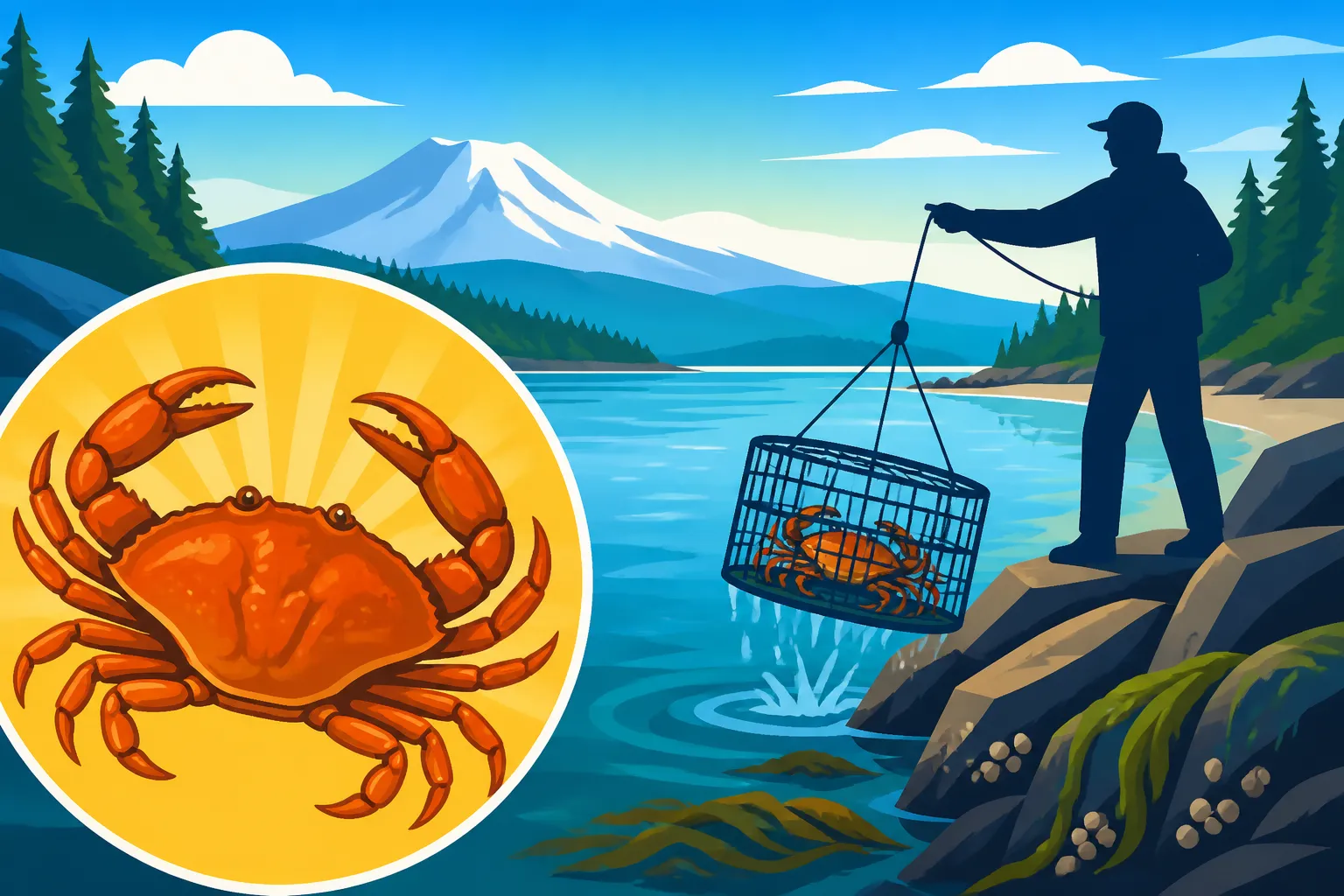
Crab rings are often favored by shore anglers because they are lighter and easier to cast and retrieve from docks or beaches. They lay flat on the bottom, allowing crabs to walk in freely, and then "purse" or fold up when retrieved, trapping the crabs. Crab pots (the rigid, cage-like traps) can also be used but require more effort to cast or deploy from shore, often necessitating a long pole or kayak to set them further out. Remember, no matter your gear, you'll need to know How Long to Soak a Crab Pot in Puget Sound for optimal results.
Beyond the traps themselves, you'll need sturdy line – usually leaded line so it sinks and doesn't float into boat traffic – and sufficient length to reach your desired depth, plus extra for tying off to shore. A bait cage or clip is essential to hold your bait securely within your trap. Don't forget a crab measure, gloves, and a cooler with ice for your catch.
Choosing the Right Gear for Shore Crabbing
The type of gear you choose will largely depend on your access point and how far you can comfortably deploy your trap.
- Crab Rings: These are excellent for casting from docks or areas where you can wade out a bit. They are typically flat, circular frames with mesh netting. When deployed, they lie flat, allowing crabs to walk onto the bait. When you pull the line, the sides rise, forming a basket. They are lightweight, easy to handle, and require frequent checking (every 15-30 minutes) as they don't hold crabs as securely as pots.
- Collapsible Pots: These are a step up from rings. They fold flat for transport but expand into a full pot when deployed. They are heavier than rings but lighter than rigid pots, making them a good compromise for shore anglers who want the crab-holding security of a pot. They can be cast with a heavy-duty surf rod or deployed by hand from a dock.
- Rigid Pots: While harder to deploy from shore, if you have access to a small boat, kayak, or even a long pier, rigid pots are the most effective. They are designed to hold crabs securely for longer soak times and are generally more robust. If you're using this kind of pot, understanding Crab Pots vs Rings in Washington's Puget Sound can help you decide.
- Line: You'll need sturdy, rot-resistant line. Often, 1/4-inch leaded poly rope is preferred. Ensure you have enough length to comfortably reach your desired depth at high tide, plus extra to secure to shore or a dock cleat.
- Buoys: Even when crabbing from shore, it's a good idea to mark your gear with a buoy, especially if you're deploying it further out. This helps you identify your gear and prevents others from fouling it. Ensure your buoy is marked with your name and address, or WDFW customer ID.
The Best Bait for Attracting Crabs
Crabs are scavengers, and they're not picky, but some baits are definitely more effective than others. The goal is a smelly, oily bait that creates a strong scent plume in the water to attract crabs from a distance.
- Fish Carcasses: Salmon heads, rockfish carcasses, or any oily fish remains are absolute crab magnets. The strong scent travels far and lasts a long time. Many local fish markets or charter operations will give these away.
- Chicken: Chicken legs or thighs, especially if they're a bit older, work wonders. The dark meat is tough, staying on the bait clip longer, and the scent is irresistible to crabs. Some anglers will even let chicken sit out for a day or two to get extra "ripe."
- Cat Food (Canned): Believe it or not, cheap canned cat food, especially fishy varieties, can be excellent. Punch holes in the can and place it in your bait cage. The slow release of scent is very effective.
- Scraps from home: Any leftover oily fish, shrimp shells, or even beef bones can work. The key is to have something with a strong, lingering smell.
Always put your bait in a proper bait cage or securely clip it to the bottom of your pot. This prevents crabs from quickly devouring the bait without entering the trap, and also keeps scavengers like seals or birds from easily stealing it. For more details on baiting, check out our guide on the Best Bait for Washington Dungeness Crab.
Navigating Washington's Crabbing Regulations from the Shore
Washington's fishing and crabbing regulations are designed to sustain healthy populations for future generations, and they apply just as rigorously to shore-based anglers as they do to boaters. Ignoring them can lead to hefty fines and loss of gear. The WDFW regularly updates these rules, so staying informed is crucial for a legal and enjoyable crabbing experience.
First and foremost, you'll need a valid Washington fishing license that includes a shellfish endorsement. This is non-negotiable, whether you're fishing from a boat or the beach. For visitors, understanding the Washington Fishing License Guide for Nonresidents is key. Once you have your license, you'll need to be aware of seasons, daily limits, possession limits, and size restrictions for Dungeness and Red Rock crabs. These can vary significantly by marine area, and even within Hood Canal, there might be specific closures or restrictions.
Crucially, you must know how to accurately identify and measure your crabs. Only male Dungeness crab of a certain minimum size can be kept, and female Dungeness must always be released unharmed. Red Rock crab, both male and female, can often be kept, but they also have a minimum size. It's vital to have a WDFW-approved crab gauge and know how to use it correctly. Proper handling of crabs, especially those you intend to release, is also part of responsible crabbing.
Understanding Seasons and Limits in Hood Canal
Washington's crabbing seasons are often broken down by marine area, and Hood Canal falls into specific marine areas, primarily Marine Area 12 (Quilcene Bay, Dabob Bay, and other portions of Hood Canal north of a line from Misery Point to buoy 13 near Union) and Marine Area 12 (South Hood Canal, south of the Misery Point to Union line). Sometimes, Marine Area 12 closes for periods due to conservation concerns, while other parts of the canal remain open. Always consult the current WDFW regulations pamphlet or their website before you go.
Typical summer seasons for Dungeness often run from July through Labor Day, with some fall and winter openings. Red Rock crab seasons are often more liberal, sometimes remaining open year-round in certain areas, but always verify this.
Here's a quick overview of typical limits, but remember these can change:
| Species | Minimum Size (carapace) | Daily Limit (per angler) | Restrictions |
|---|---|---|---|
| Dungeness Crab | 6 1/4 inches | 5 males | Males only; no soft-shell crabs |
| Red Rock Crab | 5 inches | 6 (any sex) | No soft-shell crabs; no minimum for some areas, verify |
You must release all female Dungeness crab, regardless of size. Releasing soft-shell crabs (those that have recently molted and have soft shells) is also highly encouraged, as their meat quality is poor, and they are vulnerable. For detailed identification tips, refer to our guide on Dungeness Crab Identification and Legal Size.
The Washington Catch Record Card Requirement
Just like for salmon and steelhead, a Catch Record Card (CRC) is required for Dungeness crab in Washington. You must possess a CRC when crabbing for Dungeness and record your catch immediately after retaining a legal crab. This includes noting the date, marine area, and species. Failing to fill out your CRC correctly or in a timely manner is a common violation that can lead to fines.
Even if you don't catch any legal crabs, you are still required to return your CRC to WDFW by the specified deadline (usually in the spring of the following year). This data is crucial for WDFW biologists to monitor crab populations and set future seasons. You can find more comprehensive information about this essential requirement in our guide on The Washington Catch Record Card and What It Requires. It's a small administrative task that makes a huge difference for conservation efforts.
Disclaimer
Please remember that fishing and crabbing regulations in Washington can change frequently due to management needs and emergency rule changes. Always consult the official Washington Department of Fish and Wildlife (WDFW) regulations pamphlet or their website before heading out to fish or crab. This guide is for informational purposes only and should not be considered a substitute for official regulations.