Can You Keep All the Fish You Catch on a Washington Charter?
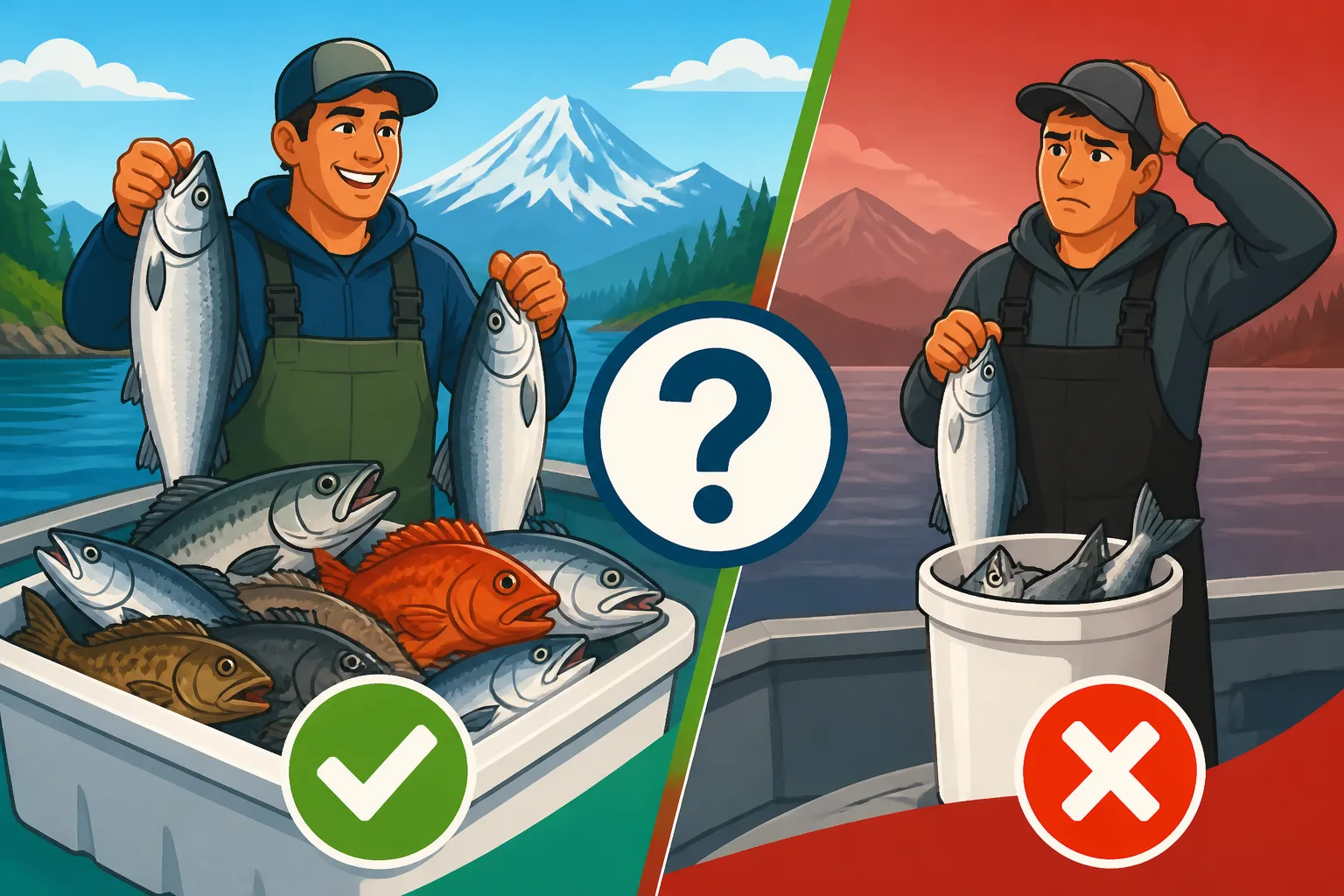
It’s a common and understandable assumption: you pay good money for a Washington fishing charter, you catch some amazing fish, and you get to take it all home, right? Not so fast. While the goal is absolutely to bring home a bounty, Washington's stringent and ever-changing fishing regulations mean that what you "catch" and what you can "keep" are often two very different things. This guide will walk you through the nuances of daily bag limits, possession limits, species-specific rules, and your personal responsibilities, ensuring your charter trip is both successful and fully compliant with the law.
Understanding Daily Bag and Possession Limits
The most fundamental concept to grasp when fishing in Washington, especially on a charter, is the difference between catching fish and legally retaining them. It’s not simply about how many fish bite your hook; it’s about how many you’re legally allowed to possess at any given time. These limits are in place for critical conservation reasons, ensuring sustainable fisheries for future generations. Ignoring them, even accidentally, can lead to stiff penalties.
Daily Limits on a Charter Trip
A daily limit is precisely what it sounds like: the maximum number of a particular species an individual angler can legally keep in a single fishing day. This is crucial on a charter boat because the limit applies per person, not per boat. So, if there are six anglers on a boat and the daily limit for Chinook salmon is one, each of those six anglers can keep one legal Chinook, totaling six for the boat. However, if one angler catches their limit quickly, they cannot continue to fish for that species, or if they do, any additional fish must be immediately and carefully released. This can sometimes be a source of frustration, especially when the bite is hot and you feel like you could catch more, but it's a vital rule.
These daily limits are highly dynamic. They can vary dramatically based on the species, the specific marine area or river, the time of year (season), and even whether the fish is wild or hatchery-marked. For instance, you might find different daily limits for Chinook salmon in Puget Sound versus the lower Columbia River, or different rules for halibut depending on the specific marine area you're fishing. Your charter captain, being a licensed professional, will be intimately familiar with the current daily limits for your target species and fishing location, but it's always smart for you, as the angler, to have a basic understanding of Washington Fishing Regulations Every Angler Should Know. When you're browsing for a charter, perhaps on a site like FishingBooker, it's easy to focus on the boat and the target species, but remember the limits are just as important as the lure.
Possession Limits at Home
While closely related to daily limits, possession limits are a distinct concept that often trips up anglers, especially those on multi-day trips or those who might keep fish from separate outings. A possession limit is the maximum number of a particular species an individual can have in their actual physical possession at any time, whether that fish is fresh, frozen, canned, or processed in any other way. This includes fish stored at your home, in your cooler, in your vehicle, or at a processing facility. Essentially, if it’s yours, and you can access it, it counts toward your possession limit.
In Washington, for many species, the possession limit is simply the daily limit. However, for some species or in certain contexts, it might be a multiple of the daily limit (e.g., two daily limits). This is especially relevant if you're planning a weekend fishing excursion where you might fish on Saturday and again on Sunday. If the daily limit is two salmon, and the possession limit is also two, you cannot keep two salmon on Saturday and then two more on Sunday without first consuming or processing the first two such that they are no longer in your "possession" in the field. This nuance is why understanding How Bag and Possession Limits Work in Washington is crucial. It’s a conservation measure designed to prevent anglers from stockpiling large quantities of fish beyond what's deemed reasonable for personal consumption. A reputable guide, often found through platforms like FishingBooker, will always emphasize adherence to these rules and can help you navigate them if you're planning multiple days of fishing.
Species-Specific Rules and Restrictions
Washington is blessed with an incredible diversity of fish, but each species comes with its own set of rules. What applies to salmon might not apply to halibut, and what's legal for a hatchery steelhead could be a serious violation for a wild one. These specific regulations are designed to protect vulnerable populations while allowing harvest on abundant stocks.
Salmon Regulations and Endorsements
Salmon are perhaps the most popular target for charter anglers in Washington, and their regulations are notoriously complex. There are five species of Pacific salmon (Chinook, Coho, Sockeye, Chum, Pink), and each has different seasons, daily limits, and sometimes even size restrictions that vary by marine area or river system.
- Chinook (King) Salmon: Often the most prized, Chinook limits can be very restrictive, sometimes just one per day, or even zero in certain areas or times to protect wild spawning stocks. Many fisheries are "selective," meaning you can only keep Chinook that have a clipped adipose fin (indicating they are hatchery-reared). Catching a wild Chinook in a selective fishery means it must be immediately released unharmed.
- Coho (Silver) Salmon: Coho often have more liberal limits than Chinook, but they too can be subject to selective fisheries or area-specific closures.
- Chum (Dog) Salmon and Pink (Humpy) Salmon: These species often have higher limits when they are open, particularly in their peak run years (Pinks run primarily in odd-numbered years).
- Sockeye Salmon: Sockeye runs, such as the famous Baker Lake sockeye, are often managed with very specific seasons and quotas, sometimes requiring a special permit in addition to your license.
Beyond daily limits, some areas, particularly the Columbia River, require a special Columbia River Salmon and Steelhead Endorsement, Explained in addition to your basic fishing license if you intend to fish for or retain salmon or steelhead in that specific river section. It's vital to have all the correct paperwork before your trip to avoid any issues.
Halibut and Bottomfish Quotas
Halibut fishing off the Washington coast is highly sought after but also extremely regulated. The season is typically very short, often consisting of just a few days or weekends each year, and subject to strict quotas set by international and federal agencies.
- Pacific Halibut: Daily limits are usually one halibut per person, and there might be size restrictions (e.g., minimum and/or maximum size). The Halibut Possession Limit in Washington is typically one daily limit. These fisheries can close without notice if quotas are met, so it's critical to check current rules right before your trip. Your charter captain will definitely be on top of these, but it doesn't hurt to be informed.
- Lingcod: These aggressive bottom dwellers offer a fantastic fight and delicious meat. Limits are usually one or two per angler, with specific size minimums to protect younger fish.
- Rockfish: Washington has many species of rockfish, and many are heavily protected due to their slow growth rates and susceptibility to barotrauma when brought up from deep water. Some species are completely off-limits, while others have very conservative limits. Always be prepared with a descending device to safely release rockfish caught from deep water that you cannot keep, as it's a legal requirement in many situations.
Your charter will provide specialized gear for bottom fishing, but understanding that some of these species are catch-and-release only, or have very strict limits, helps manage expectations.
Steelhead and Trout Rules
While salmon and halibut often dominate the charter scene, many guides also target steelhead and trout in Washington's vast network of rivers and lakes.
- Steelhead: These ocean-going rainbow trout are highly prized but also highly protected. Many steelhead fisheries, particularly for wild runs on rivers like those on the Olympic Peninsula, are strictly catch-and-release. For hatchery steelhead (identified by a clipped adipose fin), there may be very limited retention opportunities, often just one fish per day, and sometimes with specific size windows. It's absolutely crucial to know if you're in a wild-only or hatchery-retention area, as keeping a wild steelhead when not permitted carries severe penalties.
- Trout (Rainbow, Cutthroat, Brown, Brook): Trout fishing in lakes and rivers often has more generous limits, typically ranging from 2 to 5 fish per day, but these also vary by water body and season. Some lakes might have specific "trophy" rules, allowing only one large fish, or certain streams might be fly-fishing only or catch-and-release. Sea-run cutthroat trout, found in Puget Sound estuaries, also have specific seasons and limits.
Before heading out, especially if you're targeting trout or steelhead, always consult the most current regulations in the Washington Sport Fishing Regulations Pamphlet. Even if a guide has all the details, it’s a good habit to skim the rules for your intended area.
The Role of Your Catch Record Card
The Washington Catch Record Card (CRC) is a critical piece of documentation for any angler pursuing certain species. It’s not just a formality; it's a legal requirement that helps the state manage its fisheries and collect vital data on harvest rates. For charter clients, understanding your role with the CRC is paramount.
Mandatory Recording for Certain Species
If you're fishing for salmon, steelhead, sturgeon, or halibut in Washington, you must possess a valid Catch Record Card and fill it out immediately upon retaining one of these species. "Immediately" means before you re-deploy your line into the water, before you move to a new fishing spot, or definitely before you return to the dock. This isn't a suggestion; it's a strict rule.
On the card, you'll record specific information for each fish kept:
- Date: The date you caught the fish.
- Location: The designated marine area or river code where you caught it.
- Species: Which type of salmon, steelhead, etc., you caught.
- Adipose Clip: Whether the fish had its adipose fin clipped (H = Hatchery) or was unclipped (W = Wild). This is particularly important for selective fisheries.
- Length (Halibut/Sturgeon): For halibut and sturgeon, you'll often need to record the estimated length.
The data collected from these cards helps fisheries biologists understand harvest pressure, assess population health, and make informed decisions about future seasons. It's your contribution to conservation. Even when booking through a convenient platform like FishingBooker, understanding these personal responsibilities is key. The guide will certainly remind you, but the pen is in your hand.
Guide's Role vs. Angler's Responsibility
While your charter guide is an expert and will assist you every step of the way, the ultimate legal responsibility for accurately and immediately filling out your Catch Record Card rests with you, the individual angler. The guide cannot fill it out for you; they can only direct and advise. Think of it this way: your driver's license is your responsibility, not the car rental company's.
Here's how it typically works on a charter:
- Fish Caught and Retained: You successfully land a legal fish that you intend to keep.
- Guide Assists: The guide will likely net the fish, dispatch it, and often bleed it. They'll confirm it's a legal fish (species, size, fin clip if applicable) and advise you on the correct marine area or river code.
- You Record: You take your Catch Record Card and pen, and immediately fill in all the required fields. You must personally make the entries.
- Punch Out (if required): For some species, like halibut, you might need to punch out a specific day or month on the card, in addition to writing the details.
Failing to properly fill out your Catch Record Card can lead to fines, confiscation of your catch, and even suspension of your fishing privileges. It's a simple step that takes mere seconds but is incredibly important. You can even use an electronic version through the Fish Washington app, if you prefer, as explained in Electronic Catch Record Cards and the Fish Washington App. Just ensure your phone is charged!
Practical Considerations for Taking Your Catch Home
So, you’ve followed all the rules, caught your legal limit, and properly filled out your Catch Record Card. Now for the fun part: getting your delicious catch from the boat to your dinner table. Charters offer varying levels of service when it comes to fish processing, and how you plan to transport it home requires some foresight.
Fish Cleaning and Packaging on Charters
One of the great perks of hiring a charter is that most reputable operations will take care of cleaning and filleting your catch for you, right there on the boat or back at the dock. This is a huge time-saver and ensures your fish is handled properly.
- Cleaning Services: Most Puget Sound and coastal charters include basic cleaning and filleting as part of the trip cost. This usually means your fish will be gutted, scaled, and filleted into boneless portions, then placed in plastic bags. It's always a good idea to confirm this service when you book, especially if you're using a platform like FishingBooker where services might be listed.
- Fillets vs. Whole Fish: For larger fish like halibut or big Chinook, you'll almost always get fillets. Smaller trout or panfish might be kept whole and gutted, ready for the pan or smoker. Ensure you communicate any preferences (e.g., leaving a specific cut for steaks) with your guide, though they often have a standard procedure.
- Packaging: Typically, your fillets will be placed into Ziploc-style bags. While these are great for immediate transport, they aren't airtight or freezer-burn proof for long-term storage. You'll need to transfer them to vacuum-seal bags or freezer paper once you get home for best quality.
- Ice and Coolers: Charter boats will have coolers and ice on board to keep your fish fresh during the trip. However, you are responsible for having your own cooler, packed with plenty of ice, ready to transport your catch home once you're off the boat. The quicker you can get your fish on ice, the better the quality will be. This is a critical item for What to Bring on a Washington Fishing Charter.
Transporting and Storing Your Catch
Once your fish is cleaned and bagged, the next step is safely getting it home and properly storing it. Mishandling at this stage can compromise the quality of your hard-earned fillets.
- Maintaining Cold Chain: The most important rule is to keep your fish as cold as possible. Transfer your bagged fish into your waiting cooler filled with ice immediately upon leaving the charter. If you have a long drive home, consider adding dry ice to your cooler, making sure it doesn't directly contact the fish.
- Flying with Fish: If you're flying home from Washington, plan ahead. Airlines have specific rules for transporting fish. Generally, fish must be frozen solid and packed in a leak-proof, hard-sided cooler (often referred to as a "fish box") that meets airline carry-on or checked baggage size and weight restrictions. Dry ice is usually permitted in limited quantities, but check with your specific airline. Many airports, especially Seattle-Tacoma International Airport (Sea-Tac), have facilities that can help you box and ship your catch, or you can check with local seafood processors near your charter port. For detailed advice, consult How to Package Fish for the Flight Home.
- Home Storage: For immediate consumption, fresh fish will last a couple of days in the refrigerator. For longer storage, vacuum sealing and freezing is the gold standard. This protects against freezer burn and preserves quality for several months.
- Waste Not, Want Not: Washington regulations, like many other states, make it illegal to waste game fish. This means if you legally harvest a fish, you must make a reasonable effort to utilize the edible portions. Is It Illegal to Waste a Legally Caught Salmon? covers this important ethical and legal consideration.
Understanding these details will ensure that the delicious fish you caught on your Washington charter becomes a memorable meal, not a regulatory headache or a wasted resource. Before confirming your trip, whether directly with a captain or through an intermediary like FishingBooker, make sure to clarify their policy on cleaning and packaging, so you can plan accordingly for your journey home.
Disclaimer
This article is for general informational purposes only and does not constitute professional advice. Laws, prices and regulations vary by location and change over time. Consult a qualified professional for guidance on your specific situation.