What an Emergency Rule Change Actually Modifies
There are few things more frustrating for an angler than carefully planning a fishing trip, checking the regulations a week out, only to wake up the morning of your adventure and find out the rules have completely changed. It’s a gut punch, turning excitement into confusion and sometimes, outright disappointment. This guide is here to demystify what an emergency rule change in Washington State actually modifies, why it happens, and how you can navigate these often bewildering shifts in regulations.
The Frustrating Reality of In-Season Rule Changes
Washington State offers some of the most diverse and exciting fishing opportunities anywhere, from salmon and steelhead in our majestic rivers to halibut and lingcod in the vast Pacific. But with such incredible resources comes a significant responsibility to manage them sustainably. That's where emergency rule changes come in, and while they can feel like a personal affront to your meticulously planned weekend, they're a vital tool for conservation.
Why Rules Can't Just Stay Static
Imagine trying to manage a vibrant ecosystem with a fixed set of rules that never adapt. It simply wouldn't work. Washington's fish populations, particularly our anadromous species like salmon and steelhead, are incredibly dynamic. Their numbers fluctuate yearly, sometimes wildly, due to a complex web of environmental factors.
For instance, river conditions can change dramatically. Low water flows can make fish more vulnerable to angling pressure, while unusually warm water temperatures can stress migrating fish to the point where any additional stress from being caught, even if released, can be detrimental. Conversely, a strong surge of rain might blow out a river, making fishing impossible for a few days, but then drop to perfect conditions, concentrating fish and making them more susceptible. These are just some of the reasons why the Washington Department of Fish and Wildlife (WDFW) can't just set annual rules and forget about them. They have to react in real-time to protect vulnerable runs, maximize fishing opportunity when it's safe to do so, and ensure the long-term health of our fisheries.
The Immediate Impact on Your Fishing Plans
Let's be honest, an emergency rule change can absolutely derail your plans. You've probably been there: you’ve got your vacation time booked, the boat is gassed up, bait is purchased, and then BAM! A closure for Chinook salmon in your favorite marine area, or a sudden bait ban on the river you planned to hit for steelhead. It's not just an inconvenience; it can be a financial hit, especially if you've paid for a guide, booked lodging, or even just invested in specific gear for a particular fishery.
For many, fishing is an escape, a chance to de-stress and reconnect with nature. When those plans are suddenly thrown into disarray, it can be deeply frustrating. The constant need to re-check the regulations can feel like a chore, taking away from the simple joy of anticipation. It requires a level of flexibility and adaptability that not every angler can afford, particularly those traveling from out of state or with limited time off. It's a challenging balance between providing opportunity and ensuring the health of the resource, and anglers often feel the brunt of these necessary adjustments.
Core Elements an Emergency Rule Can Alter
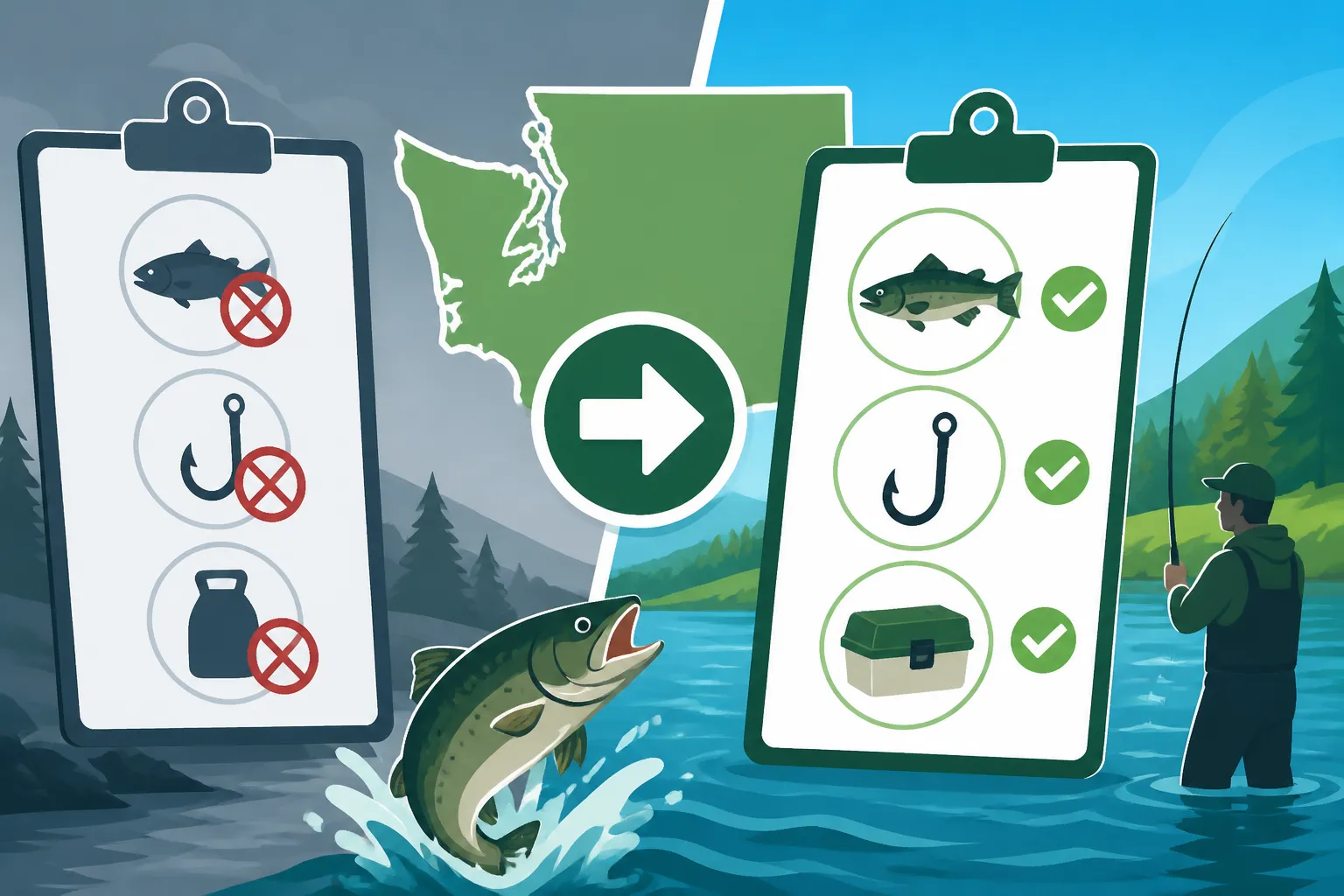
When WDFW issues an emergency rule change, it’s not always a blanket "everything is closed" announcement. Often, these changes are highly specific, targeting particular aspects of a fishery to achieve a precise management goal. Understanding the types of changes they can implement helps you decipher what the latest update actually means for your rod and reel.
Season Dates and Open/Closed Areas
One of the most common and impactful emergency rule changes involves adjusting the actual fishing season dates or closing specific areas entirely. This can happen in a few different ways, and the reasoning is usually directly tied to the health of the fish run.
For example, if WDFW biologists project a strong return of a particular salmon stock, they might issue an emergency rule to open a season that was previously closed or extend an existing season. This provides more opportunity for anglers to enjoy the resource. We've seen this on rivers like the Columbia, where strong summer Chinook returns can sometimes lead to additional fishing days or expanded areas. On the flip side, and more commonly, if a projected run of fish isn't materializing as expected, or if a specific stock is experiencing critically low numbers, WDFW will quickly implement an emergency closure. This means an area that was open yesterday might be completely closed today, or specific species may be off-limits. This is often done to ensure enough fish make it to the spawning grounds, protecting the future generations. It can also apply to specific marine areas within Puget Sound, where certain salmon runs might be struggling more than others. Keeping an eye on the Washington Sport Fishing Seasons and Emergency Closures page on the WDFW website is crucial for staying up-to-date on these dynamic changes.
Bag and Possession Limits
Another frequent target of emergency rules is the daily bag limit and possession limit. These are critical tools for managing the total number of fish removed from a fishery, especially when a run is weaker than anticipated or if harvest is exceeding expectations.
An emergency rule might reduce the daily limit for a species from, say, two fish down to one. This directly impacts how many fish an angler can keep in a single day. The possession limit, which dictates how many fish you can have in your possession at any given time (including at home in the freezer), can also be modified. If the daily limit drops, the possession limit often follows suit to prevent anglers from "stockpiling" fish over multiple days beyond the conservation goals. For example, if a river is experiencing a weak steelhead run, WDFW might change the rule to "catch-and-release only" for wild steelhead, or even reduce the hatchery steelhead limit. These adjustments directly impact your take-home fish. It’s important to remember that the rules distinguish between Understanding Washington's Daily Bag Limits by Species and the broader concept of How Bag and Possession Limits Work in Washington. You might catch your daily limit, but if your freezer already holds your possession limit, you can't keep more until some have been consumed or gifted.
Gear Restrictions and Bait Bans
Emergency rules frequently address the type of gear allowed or whether bait can be used. These restrictions are generally implemented to reduce the mortality of incidentally caught fish or to make fishing more challenging, thereby reducing overall harvest pressure.
A common gear restriction is the requirement for Barbless Hook Requirements on Washington Rivers. While often in place during certain seasons, an emergency rule can impose barbless hooks on a fishery that previously allowed barbed hooks. The reasoning here is to make it easier to release fish unharmed, especially when targeting hatchery fish in an area also containing vulnerable wild stocks that must be released. Similarly, an emergency rule might declare a Washington Bait Bans and When They Apply. This means you can't use scents, eggs, shrimp, or other natural baits. Bait bans are often put in place in areas where there's a need to protect wild or endangered species, as bait can lead to deeper hooking and higher mortality rates for released fish. For instance, in some stretches of the Columbia River, a bait ban might be implemented if certain upriver bright salmon stocks are struggling, even if other more abundant stocks are present. These changes force anglers to switch to artificial lures or flies, which generally result in fewer deep-hooked fish.
The Data Driving These Decisions
It’s easy to feel like emergency rule changes appear out of nowhere, arbitrarily altering your plans. But behind every single adjustment is a complex web of scientific data, ongoing monitoring, and dedicated personnel working to manage a precious natural resource. These decisions are far from arbitrary; they are the result of constant vigilance and data analysis.
Test Fisheries and Run Updates
One of the most critical sources of real-time information driving emergency rule changes comes from "test fisheries." These are carefully controlled fishing efforts, often conducted by WDFW staff or contractors, to gauge the strength and timing of incoming fish runs. Imagine a small fleet of boats fishing with specific gear in a particular area, meticulously recording every fish caught, its species, origin (hatchery or wild), and even collecting genetic samples.
The data gathered from these test fisheries is invaluable. If a test fishery in the lower Columbia River, for example, is showing significantly lower catches of fall Chinook than predicted, or if the proportion of wild fish is higher than expected, it sends up a red flag. This real-time intelligence, combined with fish counts at dams (like Bonneville or McNary), allows WDFW biologists to adjust their projections for the overall run size. When these updated projections fall below conservation thresholds, or if tribal co-manager agreements require adjustments, an emergency rule change becomes necessary. This is precisely how Test Fishery Counts and How They Drive Salmon Openings are integrated into the decision-making process, often leading to swift rule adjustments that prevent overharvest and protect future returns.
Conservation Goals and Species Management
At the heart of every WDFW decision, especially concerning emergency rules, are fundamental conservation goals and the broader mandate of species management. The department isn't just trying to provide fishing opportunities; its primary role is to ensure the long-term health and sustainability of Washington’s fish and wildlife populations for future generations.
Many of Washington's iconic fish species, particularly wild salmon and steelhead, are listed under the Endangered Species Act (ESA) or are considered species of concern. This means there are strict legal requirements to protect them. An emergency rule might be triggered if harvest rates on an abundant stock are inadvertently impacting a weaker, co-mingling stock that is ESA-listed. For instance, if a Puget Sound fishery is targeting abundant hatchery coho, but test fisheries reveal a higher-than-expected incidental catch of a struggling wild Chinook stock, an emergency rule might close the coho fishery or implement even stricter gear restrictions to reduce stress on the Chinook. Furthermore, the WDFW operates under a complex framework of tribal fishing rights and agreements. These co-management relationships often mean that fishing seasons and allocations for both tribal and non-tribal fisheries are constantly being re-evaluated based on real-time run updates. Any necessary adjustment to tribal fisheries can, in turn, trigger a corresponding emergency rule change for recreational anglers, ensuring the overall harvest stays within sustainable limits. This intricate dance of data, conservation, and co-management is why How Washington's WDFW Sets In-Season Emergency Rules is such a nuanced process.
How to Stay Informed and Adapt
The dynamic nature of Washington fishing regulations means that relying on a pamphlet you picked up at the beginning of the year is no longer sufficient. To avoid disappointment and potential violations, proactive information gathering and a flexible mindset are your best allies.
Official Sources for Real-Time Updates
The absolute best place to find current and emergency rule changes is directly from the source: the Washington Department of Fish and Wildlife (WDFW). Their website is constantly updated, often multiple times a week during peak seasons.
Specifically, you want to bookmark the WDFW "Emergency Rules" page. This is where every single in-season change is posted immediately, detailing the specific area, species, dates, and what exactly has been modified. These notices are usually very clear, stating the effective date and the changes made to the permanent regulations. Beyond the website, WDFW also offers the Fish Washington app, which is a fantastic resource. This app allows you to download regulations, check emergency rules for specific areas, and even report your catch electronically. It's like having the most current regulations right in your pocket. Using tools like the Electronic Catch Record Cards and the Fish Washington App can save you a lot of headache. While social media groups and forums can be great for local chatter and tips, always double-check any rule information against the official WDFW sources. Angler interpretations, while well-intentioned, can sometimes be inaccurate. Make it a habit to check Where to Find Current Washington Fishing Rules before every trip, even if you just fished the same spot yesterday.
Adapting Your Approach When Rules Shift
The best anglers are often the most adaptable. When an emergency rule changes your plans, instead of throwing in the towel, consider it an opportunity to explore new waters or target different species. This is where having a versatile tackle box and a willingness to learn new techniques really pays off.
If your planned river for steelhead goes catch-and-release only, for example, maybe it’s time to explore a lake for trout, or pivot to targeting resident coho in Puget Sound if those seasons are open. Having a variety of gear that can be quickly swapped out, such as different types of lures, flies, or even an extra rod rigged for a different method, can be incredibly helpful. Websites like Amazon offer a huge selection of tackle that can be delivered quickly if you realize you're missing something crucial for a new plan. Don't be afraid to try something new, like fly fishing if you typically spin fish, or bottom fishing for lingcod if your salmon plans are thwarted. Local tackle shops are also invaluable resources; the staff often have the most up-to-date intel on what’s biting and what areas are open, and they can offer excellent advice on alternative fisheries. Remember, even if your primary target is closed, Washington usually has something open year-round for anglers to pursue.
The "Why" Behind the "What" – Deeper Understanding
While the immediate impact of an emergency rule change can be frustrating, taking a step back to understand the fundamental reasons behind these decisions can foster a greater appreciation for the delicate balance that WDFW strives to maintain. These aren't arbitrary rules; they are scientifically informed actions designed to protect our shared resources.
Short-Term Pain for Long-Term Gain
It’s a tough pill to swallow when your highly anticipated fishing trip is curtailed by an emergency closure or a severe restriction. However, these measures are almost always implemented for the greater good: the long-term health and sustainability of Washington's fish populations. Think of it as a necessary pause or adjustment to ensure there's fishing for years, decades, and generations to come.
Without the ability to implement emergency rules, WDFW would be unable to react swiftly to unforeseen circumstances, like a critically low run of salmon returning to a specific river, or unexpected environmental conditions that make fish particularly vulnerable. Imagine if, back in the day, a river with a struggling steelhead run was kept open purely because the annual pamphlet said it would be. The consequence could be a complete collapse of that run, leading to years, if not decades, of closures, or even permanent loss. These short-term sacrifices, whether it's a reduced bag limit or a temporary closure on a specific portion of the Fishing the Columbia in Washington During an In-Season Closure, are crucial interventions. They ensure that enough fish escape to spawn, replenish the population, and provide future angling opportunities. It's a testament to adaptive management and a commitment to ensuring that the resource is not overexploited.
The Role of Public Input and Scientific Data
While emergency rule changes are often made quickly based on immediate scientific data and unforeseen circumstances, it's important to understand that the broader regulatory framework often incorporates public input. However, emergency rules, by their very nature, are designed for rapid response, meaning extensive public comment periods aren't always feasible in the moment.
The WDFW utilizes an immense amount of scientific data: fish counts, genetic analysis, ocean conditions, habitat assessments, and more. This forms the bedrock of their decision-making. For regular, annual rule-setting processes, there are extensive public comment periods, public meetings, and advisory committees where anglers and stakeholders can voice their opinions and contribute to the shaping of future regulations. Emergency rules, however, bypass much of this process because the situation demands immediate action. The decision-makers rely on the best available science and the expertise of their biologists to make quick, informed choices to protect the resource. While it may feel like your voice isn't heard in these specific instances, remember that the broader regulatory system is built on a foundation that does incorporate public perspective and scientific rigor. The goal is always to balance harvest opportunity with the critical need for conservation.
Common Emergency Rule Modifications and Reasons
To help you understand what to expect, here's a table summarizing common types of emergency rule changes and the typical reasons they are implemented:
| Type of Emergency Rule Change | What it Modifies | Common Reasons | Example |
|---|---|---|---|
| Season Closure/Opening | Completely closes an area/species, or unexpectedly opens one. | Fish run weaker/stronger than predicted, environmental conditions, conservation goals. | "Effective immediately, Marine Area 9 is closed to Chinook salmon retention due to lower-than-expected run strength." Or, "Cowlitz River to open for additional 3 days for hatchery steelhead due to strong return." |
| Bag Limit Change | Reduces or increases the daily limit for a species. | Run strength adjustments, reaching harvest quotas earlier than anticipated. | "Daily limit for Coho salmon in Marine Area 7 reduced from 2 to 1." Or, "Daily limit for resident trout in Lake Whatcom increased to 10." |
| Possession Limit Change | Reduces or increases the total number of fish you can possess. | Aligns with daily limit changes to prevent accumulation over several days. | "Statewide possession limit for hatchery steelhead reduced to 2 fish." |
| Gear Restriction | Mandates specific hook types, prohibits certain gear. | Reduce incidental mortality on wild/protected species, reduce catch efficiency. | "All fishing for salmon and steelhead on the Skykomish River requires single-point, barbless hooks." |
| Bait Ban | Prohibits the use of natural baits (eggs, shrimp, worms, etc.). | Reduce deep hooking and mortality of released fish, especially for wild stocks. | "Bait prohibited for all species in the North Fork Nooksack River upstream of the Acme Bridge." |
| Area Restriction | Closes specific parts of a water body (e.g., above a certain bridge). | Protect spawning fish, reduce pressure on concentrated fish, habitat protection. | "Fishing prohibited within 400 feet of the Baker River Dam fish ladder." |
| Species-Specific Closure | Closes a fishery for one species while others remain open. | Targeted conservation effort for a particular stock, ESA concerns. | "Only hatchery Chinook may be retained; wild Chinook must be released unharmed in the Quillayute River system." (Effectively, a wild Chinook closure within a broader salmon season.) |
Disclaimer
The information provided in this guide is for informational purposes only and is not a substitute for checking the official Washington Department of Fish and Wildlife (WDFW) regulations. Fishing rules and regulations can change frequently and without prior notice, especially through emergency rule changes. Always consult the most current WDFW Fishing Regulations pamphlet, the WDFW Emergency Rules webpage, or the Fish Washington mobile app immediately before and during your fishing trip to ensure compliance. Failure to do so could result in fines or penalties.