Black Rockfish vs Copper Rockfish
It's incredibly common to stare down at a rockfish you've just brought aboard and scratch your head, wondering exactly which species you're looking at. With so many different types swimming in Washington waters, it can be a real challenge to tell them apart, especially when two species share similar colorations or body shapes. This guide aims to clear up some of that confusion, offering a detailed comparison between two of Washington's most frequently encountered rockfish: the Black Rockfish and the Copper Rockfish.
Understanding Washington's Rockfish Landscape
Washington's marine waters are home to a diverse array of rockfish species, each playing a vital role in our underwater ecosystems. From the rocky reefs of Puget Sound to the offshore pinnacles along the Pacific Coast, these fascinating fish are a staple for many anglers. Knowing your rockfish isn't just about identifying your catch; it's crucial for adhering to regulations and contributing to conservation efforts.
The Importance of Accurate Identification
You might think, "A rockfish is a rockfish, right?" Not so fast! While many rockfish share a similar general appearance – stout bodies, large mouths, and often spiny fins – the subtle differences are incredibly important. For instance, some rockfish species have stricter bag limits than others, and some are even completely prohibited from retention due to conservation concerns. Misidentifying a rockfish could lead to accidental violations, which nobody wants. Beyond regulations, accurate identification helps you understand the habitat and behavior of the fish you're targeting, making you a more effective and responsible angler. You'll find a great overview in Rockfish Species Along the Washington Coast.
General Characteristics of Rockfish
Before we dive into the specifics of Black and Copper Rockfish, let's touch on what generally defines a rockfish. These are bottom-dwelling fish, often found associated with rocky structures, kelp forests, and artificial reefs. They are members of the Sebastes genus, which means "magnificent" in Greek, a fitting name for their often vibrant colors and impressive fighting spirit. Most rockfish are characterized by their spiny dorsal fins, large pectoral fins, and a mouth that can gape surprisingly wide to engulf prey. They are relatively long-lived, slow-growing, and give birth to live young, which makes them particularly vulnerable to overfishing. This slow life history is a big reason why careful management and angler identification are so critical.
Black Rockfish: The Coastal Cruiser
Often considered one of the most accessible and popular rockfish species for anglers in Washington, the Black Rockfish (or Sebastes melanops) is a true icon of our coastal and Puget Sound waters. They are often found in relatively shallower water, making them a common target for both boat and shore anglers.
Key Identification Features of Black Rockfish
Black Rockfish are, as their name suggests, typically dark. Their overall coloration ranges from a dark gray to black on their backs, fading to a lighter gray or white on their bellies. What really sets them apart are the subtle dark spots and blotches that can be seen along their sides, giving them a somewhat mottled appearance, especially when wet. Their lateral line, which is a sensory organ running along the side of the fish, is usually a lighter color, standing out against their dark background.
Another crucial identifier is their mouth. Black Rockfish have a relatively large mouth, with the lower jaw protruding slightly beyond the upper jaw, giving them a characteristic "underbite." Their fins are often dark, matching their body color. When you hold one up, notice the dark blotches that aren't quite distinct bars but more like smudges. This distinct pattern is key, and you can learn more about it in How to Identify a Black Rockfish. They often have a somewhat streamlined body shape, reflecting their tendency to cruise through the water column, hunting smaller baitfish.
Where and When to Find Black Rockfish
Black Rockfish are incredibly adaptable and can be found in a wide range of habitats across Washington. You'll encounter them in both the protected waters of Puget Sound and along the open Pacific Coast, including popular fishing destinations like Westport and Neah Bay. They prefer rocky areas, kelp beds, and submerged structures where they can ambush prey. However, unlike some other rockfish species that hug the bottom tightly, Black Rockfish often suspend in the water column, sometimes just a few feet below the surface, especially when feeding on baitfish.
They are present year-round, though their accessibility and concentration can vary with baitfish movements and water temperatures. During spring and summer, when baitfish like herring and anchovies are abundant, Black Rockfish can be found actively feeding in schools near the surface, making them a fantastic target. They're often found around prominent points, reefs, and even beneath docks or jetties if there's enough depth and cover.
Fishing Techniques for Black Rockfish
Fishing for Black Rockfish is generally straightforward and incredibly fun, making them a great target for anglers of all skill levels. They are aggressive feeders and will readily strike a variety of lures and baits. Bottom Fishing for Lingcod and Rockfish off Washington offers some general tips, but for Blacks specifically, here's what often works:
- Jigging: One of the most popular and effective methods is jigging with metal jigs, leadhead jigs with soft plastics, or even bucktail jigs. Black Rockfish often respond well to a retrieve that mimics a fleeing baitfish. Drop your jig to the desired depth and work it with a series of lifts and drops, varying your retrieve speed until you find what they like. Colors like white, chartreuse, blue, and silver are often excellent choices. You can find a good selection of jigs and soft plastics on Amazon to get started.
- Plastic Swimbaits: Large soft plastic swimbaits rigged on heavy leadheads are deadly for Black Rockfish. Cast them out, let them sink, and retrieve them with a steady reel-and-pause motion. The paddle tail creates a tempting vibration that these fish can't resist.
- Live Bait: If you can get your hands on some live herring or anchovies, these are absolutely irresistible to Black Rockfish. Rig them on a simple leadhead jig or a mooching rig and let them swim naturally near structure or baitfish schools.
- Spinners and Spoons: For shallower water or when fish are really active near the surface, casting and retrieving larger spinners or spoons can be very effective, especially those designed to imitate small baitfish.
Copper Rockfish: The Reef Dweller
The Copper Rockfish (Sebastes caurinus) is another beautiful and highly sought-after species in Washington. While they share some similarities with their Black Rockfish cousins, their preferred habitat and distinct coloration make them easily distinguishable once you know what to look for.
Key Identification Features of Copper Rockfish
Copper Rockfish are aptly named for their striking coloration, which can range from a coppery brown to an olive-brown on their backs and sides, often with lighter patches and sometimes even hints of orange or pink. Their bellies are typically white or cream. The most distinguishing feature, however, is a clear, distinct white or copper-colored stripe that runs along their lateral line, often extending from behind their eye to their tail. This stripe is usually much brighter and more defined than any markings on a Black Rockfish.
Their fins are usually a darker shade of their body color, often with some coppery or orange hues. Their mouth is also generally smaller than a Black Rockfish, and the jaws are more even, with the upper jaw extending slightly beyond or meeting the lower jaw. Unlike the Black Rockfish's "underbite," the Copper Rockfish has a more conventional jawline. You can dive deeper into these subtle differences in How to Identify a Copper Rockfish. Look closely at the head and gill plate; they often have blotchy, dark markings that contrast with their lighter body, and their eyes tend to be quite large and prominent.
Where and When to Find Copper Rockfish
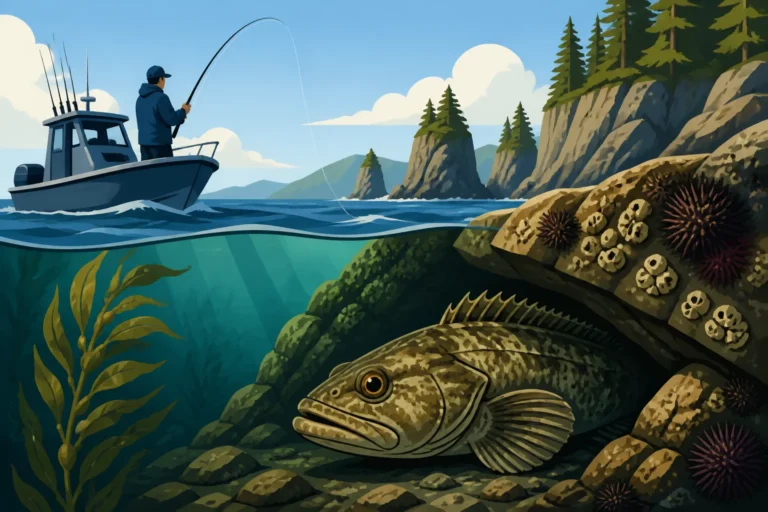
Copper Rockfish are true bottom dwellers, preferring deeper, rockier habitats than their Black Rockfish counterparts. You'll find them lurking in kelp forests, around rocky reefs, artificial structures like wrecks, and steep drop-offs from Puget Sound all the way to the outer coast. They don't typically suspend in the water column to the same extent as Black Rockfish. Instead, they prefer to hug the bottom, using the structure for cover and to ambush prey.
They are also a year-round resident, but like Black Rockfish, their specific locations might shift with water temperatures and food availability. Anglers often find them in depths ranging from 20 to 200 feet, but they can be found shallower or deeper depending on the specific structure. Good spots include the ledges and pinnacles around the San Juan Islands, offshore reefs near Westport, and the rocky areas of Puget Sound. If you're targeting areas known for Lingcod: Washington's Toothy Bottomfish, you're likely in Copper Rockfish territory too.
Fishing Techniques for Copper Rockfish
Since Copper Rockfish are typically found closer to the bottom and within structure, your fishing techniques will need to reflect this. Precision and the ability to get your offering down to their strike zone are key.
- Bottom Bouncing Jigs: Heavy leadhead jigs tipped with soft plastic grubs, shrimp, or squid imitations are incredibly effective. Drop your jig directly to the bottom, give it a few jigs, and then let it sit briefly before jigging again. The goal is to keep it near the bottom where the Coppers are holding.
- Scented Baits: Copper Rockfish often respond very well to natural baits. Herring, squid, shrimp, or even chunks of fish rigged on a dropper loop or a basic bottom rig are excellent choices. Using a bait like PowerBait Gulp! or similar scented soft plastics can also provide an edge. You can find various scented baits and jig heads on Amazon for a wide selection.
- Dropper Loop Rigs: This classic bottom fishing rig is perfect for Copper Rockfish. It allows you to present multiple baits or lures (like a leadhead jig on the bottom and a baited hook above it) near the seafloor. This maximizes your chances and helps you gauge what they're biting on. Bait Rigs for Rockfish on the Washington Coast has some good examples.
- Vertical Jigging with Metal Jigs: While Black Rockfish might chase a jig through the water column, for Coppers, you'll want to focus your vertical jigging closer to the bottom, perhaps just a few feet above the structure. Work it with a sharper, shorter jigging motion.
Head-to-Head: Black Rockfish vs. Copper Rockfish
Now that we've looked at each species individually, let's put them side-by-side to highlight the differences that will help you tell them apart quickly on the water. This comparison is vital not just for identification, but for understanding their preferred habitats and angling strategies.
Visual Distinctions: A Closer Look
When comparing a Black Rockfish and a Copper Rockfish, several visual cues stand out. The most obvious is color, but it's not always a perfect indicator due to individual variations and environmental factors affecting appearance.
| Feature | Black Rockfish | Copper Rockfish |
|---|---|---|
| Overall Color | Dark gray to black, lighter belly | Coppery brown to olive-brown, white/cream belly |
| Lateral Line Mark | Often a lighter, indistinct line against dark body | Distinct white or coppery stripe from eye to tail |
| Body Markings | Subtle, smudgy dark spots/blotches (not distinct bars) | Blotchy, dark markings on head/gill plates, lighter patches on body |
| Jaw | Lower jaw protrudes, characteristic "underbite" | Jaws more even, upper jaw slightly beyond lower or even |
| Fins | Typically dark, matching body color | Often darker, with coppery/orange hues |
| Body Shape | More streamlined | Stockier, robust |
Remember, while this table highlights key differences, always consider multiple features, especially the lateral line stripe and jaw configuration, as these are very reliable. The smudgy spots on a Black Rockfish vs. the clean, distinct stripe on a Copper Rockfish is probably the single best visual differentiator.
Habitat and Behavior Differences
Their appearances hint at their different lifestyles. Black Rockfish, with their streamlined bodies and projecting jaws, are built for cruising and ambushing baitfish in the water column. They are more pelagic (open water) in their habits, even though they are still associated with structure. Think of them as the hunters that venture out from the rocks to chase down schools of herring.
Copper Rockfish, on the other hand, are stockier, with mouths better suited for picking prey off the bottom or out of dense cover. They are fundamentally demersal (bottom-dwelling) and more territorial. They prefer to stay close to the protection and ambush points offered by reefs, boulders, and kelp forests. If you're fishing directly on top of a rocky pinnacle in deeper water, you're much more likely to pull up a Copper Rockfish. If you're casting towards a kelp bed near the surface, a Black Rockfish is a strong possibility.
Why Identification Matters for Anglers
Beyond simply knowing what you caught, distinguishing these species has practical implications for your fishing experience. First and foremost, regulations. While both are generally popular sport fish, specific management areas or emergency rules might treat species differently. You'll need to know Washington Fishing Regulations Every Angler Should Know and How Bag and Possession Limits Work in Washington. For example, some areas might have different bag limits for certain rockfish, or some species might be closed entirely, while others remain open. Understanding these distinctions helps you fish legally and avoid fines.
Secondly, knowing the species helps you refine your techniques and target specific fish. If you're aiming for Black Rockfish, you'll focus more on areas where baitfish congregate and use techniques that cover more water. If Copper Rockfish are your goal, you'll concentrate on deeper, rougher structure and present your baits or jigs closer to the bottom. This knowledge empowers you to be a more efficient and successful angler.
Gear, Regulations, and Conservation
Being a responsible rockfish angler goes beyond just knowing how to catch them and tell them apart. It also involves understanding the right gear to use, adhering to all regulations, and actively participating in conservation efforts to ensure these amazing fish thrive for future generations.
Essential Gear for Rockfish Anglers
The gear you choose will significantly impact your success and your ability to properly handle these fish.
- Rod and Reel: For Black Rockfish, a medium-heavy spinning or casting rod, about 7-8 feet long, paired with a reel spooled with 20-30 lb braided line and a fluorocarbon leader (20-30 lb test) is ideal. This setup provides the casting distance for jigs and swimbaits and enough power to handle a feisty rockfish. For Copper Rockfish, especially in deeper water or heavy structure, you might want a slightly stiffer rod with a fast action to quickly get fish away from snags. A good quality rod and reel setup can be found on Amazon, suitable for saltwater applications. Check out Rod and Reel You Need for Washington Puget Sound Salmon for general saltwater setups that can adapt to rockfish.
- Lures and Baits: As discussed, metal jigs, soft plastic swimbaits, bucktail jigs, and natural baits like herring or squid are all excellent choices. Having a variety on hand will allow you to adapt to what the fish are preferring on any given day.
- Descending Device: This is an absolute non-negotiable piece of gear for rockfish anglers. Rockfish are highly susceptible to barotrauma (the "bends") when brought up from deep water. Their swim bladders expand, making it difficult for them to swim back down. A descending device allows you to return rockfish that you don't intend to keep or that are prohibited from retention to depth, significantly increasing their survival rate. You can find these essential tools readily on Amazon or at local tackle shops. Learn more in Descending Devices for Rockfish and How to Use One.
- Pliers and Dehooker: Rockfish have sharp spines and often swallow hooks. Long-nosed pliers and a dehooking tool are crucial for safely removing hooks and minimizing injury to the fish, especially if you're practicing catch and release.
Understanding Rockfish Regulations in Washington
Washington's rockfish regulations are complex and can change frequently, often varying by marine area and species. It's not uncommon to encounter specific closures for certain rockfish species or even entire marine areas to protect vulnerable populations. Always, and I mean always, check the current Washington Department of Fish and Wildlife (WDFW) regulations before you head out.
Key things to look out for include:
- Bag Limits: How many rockfish of a specific species (or aggregate rockfish) can you keep per day?
- Possession Limits: How many can you have in your possession after multiple days of fishing?
- Size Limits: Are there minimum or maximum size requirements for certain rockfish? Slot Limits and Why Some Fish Must Go Back explains this concept well.
- Seasonal and Area Closures: Are there specific times of year or marine areas where rockfish fishing is closed entirely, or where certain species are prohibited? For instance, some marine areas in Puget Sound have very restricted or closed rockfish fisheries to aid recovery. Rockfish Species That Must Be Released in Washington will give you an idea of some of the protected species.
- Gear Restrictions: Are there limits on the number of hooks, or requirements for barbless hooks?
The bottom line is that these rules exist to protect rockfish populations, which are particularly vulnerable due to their slow growth and long lifespan. Ignorance of the law is not an excuse, and violating regulations can lead to hefty fines and loss of fishing privileges.
Practicing Responsible Rockfish Angling
Beyond following the letter of the law, ethical angling practices are essential for preserving our rockfish resources.
- Know Your Target: As this guide emphasizes, knowing the difference between species is the first step towards responsible angling. If you don't know what it is, don't keep it, especially if you're fishing in an area with complex rockfish regulations.
- Minimize Barotrauma: For any rockfish brought up from depths greater than 30 feet, assume it has barotrauma. If you intend to release it, use a descending device immediately. Don't just toss it back; a fish floating on the surface has a very low chance of survival.
- Handle With Care: If you plan to release a fish, handle it minimally and gently. Wet your hands before touching the fish to protect its slime coat. Avoid squeezing its internal organs.
- Practice Catch and Release: Consider practicing catch and release, especially for larger breeding-sized fish, or if you've already met your personal consumption needs. Rockfish are delicious, but moderation helps ensure their future.
- Reduce Bycatch: If you're consistently catching non-target or prohibited species, consider changing your location, depth, or fishing technique to reduce incidental catches.
- Report Violations: If you witness illegal fishing activity, such as exceeding bag limits or targeting closed species, report it to WDFW. We all share responsibility for protecting our fisheries.
By understanding the distinct characteristics of Black Rockfish and Copper Rockfish, equipping yourself with the right tools, and committing to responsible fishing practices, you're not just improving your own angling success; you're also becoming a vital part of rockfish conservation in Washington.
Disclaimer
This article is for general informational purposes only and does not constitute professional advice. Laws, prices and regulations vary by location and change over time. Consult a qualified professional for guidance on your specific situation.