Bull Trout and Why You Can’t Keep Them
Oh, the sheer delight of hooking into a beautiful fish in Washington's pristine waters, only to realize with a pang that it's a bull trout—a species you absolutely cannot keep. It's a bittersweet moment, isn't it? You're thrilled by the fight and the vibrant colors, but then the rules kick in, and you know this magnificent creature needs to go straight back into the water. This guide is all about helping you understand why these incredible fish are protected, how to identify them, and most importantly, how to ensure their safe return so they can continue to thrive in our wild rivers and lakes.
The Enigma of the Bull Trout: A Glimpse into Washington's Native Char
Imagine a fish that embodies the wild, untamed spirit of Washington's most pristine waterways. That's the bull trout. These aren't just any trout; they're char, a distinct group within the salmon family, and they are incredibly special. Many anglers, especially those new to our state, often find themselves captivated by a bull trout's striking appearance and powerful fight, only to later learn about their protected status. It can be a little confusing, but once you understand their story, you’ll appreciate why we give them such special treatment.
What Makes a Bull Trout a Bull Trout?
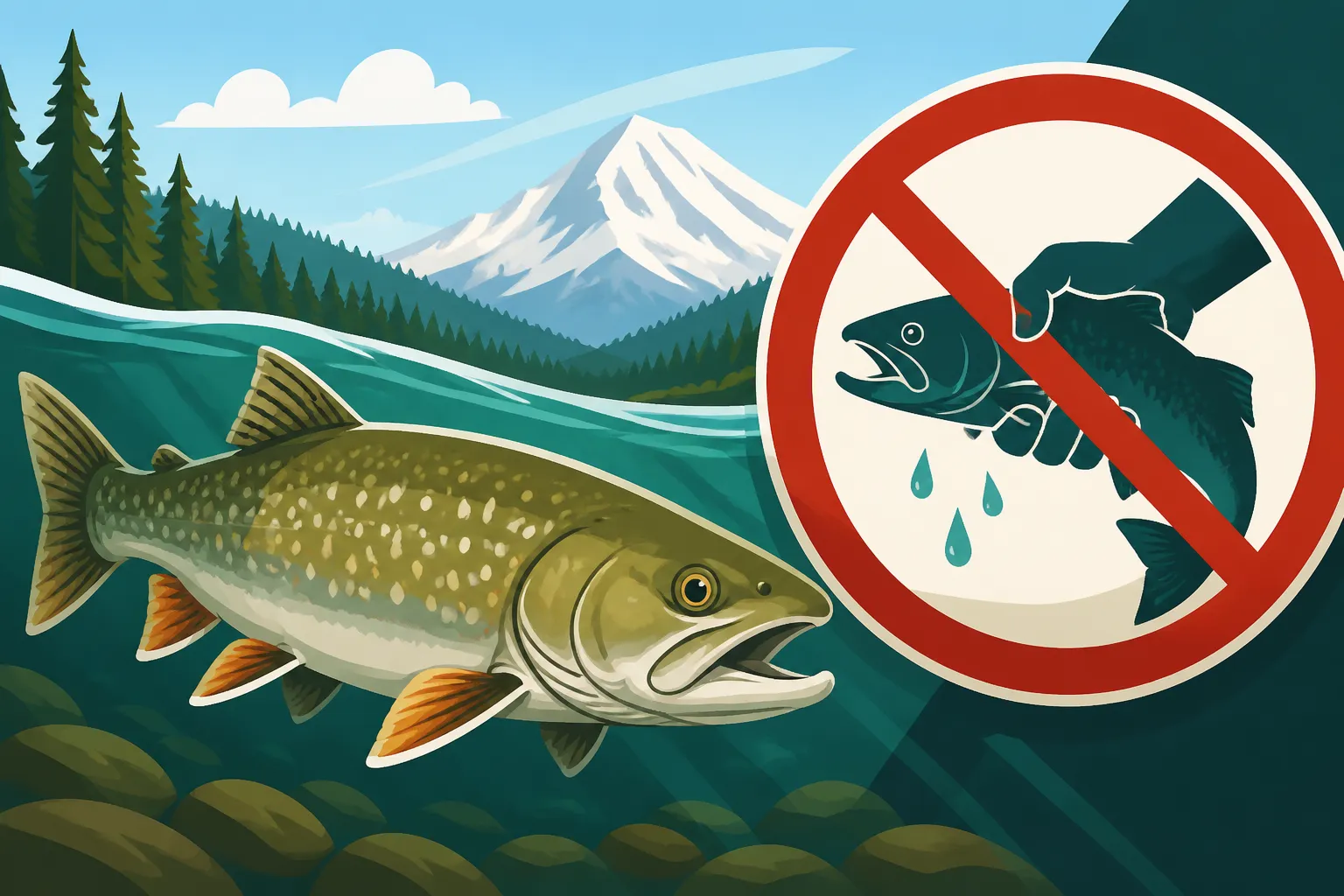
When you first see a bull trout, you might notice a few things that set it apart. Unlike many true trout species, bull trout typically lack the vibrant red or black spots along their lateral line that you often see on rainbows or cutthroat. Instead, they sport pale yellow, orange, or reddish spots on a darker, often olive-green to bluish-grey body. Their belly can range from white to pale yellow, and during spawning, males can erupt in a fiery orange and red, making them truly breathtaking. Another dead giveaway is their large, broad, and somewhat flattened head, often described as "bull-like," which gives them their name. This powerful head houses equally powerful jaws, indicative of their predatory nature.
They are apex predators in their ecosystems, primarily feeding on smaller fish. These char absolutely demand cold, clean, and complex aquatic habitats, making them fantastic indicators of a healthy watershed. In Washington, you’ll find them in the colder tributaries of the Columbia River, parts of the Puget Sound drainage, and especially the rugged, crystal-clear rivers of the Olympic Peninsula and North Cascades. They often undertake long migrations from lakes or larger rivers into smaller, colder streams to spawn, a journey that can cover many miles. Their life cycles can be quite complex, with some individuals staying in rivers their whole lives, others moving between rivers and lakes, and still others venturing into saltwater before returning to spawn.
Bull Trout vs. Dolly Varden: Clearing Up the Confusion
Here's where it gets a little tricky for a lot of folks: distinguishing between bull trout and Dolly Varden. For many years, and in some regions, these two species were considered the same or very closely related, often lumped under the name "Dolly Varden." However, scientific consensus now generally recognizes them as distinct species, though they are both part of the Salvelinus genus (char). In Washington, this distinction is particularly important because while Dolly Varden (specifically the anadromous coastal form) might be open to harvest in very limited, specific areas or under certain conditions, bull trout are almost universally protected as a catch-and-release species.
What makes it even harder is that they look incredibly similar. Both have those characteristic pale spots on a darker body and lack the distinct white leading edges on their pectoral, pelvic, and anal fins that you'd see on a brook trout. The most reliable way to tell them apart often involves examining specific anatomical features that are not easily done streamside, or knowing the exact watershed you're fishing. For practical purposes, and to be absolutely safe, the Washington Department of Fish and Wildlife (WDFW) often lumps all Salvelinus species found in bull trout habitat under the general "bull trout" regulation, meaning they are all catch-and-release only. This simplifies things for anglers and ensures the maximum protection for these vulnerable fish. So, if you catch what you think might be a Dolly Varden in a known bull trout area, treat it as a bull trout and release it carefully. When in doubt, let it swim! For more on this, check out How to Tell a Bull Trout From a Dolly Varden.
Why You Can't Keep Them: The Protected Status of Bull Trout in Washington
It's a common question, and sometimes a frustrating reality for anglers: why can't I keep this beautiful fish? The answer lies in decades of environmental change and the inherent vulnerability of bull trout. They are not just another game fish; they are a vital, yet struggling, native species. Their protected status is a testament to significant declines in their populations and a commitment to their recovery.
A Species in Peril: The History of Bull Trout Decline
Bull trout populations have faced immense pressure over the last century, leading to dramatic declines across much of their historical range. One of the biggest culprits has been habitat degradation. Historically, logging practices, road building, and agricultural development altered the very streams and rivers that bull trout depend on. Sediment runoff from these activities can smother spawning beds, while increased water temperatures from clear-cutting riparian areas can make a stream uninhabitable for these cold-water specialists. Dams have also played a significant role, fragmenting their migratory routes, preventing access to critical spawning and rearing habitat, and altering natural flow regimes. It’s hard to imagine a fish that needs to travel dozens, sometimes hundreds, of miles to spawn being blocked by a massive concrete wall.
Another major threat comes from non-native fish species. The introduction of brook trout, for example, has been particularly damaging. Brook trout compete with bull trout for food and habitat, but even more critically, they can hybridize with bull trout, leading to infertile offspring and diluting the genetic integrity of native populations. Overfishing in earlier eras, before their vulnerability was fully understood, also contributed to their decline. Faced with these compounding threats, the U.S. Fish and Wildlife Service listed bull trout as a threatened species under the Endangered Species Act (ESA) in 1999. This federal protection, along with state-level regulations from the WDFW, makes it illegal to harvest bull trout, emphasizing conservation above all else. This isn't just a Washington issue; it's a critical conservation challenge across the Pacific Northwest.
Conservation Efforts and Recovery Programs in Washington
The story isn't all grim, thankfully. Significant efforts are underway to bring bull trout populations back from the brink, and Washington is a key battleground in this fight. The WDFW, in conjunction with federal agencies like the U.S. Fish and Wildlife Service and the U.S. Forest Service, as well as numerous tribal nations and local conservation groups, is actively involved in comprehensive recovery programs. These programs often focus on a few key areas: habitat restoration, barrier removal, and education.
Habitat restoration projects involve things like planting native vegetation along stream banks to provide shade and cool water, stabilizing eroded banks, and adding large woody debris to create complex in-stream habitats that offer shelter and foraging opportunities. Dam removals, such as the historic Elwha River project on the Olympic Peninsula, have opened up vast stretches of prime habitat, allowing bull trout and salmon to return to their ancestral spawning grounds for the first time in a century. Researchers also conduct extensive surveys to monitor populations, identify critical habitats, and track recovery progress. Anglers play a crucial role in this by adhering strictly to catch-and-release regulations and even participating in citizen science efforts to report sightings in some areas. It’s a long road, but the commitment to these unique fish is strong, and every careful release helps. For a broader understanding of statewide rules, see Washington Fishing Regulations Every Angler Should Know.
Encountering a Bull Trout: Best Practices for Catch-and-Release
So, you’re out on a Washington river, casting for steelhead or trout, and suddenly your rod bends. You reel in a beautiful fish with those tell-tale pale spots and a big head – it’s a bull trout! Your heart might quicken, both from the excitement of the catch and the realization that you’ve encountered a protected species. Now, what do you do? The key is to be prepared and know how to handle these fish with the utmost care to ensure their survival after release.
Minimizing Harm: The Right Way to Handle a Protected Fish
The goal when catching a bull trout (or any fish you plan to release) is to minimize stress and physical injury. This starts even before you cast your line. Many areas where bull trout are present, particularly on wild steelhead rivers, have specific gear restrictions, such as mandatory use of barbless hooks. This isn't just a suggestion; it's a regulation designed to make unhooking easier and less damaging to the fish. You can find barbless hooks easily at any fishing tackle shop or even on Amazon. If your hooks aren't barbless, crimp down the barb with a pair of pliers – it makes a huge difference.
When you land the fish, try to keep it in the water as much as possible. A rubberized landing net is an invaluable tool for this. Unlike knotted nylon nets that can strip off protective slime and damage fins, rubber nets are much gentler. Avoid beaching the fish on rocks or sand, which can also remove that vital slime layer, leaving them vulnerable to disease. If you need to handle the fish for a quick photo, wet your hands thoroughly first. Dry hands can remove the slime, which is the fish's first line of defense against pathogens. Support the fish horizontally, ideally with one hand under its belly and another gently grasping the base of its tail. Never lift a large fish solely by its jaw or by squeezing its belly tightly, as this can cause internal organ damage. Unhook quickly, preferably with forceps or pliers, and then gently guide the fish back into the current, allowing it to recover and swim away on its own power. You can learn more about general careful release practices in Catch-and-Release Rules During Wild Steelhead Closures.
What to Do If You Accidentally Catch One (and you will!)
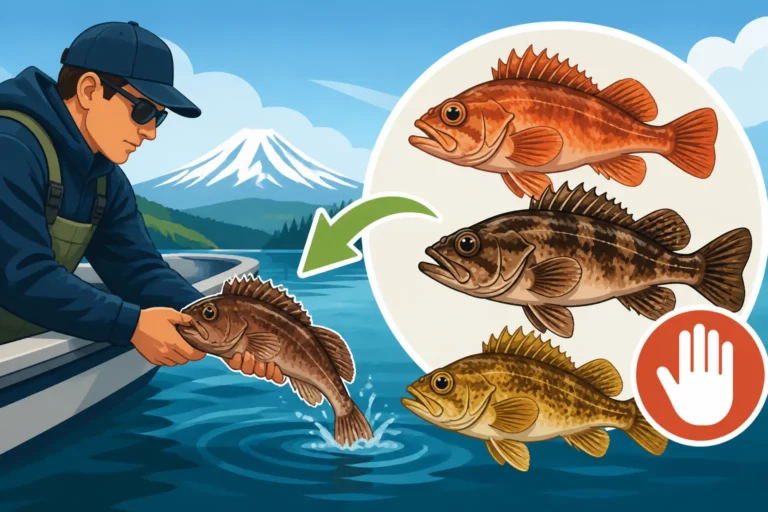
No matter how careful you are, if you fish in bull trout habitat, you will eventually hook one. It’s part of the experience, and there's no shame in it, as long as you know how to respond. The absolute first rule is: do not remove it from the water if you can help it. If it’s small enough to handle in the net while submerged, do that. If it's too big, try to get the hook out while the fish is still in the water, ideally without even touching it if you can manage.
If you have to briefly touch the fish to get the hook out, remember those wet hands. Never, ever put a bull trout on a stringer or in a live well. There is no legal possession limit for bull trout in Washington; the limit is zero. If you accidentally hook one deep and can’t remove the hook without causing more damage, it’s often recommended to cut the line as close to the hook as possible. The hook will often rust out or be dislodged naturally over time, and this is usually less traumatic than trying to forcibly rip it out.
There’s typically no requirement to report an accidental catch and release of a bull trout to WDFW, as long as it’s handled properly and released immediately. The emphasis is on prevention and careful handling. However, being aware of areas known for bull trout and adjusting your gear (like using single, barbless hooks) is a proactive step that every responsible angler should take.
Navigating the Regulations: How Bull Trout Rules Affect Your Fishing Trip
Understanding fishing regulations in Washington can sometimes feel like trying to decipher an ancient scroll, and adding protected species like bull trout into the mix only adds another layer. But it’s crucial to know the rules, not just to avoid penalties, but to actively contribute to conservation. Bull trout regulations are designed to protect a vulnerable population, and every angler plays a part in their recovery.
General Rules and Specific River Closures
The overarching rule for bull trout in Washington is straightforward: they are catch-and-release only, statewide. This means if you catch one, you must release it immediately and with the least possible harm. There are no exceptions, no special seasons, and no size limits because you simply cannot keep them. This blanket regulation simplifies compliance for anglers and provides a strong protective measure for the species.
Beyond the general catch-and-release rule, specific waters, particularly those known for significant bull trout populations, might have additional restrictions. These can include mandatory single-point barbless hooks (as discussed earlier, vital for easy release), bait bans, or even full closures to all fishing during critical spawning periods. For example, some high-elevation lakes or remote river sections that are strongholds for bull trout might have unique regulations that differ from general trout fishing rules. Rivers on the Olympic Peninsula, such as the Quinault or Hoh, which are also famous for their wild steelhead, are places where you might encounter bull trout and need to be extra vigilant about adhering to specific gear rules. Before every trip, it's absolutely essential to consult the current WDFW Sport Fishing Regulations pamphlet. You can often pick up a physical copy at tackle shops or download it digitally. Reading the Washington Sport Fishing Regulations Pamphlet is a great way to prepare, and always check for Emergency Rule Changes: Why Washington's Rules Shift Mid-Season, as regulations can change without much notice, especially for sensitive species or during low-water years.
Distinguishing Bull Trout from Other Salmonids When Rules Differ
This is where the angler’s identification skills really come into play. Many of Washington's waters hold a variety of salmonid species, and some look quite similar at first glance. You might be targeting rainbow trout, which are often open for harvest, or even a specific char like a Dolly Varden in an area where limited harvest might be allowed (though rare for Dolly Varden in Washington). The challenge is that a misidentification could lead to a violation, potentially resulting in fines or even loss of fishing privileges, as detailed in Fines and Penalties for Common Fishing Violations.
Consider the classic example: a bull trout versus a rainbow trout or a cutthroat. Rainbow trout typically have black spots all over their body and fins, and often a reddish stripe along their side. Cutthroat trout have a distinctive red or orange slash under their jaw. Bull trout, as we've noted, have those pale spots. While it might seem subtle, learning these key differences is vital. If there's ever a moment of doubt, the safest and most responsible course of action is to assume it's a bull trout and release it carefully. It’s better to release a fish you could have kept than to keep a fish that should have been released. Many experienced anglers carry a small, waterproof field guide or even a laminated sheet of common fish identification tips, perhaps found on Amazon, to help with quick decisions streamside. Understanding the key features, like those detailed in How to Identify a Fish You've Never Caught Before, will significantly reduce the risk of accidental harvest.
Here's a quick comparison to help solidify those identification cues:
| Feature | Bull Trout | Rainbow Trout (Coastal) | Cutthroat Trout (Coastal) |
|---|---|---|---|
| Spots | Pale (yellow, orange, red) on dark body | Numerous small black spots on body & fins | Numerous small black spots, concentrated towards tail |
| Ventral Fins | No white leading edge | White leading edge often present | White leading edge often present |
| Jaw | Large, extends beyond eye | Extends to or slightly beyond eye | Extends well beyond eye |
| Color | Olive-green to bluish-grey, lighter belly | Silvery sides, darker back, red stripe | Silvery to brassy, darker back |
| Unique Marker | Large, broad head | Pinkish/red lateral stripe | Red/orange slash under jaw (hence "cutthroat") |
| Harvest Status | Catch-and-Release ONLY (Statewide) | Generally open for harvest (check limits) | Generally open for harvest (check limits) |
The Broader Impact: Why Bull Trout Conservation Matters
Sometimes it's easy to get caught up in the individual rules and regulations, but it's equally important to step back and understand the bigger picture. Why are we going to all this trouble for a single species of fish? The answer extends far beyond the bull trout themselves. Their survival, or decline, tells a crucial story about the health of our entire ecosystem.
Bull Trout as an Indicator Species
Think of bull trout as the canary in the coal mine for our cold-water ecosystems. Because they require very specific, high-quality habitat – exceptionally cold, clean, and well-oxygenated water with complex riverine structures – their presence (or absence) is a powerful indicator of environmental health. If bull trout populations are thriving in a river, it's a strong sign that the water quality is excellent, the riparian areas are healthy, and the aquatic food web is functioning properly. Conversely, a decline in bull trout numbers often signals deeper environmental problems, such as increasing water temperatures, sedimentation, pollution, or habitat fragmentation.
Protecting bull trout isn't just about protecting one species; it's about safeguarding the entire web of life that depends on these pristine conditions. The same cold, clear water and healthy river systems that bull trout need are also critical for many other iconic Washington species, including several runs of salmon and steelhead. When we work to restore bull trout habitat, we're simultaneously creating better conditions for juvenile salmon to rear, for insects to flourish, and for a multitude of other wildlife, from otters to eagles, to thrive. It’s a holistic approach to conservation, where one species' well-being benefits many.
The Role of Anglers in Protecting Washington's Wild Legacy
As anglers, we are more than just participants in a pastime; we are stewards of the resource. We are often the first ones to notice changes in river conditions, the first to appreciate the beauty of an intact ecosystem, and the first to come face-to-face with the incredible wild creatures that inhabit our waters. This gives us a unique and powerful role in conservation. By understanding and adhering to regulations, especially for protected species like bull trout, we are directly contributing to their survival.
Every time you use a barbless hook, every time you wet your hands before handling a fish, and every time you gently release a bull trout back into the current, you are actively participating in the recovery efforts. This responsible behavior isn't just about avoiding a fine; it's about fostering a deep respect for the natural world and ensuring that future generations can experience the same thrill of encountering these wild, native fish. We have a collective responsibility to protect Washington's wild legacy, and that includes the enigmatic bull trout. By staying informed, practicing ethical angling, and perhaps even supporting conservation organizations, we can all help ensure that the bull trout continues to be a vibrant part of our state's incredible biodiversity for years to come.
Disclaimer
This article is for general informational purposes only and does not constitute professional advice. Laws, prices and regulations vary by location and change over time. Consult a qualified professional for guidance on your specific situation.