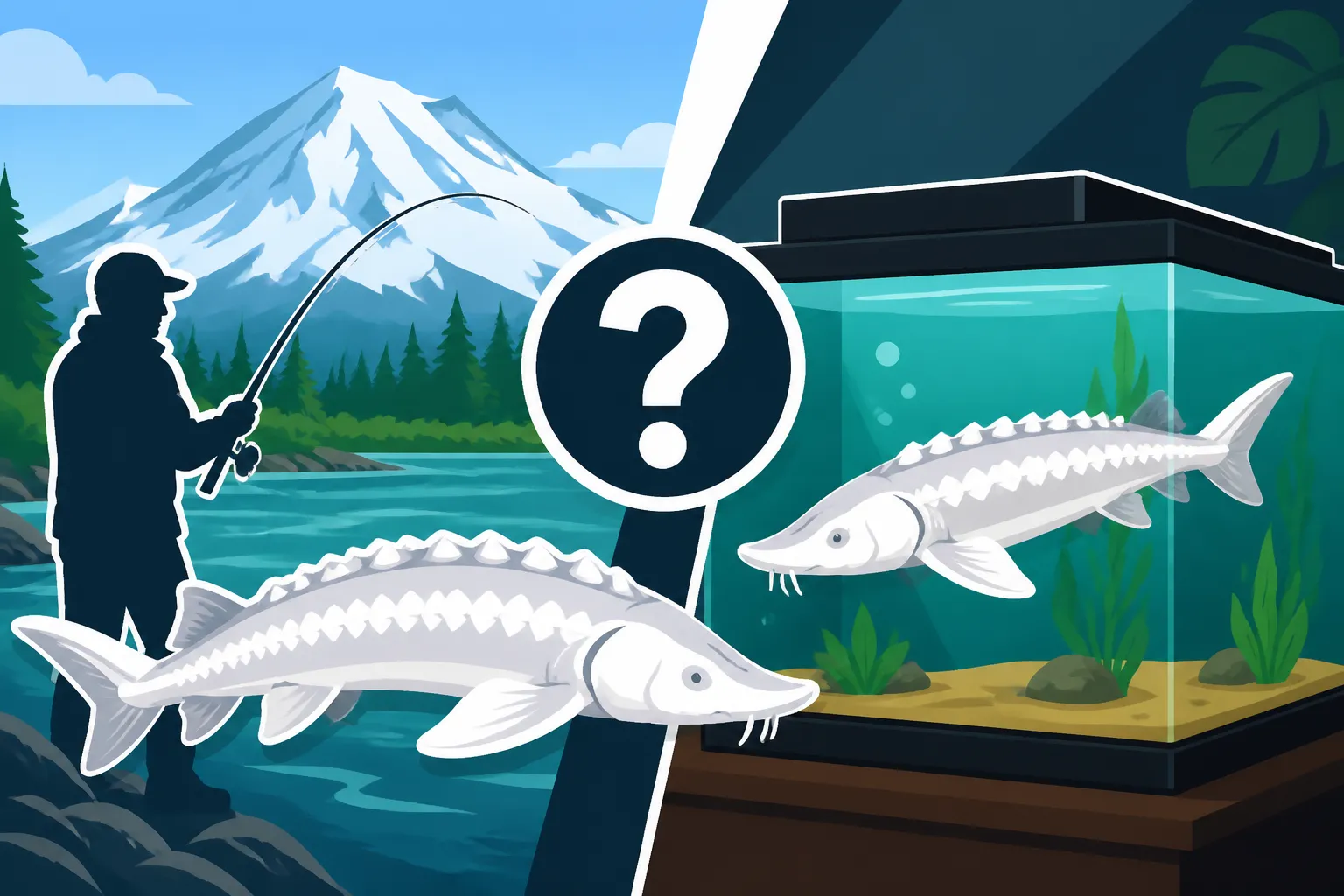
Can You Keep a White Sturgeon in Washington?
Catching a magnificent white sturgeon in Washington waters is truly an experience of a lifetime, a moment that many anglers dream about. The sheer power and ancient grace of these incredible fish make for an unforgettable battle. However, that thrilling moment when you finally get one alongside the boat or on the bank often comes with a looming question: "Can I keep this?" For many, the answer is a heartbreaking but necessary "no." This guide is here to shed light on the reality of white sturgeon retention in Washington, explaining why the rules are so strict, what those rules typically entail, and how you can be a responsible angler for these majestic creatures.
The Reality of White Sturgeon Retention in Washington
Let's cut right to the chase for most of Washington's waters, especially those iconic stretches of the Columbia River and its tributaries: the general rule is that you cannot keep a white sturgeon. While it might feel disappointing after an epic fight, this regulation is deeply rooted in critical conservation efforts to protect a species that has faced significant challenges over the decades. It's a tough pill to swallow when you’ve just landed a dinosaur of a fish, but understanding the ‘why’ behind it makes it a little easier to accept.
These aren't your typical fast-growing, quickly reproducing game fish. White sturgeon are slow to mature, live for an incredibly long time, and don't spawn every year. This means that populations are very vulnerable to overfishing. A single individual can represent decades of growth and potential future spawners. Consequently, regulations have become increasingly conservative over time to ensure these ancient fish continue to thrive for future generations of anglers.
Why Catch-and-Release is the Norm for White Sturgeon
The mandate for catch-and-release isn't just a whim; it's a vital strategy for protecting a truly unique and sensitive fish. When you encounter a white sturgeon, you're looking at a living fossil that has navigated these waters for millions of years. Their biology dictates a very careful approach to fishing.
A History of Conservation Needs
Historically, white sturgeon populations faced immense pressure from commercial fishing and habitat degradation, particularly in the lower Columbia River. They were once incredibly abundant, but unsustainable harvest practices, combined with dam construction impacting their spawning and rearing grounds, led to severe declines. Imagine a time when sturgeon were so plentiful they were almost ignored, then rapidly plummeted to the point of concern. That's the trajectory these fish have largely followed.
Conservation efforts in Washington, spearheaded by the Washington Department of Fish and Wildlife (WDFW), have focused on rebuilding these populations. This means implementing strict limits, and often, outright bans on retention. The long lifespan of sturgeon, sometimes exceeding 100 years, means that individuals take a very long time to replace. Losing even a few mature females can have a disproportionately large impact on the entire population's ability to recover. So, when you're asked to release a sturgeon, you're participating directly in a grand, multi-generational effort to bring them back.
The General Catch-and-Release Mandate
For the vast majority of Washington's white sturgeon fisheries, particularly in the lower Columbia River system and its tributaries, catch-and-release is the standing rule. This means that once you've caught a sturgeon, enjoyed the fight, and perhaps snapped a quick photo, it must be returned to the water alive and unharmed. There are stringent rules about how you handle the fish during this process, all designed to maximize its survival post-release.
While it's frustrating to release such an impressive fish, it's also a privilege to participate in a fishery that prioritizes conservation. Every released sturgeon represents a victory for the species and for the long-term health of Washington's aquatic ecosystems. Always make sure to consult the current regulations pamphlet, available from the WDFW or at licensed retailers, before heading out. Sometimes, specific windows or areas might open for limited retention, but these are exceedingly rare and require careful scrutiny of the rules, which can change rapidly. For example, understanding How Bag and Possession Limits Work in Washington is crucial, as sturgeon have very particular rules, even if they often point to catch-and-release.
Understanding Potential Retention Opportunities and Strict Size Limits
While catch-and-release is the overwhelmingly dominant regulation for white sturgeon in Washington, it's true that extremely limited retention opportunities sometimes exist in very specific areas or during tightly managed seasons. These are not commonplace and are typically introduced only when specific population goals are met or specific segments of the population are deemed healthy enough for a tightly controlled harvest. It's truly like finding a needle in a haystack for most anglers, but it's important to understand the framework.
The Rarity of Open Seasons
When a retention season does occur, it's usually for a very short duration, in a very specific geographic area, and often comes with incredibly tight bag limits and slot limits. A "slot limit" means that only sturgeon within a very specific length range can be kept. Fish that are too small or too large must be released. This approach is designed to protect both the younger, growing fish and the older, larger broodstock that are critical for spawning. You can learn more about Slot Limits and Why Some Fish Must Go Back.
These rare openings are often focused on the younger, non-spawning segments of the population. For instance, sometimes in the lower Columbia River, you might see a limited retention fishery for sturgeon between, say, 44 and 50 inches fork length. But again, these are not annual occurrences and are subject to immediate emergency closures based on catch rates and quota attainment. It's a constantly moving target, which is why checking Washington Sport Fishing Seasons and Emergency Closures is paramount every single time you plan a trip.
Strict Size Limits and Measuring Your Catch
If, by some rare chance, you find yourself in an open retention season, knowing how to properly measure a sturgeon is non-negotiable. Sturgeon are measured from the tip of the snout to the fork of the tail, known as "fork length." This isn't like measuring a trout; it requires careful handling. You'll need a reliable tape measure, often one that's affixed to a sturgeon mat or a long, flat surface to ensure accuracy without causing harm to the fish. Many anglers find specialized mats or oversized tape measures on retailers like Amazon, which makes the process safer and more precise.
Table: General Sturgeon Retention Guidelines (Hypothetical & Illustrative of Strictness)
| Feature | Typical White Sturgeon Retention Rules in Washington (if open) |
|---|---|
| Status (most areas) | Catch-and-Release Only |
| Retention | Extremely rare, short, and highly regulated seasons, if at all |
| Allowed Size (fork) | Very specific slot limit (e.g., 44-50 inches), subject to change annually or in-season |
| Bag Limit | Often 1 fish per angler, per specific, very limited season |
| Possession Limit | Usually equivalent to the daily bag limit or very restrictive |
| Gear Restrictions | Barbless hooks typically mandatory, single-point hooks common |
| Catch Record Card | Mandatory recording, even for retained fish during open seasons |
| Reporting | Some fisheries may require immediate reporting of retained fish |
It cannot be stressed enough: Always check the latest WDFW regulations for any specific area you plan to fish. These rules are illustrative and subject to constant change.
The penalties for violating sturgeon regulations, particularly keeping a fish out of season or outside the slot limit, are severe. They can include substantial fines, confiscation of gear, and loss of fishing privileges. This isn't just a slap on the wrist; it's treated with the seriousness that reflects the species' vulnerable status. Ignorance of the law is not an excuse, which is why Reading the Washington Sport Fishing Regulations Pamphlet is a fundamental responsibility for every angler.
Responsible Handling and Release Practices
Since catch-and-release is the norm for white sturgeon, knowing how to properly handle these magnificent fish to ensure their survival is absolutely crucial. A poorly handled sturgeon is a dead sturgeon, even if it swims away. Our goal as responsible anglers is to minimize stress and physical harm.
Essential Gear for Sturgeon Anglers
Before you even leave the house, make sure you have the right tools. Investing in proper gear is an act of conservation in itself. You'll need:
- Heavy-Duty Rod and Reel: Stout tackle designed for large, powerful fish will help you land the sturgeon quickly, minimizing the fight time and subsequent exhaustion for the fish. Many experienced anglers purchase their setups from reputable outdoor retailers or online stores like Amazon.
- Strong Line and Leader: Use line strong enough to prevent break-offs, which can leave a fish trailing line and hooks.
- Barbless Hooks: These are often required by regulation for sturgeon fishing anyway, but even if not, they are essential for easy and quick hook removal, minimizing tissue damage. You can easily pinch down barbs on your existing hooks with a pair of pliers.
- Large Landing Net or Cradle: A net with a rubberized mesh is ideal as it's gentler on the fish's slime coat and fins. Alternatively, a sturgeon cradle or sling allows you to safely secure and handle the fish in the water.
- Long-Nose Pliers or Hook Removers: These tools allow you to quickly and safely remove hooks without putting your hands too close to the fish's mouth or gills.
- Measuring Device (if retention is ever an option): A sturgeon measurement mat or a flexible, non-abrasive tape measure if you might need to confirm a slot length.
Without these items, you risk injuring the fish, making the fight longer than necessary, or struggling with hook removal, all of which reduce the sturgeon's chances of survival. Think of it as a small investment in the future of the fishery, and you can find a lot of great options on Amazon for all your sturgeon fishing needs.
Best Practices for Landing and Releasing Sturgeon
Once you've hooked a sturgeon, the real work begins. Your actions in the next few minutes will determine the fish's fate.
- Fight the Fish Quickly: Use appropriate tackle and fight the fish firmly to bring it in as quickly as possible. Prolonged fights exhaust the fish, reducing its chance of survival.
- Keep it in the Water: The golden rule for sturgeon: keep them in the water as much as possible. Their internal organs are not designed to support their massive weight out of water, and even a short time on the bank can cause irreversible damage. If you need to move it for a photo, use a cradle or sling and ensure its entire body is supported.
- Handle with Care: If you must touch the fish, wet your hands first to protect its delicate slime coat. Avoid holding it by the tail or gills. For larger fish, two people may be needed to support its belly.
- Quick Hook Removal: Use your pliers or hook removers to get the hook out swiftly. If the hook is deeply embedded and cannot be removed without causing further damage, cut the line as close to the hook as possible. Barbless hooks make this much easier.
- Revive If Necessary: If the fish appears sluggish or stressed, hold it gently in the current (facing upstream) and allow water to flow over its gills until it regains its strength and can swim away under its own power. Do not simply toss it back; ensure it is strong enough to escape predators.
- Minimize Photo Time: While a photo is tempting, keep it brief and ensure the fish is well-supported and back in the water within seconds.
By following these practices, you're doing your part to ensure that the White Sturgeon on Washington's Columbia River continue to thrive. This commitment to proper handling is a hallmark of truly ethical angling.
The Importance of Measuring and Reporting (Even for C&R)
Even when retention is not allowed, measuring and sometimes reporting your catch can still be important, primarily for scientific data collection. The WDFW often relies on angler reports to monitor populations, assess health, and understand migration patterns. While it's not always required for catch-and-release sturgeon, some specialized fisheries might ask for voluntary data, or a Catch Record Card Is Required in Washington even if you are just releasing them.
Understanding How Big White Sturgeon Get on the Columbia is fascinating, and your careful observation and (if applicable) accurate measurements contribute to the broader scientific understanding of these incredible fish. Scientists use this data to make informed decisions about future regulations, aiming to strike a balance between conservation and allowing for sustainable recreational opportunities. Therefore, being a conscientious angler means paying attention to these details and contributing to the bigger picture of sturgeon management.
Remember, the overarching theme with white sturgeon in Washington is conservation. Their long lives, slow reproduction, and vulnerability mean that every single fish is precious. By adhering to the strict catch-and-release rules and practicing responsible handling, we ensure that future generations can also experience the thrill of encountering these magnificent living dinosaurs in our Washington waters.
Disclaimer
This article is for general informational purposes only and does not constitute professional advice. Laws, prices and regulations vary by location and change over time. Consult a qualified professional for guidance on your specific situation.