What a Sea-Run Cutthroat Looks Like
There’s a special kind of thrill that comes with chasing sea-run cutthroat trout in Washington's estuaries and coastal rivers. These fish are absolute gems, blending beauty with a fierce fighting spirit. But let's be real, identifying them, especially when they’re zipping between saltwater and freshwater, can sometimes feel like solving a puzzle, particularly with other trout and young salmon around. This guide is here to unravel that mystery, giving you a clear picture of what a true Washington sea-run cutthroat looks like so you can confidently identify your catch.
The Distinctive Marks of a Washington Sea-Run Cutthroat
When you pull a sea-run cutthroat from the water, their appearance can vary subtly depending on where they’ve been recently, but there are some core characteristics that are unmistakable. These fish are truly a testament to nature's adaptability, often displaying a chameleon-like ability to shift their colors.
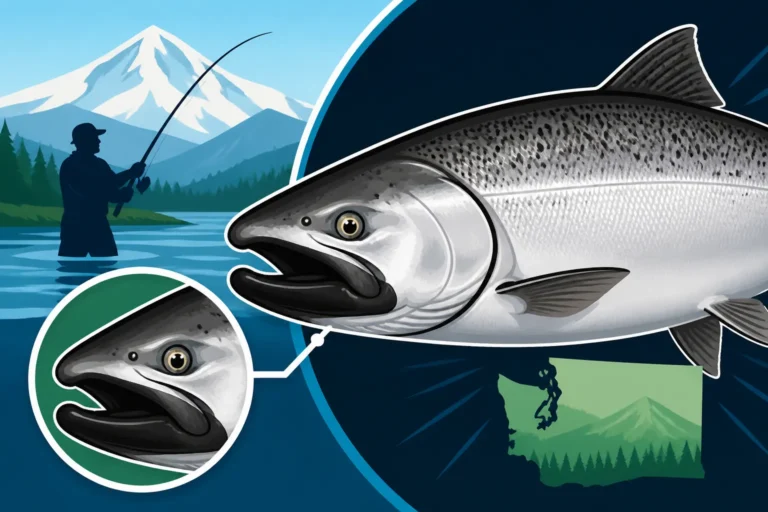
First and foremost, the most defining feature—the one that gives them their very name—is the red or orange "cutthroat" slash or two under their lower jaw. These slashes aren't always bright fire-engine red, especially on a fish that's just come in from the saltwater, where they might be a faded orange or even a faint rosy hue. But if you look closely, they'll almost always be there. It's like their signature. You might even need to gently lift their gill plate cover a bit to get a good look, but be gentle if you plan to release the fish.
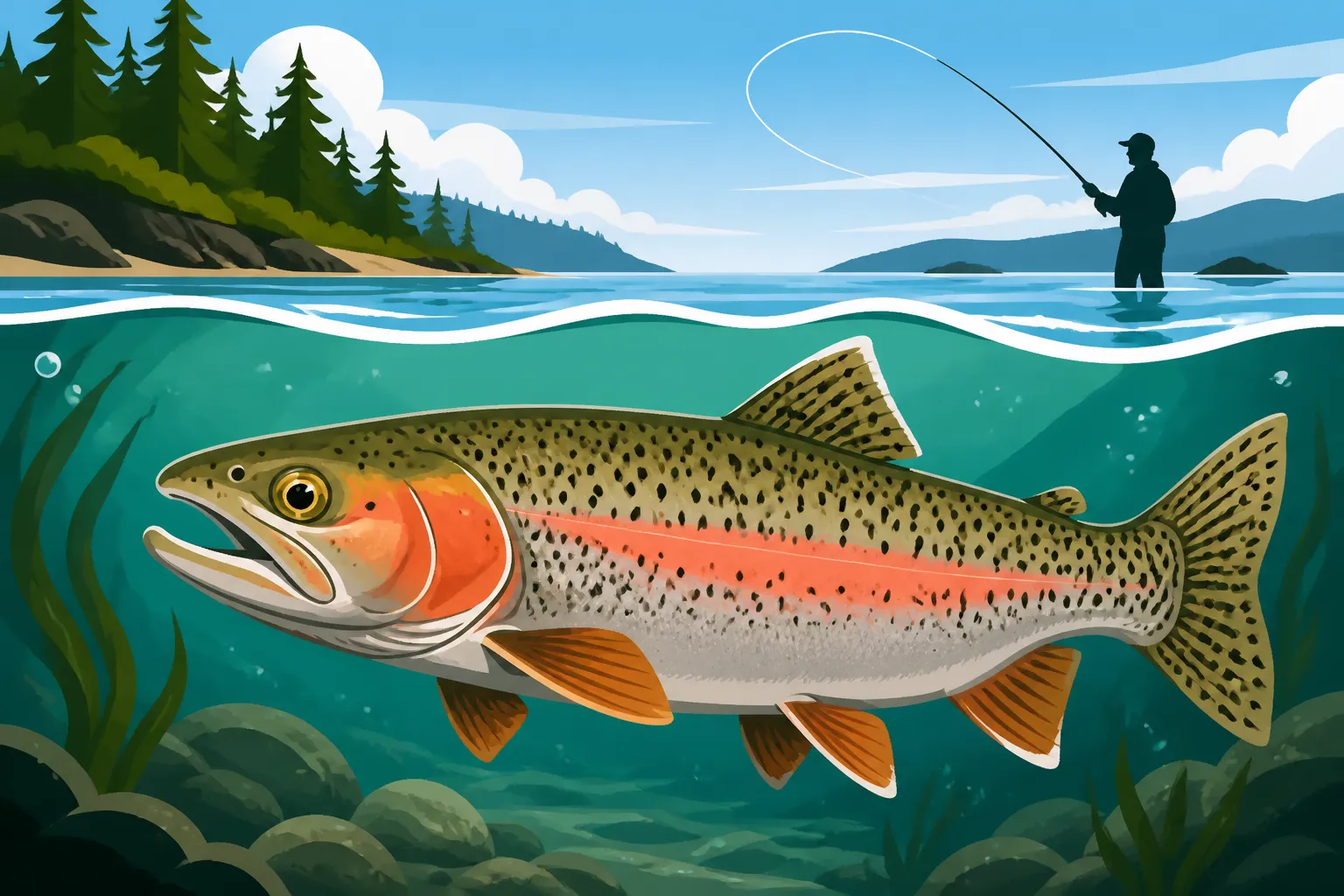
Beyond that key slash, let's talk about their overall body shape and coloration. A sea-run cutthroat is typically torpedo-shaped, quite streamlined, especially compared to some of their more "chunky" resident freshwater cousins. They are built for speed and navigating both currents and open water. Their back is often an olive-green to bluish-gray, fading into silvery sides that can shimmer like polished chrome. This silver sheen is particularly pronounced when they've spent time in Puget Sound or the ocean, helping them blend into the open water. As they move into freshwater, especially darker tannin-stained rivers or brackish estuaries, that silver often deepens into a more bronze, golden, or even olive-brown hue, making their spots stand out more.
Speaking of spots, sea-run cutthroat usually have a generous scattering of small, dark spots over their back, sides, and especially on their caudal (tail) fin. These spots are often irregular in shape and size, and they tend to be more concentrated towards the tail. It’s not uncommon to see them speckling the gill plates too. The density and size of these spots can vary quite a bit from fish to fish and even river system to river system, but they are generally less uniform and often more numerous than on, say, a rainbow trout. You might find a good field guide, perhaps one you ordered from Amazon, to be incredibly helpful with these nuances.
Their fins also tell a story. The dorsal fin is typically unremarkable in size, but their tail fin (caudal fin) is usually square or only very slightly forked. It's not deeply forked like a coho salmon, nor is it always perfectly straight. This subtle shape difference is another critical clue when you’re trying to distinguish them from other species in the water. Pay close attention to the fin margins, which might be slightly dusky or yellowish on some individuals.
Understanding Their Environment and How It Affects Appearance
The "sea-run" part of their name is crucial to understanding why their appearance can be so variable. These are anadromous fish, meaning they spend part of their lives in saltwater (the "sea") and part in freshwater (the "run") to spawn. This back-and-forth journey is what makes them so unique among trout, and it dramatically influences their looks.
When a sea-run cutthroat is actively living in saltwater environments, like the vast expanse of Puget Sound or the nearshore ocean along the coast, they often exhibit their most silvery, iridescent phase. This adaptation helps them camouflage in the open, blue-green waters, protecting them from predators while they feed on small baitfish and crustaceans. Their spots, while still present, can sometimes appear fainter against the bright silver background. Their bodies feel firm, muscular, and incredibly sleek, reflecting a rich diet. You might encounter them in this silvery phase when fishing areas like Saratoga Passage or near the mouths of rivers flowing into the Sound. For more on where these fish roam, check out Sea-Run Cutthroat in Washington's Puget Sound.
As these fish begin their "run" back into freshwater rivers and estuaries to spawn, their physiology and appearance start to transform. They might spend time in the brackish mixing zones where rivers meet the sea, slowly acclimatizing. During this transition, their silver fades, and their colors deepen. The olive greens and bronzes become more pronounced, and their spots tend to pop more vibrantly against the darker background. Their flesh will also start to change color, often becoming less orange or red than a salmon, but still quite healthy looking. This color change isn't instant; it's a gradual process that can take weeks as they move further upstream. A fish caught just inside a river mouth might still be very silvery, while one caught a few miles upriver could be distinctly darker.
This shift in appearance is also what sometimes leads to confusion with resident, non-migratory cutthroat trout. Purely freshwater cutthroat, those that live their entire lives in rivers and lakes, tend to have more intense, often golden or darker body colors, and their spots can be larger and more pronounced because they aren’t trying to blend into a vast silvery ocean. While they share the diagnostic red slashes, the overall package of a true sea-run cutthroat is typically more streamlined and retains hints of that migratory sheen. Understanding this environmental influence helps immensely in proper identification, especially if you're exploring different waterways. To learn more about their resident cousins, take a look at Cutthroat Trout in Washington's Rivers and Lakes.
Spotting the Difference: Sea-Run Cutthroat vs. Lookalikes
One of the biggest challenges for anglers, myself included, is telling a sea-run cutthroat apart from other species that inhabit the same waters. Washington is rich with diverse fish, and some of them can be real doppelgängers. Here’s how to avoid common misidentifications and confidently know you’ve got a cutthroat on your line.
Sea-Run Cutthroat vs. Rainbow Trout/Steelhead
This is probably the most frequent mix-up. Both are trout, both are often silvery, and both have spots. But there are key differences.
- The Slashes: The absolute giveaway for a cutthroat is that distinctive red or orange slash under the lower jaw. Rainbow trout (and their anadromous form, steelhead) simply do not have these. If you see the slash, it's a cutthroat. No slash? Not a cutthroat.
- Spotting Pattern: While both have spots, the pattern differs. Rainbows and steelhead generally have smaller, more uniform spots that extend onto the dorsal and caudal fins, often appearing in neat rows. Cutthroat, especially sea-runs, tend to have smaller, more irregular spots that are often concentrated towards the tail and sometimes on the head and gill plates. Rainbows might also have a more pronounced, often pink or reddish lateral band along their sides, which is usually absent or very subtle on a sea-run cutthroat.
- Mouth and Maxilla: Cutthroat often have a slightly longer maxilla (upper jaw bone) that extends noticeably beyond the eye. Rainbows generally have a shorter maxilla that ends roughly in line with the eye.
- Internal Link: For a deeper dive, check out Cutthroat Trout vs Rainbow Trout in Washington and How to Tell Cutthroat From Rainbow Trout.
Sea-Run Cutthroat vs. Coho Jack (Juvenile Coho Salmon)
This is another common mistake, especially in estuaries and river mouths where juvenile salmon (jacks) are present. Coho jacks can be very silvery and might even have some dark spots.
- The Slashes: Again, the cutthroat slashes are your best friend here. Coho jacks do not have them.
- Tail Fin: Coho jacks typically have a distinctly forked tail fin. Sea-run cutthroat have a square or only slightly forked tail. This is a very reliable distinguishing feature.
- Gums/Mouth Color: Gently lift the gill plate and look at the gum line. Coho salmon (and other Pacific salmon) often have a dark gum line, especially on the lower jaw, while trout generally have a pale gum line. This can be tricky on small fish, but it's a good secondary indicator.
- Body Shape: While both are streamlined, coho jacks can sometimes appear a bit more stout or "salmon-like" in their build, whereas cutthroat generally maintain a more slender, elongated trout profile.
To help you visualize these differences, here's a quick comparison table:
| Feature | Sea-Run Cutthroat Trout | Rainbow Trout / Steelhead | Coho Jack (Juvenile Coho Salmon) |
|---|---|---|---|
| Jaw Slashes | Present (red/orange under lower jaw) | Absent | Absent |
| Tail Fin Shape | Square to slightly forked | Square to slightly forked | Distinctly forked |
| Spotting Pattern | Numerous, small, irregular, often concentrated on tail and head | Smaller, more uniform, often in rows, less on head | Fewer, larger, oval-shaped, mostly on back |
| Overall Color | Silvery in salt, bronze/olive in fresh | Silvery with pink band (rainbow) | Bright silver, darker back |
| Maxilla (Upper Jaw) | Extends noticeably past the eye | Ends roughly in line with the eye | Ends roughly in line with the eye |
| Gum Line (Lower Jaw) | Pale | Pale | Dark |
When you're out there, having a good pair of polarized sunglasses, maybe even a set you picked up from Amazon, can really help you see the details on these fish before you even bring them to hand, which is crucial for ethical catch-and-release practices.
Key Identification Tips for Anglers
Becoming adept at identifying sea-run cutthroat comes down to diligent observation and knowing what specific features to scrutinize. Here are some actionable tips to refine your identification skills out on the water.
Firstly, always prioritize the jaw slashes. This is your primary diagnostic tool. Gently check for those red or orange marks under the lower jaw. Remember, they can be faint, so good lighting and a careful glance are important. If you can't clearly see them after a quick, gentle look, start considering other possibilities.
Secondly, pay close attention to the overall body impression. Is the fish super silvery, almost chrome, suggesting recent saltwater exposure? Or is it taking on a richer, deeper hue with more prominent spots, indicating it's been in freshwater for a bit? This context helps confirm your cutthroat assessment, especially when comparing against How Big Sea-Run Cutthroat Get. A sea-run cutthroat, particularly a larger one, often feels incredibly solid and muscular.
Thirdly, observe the tail fin shape and spotting distribution. A square or only slightly forked tail is characteristic. Look for those small, somewhat irregular spots peppered heavily on the caudal fin and often extending up towards the head. If the spots are large and sparse, or the tail is deeply forked, you're likely dealing with something else. It's helpful to remember that most salmon species will have a more deeply forked tail, whereas most trout species, including cutthroat, will have a squarer or less-forked tail.
Finally, and this is critical for responsible angling, handle the fish with care. If you're unsure of the species and plan to release it, minimize its time out of water. Use a net with a rubberized mesh (which you might find readily available on Amazon) to protect its slime coat, and try to make your identification quickly without putting unnecessary stress on the fish. Wet your hands before handling to further protect that vital slime layer. Being familiar with Washington Fishing Regulations Every Angler Should Know regarding handling practices is always a good idea. Knowing what you've caught means you can adhere to specific regulations, like those sometimes in place for Puget Sound Salmon Closures: What Washington Anglers Need to Know, which might also impact incidental cutthroat catches.
Practicing catch-and-release techniques for sea-run cutthroat is often encouraged, especially for wild fish, to help conserve these incredible populations. By confidently identifying them, you contribute to better conservation efforts and ensure you’re abiding by all local rules. Good luck out there, and enjoy the thrill of pursuing these unique Washington treasures!
Disclaimer
This article is for general informational purposes only and does not constitute professional advice. Laws, prices and regulations vary by location and change over time. Consult a qualified professional for guidance on your specific situation.