Fishing Lake Washington for Trout and Bass
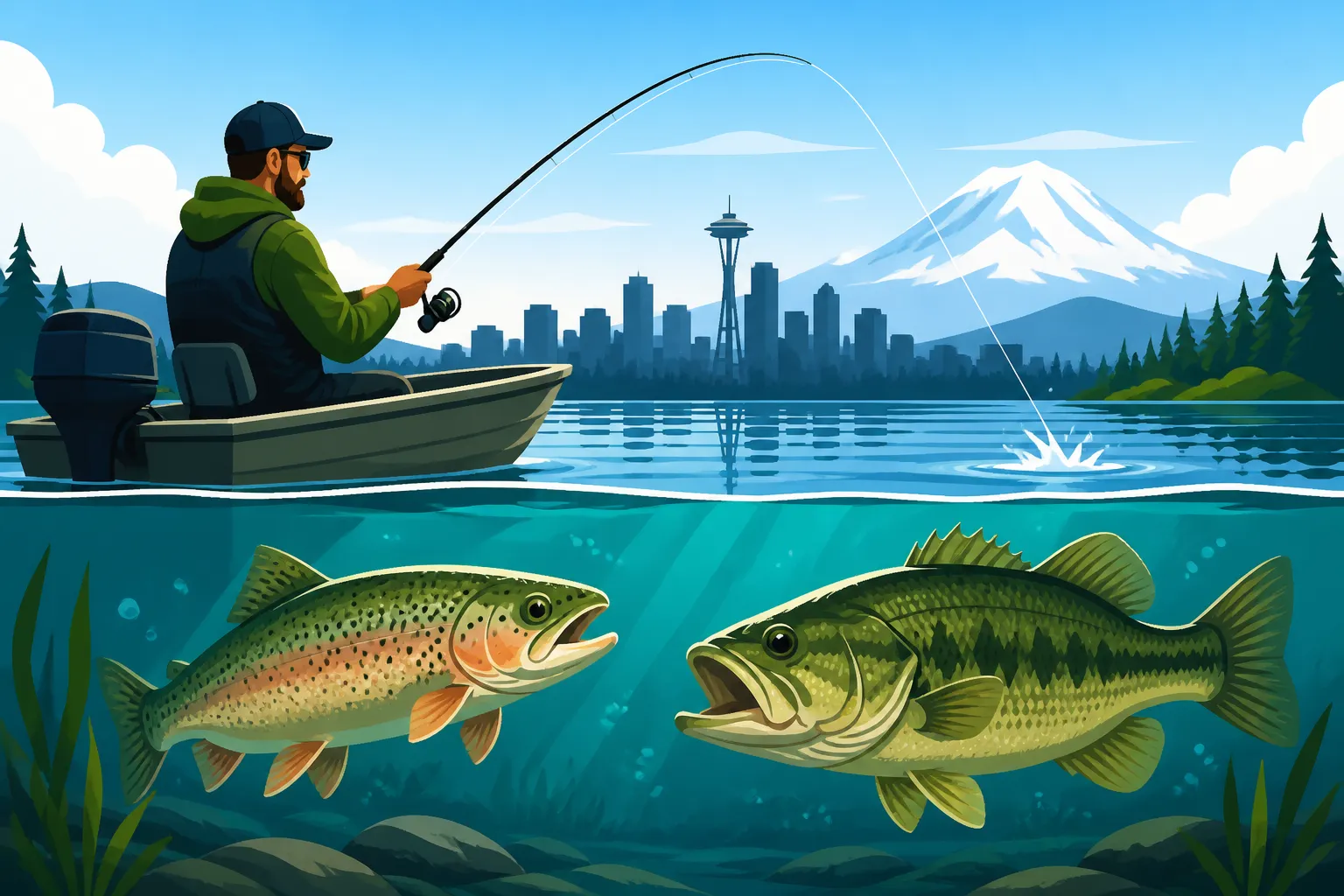
Lake Washington, sprawling right next to Seattle's bustling urban core, can feel like a behemoth to new anglers or those unfamiliar with its depths. It’s easy to get lost in its vastness, wondering where to even begin and what fish call its waters home. This guide aims to unravel the mysteries of fishing Lake Washington, specifically for its popular trout and bass populations, providing you with the insights and confidence to hook into some fantastic catches.
Understanding Lake Washington's Unique Ecosystem
Lake Washington isn't just a big puddle; it's a dynamic, freshwater inland sea, shaped by glacial activity and fed by several rivers, including the Cedar and Sammamish. This immense body of water, approximately 22 miles long and 2 miles wide, plunges to depths over 200 feet in some areas, offering a diverse array of habitats for different fish species. Its proximity to a major metropolitan area means it sees significant recreational use, but don't let the city skyline fool you – beneath the surface lies a thriving fishery with plenty to explore.
The Lake's Dynamic Environment
The unique characteristics of Lake Washington make it a truly special place to fish. Unlike smaller, more intimate lakes, its sheer size and depth create distinct zones. You have shallow, weedy bays, expansive open water, steep drop-offs, and rocky points. The Cedar River and Sammamish River deltas, for example, bring in nutrients and cooler water, creating prime feeding areas at different times of the year. The lake also has several bridges, like the I-90 and SR 520 floating bridges, which provide excellent structure that attracts baitfish and, consequently, predatory species. Understanding these varied environments is key to deciphering where fish might be holding.
The lake also experiences temperature stratification, especially in summer, where warmer water sits atop cooler, deeper layers. This thermocline can be a crucial factor in locating fish, as many species will suspend or hold near specific temperature bands. During the winter, the lake mixes, and temperatures become more uniform, changing how fish relate to structure and depth.
Common Fish Species You'll Encounter
While we're focusing on trout and bass, Lake Washington is home to a surprisingly diverse community of fish. When you cast your line, you might encounter various salmon species, perch, crappie, and even a few protected bull trout. For those targeting trout, you'll primarily be looking for rainbow trout, cutthroat trout, and the fascinating kokanee salmon, which are actually landlocked sockeye. Bass anglers will be thrilled with both smallmouth and largemouth bass, each offering a different challenge and preferred habitat. The Washington Department of Fish and Wildlife (WDFW) actively manages these fisheries through stocking programs and regulations, ensuring healthy populations for anglers to enjoy.
Beyond our target species, you'll find yellow perch in abundance, especially in shallower, weedy areas, offering a fun target for kids or when the main bite is slow. Black crappie are also present, often found around docks and submerged brush. It's always a good idea to know what else might bite, as incidental catches can be common. For a broader look at aquatic life, consider exploring our guide on Fish Species You Can Legally Keep Year-Round in Washington.
Navigating Fishing Pressure and Challenges
Fishing in an urban lake like Lake Washington comes with its own set of challenges, particularly the fishing pressure. Being so accessible to millions of people means popular spots can get crowded, especially on weekends or during peak seasons. You'll often share the water with pleasure boats, kayaks, paddleboards, and even seaplanes, so situational awareness is crucial. This pressure can make fish a bit more wary, requiring a more subtle approach or a willingness to explore less-trafficked areas.
Another challenge is simply the sheer size of the lake. Without local knowledge or a good understanding of the fishery, it can feel like looking for a needle in a haystack. However, with good preparation and a bit of perseverance, you can find your own productive stretches. Using resources like bathymetric maps, online fishing forums, and even talking to local tackle shop owners can provide invaluable insights into current conditions and hot spots. Don't be discouraged by the crowds; with the right approach, Lake Washington still offers incredible fishing opportunities.
Targeting Trout in Lake Washington
Lake Washington is a fantastic destination for trout anglers, offering a mix of stocked rainbows, native cutthroat, and the unique kokanee. Each species provides a different kind of fishing experience, from fast-paced action to more nuanced, technical angling.
Rainbow Trout: Stocked Wonders
Rainbow trout are undoubtedly the most popular trout species in Lake Washington, thanks to regular stocking efforts by the WDFW. These hatchery-raised fish are put into the lake to provide consistent angling opportunities, particularly for those fishing from shore. They tend to congregate in certain areas, especially near public access points where they are released, making them a great target for beginners or families.
When targeting these stocked rainbows, presentation is often more important than the exact lure. They are often cruising the upper water column or along drop-offs near shore. Popular baits include PowerBait in various colors (chartreuse, rainbow, pink are classics), worms, and small marshmallow-worm combos fished off the bottom with a sliding sinker. For those preferring lures, small Kastmaster spoons, Rooster Tail spinners, and Wedding Ring lures can be incredibly effective, especially when trolled from a boat or retrieved slowly from shore. Early mornings and late evenings tend to be the most productive times, as these fish are actively feeding. You can also find great tips on Trolling Wedding Rings for Kokanee and other trout, which can be adapted for rainbows.
Native Cutthroat and Sea-Run Opportunities
Lake Washington also holds a healthy population of native cutthroat trout. These aren't your typical hatchery fish; they're wilder, often more elusive, and possess a striking beauty. Many of these cutthroat are residents of the lake, but others are sea-run cutthroat, meaning they migrate between the lake and Puget Sound via the locks in Ballard. These sea-run fish are particularly aggressive and often larger, providing an exciting challenge.
Targeting cutthroat usually requires a more subtle approach. They often relate to structure like submerged logs, weed lines, and current seams, especially near the mouths of tributary rivers like the Cedar and Sammamish. Fly anglers find success with streamers and baitfish imitations, while spin fishermen do well with small spoons, spinners, or twitching jigs. Early spring and fall are prime times to target these fish, especially when they are actively feeding on baitfish. Pay attention to changes in current or structure, as these are often prime ambush points for hungry cutthroat. If you’re into fly fishing, techniques like those outlined in Nymphing for Trout on Washington's Yakima River can offer valuable insights into reading water for trout, even in a different setting.
Kokanee: The Elusive Landlocked Sockeye
Kokanee are truly unique residents of Lake Washington. These landlocked sockeye salmon don't migrate to the ocean; instead, they spend their entire lives in the lake. They are known for their vibrant red flesh and delicious taste, but they can be incredibly challenging to catch. Kokanee are primarily plankton feeders, making them highly selective about what they will strike. They typically school in deep, open water and are often found suspending at specific depths, sometimes 50 to 100 feet down, or even deeper, depending on the season and light conditions.
Success with kokanee usually involves specialized techniques like downrigging or jigging. Anglers will often troll small dodgers or flashers rigged with wedding rings, kokanee flies, or small hootchies tipped with corn. The corn isn't just bait; it serves as a visual attractant and may even help mask human scent. Finding the right depth is paramount, and a good fish finder is an essential tool. Keep an eye on your electronics for schools of bait or individual arcs at specific depths. Once you find them, stick to that depth religiously. For more detailed strategies on this technique, our guide on Jigging for Kokanee in Washington Lakes provides excellent foundational knowledge. The best times to target kokanee are generally spring and early summer before the water gets too warm and they move to extreme depths.
Chasing Bass in Lake Washington
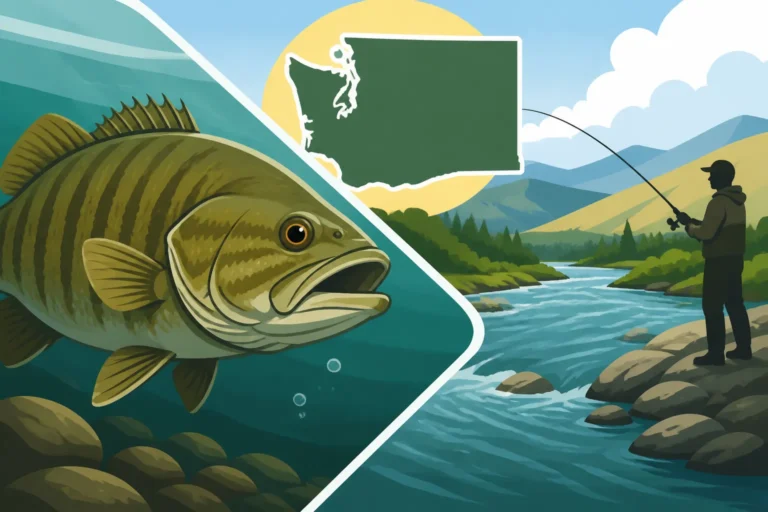
For anglers who prefer the aggressive strikes and powerful fights of black bass, Lake Washington delivers with both smallmouth and largemouth populations. These species offer distinct challenges and thrive in different parts of the lake, making it an exciting quest to target both.
Smallmouth Bass: Rocky Relatives
Smallmouth bass are incredibly popular in Lake Washington, particularly on the eastern side where there's more rocky structure and riprap. These bronze battlers love hard bottoms, rocky points, submerged humps, and the pilings of bridges and docks. They are sight feeders, and their aggressive nature makes for exhilarating strikes. Unlike largemouth, smallmouth are more comfortable in deeper, clearer water and are often found in areas with good current flow, especially near the I-90 and SR 520 bridges, as well as along the eastern shoreline.
When targeting smallmouth, focus on baits that mimic their natural forage: crawfish, gobies, and small baitfish. Jigs (football jigs, tube jigs), drop-shot rigs with small plastics, crankbaits (especially those that dive to contact rocky bottoms), and spinnerbaits are all highly effective. Fishing around transitional areas where rock meets weeds or sand can be particularly productive. Pay close attention to subtle changes in structure, as a single large boulder or a small patch of gravel can hold a trophy smallmouth. Early morning and late evening are prime, but smallmouth will often bite aggressively throughout the day, especially if there's some cloud cover or chop on the water. For more on these incredible fish, you can learn about Smallmouth Bass on Washington's Columbia and Snake Rivers.
Largemouth Bass: The Structure Lovers
While less common than smallmouth in many parts of Lake Washington, healthy populations of largemouth bass thrive in the lake's shallower, weedy bays and protected coves. These fish are true ambush predators, preferring dense cover like lily pads, submerged logs, docks, and thick weed beds. If you're looking for largemouth, you'll want to explore the northern and southern ends of the lake, as well as the numerous secluded bays that offer this type of habitat. They are a bit more temperature-sensitive than smallmouth, often preferring warmer, shallower water.
To entice largemouth, you'll need to get your baits right into their living rooms. Topwater lures like frogs and poppers are incredibly exciting during low-light conditions or over heavy cover. Plastic worms (Texas-rigged or Carolina-rigged), Senkos, spinnerbaits, and swim jigs are also very effective when worked slowly through or around structure. Pitching and flipping techniques are essential to present your bait precisely into tight pockets of cover. Patience is key, as largemouth often need a bait to land right on their nose to trigger a strike. Seek out areas with abundant vegetation and wood, especially those near deeper water access points, as these are classic largemouth haunts.
Seasonal Patterns for Bass Success
Understanding the seasonal movements of both smallmouth and largemouth bass is critical for consistent success on Lake Washington.
- Spring (Pre-spawn & Spawn): As water temperatures rise in late spring (April-May), bass move into shallower areas to feed heavily before spawning. This is often the best time for big fish. Smallmouth will be on rocky points and flats, while largemouth will gravitate towards shallow weed beds and docks. This is a great time for crankbaits, spinnerbaits, and jigs.
- Summer (Post-spawn & Summer Patterns): After spawning, bass disperse. Smallmouth often move to deeper offshore structures, humps, and main lake points, suspending or relating to deep rock. Largemouth retreat to dense cover in their shallow bays, often becoming more nocturnal. Drop-shot, deep crankbaits, and Carolina rigs work for smallmouth, while topwater and soft plastics excel for largemouth early and late.
- Fall (Feeding Frenzy): As water temperatures drop and days shorten, bass go on a feeding binge to put on weight for winter. Both species become more aggressive and can be found in shallower to mid-depth ranges, often schooling up. Crankbaits, jerkbaits, and bladed jigs are highly effective. This is an excellent time for quantity and quality.
- Winter (Deep & Slow): Bass become lethargic in winter, moving to deeper, stable water. They bite sparingly, requiring slow, finesse presentations. Vertical jigging spoons, blade baits, and slow-rolled jigs in deep holes or along steep breaks can sometimes tempt a bite.
Keeping an eye on water temperature and weather patterns will help you predict these shifts and be in the right place at the right time.
Essential Gear and Techniques for Lake Washington
Having the right tackle and knowing how to use it are paramount to success on a diverse waterbody like Lake Washington. Whether you're chasing trout or bass, a well-prepared angler always has an advantage.
Rods, Reels, and Line for Lake Washington
For trout fishing, a light to medium-light spinning rod, typically 6' to 7' long, with a fast action tip is ideal. Pair this with a 1000-2500 series spinning reel spooled with 4-8 lb monofilament or fluorocarbon line. Monofilament offers good stretch for fighting smaller trout and is forgiving, while fluorocarbon is nearly invisible underwater, a huge advantage in clear lake conditions, especially for wary kokanee and cutthroat. For kokanee or deeper trolling, a specialized kokanee rod with a soft tip or a light trolling rod might be beneficial, often paired with a line counter reel.
For bass fishing, you'll likely want to bring a couple of different setups.
- Spinning gear: A medium-light to medium power spinning rod (6'6" – 7') with a 2500-3000 series reel spooled with 8-12 lb fluorocarbon or braided line with a fluorocarbon leader is excellent for finesse techniques like drop-shotting, shaky heads, and smaller jigs.
- Casting gear: A medium-heavy to heavy power casting rod (6'10" – 7'6") paired with a baitcasting reel spooled with 15-20 lb fluorocarbon or 30-50 lb braided line is perfect for heavier techniques like flipping jigs, throwing spinnerbaits, crankbaits, and topwater lures into heavy cover. The heavier line helps in battling fish out of weeds and wood.
Choosing the right line is critical. Braided line offers superior sensitivity and strength, making it popular for feeling subtle bites and pulling fish from cover. However, a fluorocarbon leader is often essential to maintain stealth in clear Lake Washington waters.
Popular Lures and Baits for Trout and Bass
The tackle box for Lake Washington should be versatile to cover both trout and bass.
- For Trout:
- Bait: PowerBait (various colors), nightcrawlers, scented soft plastics (e.g., Gulp! Maggots or Power Worms). Tipping lures with a piece of corn is also a classic kokanee trick.
- Lures: Small spoons (Kastmaster, Little Cleo), inline spinners (Rooster Tail, Panther Martin), wedding rings, kokanee flies, small hootchies.
- For Bass:
- Soft Plastics: Senkos, tube jigs, creature baits, plastic worms (curly tail, straight tail), flukes. Colors like green pumpkin, black and blue, and watermelon are always solid choices.
- Jigs: Football jigs, swim jigs, casting jigs in various weights and skirt colors.
- Crankbaits: Shallow divers for largemouth in the bays, deep divers for smallmouth on rocky ledges. Colors mimicking crawfish or baitfish are great.
- Spinnerbaits/Chatterbaits: White, chartreuse, or natural baitfish colors work well, especially around cover.
- Topwater: Poppers, walking baits, frog lures for largemouth in heavy cover.
Don't forget essential terminal tackle: an assortment of hooks (worm hooks, drop-shot hooks, treble hooks for lures), sinkers (bullet weights, drop-shot weights, split shot), swivels, and leader material. A good pair of pliers or forceps for hook removal is also a must-have.
Boating vs. Shore Fishing Strategies
Lake Washington offers excellent opportunities for both boat anglers and shore-bound fishermen, each with distinct advantages and strategies.
Shore Fishing: Shore fishing is perhaps the most accessible way to fish Lake Washington. Public parks, docks, and designated fishing piers provide ample access. For trout, focus on areas where the WDFW regularly stocks, often near these public access points. Fishing PowerBait or worms off the bottom, or casting small spinners and spoons, can be very productive. For bass, look for shorelines with rocky structure or submerged vegetation, especially in the quieter bays. Target areas around docks, fallen trees, and bridge pilings that extend from shore. Mornings and evenings are prime times, and during the fall, shore access can yield some great smallmouth action as they chase baitfish. A simpler setup makes this a great way to enjoy the lake, especially for beginners or those looking for an easy outing.
Boat Fishing: A boat, whether a small aluminum skiff, kayak, or full-sized bass boat, opens up a world of possibilities on Lake Washington. You can access deeper offshore structures for smallmouth and kokanee, troll vast expanses for rainbow trout, and explore secluded bays for largemouth. Downriggers are invaluable for precise depth control when targeting kokanee. When searching for bass, using your electronics to locate submerged structure, baitfish schools, and depth contours is crucial. Trolling patterns can be highly effective for trout and kokanee, covering more water to find active fish. Kayaks and paddleboards are also gaining popularity, offering stealthy access to shallower bass haunts. Being able to move and adapt to changing conditions and fish locations is the biggest advantage of boat fishing. You might even consider booking a guided trip to maximize your experience; platforms like FishingBooker connect you with local experts who can navigate these waters with ease.
Best Fishing Spots and Access on Lake Washington
Lake Washington is vast, but certain areas consistently produce good fishing for trout and bass. Knowing where to go, whether you're launching a boat or casting from shore, can make all the difference.
Public Docks and Parks for Shore Anglers
For those without a boat, Lake Washington still offers numerous fantastic opportunities from its extensive network of public parks and fishing piers. These spots are often maintained by local municipalities and the WDFW, sometimes including amenities like restrooms and parking.
- Seward Park (Seattle): Located on the south end of the lake, Seward Park offers excellent shoreline access with a fishing pier and plenty of rocky and weedy areas. It's known for stocked rainbow trout and can hold some decent smallmouth bass, especially around the rocky points. The deep water access from the pier makes it a popular spot.
- Gene Coulon Memorial Beach Park (Renton): At the very southern tip of Lake Washington, Coulon Park boasts a long fishing pier that extends into the lake. This area is often stocked with rainbow trout and provides good access for yellow perch and even some incidental bass. Its relatively shallow, protected waters can be good for largemouth in the surrounding bays.
- Kenmore boat launch and pier (Kenmore): On the north end of the lake, this area offers both boat launch facilities and a pier. It’s a reliable spot for stocked trout and can yield smallmouth bass around the boat launch structures and nearby rocky sections.
- Juanita Beach Park (Kirkland): This park on the eastern shore features a pier and a shallow, protected bay that's great for largemouth bass and various panfish, especially during warmer months. The weed beds here provide excellent cover.
Many other smaller neighborhood parks along the lake's perimeter also offer limited shoreline access and can be worth exploring, particularly if you're seeking less crowded conditions.
Boat Launches and Prime On-Water Zones
For those with a boat, Lake Washington opens up immensely, allowing access to deeper water, offshore structures, and secluded coves that shore anglers can't reach.
- Gene Coulon Memorial Beach Park (Renton): Besides its pier, Coulon offers a multi-lane boat launch with ample parking. From here, you can easily access the southern basin of the lake, known for good smallmouth bass fishing along the main lake points and the deeper water where kokanee might suspend.
- Atlantic City Boat Launch (Seattle): This is another popular launch on the southern end, providing excellent access to the main body of the lake. Anglers often head out from here to target smallmouth around the I-90 bridge pilings and the various rocky reefs scattered throughout the area.
- Kenmore Boat Launch (Kenmore): Located in the northeastern arm of the lake, this launch provides access to the northern basin and the mouth of the Sammamish River. It's a good starting point for targeting rainbow trout and cutthroat, especially near the river mouth, and for exploring the shallower bays for largemouth.
- Fairview Ave E. Boat Launch (Seattle): A classic Seattle launch, offering access to the western side of the lake. It's a good jump-off point for fishing the numerous docks and houseboats along the western shore, which can hold both largemouth and smallmouth.
When fishing from a boat, areas like the I-90 and SR 520 bridge pilings are absolute magnets for smallmouth bass. The current and structure attract baitfish, making them prime ambush points. The deeper, open waters of the central and northern basins are where you’ll find the elusive kokanee, often requiring precise trolling techniques. Also, pay attention to depth contours and underwater humps that show up on your fish finder – these are often overlooked gems for all species. If you’re looking for a guide to help navigate these spots, online platforms like FishingBooker can help you find experienced captains specializing in Lake Washington.
Hidden Gems and Productive Areas
Beyond the well-known spots, Lake Washington has a few "hidden gems" and less obvious areas that can be incredibly productive for those willing to explore.
- The Montlake Cut and Union Bay: While regulated differently at times, the Montlake Cut and the broader Union Bay area, which connects Lake Washington to Lake Union, can offer unique fishing. The transition zones and current can hold migratory fish, including sea-run cutthroat. Union Bay itself has extensive weed beds, making it a decent spot for largemouth bass, especially near the university wetlands. Check Washington Fishing Regulations Every Angler Should Know before fishing this area, as rules can be quite specific due to the locks.
- Mouths of Tributary Rivers: The deltas of the Cedar River (south end) and the Sammamish River (north end) are critical areas. These nutrient-rich waters attract baitfish and provide cooler water, drawing in trout and bass. Fishing the edges of these deltas, especially during salmon returns, can be very productive for opportunistic cutthroat and smallmouth.
- Residential Docks and Houseboats: Along the entire perimeter of the lake, especially on the western and eastern shores, thousands of private docks and houseboats provide immense amounts of submerged structure. While you must respect private property, fishing around these structures from a boat, particularly in less trafficked areas, can yield excellent bass catches. Largemouth love the shade and cover, and smallmouth will often patrol the deeper edges.
Exploring these varied locations requires a keen eye for detail and a willingness to try different techniques. Each area holds its own potential, and discovering a new productive spot is one of the great joys of fishing.
Navigating Regulations and Seasons on Lake Washington
Fishing in Washington, especially near urban centers, always requires a solid understanding of the regulations. Lake Washington is no exception, with specific rules that govern seasons, catch limits, and even gear. Staying informed ensures a legal and enjoyable outing.
Understanding General Lake Washington Rules
The Washington Department of Fish and Wildlife (WDFW) sets the regulations for Lake Washington, which are generally categorized under "Marine Area 10 – Puget Sound" for some species, but primarily under the "Freshwater Rules" for the lake itself. A valid Washington freshwater fishing license is required for all anglers aged 15 and older. While the lake itself is often open year-round for trout and bass, specific species and areas may have seasonal closures or special restrictions.
Always carry your fishing license, either in physical form or digitally on your phone via the MyWDFW app. Game wardens frequently patrol Lake Washington, checking for compliance. Beyond licensing, understanding basic rules like anti-snagging, gear restrictions (e.g., single barbless hooks for certain salmon fisheries), and fish identification is crucial. For comprehensive details, always consult the current WDFW Sport Fishing Regulations pamphlet, which can be found online or at licensed dealers. This pamphlet is your bible for Washington fishing. You can find more details in our guide on Washington Fishing Regulations Every Angler Should Know.
Specific Seasons for Trout and Bass
While Lake Washington is generally open for fishing year-round for many species, the best seasons for trout and bass align with their natural life cycles and behavior.
- Rainbow Trout: Thanks to stocking, rainbow trout are available year-round. However, spring (March-May) and fall (September-November) often see the most consistent action as water temperatures are cooler and fish are more active closer to shore or in shallower depths. In summer, they tend to move deeper to find cooler water.
- Cutthroat Trout: These native trout are also present year-round. Sea-run cutthroat become more active in the lake during spring and fall as they prepare for or return from their journey through the locks. Resident cutthroat can be targeted throughout the year, with peak activity often in cooler months.
- Kokanee: The kokanee season typically runs from spring through summer. Early spring, when they are found in shallower depths, offers the most accessible fishing. As summer progresses, they move deeper, making them harder to locate without specialized gear. There can be specific limits and rules for kokanee that differ from other trout species, so always check.
- Smallmouth and Largemouth Bass: Bass fishing is excellent from late spring (April-May), through summer, and into fall (September-October). The pre-spawn period in late spring offers some of the best opportunities for large, aggressive fish. During the colder winter months, bass fishing slows considerably as they become lethargic and hold in deeper water.
It's paramount to double-check the current WDFW regulations for any specific opening and closing dates, as these can change annually or through emergency rule changes. You can keep up to date with these shifts by checking out How to Check for Emergency Rule Changes in Washington.
Catch Limits and Other Important Considerations
One of the most critical aspects of fishing responsibly is adhering to catch limits and other regulations designed to protect fish populations.
- Daily Bag Limits: These specify the maximum number of fish of a particular species you can keep in a 24-hour period. For trout, this is often a general trout limit, but kokanee might have a separate, lower limit. Bass generally have their own limits.
- Possession Limits: This refers to the total number of fish you can have in your possession, whether on your person, in your cooler, or at your home. It's often twice the daily limit, but this can vary. Understanding Possession Limits vs Daily Limits in Washington is key to staying legal.
- Size Limits: Some species, particularly bass and larger trout, may have minimum or maximum size limits. For example, you might only be allowed to keep bass within a certain slot size, protecting both juveniles and large breeding adults.
- Special Rules: Be aware of any special rules for specific areas, such as bait restrictions, gear type limitations (e.g., fly fishing only in certain streams, although not typical for Lake Washington itself), or catch-and-release only zones. The Montlake Cut, as mentioned earlier, is an area where specific rules often apply.
- Catch Record Cards: For salmon and steelhead, a Catch Record Card is mandatory, even if you are just catch-and-release fishing or happen to catch one incidentally. While trout and bass usually don't require recording on a Catch Record Card, it's vital to know when one is necessary, such as for the occasional salmon that might stray into the lake from the Cedar River or other tributaries. Our guide on When a Catch Record Card Is Required in Washington can help clarify this.
It is your responsibility as an angler to know and follow these rules. Ignorance is not an excuse for violations, which can lead to hefty fines or even loss of fishing privileges. A quick check of the WDFW regulations before each trip is always a good practice.
Lake Washington Trout and Bass Seasonality
To help you plan your trips, here's a general overview of when different species are most active and catchable in Lake Washington. Keep in mind that exact timing can shift based on yearly weather patterns and water temperatures.
| Species | Primary Season | Secondary Season | Key Techniques | Prime Locations |
|---|---|---|---|---|
| Rainbow Trout | Spring (Mar-May) | Fall (Sep-Nov) | Bait (PowerBait, worms), Spinners, Small Spoons, Trolling | Public Piers, Stocked Areas, Shorelines, Open Water |
| Cutthroat Trout | Spring (Apr-Jun) | Fall (Sep-Oct) | Spinners, Spoons, Fly Fishing, Twitching Jigs | River Mouths (Cedar, Sammamish), Weed Lines, Docks |
| Kokanee | Late Spring (May-Jul) | Early Fall (Aug-Sep) | Downrigging, Jigging, Trolling with Flashers/Hoochies | Deep Open Water (Central/Northern Basin) |
| Smallmouth Bass | Late Spring (May-Jun) | Summer (Jul-Aug), Fall (Sep-Oct) | Jigs, Crankbaits, Drop-Shot, Spinnerbaits | Rocky Points, Bridge Pilings (I-90, SR 520), Humps |
| Largemouth Bass | Late Spring (May-Jul) | Summer (Jul-Aug), Fall (Sep-Oct) | Soft Plastics, Topwater, Swim Jigs, Spinnerbaits | Shallow Weedy Bays, Docks, Submerged Wood |
This table provides a general guideline. Always adapt your approach based on current conditions and recent fishing reports.
Disclaimer
Fishing regulations, seasons, and fish populations can change frequently due to biological factors, environmental conditions, and management decisions by the Washington Department of Fish and Wildlife (WDFW). While every effort has been made to provide accurate and up-to-date information in this guide, it is essential for all anglers to consult the official WDFW Sport Fishing Regulations pamphlet or their website before heading out on the water. This guide is for informational purposes only and should not be considered a substitute for the official regulations.