Best Tide for Puget Sound Salmon Fishing in Washington
Trying to figure out the best tide to fish for salmon in Puget Sound can feel like trying to solve a complicated puzzle, especially when you hear so many different opinions from seasoned anglers. It's not just about high tide or low tide; the currents, the exchange, and even the specific area you're fishing all play a massive role in whether those salmon are actively biting or just cruising by. This guide is going to break down the ins and outs of Puget Sound's tidal system and help you understand how to harness its power to put more salmon in your net.
Understanding Puget Sound's Tidal Dynamics
Puget Sound isn't just one big open body of water; it's a complex network of deep basins, narrow channels, and countless islands. This unique geography means that the tides here behave very differently than they might on an open coast. Simply knowing the "tide is coming in" isn't enough; you need to understand the strength of that tide, the direction of the current it generates, and how that impacts baitfish and, consequently, salmon.
The Basics of Tides: High, Low, Slack, and Exchange
Let's start with the fundamentals, because even experienced anglers can get tripped up by the nuances of Puget Sound's tides. You've got your standard high tide and low tide, which refer to the maximum and minimum water levels. But for fishing, what really matters are the currents associated with these changes, and that's where slack tide and tidal exchange come into play.
Slack tide is that brief period, sometimes just minutes long, when the water movement essentially stops or reverses direction. There's a "high slack" after the incoming tide peaks and before it starts going out, and a "low slack" after the outgoing tide bottoms out and before it starts coming in. Many anglers, especially those just starting out, often think slack tide is always the best time to fish, but we'll dive deeper into why that's not always the case for salmon. What you really want to pay attention to is the exchange – the total difference in water height between the high and low tide. A large exchange, say 10 or 12 feet, means strong currents and potentially very active feeding periods, while a small exchange of only a few feet will result in much weaker currents. The stronger the current, the more likely baitfish are being pushed around and disoriented, creating feeding opportunities for salmon.
How Puget Sound's Geography Affects Tides and Currents
The intricate network of islands, narrows, and deep basins within Puget Sound acts like a giant, complex plumbing system. When the tide changes, water funnels through these constrictions, creating incredibly strong and localized currents. Think about places like Deception Pass, the Tacoma Narrows, or Admiralty Inlet; these areas can have currents ripping at several knots, completely transforming the fishing experience compared to a wide-open bay.
These strong currents can be a double-edged sword. On one hand, they concentrate baitfish, washing them out of hiding spots and making them easy targets for predatory salmon. On the other hand, fishing in such powerful currents requires heavy gear, precise boat control, and often a different set of techniques. The sheer volume of water moving in and out with each tide, especially during large exchanges, also influences water temperature, salinity, and oxygen levels, which can all indirectly affect where salmon choose to hold and feed. Understanding these hyper-local dynamics is key to consistently finding fish.
Best Tides for Salmon Fishing in Puget Sound
When it comes to salmon, different species often have different preferences for tidal conditions, and even within a species, their behavior can change based on the season and location. Generally, salmon are predators, and they love current because current equals food. It disorients baitfish, makes them easier to ambush, and carries nutrients.
Trolling for Chinook Salmon on Puget Sound's Best Tides
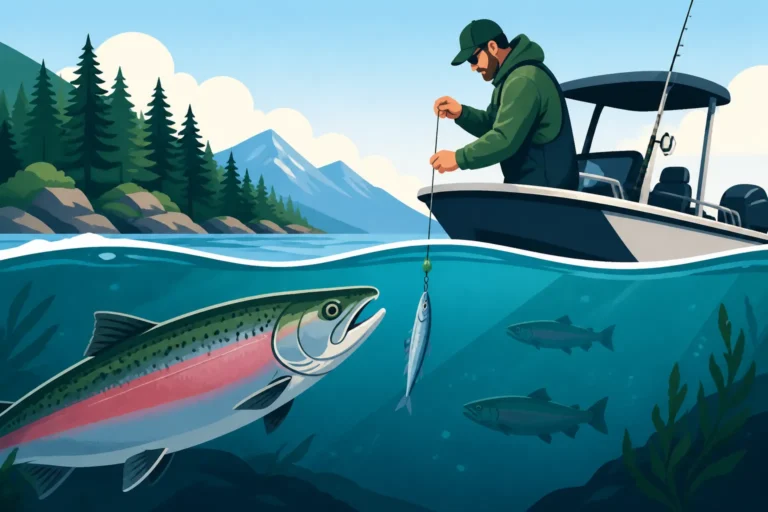
Chinook salmon, often called King salmon, are notorious for their size and power, and they're usually found where the bait is thick and moving. For Chinook Salmon: Washington's King of Fish, strong incoming or outgoing tides are often your best bet, particularly during the middle of the tidal swing when the current is at its peak. The moving water pushes herring, candlefish, and squid out of their hiding spots, creating a buffet line for hungry Chinook.
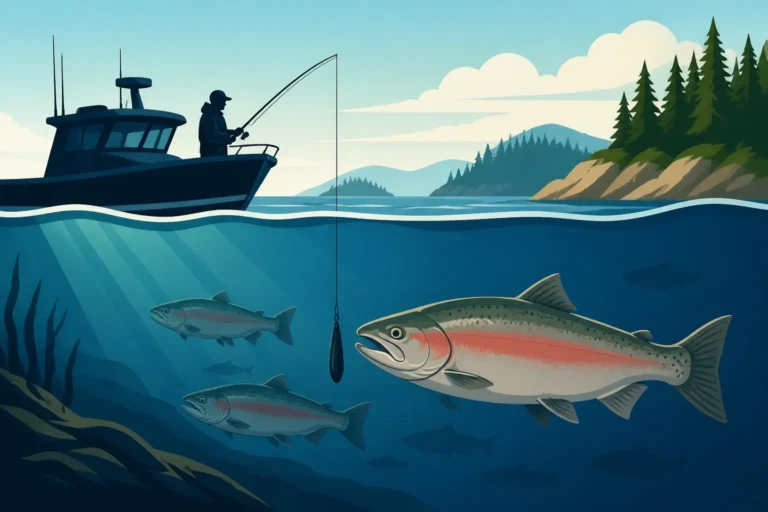
When you're Trolling for Salmon in Washington's Puget Sound, these strong currents allow you to cover more ground with your gear, presenting your bait or lure naturally in the direction of the flow. You might find success trolling with the current, which gives your gear a more lifelike action, or against it, which allows you to slow your speed relative to the water and stay in a productive zone longer. If you're fishing a specific structure or depth contour, a strong tide can concentrate bait and salmon along those edges. For example, during a strong incoming tide into a deep channel, baitfish might get pushed against a certain wall or ledge, and that's exactly where you'll want your gear. Adapting your weights and downrigger depths to maintain contact with the desired fishing zone in strong current is crucial. You might need heavier lead or a faster drop rate on your downriggers from brands like Scotty or Cannon to keep your gear in the strike zone when the water is really ripping.
Finding Coho Salmon During Optimal Tidal Flows
Coho salmon, or Silvers, are known for their aggressive strikes and acrobatic fights. They tend to be more active feeders than Chinook, and their preference for strong, moving water is often even more pronounced. For Coho Salmon Fishing in Washington, the periods just before and after the peak of a strong tide, whether incoming or outgoing, are prime times. These fish are opportunistic and will actively chase down baitfish that are being tossed around by the currents.
Coho will often school up in current lines or along the edges of rips where bait is concentrated. Think about areas where currents meet or swirl, creating a "seam" in the water. These are excellent places to target Coho. They'll position themselves just outside the strongest current, darting in and out to pick off disoriented bait. If you're mooching or jigging, working these current seams can be incredibly effective. Even during weaker tides, Coho will still seek out areas with some water movement. Knowing When Coho Salmon Run in Washington can also help you anticipate their feeding patterns, as their behavior might shift slightly as the season progresses.
Targeting Chum Salmon on Puget Sound Tides
Chum salmon, sometimes called Dog salmon due to their formidable teeth as they approach spawning, are often overlooked but can provide thrilling fishing, especially closer to their spawning rivers. While they might not be as actively feeding as Chinook or Coho once they're far into the Sound and nearing their natal rivers, tidal flows are still critical for them. For When Chum Salmon Run in Washington Rivers, these fish use the tides to navigate their way through Puget Sound and into river mouths.
For Chum, the key isn't necessarily about finding them actively feeding on bait, but rather intercepting them as they move. Strong incoming tides often help pull them into river systems, and outgoing tides can push them out into staging areas. Focusing your efforts around river mouths, estuaries, and nearshore areas during these strong tidal movements can be very productive. Techniques like twitching jigs or throwing large, colorful flies that aggravate them into striking, rather than imitating bait, can be effective. While you might not be looking for the "best feeding tide" for Chum in the same way as for Chinook or Coho, understanding their migratory patterns in relation to the tide is paramount.
Practical Strategies for Fishing the Tides
Understanding the theoretical best tides is one thing, but putting that knowledge into practice on the water is where the real skill comes in. It involves careful planning and adaptability.
Reading a Tide Chart and Planning Your Trip
Don't just show up at the ramp and hope for the best; that's a recipe for frustration in Puget Sound. Learning how to read a tide chart is absolutely foundational to successful salmon fishing here. A tide chart will tell you the times of high and low tide, as well as the predicted height of the water. But remember, water height isn't the whole story. You need to pay attention to the tidal exchange (the difference between high and low) because that dictates the strength of the current. A big exchange means strong currents, and often, hot fishing. A small exchange means weaker currents, which can make for slower fishing but also easier boat control.
Many excellent apps and websites are available that provide not just tide predictions but also current predictions for specific locations within Puget Sound. This is far more valuable for salmon fishing than just water height. For instance, an app might show you current speeds for Admiralty Inlet, Deception Pass, or the Tacoma Narrows, allowing you to pick your fishing window based on favorable currents rather than just water levels. Always check these predictions the day before your trip, and don't forget to factor in the local weather conditions, which can also influence water movement. It’s part of a complete pre-trip routine, much like checking What to Check Before Every Washington Fishing Trip or understanding Reading the Washington Sport Fishing Regulations Pamphlet.
Adjusting Your Techniques for Different Tidal Conditions
Once you understand the tide, you need to adjust your approach. Strong currents demand heavier gear and more aggressive tactics. If you're trolling, you might need heavier downrigger balls or a faster trolling speed to keep your gear at the desired depth. Leaders might need to be shorter to prevent tangles in fast water. In extreme current, techniques like mooching or jigging might become impractical because your gear is simply washed away too quickly. This is where you might employ a method like Mooching for Salmon and How Washington Anglers Do It during a slower tide.
Conversely, during weaker tides or slack water, you might be able to lighten up your gear, use longer leaders, and slow your presentation significantly. This is often when you can get away with more subtle techniques. Think about what the salmon are doing: in strong currents, they're often aggressively chasing bait; in weaker currents, they might be more selective or holding tighter to structure. Don't be afraid to experiment with different lure colors, sizes, and presentations based on the tidal conditions. Having a versatile tackle box, readily available from retailers like Amazon, allows you to adapt on the fly to changing conditions. A robust fish finder, also often found on Amazon, can help you identify baitfish schools and salmon marks, giving you crucial information about what's happening beneath the surface, regardless of the tide.
Common Tidal Misconceptions and Local Nuances
The Puget Sound is vast and varied, meaning what works in one area might be entirely different just a few miles away. It's important to challenge common wisdom and learn the specific characteristics of your chosen fishing grounds.
The Myth of "Slack Tide is Always Best"
This is perhaps the most common misconception among new anglers. While slack tide offers the easiest fishing in terms of boat control and keeping your gear down, it's rarely the best time for active salmon feeding in Puget Sound. Why? Because salmon are built for chasing prey in current. When the water stops moving, baitfish tend to disperse and hold tight to structure, making them harder for salmon to find and ambush.
Think about it: during a strong tidal push, baitfish are disoriented, concentrated, and actively moving, creating an easy target for a salmon. When the water goes slack, that easy meal disappears. However, slack tide can be productive for other species, such as bottom fish, or if salmon are staging in very specific areas, perhaps just before making a final push into a river. Sometimes, you might catch a few during slack, but often the bite picks up significantly as soon as the current starts to build again. This is especially true for salmon species like Chinook and Coho that are actively feeding. For knowing the general windows, an article like Best Time to Fish for Chinook in Washington's Puget Sound can give you a good starting point.
Regional Differences in Puget Sound Tidal Patterns
Puget Sound is not a monolithic body of water, and its tidal patterns are incredibly diverse. What's true for the wide-open waters of central Marine Area 9 for Salmon Fishing, Explained might not apply at all to the narrow confines of the South Sound or the fast-moving channels around the San Juan Islands.
For example, the northern reaches of Puget Sound and the San Juans experience much stronger currents and a larger tidal exchange due to their proximity to the Strait of Juan de Fuca and the open ocean. Fishing here often means contending with powerful rips and eddies, and timing your trips around these current cycles is non-negotiable. Meanwhile, the shallower, more protected areas of the South Sound might have weaker currents and less dramatic tidal swings, requiring a different approach. Even within the same marine area, a protected bay will fish differently than a prominent point exposed to the full force of the current. It's crucial to consult local tide and current charts for your specific fishing spot and to understand that Does a Different Bag Limit Apply in the San Juans? not only changes rules but can influence fishing pressure and local salmon behavior based on those changes. The more time you spend observing and fishing different areas, the better you'll become at recognizing these regional nuances.
| Salmon Species | Preferred Tidal Conditions | Why It Works | General Strategies |
|---|---|---|---|
| Chinook (King) | Strong incoming or outgoing (mid-swing) | Concentrates baitfish, creates ambush opportunities | Trolling with/against current, focus on structure |
| Coho (Silver) | Building or fading strong tides (just before/after peak) | Active feeders, exploit disoriented bait in current lines | Trolling, mooching, jigging current seams |
| Chum (Dog) | Strong incoming into river mouths, outgoing for staging | Aids migration, pushes fish towards spawning grounds | Twitching jigs, flies near estuaries during migrations |
| Pink (Humpy) | Moderate to strong currents (odd years only) | Mass movement towards rivers, active feeding | Trolling small lures, casting jigs in current |
| Sockeye | Less current-dependent for feeding, but use tides for migration into rivers/lakes | Aids migration, schooling behavior | Trolling specific depths, often near lake entrances |
Disclaimer
Always consult the latest Washington Department of Fish and Wildlife (WDFW) regulations before heading out. Fishing rules, seasons, and limits can change frequently and unexpectedly.